Live chat
April 6, 2024
American Thought Leaders
Live chat
 Expand
Expand
 Expand
[FULL TRANSCRIPT BELOW] “It is not about health, this entire WHO new treaty, but it’s about creating a new pandemic industry.”
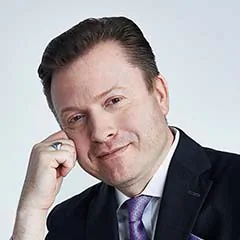
In this episode, I sit down with Swiss attorney Philipp Kruse, who specializes in international law. He has examined, line by line, the World Health Organization’s new pandemic treaty, and amendments to the International Health Regulations.
“The General Director will be given much more discretion to declare a public health emergency and to maintain it without any mechanism that could stop him from doing so, or even that would force him to justify his decision,” says Mr. Kruse.
He has filed and publicly released a criminal complaint against Swissmedic, the government agency in Switzerland that regulates drugs and medical products.
“Our safety agency did not tell the people the true risks that were involved. Like the WHO, they told everybody: ‘These substances—they are vaccines, and they are safe, and they are effective. Please take them,'” says Mr. Kruse.
Are the treaties really non-binding, as the WHO maintains?
“As long as WHO will maintain the special status of ‘pandemic’—’public health emergency of international concern’—our politicians and our courts will step back from doing their own careful assessment, and will not put in question what they’ve recommended,” says Mr. Kruse.
Views expressed in this video are opinions of the host and the guest, and do not necessarily reflect the views of The Epoch Times.
*Big thanks to our sponsor for this episode Patriot Gold Group. Check them out here: https://ept.ms/3sr5LhH
FULL TRANSCRIPT
Jan Jekielek:
Philip Kruse, such a pleasure to have you on American Thought Leaders.
Philip Kruse:
Thank you so much, Jan, for having me. It’s a pleasure.
Mr. Jekielek:
In response to the Covid-19 pandemic, there is now an update to the international health regulations [IHRs] and a new pandemic treaty. Please give us a sense of what is happening.
Mr. Kruse:
Yes, you’re absolutely right. At the end of 2021, the WHO [World Health Organization] called its 194 member states together to make a decision about the future and the creation of two new legal instruments. In their view, we had two major problems. Number one, we had acted too late.
Number two, we didn’t have sufficient vaccines. Therefore, we need to be better prepared for the future.
They created two working groups. One working group was designed to amend the already existing international health regulations on which they had managed the Covid-19 crisis. This other new international treaty is designed to be a totally new international agreement, a new pandemic treaty. This is dealt with now by all the member states and designed to cover all kinds of prevention-relevant programs.
It is very comprehensive. It will also be available or relevant between the pandemics. First of all, it covers things like pandemic preparation in terms of surveillance and of having sufficient production capacities prepared. It also introduces this one health concept that everything is linked together; human beings, plants, animals, environment, and all of that could give rise to the next pandemics. Most significantly, this idea of information control, called infodemics, is inserted in there. There are many more provisions as well.
It is important to note, this is a new agreement. It will take a two-thirds majority at the coming World Health Assembly to have it adopted by the member states. Then it will need a national process of ratification. We are looking at a minimum of democratic process going on in each of our member states.
This is opposed to the amendments to the international health regulations, which are considered to be the rather technical provisions and set medical standards for member states. Therefore, they undergo a privileged treatment. They will be adopted by the World Health Assemblies with just a simple majority. Ultimately, they shall come into force by way of an automatism. All of that is because they are considered to be just technical. But as we can see, they are much more than just technical provisions.
Mr. Jekielek:
The way the WHO responded to the pandemic was an abysmal failure by any credible research that I’ve seen. How do these provisions, whether it’s the agreement or the international health regulations, address the failure of the WHO itself?
Mr. Kruse:
That is actually one of the most important questions here. The WHO and most of their member states are of the opinion to have done a careful assessment of the pandemic crisis and have come up with the correct answers. But most of us say, “No, that’s not true.” They have not done their homework with respect to the risk analysis. They have over-exaggerated the risk coming from Covid-19.
They prematurely jumped to just a couple of solutions; lockdowns, masks, and ultimately recommending mRNA-based substances without having any proof of necessity, efficacy, or most of all, safety. There should be a careful reconsideration of the WHO’s responses beginning in 2020.
In my view, and in the view of most experts, these questions should have been asked first. What was this phenomenon, Covid-19? How dangerous was it truly? Now, as we all know, it was not dangerous to the vast majority of the population.
Then there are the mRNA-based substances, which standards exceed the risk profile of anything we have seen so far. As we all know, the purpose of WHO is actually to protect people’s health at the highest possible level. The last thing they should be allowed to do would be to harm the people.
In order not to harm the people, they would have to go back and by definition look at the effects of their lockdown policies, and most of all, their recommendations of these mRNA-based experimental substances. On the WHO’s homepage, they are still recommended to be as safe as other vaccines. This is deception. This is absolutely not true, and this creates new risks.
Mr. Jekielek:
In these new regulations and the agreement, are ways to mitigate such failures addressed in any way ?
Mr. Kruse:
We would expect to see some mechanism that addresses the fact that the WHO prematurely declared a public health emergency at the end of January 2020, and then maintained this declaration until May 5, 2023.
We would expect to see some challenge or some stop button, but that’s not the case.
To the contrary, the Director-General will be given much more discretion to declare a public health emergency and to maintain it without any mechanism that could stop him from doing so, or that would even force him to justify his decision. That’s my first biggest concern.
Here we are talking about arbitrary behavior without any standards. He can call it just by saying, “We have a new pathogen somewhere in Asia coming from birds, coming from somewhere in the waste waters, therefore, we think it’s time for another pandemic.” That’s not how modern societies work. We work on the basis of clear standards. The checks and balances system must be in place with some mechanism of control and correction. That is absolutely missing here with these international health regulations. We are speaking about Article 12 that allows the declaration of a public health emergency of international concern just by the Director-General himself.
Mr. Jekielek:
But he has challenged that interpretation. He said that he doesn’t have the ability to coerce anyone to do these things.
Mr. Kruse:
Technically, that’s right. But we also have to consider how the member states acted in the past. They have followed recommendations without any objection. In the new wording of the pandemic treaty there are some elements we have to object to. Number one, we see some wording that allows him to define the global truth of what can be said, what can be communicated, and what cannot.
Imagine you have a world where everybody is only allowed to speak about the huge risk and the only solution being mRNA based substances. Then you don’t actually need a legally binding provision, because people already want to do the wrong thing.
Mr. Jekielek:
In these provisions, there is explicit language for censorship and information control that would be recommended from the top. At best, it’s just a recommendation. At worst, it’s the type of recommendation that we saw accepted by the vast majority of nation states.
Mr. Kruse:
Yes, that’s right. We have that not only in both of these two international treaties, we have it in the new pandemic treaty under Article 18. We have it in the amendments to the international health regulations under Article 44 in the new unofficial version in the annex. But in addition, you can just google, “WHO infodemics,” and you will find multiple, official WHO pages where they clearly and openly speak about that policy. It’s already in place, as we all know. It started to be put in place at the beginning of January 2020.
Mr. Jekielek:
On YouTube and Facebook, there are often these labels beneath videos with the WHO recommendations. Some of these huge international internet platforms that effectively control information flow are already subscribing to the WHO recommendations.
Mr. Kruse:
It’s part of the general consumer conditions that you accept once you are about to use YouTube and all other social media networks. Part of their general conditions is that they have to be compliant with the WHO’s health communication policy that is defined by nobody else but the WHO.
Mr. Jekielek:
In 2019, the WHO actually revised its policies around responding to pandemics. When it came to shelter-in-place or lockdown policies, the WHO was actually revising its policies to suggest this should almost never be done. There is no research that supports using lockdowns as a pandemic mitigation measure. Doesn’t this highlight the danger of everything you’ve just talked about?
Mr. Kruse:
Yes, absolutely. Once you control the narrative and the right to make recommendations as far reaching as lockdowns, it becomes really very uncomfortable for people and also the economy. Concerning this legally binding question, this is the point where most governments want to defend the WHO. So far, we must rely on the wording we have that is officially available.
Speaking about the international health regulations amendments, we have had the same wording since the end of 2020. In Article 1 under definitions, in Article 13A, and then in Article 42, they say, “Member states undergo and commit to…” It is very clear language. I cannot understand how one could then come to the idea that every country could still have their own solution.
Mr. Jekielek:
Philipp, please tell us about those three clauses. What exactly are they committing to?
Mr. Kruse:
The first one that is most often quoted is Article 1 about the definition for recommendations. So far, we have the word non-binding clearly in it, but this is struck out. Then we have two more, as I mentioned.
Mr. Jekielek:
You’re saying that before it was non-binding, but in this new version, it doesn’t say non-binding.
Mr. Kruse:
Yes, that’s right. It says, “Standing recommendation means non-binding advice issued by the WHO,” but these words, non-binding advice, are crossed out. Now, it reads, “Standing recommendations means advice issued by the WHO.” That might not be very strong wording. But we do have strong wording in Article 13A, Paragraph 1.
It says, “State parties undertake to follow WHO’s recommendations in the international public health response.” Look at the phrase, undertake to follow our legal terms. As lawyers, we understand what is meant by that. Without any doubt, we oblige ourselves. It’s an international law obligation.
The third example is Article 42, which says, “Health measures taken present to these regulations shall be initiated and completed without delay, including recommendations.” I don’t know what you might understand from, “Shall be initiated and completed without delay.” To me, it sounds like a military order.
These are the three sources I’m referring to. That last phrase is still there in the most recent unofficial version—shall be initiated and completed without delay. From this wording, we must conclude these recommendations will clearly become more legally binding than they have been before. This is our concern.
Mr. Jekielek:
For anyone that has been involved in contract negotiations, the nuances of the text can be quite profound. You try to find the best contract lawyer so you don’t get taken advantage of. During the pandemic, we had elected officials often deferring to the advice given by the CDC [Centers for Disease Control & Prevention] or the WHO. Technically, it was only advice, but elected officials and corporations accepted it as law.
Mr. Kruse:
Thank you for pointing that out. Because as a lawyer, I had this experience over 25 times at the court. They said exactly what you just mentioned. Number one, they said, “In times of epidemics, the authorized authorities must be given a wider range of discretion in their decision making. Number two, “As long as they pursue the recommendations of the WHO, we as courts, we have no reason to do a legal reassessment.” In other words, this is exactly what you’re saying. The court takes it to be legally binding just because we have a pandemic.
That leads us back to our initial discussion. That means as long as the WHO will maintain the special status of a public health emergency of international concern, our politicians and our courts will refrain from doing their own careful assessment, and will question what has been recommended. This is what makes it so dangerous. This is why making it more legally binding must absolutely be rejected. In my view, it must be seen as a sign of giving up sovereignty.
Mr. Jekielek:
Philipp, can you tell us about your background? You mentioned that you have been in the legal field for 25 years. Please give us a picture of what you’ve done.
Mr. Kruse:
I started to become a tax lawyer in 1998. I started working as a business lawyer first, and then concentrated on tax law from 2003 onwards. I opened my own tax law firm in 2012. At the beginning of Covid, I realized that doing tax law is actually very close to considering the constitutionality of the measures, because tax law is heavily based on constitutional law.
The government is not allowed to take away more money than legally required unless there is a clear legal basis. Of course, your voice needs to be heard and your legal rights in the procedure need to be preserved.
There are many principles that are the same.
I started to have mandates being put under legal scrutiny at the end 2020. In 55 instances, I submitted all types of corona mandates in Switzerland for legal reassessment. But they always came up with the same very poor judgment telling us, “Number one, as long as there is a pandemic, the responsible authorities must be given a wider discretion. Number two, as long as they pursue and follow the WHO’s recommendations, there is no reason for a judge to intervene.”
Mr. Jekielek:
It’s obvious why tax law would be rooted in constitutional law. Now, here’s the infodemic language in the IHRs and the treaty seems to contradict the First Amendment in the United States and its counterpart in Switzerland. I imagine it would give rise to immediate constitutional challenges should these things be adopted.
Mr. Kruse:
That is absolutely right. This is one of the founding principles of our democratic constitutions. If you take that away, by definition, you cannot have a democracy, if you have no free speech and no free access to information. People cannot come to the right decisions for democratic measures, but also in science. There cannot be true science.
There cannot be a fair, just science.
Therefore, we have a clear court practice in Switzerland, Austria, and Germany telling us that free speech is a founding principle of our constitution. If free speech is under attack, this is evidence that the amendments to the international health regulations are not just minor, technical changes to an internal regulation.
No, they are a free way for the WHO to suspend basic founding principles of our constitutions at any time. If we hand that over and let that happen in these agreements, it will be impossible to take it back. It will be impossible to hold the WHO accountable.
Therefore, we must absolutely do everything we can to prevent this from happening. The first step is to explain this to the lawmakers and tell them, “You are not allowed to give away these founding principles of our constitution, not even just one founding principle.”
Mr. Jekielek:
You have been challenging the Swiss equivalent of the CDC in court. Part of this challenge is that based on the way this organization presented its information to the public, informed consent became impossible. Is that correct?
Mr. Kruse:
Yes. Here we are not looking into the future with the pandemic treaty and amendments to the health regulations, but we are looking back into how this Covid crisis was managed. Swissmedic in Switzerland is the equivalent to the FDA [U.S. Food & Drug Administration] in the U.S. and the EMA [European Medicines Agency] in Europe. We have an autonomous set of rules where Swissmedic has authorized mRNA-based substances. I’ve filed a criminal complaint against Swissmedic for unlawfully authorizing these substances because literally none of the legal provisions and preconditions were met.
In the first place, there was not a significant health threat to the people. Also, there were many available alternatives that would have been safer than mRNA-based vaccines. But there were also two more reasons for starting a criminal investigation.
Number two is that if you bring to the market a completely unknown new product that was never before released to the public, you need to have a product review and a risk-based, pharmacovigilance process. That was never done.
The third point is exactly what you just mentioned. Our safety agency did not tell the people the true risks that were involved. Like the WHO, they told everybody, “These substances are vaccines. They are safe, and they are effective. Please take them.”
This is actually the most important reproach we make, because from the highest medical safety agency, you expect true information for true decision making, allowing informed consent to happen. If they don’t disclose the risks, then they don’t allow informed consent to happen.
Therefore, after version one, submitted mid-July 2022, I have continued to work on that with my team, because the evidence was piling up. In February, 2023, we submitted the version 2.0 criminal complaint against Swissmedic.
Today, in March, 2024, we will release it in public and put it on a specific homepage so that everybody can benefit from that work of more than two years. I had a big team and did not do it alone. It would be impossible to do it alone. I had a great internal team, but I also had a great team of international scientists, all of them contributing pro bono. The result is of very high quality.
Mr. Jekielek:
This could probably apply to comparable scenarios in the U.S. and possibly even to the WHO at the international level.
Mr. Kruse:
Yes, here we are. The medical safety agency has the legal duty to make sure that people are aware of risks and are protected from risk on the medical side, and the same applies to substances. Of course, the same applies to the WHO as well. If they create new risks by recommending harmful substances with a high risk level, then they are acting against their own constitution, against their Article 1.
The interesting thing here is their immunity from criminal prosecution is limited to the acts that they perform under their constitutional duty. Here we see they are acting outside their constitutional duty and recommending all kinds of toxins. This is outside of their immunity protection under Article 67. Yes, one could actually take this criminal complaint with Swissmedic, take out the evidence, and do a very similar thing against the WHO.
Mr. Jekielek:
Are you aware of any legal efforts using the logic of your criminal complaint against Swissmedic in the context of the WHO
or other countries?
Mr. Kruse:
No, I’m not aware of any, but the principle is very simple and the logic is very simple. Just look at the WHO’s mission according to this constitution, Article 1. Then you can refer to these two immunity articles, Article 66 and 67, which clearly provide a limitation to immunity protection with respect to the WHO’s Article 1. You can say that by promoting dangerous mRNA for general use and by thereby spreading this information about the effective mRNA risk profile, the WHO has, in fact, caused harm to millions of people.
This is a very simple concept and anyone could do it. I don’t recommend doing it if you are not a lawyer, because then we will just flood the postal mail of the WHO, and they will not take the lawyer’s work seriously. But as a principle, this is how it should be done. I’m sure it will be done sooner or later.
Mr. Jekielek:
I was reading Dr. David Bell’s recent article from Brownstone, also published in the Epoch Times, called, “The WHO Pandemic Agreement: A Guide.” It’s a wonderful document providing an overview of the whole pandemic and the international health regulations. It’s quite a long piece. It looks at some of these specific provisions which have a one-size-fits-all language.
That was one of the huge problems in what was enacted during the pandemic. Countries that have much younger populations would have completely different requirements than countries which have very old populations. Countries in Africa that have much younger populations would need to redirect a whole bunch of resources that are needed for existing diseases towards something that is potentially much less of a problem. That is indeed what happened.
Mr. Kruse:
Yes, absolutely. David Bell is a great researcher and he had experience with the WHO for over 15 years. We have had some joint conferences together and I benefited a lot from his experience. Yes, this is one of the key points with both of these new international new treaties, it is
a one-size-fits-all approach. We all know that human beings are different with age, location, and culture.
You cannot uphold this illusion of safety with this one-size-fits-all approach. This in itself should be enough evidence to show everybody that it is not about health. This entire new WHO treaty is not about safety, but it’s about creating a new pandemic industry. It is a pandemic industrial complex that will be permanently fed by the WHO. As soon as the WHO declares a public health emergency, they are the winners without any liability.
Mr. Jekielek:
The pandemic budget proposed for the WHO is more than $30 billion annually, which is an astonishing amount, given the current budget. This would be used to feed this complex, as you described.
Mr. Kruse:
Yes. This is actually a policy that you can find in the treaty in Article 20, called sustainable financing. It comes from the criteria for financing in the past, at least from the perspective of WHO, that 80 percent of its budget is coming from voluntary contributions. A huge part of these voluntary contributions are earmarked for what the sponsor wants the WHO to do, like for example, the Gates Foundation. But this is actually against one of their own principles.
In Article 37 of their constitution, they have a clear provision that prohibits any kind of influence from third parties, and so here we are. We have these 80 percent voluntary contributions specified in the Gates Foundation. They are the top donors together with Gavi, the Vaccine Alliance. Together, they provide even more than the highest voluntary donors, so we absolutely need to consider this undue third party influence.
Mr. Jekielek:
As we finish up, these international organizations and bureaucracies are not known to do things very quickly. But in that context, there seems to be this incredible rush to pass this pandemic agreement and these international health regulations. Why do you think that is?
Mr. Kruse:
There must be a huge financial interest in having these two treaties signed. Because from that moment on, we have these treaties. We have one person who can declare a public health emergency of international concern. Then directly linked to that will come the emergency use authorizations for the pandemic industry. Ultimately, this will allow them to have guaranteed profits, and this is what they want.
You can see this rush in every meeting where the general secretary or the one who is leading these negotiations keeps on saying that this is a unique chance. We must make sure these treaties will be voted upon and adopted in May. I don’t feel that this is a member states-driven process. I don’t see this pressure coming from the representatives of the member states when I look at these meetings that are openly at display.
By the way, it is in violation of their own statutory rules. They, speaking about the international health regulations, must observe this four month period that comes from the international health regulations Article 55, paragraph two. Whenever submitting an amendment of these international health regulations to the member states for consideration for a vote, it must be four months in advance. It should have been done by the end of January for a vote at the end of May. That means they will not be allowed to vote on these latest amendments by the end of May. Many people from our community have pointed this out.
Most recently, there was a highly qualified, excellent letter from the Global Health Responsibility Agency directed to Dr. Tedros, the Director-General. This letter excellently framed the reasons why this Director-General is responsible for stopping this process and having the amendments subject to a vote at a later World Health Assembly and not now. I don’t pretend to know all the reasons for this rush.
It is my best guess that they want to have these two agreements in place to have this new pandemic industry satisfied. The sponsors are probably pushing this, but there might be other reasons. They might fear that a year later there might be different political actors voting clearly against this development. We cannot look behind the scenes and see what is really going on. Clearly, the boss is not the Director-General, but the sponsors who are directing the fate of the WHO and the member states.
Mr. Jekielek:
The Chinese Communist Party, a totalitarian dictatorship, has great influence over the WHO as a key stakeholder, which was evidenced by how the WHO responded to the Chinese regime’s dictates and the credibility of their data.
Mr. Kruse:
Yes, absolutely. Just based on the first email to the United States sent by China, the United States declared a lockdown. and other things as well.
It seemed that China was in the lead when it came to the mirrors.
Mr. Jekielek:
The pandemic risk, as Dr. David Bell describes in his piece, was greatly overblown. With the overall pandemic risk, as demonstrated by the pandemics of the last century, the risk appeared to be overblown.
Mr. Kruse:
Absolutely. If we really want to really eliminate the risk of further pandemics, then we should keep a close eye on this gain-of-function research. Obviously, we see that Covid-19 did not have a natural origin. We should put clear sanctions and restrictions on this entire gain-of-function industry. The opposite is true from what we see in the new pandemic treaty.
In this treaty, the WHO even encouraged their member states to do gain-of-function research. They don’t explicitly call it gain-of-function, but you can easily read it out of this agreement. Ultimately, they are creating new risks for creating fake pandemics in order to allow the pandemic industry and probably associated industries as well to benefit from this cycle of pandemics that they will control.
Mr. Jekielek:
Philipp, what is the language that implies support for gain-of-function research?
Mr. Kruse:
It is hidden behind the words, “research and development of new pathogens.” In the previous drafts, it was more obvious in Article 9.
It is always in Article 9, but now it is a bit more hidden, and a bit more difficult to see. They speak about, “strengthen and sustain capacities for research institutions,” and, “innovative research for developing new pathogens with pandemic potential.”
Pandemic potential and innovative research are the keywords under which gain-of-function will be done, whether we like it or not, unless it will be prohibited. Therefore, we must assume that this hidden language here shall cover their efforts to still promote gain-of-function.
Mr. Jekielek:
We have learned these large pharma corporations are not the most ethical entities. Basically, this incentive structure lends itself to the interpretation that you just described. That’s a fair assessment.
Mr. Kruse:
Yes, absolutely. Ultimately, we are looking at the pandemic creation cycle. They can define the pathogen on which a fake, public health emergency will be called. They can declare a public health emergency. They then could activate the emergency use authorization list. They can then make recommendations for what kind of pandemic products shall be delivered by the member states. Ultimately, they are in control of the entire information cycle.
This is a perfect business case, isn’t it? This must be understood by all the lawmakers that the price for having that pandemic creation cycle that will benefit just a few certain businesses will have to be paid by the people and by the countries and by our economies. Therefore, we need to stop these two international pandemic treaties by any means.
Mr. Jekielek:
Philipp Kruse, it’s such a pleasure to have you on the show.
Mr. Kruse:
Thank you so much, Jan, for the invitation. It has been a pleasure.
Mr. Jekielek:
Thank you all for joining Philipp Kruse and me on this episode of American Thought Leaders. I’m your host, Jan Jekielek.
This interview has been edited for clarity and brevity.