Live chat
November 1, 2025
American Thought Leaders
Live chat
 Expand
Expand
 Expand
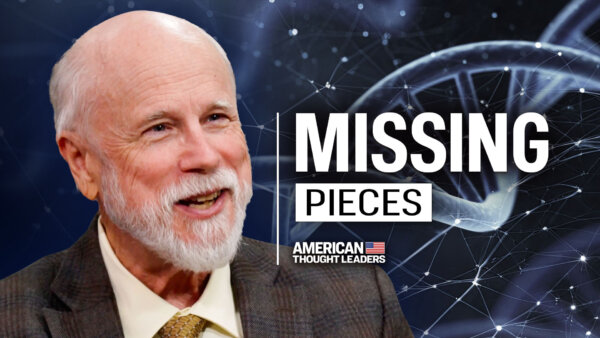
[RUSH TRANSCRIPT BELOW] Dr. Irwin Goldstein is one of America’s leading sexual health physicians, a pioneer in the field, and the director of San Diego Sexual Medicine.
In this episode, he breaks down his latest research into what’s known as post-SSRI sexual dysfunction (PSSD)—a condition that’s not uncommon but rarely discussed publicly.
He’s found that a class of antidepressants known as SSRIs can cause lasting physiological damage even after patients discontinue the medication—contrary to what many patients are told.
“When they stop the medicine, the usual teaching is that everyone returns to their pre-medication sexual function, and that’s not what we’re seeing in our sexual health clinic here,” Dr. Goldstein says.
His recent research showed that SSRIs can cause structural damage to genital tissue as well as many other physiological problems, like genital numbness, erectile dysfunction, and loss of libido. These problems persist long-term after discontinuing SSRI antidepressants.
“It’s kind of an awful thing, and it doesn’t go away,” Dr. Goldstein says. “These individuals in my clinic who have been given the medicines: Our youngest is age 11. They’ll never experience what one would otherwise consider a normal sexual life.”
Dr. Goldstein holds a degree in engineering from Brown University and a medical degree from McGill University in Montreal. He is credited with advancing the study and treatment of both male and female sexual dysfunctions and has authored more than 360 academic publications in the field.
Views expressed in this video are opinions of the host and the guest, and do not necessarily reflect the views of The Epoch Times.
RUSH TRANSCRIPT
Jan Jekielek:
Dr. Irwin Goldstein, it is such a pleasure to have you on American Thought Leaders.
Dr. Irwin Goldstein:
Thank you so much for having me. It’s a great honor.
Mr. Jekielek:
So you’ve just presented some incredibly important data at a conference. You have found that in post-SSRI sexual dysfunction [PSSD], there is actual physiological damage happening to people, including young people who are on these drugs.
Dr. Goldstein:
That is a true statement.
Mr. Jekielek:
So explain to me the whole picture here. What’s going on?
Dr. Goldstein:
SSRIs [selective serotonin reuptake inhibitors] are one of the most widely prescribed medications in the United States. They decrease the suicide rate of people with major depressive disorder and other mood issues and are found to be really life-changing by psychiatrists and individuals with mood disorders. The problem is they are recognized to raise serotonin, which is their mechanism, but serotonin is an inhibitor of sexual function. While using the medication, it’s widely appreciated that individuals will suffer sexual health concerns.
But what is not appreciated is that when they stop the medicine, the usual teaching is that everyone returns to their pre-medication sexual function. And that’s not what we’re seeing in our sexual health clinic here. So there’s an awful condition. It persists, causes frustration, embarrassment, humiliation, causes erectile dysfunction in young men, libido problems, genital sensation changes, and orgasmic dysfunction.
It’s kind of an awful thing, and it doesn’t go away. It is used in a lot of minors who aren’t part of the consent process since these medications, you know, there’s a recent study that looked at the date of the patients’ initial prescription of the SSRI medication. And three out of four patients are between the ages of 10 and 25 in this study. That’s kind of, it’s just, I don’t know, it’s amazing.
Mr. Jekielek:
Well, and of course, it’s incredibly important because even if some of these patients might actually even be pre-pubescent and so forth, this has huge ramifications.
Dr. Goldstein:
They have never experienced normal sexual function. These individuals in my clinic who have been given the medicines are as young as age 11. I mean, they’ll never experience what one would otherwise consider a normal sexual life, who are using the medication. I mean, it’s not like they’re taking poison. It’s medicine, FDA-approved.
Mr. Jekielek:
And so the other part that’s really important here is that many people who are prescribing these medications, you know, I said psychiatrists, but actually it’s general practitioners who are prescribing these medications as well, are simply not aware that this is a phenomenon that can happen.
Dr. Goldstein:
The teaching is that this is a sexual dysfunction that occurs only while on the medicine. There’s no real understanding of this PSSD phenomenon, but it is a very real issue, and it’s very sad.
Mr. Jekielek:
Well, and so why is it that doctors might be unaware, even though obviously this must exist in the scientific literature?
Dr. Goldstein:
There are a lot of reasons. We don’t like talking about sexual health problems, especially when given consent. I mean, can you imagine if it was standard of care to say, I’m going to give you medicine to treat your depression? But by the way, a percentage of people will never have a normal sexual life again.
And again, it’s a suicide issue. We don’t want people to commit suicide, and these medicines have been shown to reduce suicide rates. So how do you bring in this horrible side effect that’s permanent of this drug while trying to help people with mood issues that are kind of severe?
Mr. Jekielek:
Well, explain to me now what your study found, because it is actually, I think, incredibly important. It kind of, I guess, raises the level of the discussion substantively, at least in my mind.
Dr. Goldstein:
Okay, so let’s just start with the drug. There are SSRIs, and there’s a group called SNRIs [serotonin-norepinephrine reuptake inhibitors], and there’s another group of other modulators of serotonin, but primarily SSRIs. And the drugs raise serotonin. Basic science studies have shown that the use of these products actually changes the structure and function of neurons and their connections called synapses in the brain. They permanently change their structure and function. They permanently affect the neurotransmitters being released: serotonin, noradrenaline, oxytocin.
And these are not just, I’m raising serotonin while I’m on the drug. These are drugs that have the potential to literally change brain function permanently. Individually, we have identified that independent of the brain actions, the drugs have peripheral actions. And in the penis of animals, and now we’re finding In our study, we found that oxygen radical concentrations are increased in individuals who take these medicines.
Oxygen radicals are very potent oxygen molecules that attach to and kill smooth muscle cells in the penis, leading to increased scarring in the penis. That is not a reversible concept. We have identified scarring in the penises of 11, 12, and 15-year-old individuals, adversely affecting function because of the use of these medicines. That’s the sad part.
Mr. Jekielek:
I think you’ve described it as being that of a 70-year-old.
Dr. Goldstein:
We took the population of PSSD patients and identified two subgroups: similarly aged people who had erectile dysfunction and rectal dysfunction from trauma—motocross, horse riding, bicycle riding, that type of thing. We compared them to another subgroup of individuals over age 55 with the risk factors of hypertension, high cholesterol, and diabetes. The individuals who were in their 20s had ultrasound studies that paralleled and could not be distinguished from the older population and were way different from the similarly aged trauma group.
Mr. Jekielek:
I mean, it’s unbelievable when you think about it. Do you have some sense of what types of people are more predisposed to having this condition?
Dr. Goldstein:
So we don’t, but that would be very important to study. Why do these individuals have PSSD, while the majority of people who take SSRIs don’t have PSSD? I presume it’s some genetic issue that we don’t yet understand.
Mr. Jekielek:
You know, just on the topic, you mentioned that these drugs are often prescribed to reduce suicidality, and there’s evidence that they do that. But there’s also evidence that, in rare cases, they actually cause suicidality, which is something that, again, from what I understand, a lot of doctors don’t share. People don’t necessarily know they should be watching individuals when they get on these drugs in case they have these rare side effects.
Dr. Goldstein:
You are 100 percent correct. Suicidality is a complication of the acute use of the medicine. What I’m talking about, when we spoke, was individuals who are not really seeing psychiatrists. They may have stress or sadness after a romantic breakup, a divorce, or a death, where counseling could be performed for this situational sort of issue. Listen, you can go on the internet and get the medicine without really having seen or being evaluated by an in-office doctor’s appointment. You could do it on the internet.
I sit here and I see the sadness of these people. Our job was to put together a 15-year review of many, many patients, a highly select population of individuals who have sexual health issues, but can’t be explained by any other reason. None of these people had diabetes, hypertension, or high cholesterol. None of these people were in car accidents, were horse riders, or bicycle riders.
There was no other explanation, and everyone was sexually functional in a normal way prior to taking these medicines. So this is a really highly select population. I can speak to you about some of the other biologic pathologies beyond the vascular one.
Mr. Jekielek:
Yes, please do. Tell me more about this phenomenon, about what you’ve discovered.
Dr. Goldstein:
So beyond the scarring of the penis, these drugs affect nerves and synapses and neurotransmitter synthesis and release centrally. What is really the saddest part of the sexual dysfunction of PSSD is the anhedonia that individuals have, the lack of pleasure. They call it reduced genital sensation. It’s not like a sensation to touch; it’s a sensation that touching the penis used to be a special feeling that is different from touching your arm.
Right now, it’s the same as touching your arm. Seeing someone outside in provocative clothing would bring arousal to a usual individual, but seeing a provocative situation is like looking at a car now. This is particularly distressing to individuals with PSSD.
The other thing is we’ve noted that their hormones are kind of off. These are 20-year-old men who should have upper tertile values of testosterone, and the vast majority have lower tertile testosterone. Again, that’s all regulated through central processes, and they seem to be adversely impaired by these drugs. So there’s a lot going on here, and they require, you know, intensive evaluations.
A visit to our facility is a three-hour event. It’s not a 10-minute thing. We have to unravel and play detective and allow them to accept that their sexual health issues are not going away, but we can work with them and deal with them. It’s not always easy.
Mr. Jekielek:
The testosterone issue strikes me as quite significant because it obviously has a lot of second-order effects beyond just sexual dysfunction at an early age.
Dr. Goldstein:
Yes, muscle strength, vim and vigor, concentration, keto, are very much testosterone-related. It’s not that they have a testosterone value outside low; they don’t have the usual level of testosterone that someone that age would typically have.
Mr. Jekielek:
I mean, there’s even testosterone, which has massive impacts across, you know, a whole range, even, you know, I think well beyond what you described, such as muscle mass and so forth, right?
Dr. Goldstein:
Yes, bone health, ear health, and skin health. Sure, it goes on and on.
Mr. Jekielek:
Right. What does the literature actually tell us right now about how prevalent this PSSD is?
Dr. Goldstein:
In my opinion, it’s extremely prevalent, but I don’t have a number, and I don’t think there is a published number on the prevalence of this condition. So I think I’ll do an intense literature search as we complete this manuscript, but it’s not anywhere near like 90 or 50 percent. It’s going to be a small percentage, a single-digit percentage. But the reality is this is way more prevalent than just not existing. It’s not like the rarest thing on earth. It’s extremely common. We see so many people with this condition.
Mr. Jekielek:
Dr. Goldstein, why don’t you tell me a little bit about your background? Because this is an unusual field of medicine that you find yourself in. How did you end up where you are today?
Dr. Goldstein:
Great question. So I’m a hockey-playing Canadian who came to the United States to do electrical and biomedical engineering. Somewhere along the way, I fell in love with medicine, especially urology, and my chairman at the time I was training was very involved in the placement of sexual medicine penile prosthesis insertion, and essentially, I’ve never really done anything else in my entire career. I’ve never really done urology, so we take care of the sexual health concerns of men and women, and it’s a sexual medicine practice, and it’s fascinating, and I love it. I should have retired a long time ago, but I can’t stop doing it because I really enjoy it.
Mr. Jekielek:
Well, and what are the typical types of scenarios that you see? With PSSD, it seems like your clinic is something that focuses on that now because it’s something that isn’t so well understood. But what other types of scenarios do you see often?
Dr. Goldstein:
There are other medicines that cause permanent sexual health problems. Another very frustrating, sad patient is someone who takes hair loss medicine. The medicine is called finasteride, and that has a lot of sexual health problems. I think this is a very important interview we’re doing. I would love to get awareness out.
I want to leave the message that while my involvement with patients is extremely sad because we’re dealing with a patient population who didn’t expect this outcome from using this medicine, we really help these people. I can help their erection problems. I can help with their orgasm problems. I can help their libido problems. I can pretty much help everything they have.
But they have to have the expectation that it’s never going to be like it was, where it was a spontaneous sort of healthy sex life. They will have to do things. And what’s really scary is sometimes they have to take medicines. But they are very suspicious of taking medicines now. They don’t want to take medicine. They’d rather take herbs, spices, things like vitamins, and things like tree bark. I’m just saying that they are very suspicious individuals going forward.
Mr. Jekielek:
Well, I mean, and probably for good reason, right? These are FDA-approved products that should have this warning. People I’ve spoken with before about this issue tell me that this is actually something that’s very difficult to treat, but you’re saying you’re able to treat it. Can you tell me a little bit more about how that can play out?
Dr. Goldstein:
It’s very difficult to treat at multiple levels, I agree, but it’s not that we can’t help people. So I think there has to be some optimism provided. That’s what we hope to provide. The most difficult is anhedonia. We don’t have a lot of understanding of how you increase pleasure in people who don’t have current pleasure. But if their problem is more focused on libido or more focused on reduced sensation or their problem is more focused on erectile dysfunction. We’re very good at helping people with erectile dysfunction. I mean, at the end of the day, beyond medicines, we have penile prostheses that can be used.
Again, this is a young population, and just the concept of surgery to correct erectile dysfunction is a little aversive. But my whole point is, we’re not giving up on these people. We’re working with them, and I have a lot of patients who have done well. And maybe your podcast next is to actually speak to some of these people, show them their concerns, and show them where they are currently having had treatment.
Mr. Jekielek:
That sounds like an amazing idea. And I absolutely will. Again, there’s a whole bunch of scenarios that I’ve become aware of recently where there’s just kind of a lack of informed consent around certain medicines. But part of the problem is that the doctors themselves don’t have a full understanding of the medicines. And the combination of that is something I’m just trying to tackle here.
Dr. Goldstein:
As a sexual health provider, medicines as the cause of the sexual problem is not a rare phenomenon. We talked about finasteride; there are hypertensive drugs, there are diabetic drugs—many things cause sexual problems that are pharmaceutically based. In life, it’s about risk-benefit. If you’re going to die of hypertension or have heart attacks or strokes, then take the hypertensive medicine, and let’s deal with this sexual problem.
I’m just saying that people ought to be given awareness that this could happen to them. And people who have this support me in trying to explain to others that this could happen. Because they say, had they ever been told that this could happen, they would have thought twice about taking this medicine.
Again, suicidality is a big issue. You don’t want to not take this medicine for that. But situational things, stressful situations at high school and college—I don’t know. If you’re ready to take on permanent erectile dysfunction, anhedonia, orgasmic dysfunction, and low libido to help you with that stressful event.
Mr. Jekielek:
Have any risk factors been identified at this point that doctors should know about?
Dr. Goldstein:
Not that I’m aware of. I mean, we could do a deeper dive into the population, re-interview them with a better understanding of what to ask. But to the best of my knowledge, there’s no predictor of who gets the PSSD at this point.
Mr. Jekielek:
Oh, so there isn’t a sense of whether maybe it’s more prevalent among young people or more prevalent among older people. That also isn’t well characterized yet?
Dr. Goldstein:
It isn’t characterized. Like I’m saying, our publication will be one of the first on this topic. But the prevalence of the sexual problems makes it more logical to be in younger people because younger people have healthier sexual function. It’s only later on in life that sexual health problems typically occur.
Mr. Jekielek:
Dr. Goldstein, you’re doing some really important work here. A final thought as we finish?
Dr. Goldstein:
The true take-home message is that now that we have done work with it and understand, in the past people were saying this is all psychological; there’s nothing biological about this. There’s no way a drug could cause biologic issues. We now have evidence against that, and we’re understanding the biologic issues, and we’re developing strategies to address orgasmic dysfunction, libido dysfunction, and sensation issues, and we are working with these people and helping them.
Mr. Jekielek:
Dr. Irwin Goldstein, it’s such a pleasure to have you on the show.
Dr. Goldstein:
Thank you so much for this opportunity. I appreciate it.
This interview has been partially edited for clarity and brevity.