Just how reliable are polling numbers?
How important a role will the ”persuadable electorate,” or genuinely non-partisan voters, play in the 2020 elections?
And what do President Donald Trump’s current approval numbers mean for 2020?
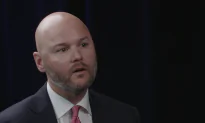
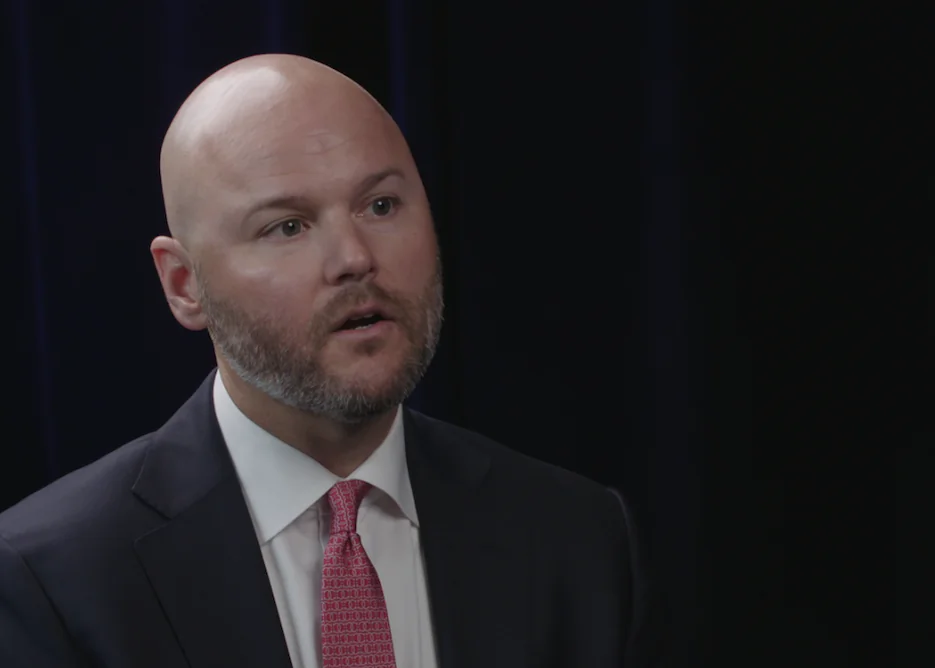
Jason Johnson, the chief political strategist for Senator Ted Cruz’s 2016 presidential campaign, sat down for an interview in New York City with Epoch Times senior editor Jan Jekielek. Johnson played an important role in Cruz’s election and re-election to the United States Senate. Today, he is the CEO and founder of J2 Strategies, a political consulting firm based in Austin, Texas.
They discuss the 2020 election, the Democratic field of candidates, the role of the media and polls, and the key issues that will decide the 2020 election.
Jan Jekielek: Jason Johnson, wonderful to have you on American Thought Leaders.
Jason Johnson: Great to be here.
Mr. Jekielek: So, Jason, you’re a veteran, Republican political strategist. You’ve run 60 to 70 campaigns. From the local up to the senatorial runs you were on Senator Cruz’s so-called impossible run that turned out not to be so impossible. I’d love to get your perspective on a lot of what’s going on today.
Mr. Johnson: You bet.
Mr. Jekielek: So you’re someone that’s really, really big on polls.
Mr. Johnson: Sure.
Mr. Jekielek: Right? And I know you’ve been following a number of polls carefully. There’s a recent, I believe it’s a Rasmussen Poll, putting the president at 48 percent approval, but something like 50 percent disapproval—if I recall the numbers. Tell me what you think.
Mr. Johnson: I think the fact that the president is recording 48 percent approval in this media environment, this persistent, sustained—since he came into office—media environment is remarkable, frankly. And on top of it, if you look historically at this point in a presidency, not very different from where Barack Obama was at this point in time going into his reelection. So while things can certainly be better, when you take 48 percent approval in the context of an economy that’s growing and record, low unemployment, I think it predicts pretty good things for the president going into 2020.
Mr. Jekielek: So tell me how much can we actually trust the polls though, because we know what happened in 2016.
Mr. Johnson: Sure.
Mr. Jekielek: I mean, it was impossible, right?
Mr. Johnson: Sure.
Mr. Jekielek: You know a bit about impossible. Can we trust the polls?
Mr. Johnson: Yes and no, right? Depends on the poll, depends on the sample, and depends on who’s delivering the top-line data of the poll, right? I mean, one of the things I think that people get in a way but don’t fully appreciate is how polls themselves are used to shape opinion, right?
That’s something that I think is just a reality. Back up in time, and go back to the last major immigration debate, for example, in 2013, or go back and look at the debate in 2013 in the U.S. Senate that Senator Cruz was very involved in with regard to Obamacare. I had the opportunity to see both public and inside polls all around those two issues and knew for a fact— particularly the private polls, right? No incentive whatsoever to lie to yourself. If you’re doing a poll, you really want to understand where the public is and being able to look at those private polls and the public polls, see where there’s similarities, see where there’s differences, and then look at how just pieces of those polls were reported, yes, in order to shape public opinion, right? The way the question’s asked, what the media decides to focus on. I think that’s a big piece of the overall puzzle, but, specifically, you talk about 2016. That’s been a huge debate ever since.
Can you trust them? In reality, the national polls in 2016 were within the margin of error. They were, right? There were some state-level polls that missed the mark. There’s no doubt about that, but they weren’t wildly different than they’ve been in the past. I would suggest that it really had a lot more to do with the media’s obsession with any time there was a negative poll for Donald Trump. And, again, trying to shape public opinion by focusing on a few polls that really put Hillary Clinton in a better light than she was in reality and more negative for Trump than he was in reality.
Mr. Jekielek: Fascinating. I want to get back to the media piece in a moment—that’s super interesting. There was recently a Gallup poll, I believe, that said that immigration is becoming the top issue for Americans now.
Mr. Johnson: Yup. A recent Gallup poll showed—so they often will ask an open-ended question, what’s the most important issue facing the country? And since they’ve tracked this issue, we now have within one percentage point the most Americans since they’ve recorded it ever saying that immigration is the most important issue facing the country, only trumped, if you will, by the federal government. And I think we know the two have a lot to do with one another.
Mr. Jekielek: Right. And speaking of the federal government—we’ll get back to [the] border as well—but speaking of the federal government, how is the federal government and Congress in particular perceived at this moment?
Mr. Johnson: Train wreck. They’ve never had higher unapproval or lower approval ratings. And as someone who’s been involved in electing a lot of these people and whose job it is to follow public opinion, I would say that the high unapproval is deserved. And I wish I could meet an American who actually approved of the job Congress is doing and could tell me rationally why they do, because they’re doing a terrible job. They really are. And I think that’s a part of what’s driving, ironically enough, this extreme partisan identity that we’re seeing amongst the public. I mean, we’ve never been more partisan, as defined by: I’m for a Republican, I’m a Republican, or I’m a Democrat, and I’m for Democrat, with no nuance on what’s really happening with regard to policy.
Mr. Jekielek: So this actually reminds me of another thing that I remember reading about you. You’ve talked about this idea of a persuadable electorate decreasing with time. I think the polarization speaks to that.
Mr. Johnson: Yes.
Mr. Jekielek: Is this a trend that you would say is continuing?
Mr. Johnson: It is.
Mr. Jekielek: And how is this going to actually factor into 2020 and onwards?
Mr. Johnson: Sure. So the myth of the persuadable electorate. Back when I was involved in and doing some research in the lead up to Ted Cruz announcing his run for the presidency—on a personal level, I wasn’t really crazy about stepping away from my family and working on a presidential campaign to tell you the truth. And just for my own selfish reasons, I had to know like, is it possible for this guy to win? Because if you back up in time, he was viewed as a lightning rod, right, in American politics, very partisan. And so I dug in and just started studying, trying to prove to myself: No way a Ted Cruz—who’s that conservative, who’s despised by Democrats that much, and at that point in time didn’t poll well with independents, persuadables—could win.
And to my surprise, I walked away here again, thinking about the role of the media, realizing that even as a political professional, I had fallen victim to this myth that these persuadable voters are the end all be all in presidential elections. When in reality, that is a universe that has been shrinking, and it continues to shrink because partisanship continues to grow, polarization continues to grow. So what it means effectively going into 2020, what it meant in 2016, frankly, what it meant in 2012—all about turnout, 100 percent about turnout.
That’s not to say that independents don’t exist because of course they do. But if you do your polling properly, when you ask a voter, a potential or a likely voter, are you an independent? Or you asked for their partisan identity, and they say, I’m not a Republican. Are you a Democrat? No, I’m an independent. Well, do you more closely identify with the Republican Party, or do you more closely identify with the Democrat Party? What you’ll find is the vast supermajority of Americans fall away. They may not be hyper-partisan, but they lean one way or another. And with the hypercharged rhetoric that we’re seeing from the two dozen Democratic candidates for president, you can see that. They’re not only behaving, if you will, and campaigning and marketing themselves that way to capture a base in order to win the Democratic primary. They’re trying to tap into energy and create energy to force more of those partisans to turn out in 2020 because they know that’s what they have to do to win. And Donald Trump knows that’s what he has to do to win.
Mr. Jekielek: How big is this persuadable group today?
Mr. Johnson: Less than 5 percent.
Mr. Jekielek: Less than 5 percent.
Mr. Johnson: Less than 5 percent. And this group, so off the top of my head, so I don’t want to give you incorrect numbers, but let’s say that a decade ago it was somewhere in the neighborhood of 12 percent, right? Order of magnitude, OK?
Mr. Jekielek: A big deal.
Mr. Johnson: Right. There’s always been a disproportionate focus by the media in campaigns on this very small slice of the electorate. And you could argue that that’s appropriate, right? These people who are true independents or, really, the better way to look at it in a campaign, are they actually undecided in their vote choice? And an individual in this environment where if you are at all interested in politics, right, it’s a buffet. You can get any amount that you want. It’s all you can eat. So if you’re going into the last month of a presidential election, and you’re truly undecided, you’re not just saying that. You’re truly undecided. Why? Well, the truth of the matter is you probably don’t have—and I don’t mean this in a derogatory way—but you probably don’t as an individual have a core, fundamental political ideology or an ideological mooring that drives you in your decision. So you’re waiting to the last minute, and what are you making your decision on? The truth of the matter is those people end up making their decision almost always number one on the economy, right? And then number two on, just how did they feel at that point in time?
But the great secret that people don’t talk about is the vast majority of those undecideds, right? At the end, they don’t actually show up and vote.
Mr. Jekielek: So what’s driving the polarization right now, in your view?
Mr. Johnson: In my view, set polls aside for a moment, if you think about the proper role of the federal government, which truly, from a constitutional perspective, is very limited, right?
Mr. Jekielek: Right.
Mr. Johnson: It’s very narrow. Our founders wrote it to be that way for very specific reasons given the history and where they came from. The federal government for so long has tried to do not only so much, but so much outside the bounds of what our founders designed our institutions to handle, that it’s almost predictable that they’re failing. And in this failure, there’s always the political incentive to lay blame, to blame the other party, to blame the other interest group, etc. And as the consequences of that failure of the federal government operating outside the bounds of what it’s designed to do have grown. Right? And now we come full circle where the federal government is not even doing its fundamental jobs like securing the border. Right? All our voting public is conditioned to do is to put it in a partisan box, right? I, as a Republican, I expect today if we talk about in the current context, the Democratic candidates for president to say exactly what they’re saying. Now, I personally think a lot of it’s ridiculous, and I think it would be detrimental for our country. But as a Republican, I’m more disappointed with Republicans, right?
Mr. Jekielek: How so?
Mr. Johnson: Well, step back to the last time Republicans had a majority in the United States House. What did they do? I mean, we talk about this issue of immigration and border security. They didn’t secure the border. They didn’t deal with the problem at all. And you say, why? Go back to the 2012 presidential election when Mitt Romney lost. The morning after the election, I was scheduled to appear on a panel at a Chamber of Commerce event down in Houston, Texas. Now, the panel began like at 7:00 A.M. Central Time.
I was seated next to a Democrat political operative and someone from the business community and someone was moderating it. And now it’s 7:00 A.M. Central Time the morning after the election. As I was sitting there talking about what had happened the night before—which was Barack Obama winning reelection, which was no surprise to me by the way—it was amazing that these folks on the panel were already reading from the same sheet of music. They already knew exactly why Mitt Romney had lost. And the reason that Romney had lost these people said, this amazing analysis in just a matter of hours, was that he was too harsh on the issue of illegal immigration. Now—
Mr. Jekielek: That’s fascinating.
Mr. Johnson: There was no data to support this. In fact, the only, if you look at presidential election models, it shouldn’t have been a surprise to anyone that Barack Obama won reelection. We almost always reelect incumbent presidents, right?
In fact, since World War II, it’s only been the case once that we have not reelected an incumbent. But there was an incentive from big business, right, and from inside the beltway, Washington, D.C., that going back to their failed attempt in 2006, I believe it was, when the Senate passed the comprehensive immigration reform to get this amnesty deal done. And over time it became just the party line, if you will, from Republican party insiders that any Republican who was against providing citizenship for individuals in the country illegally, any Republican that would take that position couldn’t possibly—to go back to the question you asked earlier—win those persuadable voters.
Mr. Jekielek: I see.
Mr. Johnson: The polling data’s never supported that. So it’s a policy agenda driven by special interest groups, which they have every right to do, right, of course.
Mr. Jekielek: Sure.
Mr. Johnson: But over time—and it really came to a head in 2012—it became almost party dogma, right, within the Republican Party that that’s a third rail. And so just leave it alone. Talk about border security, but don’t dare say that you believe in the rule of law and that if you entered this country illegally, that you should maybe not become a United States citizen.
Mr. Jekielek: So, I’ve seen different things in the polls regarding immigration. Now we’re seeing that it’s becoming the top issue.
Mr. Johnson: Right.
Mr. Jekielek: On the other hand, it seems to me like, at least the polls that I’ve seen, correct me if I’m wrong, that there’s a heck of a lot more people who believe that we need to have tighter control.
Mr. Johnson: Right. Absolutely.
Mr. Jekielek: And so you’re basically saying that special interests plus media maybe—and again, tell me what you think about that—are really standing juxtaposed to what a lot of the American public believes. Is that true?
Mr. Johnson: Absolutely, it’s true. You can look at polls just in the last six weeks, right? You had a Harvard poll, you had a Wall Street Journal, NBC poll. A lot of polls that have traditionally, let’s just say, cast the softer view of immigration and border security in a positive light that have shown now that a plurality of Americans say, we have a crisis at the border. We have a full-blown crisis. Yes, it’s a humanitarian crisis when you look specifically at the asylum seekers, etc. But we have a crisis. Congress is not dealing with it. We have a border security crisis. Congress is not dealing with it. And you have more and more Americans, a greater percentage than ever, that are actually saying we need to reduce levels of legal immigration. Now that’s a policy debate to be had. And frankly, one, I’m not an expert on actual legal immigration policy. But I think as a consequence of not doing the basic job of border security or announcing increasing numbers of Americans say, you know what? On top of that, getting rid of the illegal immigration, let’s reduce levels of legal immigration.
Mr. Jekielek: So let’s go into the media piece right now because you mentioned that the media had been shaping by cherry-picking polls and this sort of thing. How exactly are the media shaping the public opinion?
Mr. Johnson: Sure. And so here we sit at the ground zero for the headquarters of media in America. First of all, set aside just any specific poll and go back to presidential elections.
Mr. Jekielek: OK.
Mr. Johnson: There’s academic study after academic study that proves that the most influential, the most influential factor in a primary voter’s selection of a candidate in presidential elections—it’s not polls, it’s not money, it’s coverage in the media.
Mr. Jekielek: Fascinating.
Mr. Johnson: When producers make a decision for whatever reason, right, I mean, to be fair, we can’t get in their heads, but there’s been enough reporting to understand that by and large, those who produce shows that are watched by the public without question have a liberal bias in their personal lives, right? When they make a decision to cover candidate A and not cover candidate B, that’s everything, right? There are multiple candidates in this democratic field that upwards of 30 to 50 percent of democratic voters still haven’t heard of, right? Who’s leading? Well, the leader right now also is getting the most coverage. So it—
Mr. Jekielek: Leader by a giant margin.
Mr. Johnson: By a giant margin. And you look at, if you track number of mentions in the media to poll position, you’ll see that the correlation is remarkable. So it almost feeds itself, right? I mean it’s hard to, it’s hard to argue that the leaders shouldn’t also get a lot of coverage. But at what point are the folks covering the events actually changing events by making decisions about who they pay attention to? And the same is true with regard to issues like immigration, right? I would be willing to bet that that Gallup poll that we just discussed a moment ago doesn’t get just a whole lot of mention in the main media sources go forward.
Mr. Johnson: And why? I can’t say, right? And I can’t say, but the reality is for some time there’s been an appetite by those who make decisions about what to cover, to cover anything that would suggest that Americans really don’t care about the rule of law. Americans don’t have a common sense, in my opinion, perspective on immigration policy. But in fact, they are radical and don’t care much about border security.
Mr. Jekielek: Fascinating. You just made me think of this. I saw some, basically some reports about Andrew Yang, one of the Democratic—
Mr. Johnson: He actually got beat up a little on Twitter recently over [inaudible].
Mr. Jekielek: Well, no, he did. But he also, he’s actually polling better than a number of candidates who are commonly included and representations of all the folks running, and he’s more commonly excluded for some reason. Yeah. I don’t know how much you know about it, but any thoughts about why?
Mr. Johnson: So he clearly, I mean, this goes back to media, right? What I stated a moment ago, even in today’s environment where there are so many channels, so many sources for individuals to get information, it still remains true that cable news and broadcast news are the most influential. But Yang is a great example of someone…reminds me a little bit though, it’s not as broad, but if you think back in time, even before social media really had taken off, Ron Paul, right? He had this intense following from a loyal base of young voters, and Yang has the exact same thing, and he’s very astutely tapped in to social media channels to amplify his voice. And I mentioned I got beat up a little on Twitter jokingly, there was some story that didn’t mention him, and I tweeted something about it, and somebody–
Mr. Jekielek: So you were part of this group that I was talking about. Interesting.
Mr. Johnson: I said something, and they responded, what about Yang? And I responded, who? I mean just bombarded. And it was funny. They were actually very lighthearted about it, and I watched it unfold. And I was like, this guy has a real following. And he’s showing what you can do with social media when the mainstream media kind of shut you out of the equation.
Mr. Jekielek: So let’s talk a little bit about the leading Democratic candidate Joe Biden, as I mentioned, leading by a very, very large margin at this point. You’re arguing partially because he’s constantly in the media there’s this correlation. But what strikes me about him is that he seems to be increasingly campaigning on issues that strike me as not helping him win the actual election, if he is the nominee in the end.
Mr. Johnson: Right. Let me say, couldn’t agree more. It’s fascinating. Joe Biden’s whole platform, his whole selling point is old lunchbox Joe, blue-collar Joe, the idea from the Democratic perspective was he would be the best to beat Donald Trump because he can actually go out and talk to blue-collar workers, right? He can be a quote unquote moderate. Let’s set aside whether his actual record is moderate for a moment. I would agree from just a stylistic perspective, historically, that’s been Joe Biden, right? Kind of a likable guy, yeah makes some slips of the tongue from time to time. But he has taken every left-hand turn you can possibly imagine, and we haven’t even had the first debate. And what I think that we’re seeing here is he may end up being the first high-profile victim, if you will, in this civil war being waged by the radical left within the Democratic Party.
I mean, it’s so extreme, right? And the incentives for a candidate like Biden are so powerful. Even when he said something along the lines of: Sure, Vice President Mike Pence is a nice guy. He was immediately attacked for saying that, and he came out and apologized for saying that Mike Pence is a nice guy. Right? So there’s a nonissue specific situation.
Mr. Jekielek: Right.
Mr. Johnson: Then move to the Hyde amendment.
Mr. Jekielek: Right.
Mr. Johnson: Obviously, abortion is a very controversial subject and appropriately so, and it’s always been very divisive politically. But by and large, it’s always been the case, and it certainly was the case with then Senator Biden’s voting record, that even with individual politicians who believe in abortion, they would say, you know what, I understand that I probably shouldn’t force tax payers to pay for abortion, particularly those who don’t believe in abortion. And hence the Hyde amendment.
Well, Biden as recently as 2012, I watched an interview where he said, look I’m Catholic, I believe certain things but also respect other views, but we shouldn’t force the American taxpayer to fund abortions. Pressured by the left, flipped. The Green New Deal, pressured by the left, flipped. By the end of this process, Joe Biden will have disposed of, will have lost, will have frankly stolen from him his main point about why he is the best candidate to beat Donald Trump. And that’s essentially that he’s not a crazy radical leftist, and he is on a quick train to that at this point in time.
Mr. Jekielek: It’s fascinating. And I have to confess, I was actually incredibly disappointed. This was my feeling, not that I’m necessarily for any particular candidate, but I saw that he led his ad campaign—the first election ad was centered around this kind of pernicious lie that the president talked about both sides at Charlottesville, and that one side he was talking about was these white supremacists, which has been debunked multiple times by mainstream media even and so forth. And I felt like at that moment, like we’ve kind of gotten to a new low in politics or something like that.
Mr. Johnson: New low, yes. But here’s, in my perspective as a political strategist, exactly what was going on there. When you go back to 2012—go back to 2008 we were talking earlier about turnout, base turnout. Set base turnout aside for a moment, and just look at actual participation in presidential elections. Barack Obama, when he first ran in 2008, and understandably so, was able to create something that no other candidate to this point in history created, and that was African American turnout among the electorate at a national level. If you look at what percentage of what we refer to of the voting age population, the African American community makeup, it’s roughly 12 to 12.5 percent. In 2008 for the first time in history, on election day, African Americans represented a larger share, right, of who turned out than their respective share of the voting age population.
Mr. Johnson: Right. That was huge.
Mr. Jekielek: But expected.
Mr. Johnson: Expected, right? The big question going into 2012, setting aside the fact that Obama should have won, because of the economy, because of Obamacare, right, there was an expectation that he might lose. Again, his reelection hinged on incredible turnout among the African American community. This is a lesson that Joe Biden learned as his vice president and I think from day one the Biden campaign made a decision to—in the opposite of what Michelle Obama said—go low in order to stoke division, in order to paint this picture of a bigot or a racist and president with the goal of hypercharging, right, turnout among one particular slice of the electorate. I, too, was disappointed in it, and it’s going to come back to bite him. I guarantee you. He’s had some controversies in the last week, Biden has Cory Booker calling on him to apologize. You ain’t seen nothing yet. I’ve done a lot of research on Biden and his record. He has a lot of frankly shocking and inflammatory rhetoric coming right from his mouth in the past. I mean the guy’s been around a long time. He’s taken positions that I think he’s going to have a very difficult time defending in these debates. And, frankly, they likely realized that in the beginning and yet was another reason they chose to go that way because in order to win the nomination, he has to win a majority of the Democratic African American vote. And given his record and given some of the things he said in the past, it’s going to be a challenge for him.
Mr. Jekielek: So speaking of the Black American vote what do you make of Kanye West, Candace Owens. Actually we have a interview with her coming soon. We have another one with Isaiah Washington coming soon. Folks that are maybe breaking with the common voting pattern.
Mr. Johnson: It’s wonderful.
Mr. Jekielek: Is it going to have an impact? I guess that’s my question.
Mr. Johnson: Yes, yes. And let me explain. Go back to 2016 and I mentioned that I did a tremendous amount of research on whether one particular candidate that I was working for could win. And it became clear immediately this issue of, I mean, I hate talking about it this way because it can be taken out of context, but from a political science perspective, from a political operatives perspective, you absolutely look at demographic voting patterns, right? And the reality is for a long time in presidential elections, if you look at the African American black community and their vote choice, they have voted 95 percent-plus for the Democratic candidate. Now, think about that. Ninety-five percent of any particular group always making the same vote choice has a lot of impact, right?
As we were looking at the math, if that can be changed by 5 percent, frankly, if it can be changed by 2 percent, again, depending upon turnout, the impact on national elections, the impact at the state level is very consequential. So just in terms of impact on elections, but for me, it’s so much more important than that. I look at what the individuals that you mentioned are doing, and it’s just, it’s great. I mean, we should have open debate right? We should be able to have civil disagreement. We should intellectually challenge one another. Right?
And I mean, I’m a conservative, I’m a constitutional conservative, and I usually vote Republican because they sometimes do a good job of getting close to it. But if anyone ever told me that, because I’m a conservative, right, or frankly because of the color of my skin, I really only have one choice, just, I don’t understand that. And so good for the individuals who are out there challenging the status quo, talking about the real history of the two political parties, particularly our recent history. And I think it’s positive, and it definitely can have a huge impact on elections go forward.
Mr. Jekielek: So you talked a little earlier about your disappointment with Congress.
Mr. Johnson: Sure. I’m not in the minority there.
Mr. Jekielek: Right. Well, so it seems like even a little bit of good news from Congress would probably go a long way to foster some goodwill. What do you think about that statement I just made? What would you recommend?
Mr. Johnson: Well, I would agree a little bit of goodwill because the bar unfortunately has been lowered. I think, go back and look at the election of President Trump, and for those who continue to this day to get very upset with his rhetoric, his style, his approach, I think a lot of people understand that the reason that an individual as unorthodox, if you will, in the political arena as Donald Trump was able to win the presidency has as much to do with Congress and the status quo as anything, right? And yet that same group just continues to attack him and talk about how bad he is for the country. Meanwhile, I think the person sitting out there that, let’s take that small group again, that may not be partisan, just looks and say, OK, maybe I don’t like what he’s doing on x, y, or z either, but you guys have controlled the system for the last 30 years, and you’re not getting it right. So the good news for Congress, right, the bar is very low.
What I don’t understand about this particular Congress, particularly the House that’s controlled by the Democrats, everyone understands that the Democratic Party supports amnesty for those in the country illegally, everybody gets that, right? And if you’re a Democrat you support that. Some Republicans support that.
But the question for 2020 is will the president and his allies be able to, in my opinion, accurately label the Democrat nominee as radically out of touch with this country. If he’s able to do that, then he definitely wins reelection. They have an opportunity on the table right now as we are sitting here and talking, and that is to actually address our broken asylum laws, right? Yes, deal with the humanitarian crisis at the border, make sure that we’re providing food and medicine and beds and all the rest, but actually fix the perverse incentives that are causing this mass flood at the border, and they refuse to do it. As recently as this morning, even after the president announced, we’re going to hold off on ICE enforcement of those who already have a million, by the way, a million active deportation orders in this country right now.
Mr. Johnson: I’m going to hold off for two weeks so Congress can please come to the table and address it, and Nancy Pelosi said, no, we need to do quote unquote comprehensive immigration reform. That’s a joke. She’s not serious about governing at all. And I don’t think there’s any expectation among the Democratic Party base that they deliver comprehensive immigration reform today because they’re smart enough to know that it’s not going to make it through the Senate, right? So, instead of actually doing the things that there’s agreement on, she just uses this political football and punts again. So my advice would be, I mean, it’s such common sense. Just pick those few issues on border security and immigration where there’s agreement. No, it’s not going to give you this great political win of amnesty, but you have an opportunity to present yourself as somewhat reasonable, and they’re just refusing to do it.
Mr. Jekielek: So let me get this straight. Your advice to the Democratic side of Congress right now to help the Democratic side would be—
Mr. Johnson: Which I get if I were a Democrat listening to this.
Mr. Jekielek: It’s basically to follow what the American public wants on immigration, and that would give them a much bigger chance for 2020.
Mr. Johnson: It’s not rocket science, but particularly in a presidential year—and this is true for both parties—but the Democrats are in a presidential year and they are allowing themselves to be held captive by truly the extreme left even more than usual. And I think it’s their greatest risk, again, go forward is they are not in line. Again, sit the comprehensive immigration debate aside for a moment, right? Because we really are beyond that now.
I think most Democrats have even moved beyond the rhetoric of a quote unquote manufactured crisis. No reasonable person, no reasonable person can disagree with the fact that there’s a crisis at the border. And yet the Democrat-controlled House refuses to address that crisis in a vacuum without dragging in these other decades-long political arguments, and they’re gonna pay for it politically. I do believe that.
Mr. Jekielek: We’re going to wrap up in a moment. But I’ve been thinking about this, your advice for 2020, you gave a powerful piece of advice seems like both to the Republican side, to the president to stay clear on these border issues and consequential. You even offered some advice to the Democratic side on how you believe they could be stronger. What do you see as the key issues that will drive the 2020 presidential election of Trump?
Mr. Johnson: Number one, the economy, right? And we don’t know what that’ll look like come next year. But, historically, the economic conditions, even in the year leading into a presidential election have a very powerful impact on setting the conditions right for the election. And so there’s no question, the economy, employment, unemployment, increase in wages that will continue to drive the debate, and, without question, the president is wise to continue focusing on that.
But border security and immigration, both because it, yes, it animates the respect of the basis of each political party, but also because we’ve moved into a whole new realm where we have a legitimate crisis emergency on the border. And so there’s zero chance that that doesn’t continue to be one of the top two issues. And I think the third that you will see from both sides, and you already see it creeping up in the Democratic presidential candidate debate or conversation soon-to-be debates, and the president mentioned this in his announcement speech, the judiciary, right? The idea of, I mean, unfortunately the judiciary place far too active a role in our body politic and my opinions outside their lane of where the founders wanted them to be. But you have multiple Democratic candidates who are saying we need to quote unquote reform the Supreme Court, ideas about putting more members on, term limits, et cetera. And you have the president already stressing the success he’s had and putting constitutional conservatives on the bench. So I think going forward economy, border security, immigration, and judges will be three of the key issues as we go into 2020.
Mr. Jekielek: And finally let’s jump back to what we started with, this 48 percent approval rating for the President in the rccent poll. What does that translate to, do you think, in the actual electoral results? Let’s say there was an election today. What do those numbers actually mean?
Mr. Johnson: Sure, we have to project it forward, right? And so I think the best comparison is to look at Barack Obama’s reelection. The President’s at about the same spot. He needs to get his approval up a little bit, but 48 percent in this hyperpartisan environment with the benefit of a good economy—reelection.
Mr. Jekielek: OK. Well, let’s end there then. Wonderful to have you on American Thought Leaders.
Mr. Johnson: Thank you very much. Enjoyed it.
This interview has been edited for clarity and brevity.
American Thought Leaders is a new Epoch Times show available on Facebook and YouTube.
 Friends Read Free
Copy
Facebook
Tweet
Friends Read Free
Copy
Facebook
Tweet