Live chat
June 10, 2025
American Thought Leaders
Live chat
 Expand
Expand
 Expand
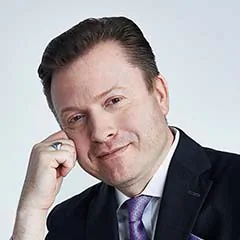
[RUSH TRANSCRIPT BELOW] Dr. Kirk Milhoan is a pediatric cardiologist and senior fellow at the Independent Medical Alliance. He has been treating children with myocarditis and other cardiovascular issues associated with COVID-19 and the COVID-19 vaccines.
“Four years later, five years later, I’m seeing this constant and dramatic change in who I’m seeing coming to see me. They’re complaining their heart doesn’t beat normally. And it beats fast for no reason at all,” says Dr. Milhoan. “Specifically after the second dose of the new platform for the COVID vaccine, we were seeing an increase in myocarditis in children that we’ve never seen before with any vaccine product in children.”
In this episode, we dive into the apparent rise of cardiovascular conditions in children and how to better address and understand them.
“We need to return the idea of a patient-doctor relationship,” says Dr. Milhoan. “You’re not a consumer. We’ve made this too marketing-oriented. We need to go back to: ‘I’m a physician who cares for you because I have compassion for you. And because of my compassion, I want you to do well, and I want you to be healthy.’”
Views expressed in this video are opinions of the host and the guest and do not necessarily reflect the views of The Epoch Times.
RUSH TRANSCRIPT
Jan Jekielek:
Dr. Kirk Milhoan, such a pleasure to have you on American Thought Leaders.
Dr. Kirk Milhoan:
Thanks for having me. I really appreciate it.
Mr. Jekielek:
There’s been a marked rise in cardiac problems in children over the last several years. A lot of different information out there about that, all the way from this isn’t happening to it being a massive problem. What’s the reality?
Dr. Milhoan:
The reality is something really happened. What people are sensing has happened, has happened. And we have seen a change in myocarditis in children, especially in boys, that is temporally related to the introduction of the COVID vaccine. We had seen a little bit of inflammation of the heart in something that’s called multisystem inflammatory syndrome in children that caused almost the whole body to become inflamed. But specifically after the second dose of the new platform for the COVID vaccine, we were seeing an increase in myocarditis in children that we’ve never seen before with any vaccine product in children.
Mr. Jekielek:
Well, and this is something that was talked about actually pretty early in the deployment, that there was this issue with myocarditis.
Dr. Milhoan:
Yes, with more of the FOIA [Freedom of Information Act] requests, and understanding what was going on beforehand, even in their phase two and phase three trials, this was a concern. They had put that in as a concern. It would be something, it would be one of the ones they were watching for as a signal.
Mr. Jekielek:
Can you quantify for me where we stand today? I mean, you yourself are a cardiologist, for a pediatrician, what are you seeing?
Dr. Milhoan:
So I think we have seen the peak of the myocarditis in terms of the acute myocarditis because hardly any children are getting any more of the vaccine or boosters. It’s still happening, but very little uptake, especially because the parents just don’t want it anymore. COVID has largely gone away; it has become much more just like a respiratory illness, and so the fear of their children dying or causing someone else to die, that’s gone away. So the myocarditis has decreased.
I’m seeing something else that is completely different that is taking up an enormous amount of my time. And this is inappropriate tachycardia or a fast heart rate where they’ll be sitting on a couch and all of a sudden a kid complains, “Mom, my heart’s racing.” So that’s what I’m seeing more of. The problem with the myocarditis that we saw, especially in 2021 and 2022, is that it could be a silent killer. And that is, the scar can be there, and a scar forms after myocarditis, which is inflammation of the heart.
So you can imagine it’s sort of like a charley horse. If your muscle gets bruised, if you get a charley horse, what do you want to do? You want to rest that muscle. If you go on a long run and your legs are sore the next day, you’re like, “Oh my gosh, my legs, I just want to rest. I don’t want to do anything.” That is what myocarditis is like; it’s inflammation of the heart.
The problem is we never allow our heart to rest. So we are expecting that heart to beat almost every second, every minute, every hour, every day. It’s a heart that needs time to repair. And the way the heart repairs is a lot of times what it does is it sends in all these agents that sort of cry foul and say something’s wrong. And so the body says, “Okay, what must we do? We’ve got to come in here. Something’s injured us.”
And so what they’ll do is sort of make little dams with fiber, which causes these little fibrous scars. If there’s a lot of damage, you’ll have big scars, and if there’s little damage, you’ll have little scars. It’s really hard for us, in our basic evaluation of children, to know if they have silent big scars or silent small scars. We can usually help them identify if they have low risk for a heart event.
But this is the big concern; what people have been seeing is it seems like a lot more athletes, just from what is concerned, a lot more elite athletes have died following the vaccine. And that is where I hear concern, not only from doctors asking, “Can I approve this child to do sports?” but also from athletes asking, “Can I push myself? Am I safe to push myself?”
Mr. Jekielek:
Well, and so how common is this exactly? That’s the other question. This certainly isn’t everybody by any means.
Dr. Milhoan:
No, not at all.
Mr. Jekielek:
That’s one piece. The second piece is people recover from this.
Dr. Milhoan:
We’re still trying to figure this out because we don’t necessarily know how many people might have it silently, so the absolute numbers are questionable. I think if you were to look at some cardiac effects that people are still having, we’re probably looking at maybe 4% of the population, so 96% are maybe having no cardiac effects at all from this. But this is very specific to the age and sex of the person. So teenage boys and young adult males were the most likely population to have myocarditis and cardiac issues.
Mr. Jekielek:
This is exactly what I was going to ask. So it’s four, I mean, four out of 100 is not a small number, but is that of all people or people who have had a particular type of COVID product?
Dr. Milhoan:
No. So when we look at it, it looks like it starts right around puberty. So as males come into puberty, they have an increase in testosterone. Testosterone is a pro-inflammatory hormone. It happened typically in this young adolescence to young adulthood is where we saw the most. We saw it in women; we saw it in older people. But that’s where the real spike came.
Mr. Jekielek:
Tied with a testosterone increase, basically.
Dr. Milhoan:
Yes, that’s what it seems like. I also, when I treated patients with COVID, some of the ones that were the hardest to treat that seemed to be really affected significantly by COVID itself were the bodybuilders. And maybe they were taking some other substances to help their bodies get big. But I think probably that maybe increased testosterone, also that pro-inflammatory hormone, was adding to the inflammation that the virus caused because of the spike protein, or the vaccine caused because it asked our body to make spike protein, which is an incredibly pro-inflammatory agent to your body.
Mr. Jekielek:
You could be getting myocarditis just from COVID. Are you suggesting it’s dose-dependent? Like how much spike is how?
Dr. Milhoan:
So there was a beautiful study done by the Nordic countries. They probably have the best capture of medical data from how they run their health care systems, their electronic medical records. And so they published this in JAMA Cardiology, and it was 23 million people. They looked at their vaccination status by age, sex, which vaccine they got, how many did they get, did they get one of one and one of the other.
So they looked at all these things, and what they found was that the unvaccinated had the lowest amount of myocarditis. If you had one Pfizer, you had more than if you were unvaccinated. If you had two Pfizer, you had even more. If you had one Moderna, it was more. If you had two Moderna, it was even more. And if you mixed them, it seemed even higher. All of these were above what we saw with the unvaccinated.
So that sort of answers the question: which is worse, to be unvaccinated or vaccinated for myocarditis? It was worse to be vaccinated, and the Moderna, which seemed worse, is supposed to have three times as much genetic material in it than Pfizer did, so we have a dose response that sort of helps us with establishing causality.
Mr. Jekielek:
And does that increase in genetic material translate into an increase in spike?
Dr. Milhoan:
We believe so. Unfortunately, those studies were never done to see actually how much spike was being produced and sampling that, and so we’re starting to see it in retrospect as we look back at the different studies. When we look at all these things, then we go, “Okay, now this has myocarditis.” I mean, it’s a very scary word if you just say myocarditis in children. If we were to look at all of our comers, most of the time what we see is caused by a virus. There are certain numbers of viruses that give these kids; some are born with myocarditis, their heart dilates because it’s weak. But it’s a very scary word.
And so in the Lancet study, they started looking at how many kids had myocarditis from the vaccine, so it was temporally related to the vaccine. They said, “Okay, at 90 days, let’s study them and look at everything and see how it looks.” And so they studied everything. They looked at all the different ways that we make ourselves feel better about clearing a child to do athletics. So that’s often what a pediatrician does: Is it okay for this child to play sports?
Mr. Jekielek:
I’m sure you get a lot of people asking you that exact question.
Dr. Milhoan:
How can I be sure it’s safe for my child to play sports? They got two vaccines. So what we typically do is have a physical exam. Most of the kids, it’s normal. Ninety days after they had myocarditis, their physical exam was normal. We do an EKG; the EKG is normal. We do a stress test where we put them on a treadmill. We look at the EKG; it’s normal. We do an echocardiogram; it’s normal.
But in 50% of the cases, if we looked at the cardiac MRI and looked for scar, there were still 50% that had scar in their heart. So it’s a very complex test where we inject a heavy metal called gadolinium, and it goes and gets stuck where there’s swelling or where there’s an actual fibrous scar. And we saw it at three months; there was still scar there. So it probably means that that is past swelling and that a scar has actually formed.
The problem with scars in the heart is that the heart has a whole electrical system that allows the beat. It initiates a beat, and then it spreads throughout the whole heart through an electrical system. Those scars act as short circuits, and they can potentially cause problematic or even fatal rhythms where the heart stops beating, and people can die from it. So depending on how much scar you have, it can dictate what your risk is. If you have enough of this scar, you even have an indication to put in an implantable defibrillator to shock your heart if it goes into a bad rhythm.
So what’s concerning for me as a cardiologist is all the things I normally would do for a child to determine if they are safe to exercise. Usually, I would do an exam and put them through a few tests, and I would say, “Oh, normal.” If I were really concerned, I’d put them on a treadmill. The problem is that in 90 days, those kids were all normal. Then the discussion is, “Okay, which kid would I give a cardiac MRI for?” which a lot of insurance companies didn’t want to cover.
Mr. Jekielek:
Yes, it’s a non-trivial thing.
Dr. Milhoan:
It’s a non-trivial thing and there’s always a risk. Anything we do has a risk. If you inject a dye for a radiologic procedure, it has risks. Some people have a real allergic reaction to it. So we’re trying to evaluate these kids, which, in my opinion as a pediatric cardiologist and with over 20 years of experience with pediatric vaccines, we usually have a lot of time to test them before we try these things out on kids. Unfortunately, this has come out very quickly. It was a whole new platform. Now we’re seeing problems that are even in excess of what we considered might be a problem at the beginning.
Mr. Jekielek:
And now you’re talking in terms of heart problems.
Dr. Milhoan:
Yes.
Mr. Jekielek:
So just like the overall incidence of heart problems, this is taking us back to the beginning. You said that the phenomenon is real.
Dr. Milhoan:
Yes.
Mr. Jekielek:
Any estimates on how real?
Dr. Milhoan:
I think those are the hard numbers. I can tell you that as we look at vaccines causing injury, we have looked for the last 30 years, and we have the same amount of vaccine injury sort of sitting as a baseline. We’re looking at 280 to 290 million vaccines a year, and we have this baseline. Then all of a sudden, in 2021, this huge spike comes up, and the spike for myocarditis is something we’ve really never seen before. So what does it mean?
Mr. Jekielek:
You’re saying it has persisted at some level, even though it’s not really something that’s being given anymore.
Dr. Milhoan:
Like I said, at 90 days, 50% were still shown to have some scar. As you start to get tissue and people die, and we do studies, there was a recent study that showed that not only big scars, but there are micro scars of people who died after maybe having not only the two series but multiple boosters after that. So this is the idea that this inflammation is now forming scars.
But these micro scars are something that I wouldn’t be able to see on a cardiac MRI; you would have to have a piece of tissue to actually look at underneath a microscope. And we don’t like to go into the heart and take a bite of muscle from the heart. Nobody likes that; we sometimes do it, but we really don’t want to. So if there’s any way we can do it without going into the heart and pulling out a little chunk of heart, we’d like to do that.
Mr. Jekielek:
You mentioned these elite athletes. There are all these memes and so forth about this happening. Is that a real phenomenon?
Dr. Milhoan:
This is where it depends on whose paper you want to listen to. A recent paper came out and said there is no increase. They looked at this. I think that we’re really concerned as we look at these studies: do we really have all the information? Doctors have a sense, and I think a lot of people watching TV have a sense that, wow, usually we would see maybe one elite athlete die a year. It would be big news, a very prominent elite athlete.
But it seemed shortly after the COVID vaccine came out, I think everyone had a sense. And I think that that’s how a lot of science starts, especially in medicine. We see something that gives us a hunch, and then we ask if we have a reason to be concerned that that hunch might be in response to something we did as doctors. And boy, as a physician, I hate to think that I’ve caused harm. Oh, I would rather not do medicine than cause harm. I didn’t go into medicine to cause harm, especially for this great, vibrant athlete.
I mean, I saw this one kid. I got called down to the ER to see him. They said, “Yeah, he has a low heart rate,” and he was two weeks out after his second injection. He was the star running back. I mean, this kid was just, I mean, just pure muscle and great. I walk in the room, and his heart rate is at 20, right? And I said, “Don’t you guys think somebody should be in this room with him if his heart rate is 20?”
Mr. Jekielek:
That’s very low. What would be a normal rate for someone?
Dr. Milhoan:
An athlete might need to get down to 40. I feel okay if an athlete is at 40 when he’s lying in bed. But 20 is something that concerns us. So I think the fact that we do have a model. We’ve had, when the Koreans did autopsy studies, and we see this in sudden cardiac death; there was inflammation in the heart. There was scarring in the heart. As we get more and more data out, we’re starting to look at these things. For some people, the spike protein, which is really one of the main causative agents, is inflammatory. That means it causes the body to respond as if it’s being attacked. And also, it’s cardiotoxic.
So these are things that we have a lot of reasons to be very concerned about. If there is, we have this hunch of an uptick in people dying suddenly during exercise, which puts a lot of stress on your heart. A lot of these kids we don’t find because what happens to a teenage male when you ask them, “Why don’t you get up?” They say, “I’m tired. I don’t want to get up.” That might be the same symptomatology if they have myocarditis.
But if all they do is sit around, maybe that’s the kid who likes to play games all day, and he’s a gamer, and he wants to be a professional gamer. So he’s sitting in a chair all day. We may never see an episode in him because he’s never stressed his heart. But if you take an elite athlete, once they get into puberty, once they get testosterone, children before puberty act differently in sports than when they’re after puberty. After puberty, they’ll push themselves well beyond pain. Before that, they just quit. They’ll just say, “I’m done.”
So when we have these elite high school athletes, they know when something’s wrong, and they’re coming in and telling us, “I just don’t feel right.” Now what I’m seeing now, four years later, five years later, is this constant and dramatic change in who I’m seeing come to see me. They’re complaining their heart doesn’t beat normally, and it beats fast for no reason at all. So that’s what I’m seeing more now.
Mr. Jekielek:
And you think that with a bit of work, you might see that it’s due to this scarring.
Dr. Milhoan:
Due to the scarring, or there was a new study that came out. It’s a preprint study out of Yale that was talking about how they’re looking at this spike protein that was supposed to be generated for a short period in time, just in your arm where you’re injected, now has gone throughout the body. In some people, as long as they looked, they were still producing more spike protein.
So this shot that was supposed to come in, give us a short little thing of a protein, ask your body to make this protein, then your body makes an antibody response, and then it sort of stops. For a lot of people, it’s not stopping. It’s almost like being in a chronic vaccinated state, as opposed to allowing the body to make an immune response and then settle back down.
Mr. Jekielek:
And again, so I mean, this highlights the fact that just all of us are different, right? All of us have just different physiologies, different peculiarities, different genetics, you know, resulting in those different environmental factors that have influenced us. And so something that might be, you know, just a huge problem for one person could be not at all for another. It’s not a one-size-fits-all.
Dr. Milhoan:
Not at all. And I’m not trying to scare people. I don’t want to scare people. We have enough anxiety in this world. I don’t want to add to that. But kids had a very low risk for COVID. As a pediatrician, I was thrilled because a lot of respiratory illnesses are very hard on kids. We just had a lot of flu A come in this year, and it was really hard on kids. If we have kids who have a bad RSV [Respiratory Syncytial Virus] season, it’s really hard on kids.
When I first started seeing COVID coming through, kids had no problem with it. Part of it is that their receptors are different at that age, as young children. So when we went down this road of now children were going to be vaccinated, many children had to be vaccinated to attend school, and many children had to be vaccinated to be able to play in sports. But they really had a low risk from the disease. And so now we have this product.
For me, as a pediatrician and as a pediatric cardiologist, I look to see, did they get any benefit from this? Or did they all face risk? But like you said, some people have no risk. The majority of people that we can tell at this point, if you ask them, “Do you feel bad?” No. “Do you feel fine?” Yes. “How was the shot?” No problem, right?
But everyone’s different. And so when we look at it, that’s why I don’t want to say, I don’t want to make it out like, you know, our hospitals are filled with these kids with myocarditis. They’re not. But we saw something that was out of the norm. And that should make us curious and go, boy, they had a low risk. Did we do harm to them? And I think for the most part, we did.
Mr. Jekielek:
Well, tell me a little bit about your background. How is it that you came to be doing your current work as a pediatric cardiologist and where you work, which is quite interesting—a place I’d like to be more often.
Dr. Milhoan:
I have an interesting story. I have wanted to be a doctor since I was eight years old. I wanted to be a space physician. So as I finished college, I was looking at places to go, and I decided to get my PhD, and I wanted to do space physiology research at UCSD [University of California San Diego]. Right as I got accepted and was about ready to start, the Challenger blew up, and so all space research stopped.
Mr. Jekielek:
That was, for those who might not know, the space shuttle, one of them, right? I remember that. I was in grade five, if I recall correctly.
Dr. Milhoan:
So what I did was switch gears a little bit and went on to do cardiac physiology. It’s interesting that my project was looking at what causes heart inflammation. I was examining endothelial cells, which are the cells that line blood vessels, and I was looking at their role in inflammation. I spent five years getting my PhD in that specific area, which is very serendipitous that I did that. Now, I’m looking at things that are going down pathways that I’m very familiar with in terms of what causes inflammation in the heart.
I went on to get my medical degree at Jefferson in Philadelphia. The Air Force helped me. I had an Air Force scholarship, so they paid for my medical school. I got my pediatric training in the Air Force and then went on to do pediatric cardiology. So everyone says, “Why do the Army, Air Force, and Navy need pediatric cardiologists?” We take care of the children of the sailors, soldiers, Marines, and airmen. So I did that.
I was also a flight surgeon. I did two tours in Iraq during Operation Iraqi Freedom. During that time, I learned a lot about having to take care of large populations and how to keep populations safe. What’s with their diet? Do you allow them to exercise? All those different things, like you mentioned before, when we look at a body, we have to take all those things into consideration.
I appreciate this push to say, “What are we eating? How are we exercising? What are we putting in our bodies? What medicines are we taking? What is our water like? What is our air like?” I think these are good discussions about how we can keep people healthy. Along with that, what do we as our government body recommend that everyone should take? I think this all needs to be discussed to see if we are doing good or doing bad? Are we benefiting people or are we harming people?
Mr. Jekielek:
And so once when you finish in the military, I mean, that’s not what you do now.
Dr. Milhoan:
No. I became a Christian when I was 15. When I was in graduate school, I lived in San Diego, and I realized that health care was dramatically different 17 miles from where I lived, across the border in Mexico. I did some trips down there. Through that and what I’ve done, as I got out, even while I was in the military, even as I was a fellow, I started going around the world helping children who have heart defects get a diagnosis and, hopefully, get a repair. I’ve gone to Mongolia 48 times. I’ve gone to Iraq 40 times. I’ve gone to Zambia, Papua New Guinea, Nepal, Tanzania, all around the world, trying to find children who otherwise wouldn’t get care.
And so God had a different plan. About 11 years ago, a church that I had done medical work with asked me to come and be their full-time pastor. I believe that Jesus has called us to feed people, help people with medicine, and visit people who are in prison. Our church has a food pantry. I opened up a free medical clinic that is under the public health service as a designated free health clinic.
When COVID came around, the question was, does your church stay open? What do you do? Well, we had a pantry. We couldn’t let all these people who were suddenly out of work in Maui go hungry. So we kept that open. Because I had this free medical clinic, when people felt they couldn’t get care and were told to go to the hospital, they’d say, “Well, come back to us when you’re really sick.” Well, I already thought I was really sick, but you’re turning me away because my number wasn’t low enough.
So I started treating all these people at home for COVID. That got me into a discussion with the head of public health for Maui County on the island of Maui. He’s a very distinguished medical scientist. He and I started talking about what we were seeing because I had a good sense of what the community looked like; I had so many community members coming to me and asking about what was going on with COVID.
I was trying to say, “Well, I have to be a good steward for the flock that God has entrusted me with.” My wife, who is also a physician, was busy doing a lot of things, while she dug down and read everything. How can we help people? What are our options? Is there anything we can do for them? Then Dr. Pang and I started talking about what it was. People wanted to put us on a podcast. They had us do this thing, and then that got out to the government.
The government didn’t like that and didn’t think we should be talking about such things, which were just different ways of treating. It was very foreign to both of us. He and I came from very different political views and religious views, but we were medical scientists. We were talking about, “Okay, you have a new pathogen out. It’s a novel pathogen.” So we said, “Well, what can we do? The Koreans do this. Oh, that’s worth trying. It seems like they’re having success with this. The Indians have tried this. Dr. Fauci said in 2005 and 2007 that this might work.” We were discussing all those things.
Then we were talking about the vaccine coming out, and I was expressing my concerns about what the plan was and what might happen. Some people in the press and some people in the state legislature weren’t happy that we were discussing that. For me, as a scientist, as a seeker of truth, as a medical doctor, why wouldn’t we want to talk about this? If I’m wrong about something, I want to know as soon as possible so I can be right. If we have people who are sick and are facing difficulties, why wouldn’t this be on the table? This is normal science. This is medicine.
There are very few things we fully agree on in medicine. We argue all the time, right? Even those of us who are sort of the rebel doctors in COVID, we get together and argue all the time, right? It’s because there’s a lot of nuance, and something works for one person, like you said, and it doesn’t work for another person. Some vaccines have a horrible effect, and some people have no effect at all. Why does it happen to one and not another? To me, we need to have more discussion and evaluation of what’s going on, so we can move forward. If we don’t talk, our progress toward improving care just stops.
Mr. Jekielek:
How did you pick what methods you would use for treating COVID? There must be a small number of common ones.
Dr. Milhoan:
Yes. So I think we were very interested in azithromycin, which is an antibiotic that is used—it’s the Z-Pak that many people know—used a lot for respiratory infections. The Koreans showed that they thought that was working well. Zinc has been well known to be good at retarding the growth of respiratory viruses. So they were using zinc and azithromycin and some other things. Some people would add vitamin C to that. Dr. Fauci had found that hydroxychloroquine worked on coronaviruses. So some people were using hydroxychloroquine as well. It’s a nice ionophore that allows zinc to come in and inhibit the growth of a virus.
Another one was quercetin. Quercetin is a supplement, and it’s an ionophore as well. It opens up the virus so the zinc can come in. So it worked in concert. It wasn’t that people weren’t getting sick. What we were trying to do was keep them out of the hospital, keep them off oxygen, and keep them off ventilators. Those were the things. Later on, ivermectin came out.
But a lot of what I was treating were those things that were really helpful up front. I used a huge amount of steroids to stop the inflammation or to decrease it. inflammation. A lot of times I wouldn’t see people until a weekend. And so what really helped me was using steroids, and we were encouraged—the FDA actually encouraged us in 1994 to use medicines off-label. We’re allowed to do that. And so these are the things that we were doing that were normal medicine.
My wife’s specialty—she’s a pediatric cardiac anesthesiologist—and she said if you were to look at, I think, she thinks 95% of her medicines are off-label, right? Just because they’re approved for us as doctors to use appropriately based on how the medicine works, its safety in adults, and it’s not always approved in children. But we’re encouraged by the FDA to try novel things.
So that’s a lot of what we were trying and other people were trying—novel things that had a low risk if we were wrong. What I want to do if I want to use a medicine, if I’m not sure if it’s going to work, well then it better not harm you. So all of these medicines that we were using had a very low risk of causing really major damage. And so a lot of times we felt like we only had upside.
Mr Jekielek:
At a recent conference where I saw you speak, you talked about post-vaccine syndrome.
Dr. Milhoan:
Yes, they were looking at this. Like I said, if you think about the spike protein as something that causes the body to feel like it’s under attack. So if the body feels like there’s something attacking it, it will send out all its warriors. And that’s fine for a time. But if you don’t pull the warriors back, then it takes a big toll on the body. And so this post-vaccine syndrome that they talked about, it’s very hard.
It was very impressive what they tried to do. It’s small numbers, but they were actually sampling the amount of spike protein they could see in the blood and then seeing what kind of symptomatology was associated with these people who were still feeling horrible after the vaccine. And I think this is when we try novel therapy. You have to understand that a lot of novel therapies might have one certain upside, but they may have too many downsides. And we go, “Well, their downsides are too much.”
And I think that that’s what we’ve seen with this vaccine. The Cleveland Clinic showed that if you looked at multiple doses, about 52,000 or so were studied in the Cleveland Clinic study. And they showed that the lowest risk of getting COVID was if you were unvaccinated. As you increase the number of vaccine doses you have, your risk of getting COVID increases, which is the exact opposite of what all of us who’ve been taking vaccines for many of us all of our lives expect. If I have a tetanus vaccine, I’m never going to get tetanus, right? And we don’t see a lot of tetanus in the U.S.
So now we have this finding of negative efficacy or not working. And there are lots of reasons for that. One of which is a decrease in our immune system. Our fighter cells are being decreased. But the other reason is this—we have a vaccine that has quite a bit of side effects and more than we’re used to. And that is where the VAERS [Vaccine Adverse Event Reporting System] data shows that we’ve never seen a vaccine cause this many side effects. And people were looking for help.
On my side, in cardiology, people would say, “I don’t feel right after this vaccine. I can’t exercise like I used to.” And what they would do is everyone with iWatches or Fitbits would watch their heart rate. And it was all over the place. And so what would happen is they would go to the doctor, and the doctor would say, “Well, your heart rate is all over. Okay, let’s put a monitor on.” And then as cardiologists, if we put a monitor on, what we’re looking for is some very abnormal rhythms.
But often what we would see were not abnormal rhythms, just abnormally fast rhythms. And we would call that sinus tachycardia. And so you’d say, “Oh, it’s no big deal. It’s just sinus tachycardia. We don’t see any of the SVT or VT,” the names we use for bad rhythms. So we’re reassured—it’s fine.
But people are saying, “I’m sitting on my couch, and my heart rate went from 60 to 160, or then it dropped to 40. And now it’s up at 180, and I’m doing nothing.” And so often when doctors evaluate these studies, people don’t always write in the diary what’s happening when these things are going on. So we look at it and go, “Well, at least it’s not sinus ventricular or supraventricular tachycardia or ventricular tachycardia, which are bad rhythms. It’s just sinus tachycardia. You’re fine.” But they go, “I don’t feel fine.”
But that might be happening with brain fog. It might be happening with menstruation. It might be happening with recurring illnesses that are not getting better. So what we’re seeing in this post-vaccine syndrome—and if you think about it, it’s touching all the cells because it’s touching the blood vessels that go to your whole body. All the organ systems can be in play. It doesn’t happen to everybody.
But to me, it’s incumbent upon us. We’ve got to figure out how to help these people. And I don’t care why a person gets a certain thing. When they come to see me as a doctor, my job is to help. They did their patriotic duty and took this shot because this was going to help. You know, they were told, “If you do your patriotic duty, this will help stop the pandemic and we’ll be able to get back to normal.”
They did everything they asked of them. The public health department said, “Do this, and this is going to save us.” And if we harmed them with that, and now that we know that it actually isn’t even that effective, then to me, it’s incumbent upon us as a medical community and the government under the HHS to come out and figure out how we can help these people that we’ve injured.
Mr Jekielek:
So bottom line, when a parent comes in and is concerned, as many are today, is my child at risk? It’s low, but I’d like to know, what is the general approach they should take?
Dr. Milhoan:
First thing I would do is I would ask the history of what their response was to the vaccine. If they felt like they had no real response, they didn’t have a fever, they didn’t have a sore arm for five days, they didn’t have any strange heart symptoms, they didn’t have any chest pain, they didn’t feel like their heart was racing—I’m very reassured that they’re probably part of that 96%.
I’d ask them if they have symptoms now. I’d ask them specifically, “Do you ever sit on the couch and your heart races for no reason? “If they have no symptoms, I would say, “You don’t need to do anything further.” That’s what I would do.
If they said, “You know what? Wow, I was really knocked out by that shot. That was the worst vaccine I ever got. I’ve gotten the flu vaccine, but it might make me feel bad for four hours. But this thing, I was laid out for five days.” If a kid says that, I know that this acted a little bit differently. So then I’m more interested, right?
So then I would get a more detailed history of, “Tell me what it was like after the first one. Okay, now tell me what it was like after the second one, and what was your activity like? What were you involved in?” So if I have a really strong suspicion, then I would probably strongly encourage a cardiac MRI. A lot of the normal tests I would do can be falsely reassuring to me.
Now, that interaction between myself and the parent—this is a lot of the discussion of sort of informed consent, right? I’m not telling them what to do. I can tell them what I think is, is this a worthwhile test? Should we do it? I’m glad I practice in a situation where I’m not getting any more money if I prescribe more tests or fewer tests, right? I don’t have that sitting over me. I would never want that sitting over me—that I had some benefit if I prescribed a test or some other benefit if I didn’t prescribe a test.
So then I sit with them and talk with them, and I think that that’s probably what we need to get back to because my biggest concern right now is that people don’t trust doctors. It’s very clear. Our trust has fallen off a cliff. We were at 70, 80%, and now we’re like 20, 30, or 40% depending on who you ask. And there are so many things that don’t have anything to do with COVID, don’t have anything to do with vaccines. But if we lose trust in basic medicine, that’s a real problem.
So what I would do is sit with them and say, “I can’t guarantee that we’re going to find anything on this test.” This test, if it’s equivocal, then I can say, “I think your risk is really low, right?” If there’s a little, I can say, “Well, I think you have an increased risk, but I’m not really sure how much because I haven’t been able to do the studies.” But the more information we have, we can really study this without fear because right now there’s a fear that if you study these things for a vaccine injury, then you’re called an anti-vaxxer. And I’m just a physician.
There was a dietary supplement way back in the late 1980s, Fen-Phen, and they used to do it for great weight loss. But it started—people said it was attacking the heart valves. My professor in graduate school, he was one of the expert witnesses. He wasn’t anti-Fen-Phen. He was just explaining that, wow, we gave something that seemed to cause people to lose a lot of weight, but it turns out a year or two later, it really destroyed their heart valves.
I think we’ve seen a lot of the immediate effects of the vaccine. And now I’m trying to treat later aspects of the vaccine. But a lot of it is if a child is doing well and hasn’t had any problems and didn’t have a lot of negative consequences in that first month after the vaccines, I would really reassure them.
Mr. Jekielek:
And now you’re actually somehow affiliated with the Independent Medical Alliance [IMA], with a conference where we saw each other. So how does that work? Or what are you trying to accomplish there?
Dr. Milhoan:
Yes, so that name, I think, says a lot. It’s the Independent Medical Alliance. Our biggest concern is that there seemed to be this idea that everyone needed to be in lockstep and you couldn’t have an independent voice. Everything had to be the same thing. I remember, doctor, there was a recent FOIA request that showed that Dr. Paul Offit from Children’s Hospital of Philadelphia, who’s very well known in vaccinology, was having a discussion with Dr. Fauci, saying that children really don’t need this vaccine. Fauci basically said that we’re giving it the same to everybody, right? So we lost that nuance.
The idea of the IMA is that we need to return to the idea of a patient-doctor relationship. It’s not necessarily a provider. You’re not a consumer. We’ve made this too marketing-oriented. We need to go back to, “I’m a physician who cares for you because I have compassion for you. And because of my compassion, I want you to do well. And I want you to be healthy. And I would love for you to be so healthy that a lot of things that could otherwise hurt you don’t hurt you because you’re so healthy. But if you do get hurt, or if you do make a stupid decision, right, I’m going to be there and help you because I’m a physician. And we have a relationship.” As opposed to feeling like, “Well, I didn’t want to do this, but the government told me or this insurance company told me.
So that idea of independence is, “You can trust me that I’m doing this because I think that this is helpful for you. And I’m not going to ignore some other treatment because it’s not approved by this situation that we’ll have a true, honest, and open discussion that’s not impacted by corporations or companies, let’s say pharmaceutical companies; you can know that I’m not bought. And so what we’re trying to do is bring back discourse, bring back discourse to what we know about things?
Because a lot of people are saying, “Well, I don’t want to do anything with Western medicine. I’m done.” But there are a lot of times you really need Western medicine. There are a lot of emergencies where you would want help acutely to get yourself through. So with the Independent Medical Alliance, we now have a journal that is not influenced by pharmaceutical companies at all. And we’re trying to bring to bear a lot of these discussions and papers, whether it’s through webinars that we have weekly, or it is through our yearly conference, or other activities, including the journal articles to try to bring awareness and allow things to be discussed, right?
A lot of things haven’t been allowed to be discussed. We just want things to be discussed. We want to talk about how we diagnose? What are our potential treatments? What are the potential side effects? What are the potential alternatives? But also, how do we make people healthy again? Because it’s a pretty sick society we have if we look at chronic diseases throughout society, and that percentage seems way too high to us.
Mr. Jekielek:
In a nutshell, you basically have a network of doctors, physicians, medical practitioners who are open-minded and are sharing different methodologies around how to deal with cardiac issues or any number of things out there. Cancer is a big one, of course. I know we had some great presentations there on that. So what’s next for you as we finish up?
Dr. Milhoan:
Primary right now is how can we help those who are injured? Alongside that is at the same time, how can we stop people from being injured? So I think many of us are very concerned about the mRNA platform, which is a new platform, and the fact that the COVID vaccine is still on the recommended CDC schedule for children under 12, even though it is all under emergency use authorization, because there’s no official approval for that medication to be used by the FDA for children under 12.
And thousands of children are still getting a vaccine for a virus that really doesn’t cause them significant harm at all and has significant side effects that I believe have reached signal long ago to be taken off the market. So right now, we would like to stop this thing that has caused so much difficulty, like no other vaccine in our history. And then how do we now help the people who are harmed? And then the outer circle to that is how do we restore health and get the discussions going so we can rebuild trust and also allow real discussions over real treatments and options.
Mr. Jekielek:
Dr. Kirk Milhoan, such a pleasure to have you on the show.
Dr. Milhoan:
Thank you very much for having me. I really appreciate it.