Live chat
March 9, 2024
American Thought Leaders
Live chat
 Expand
Expand
 Expand
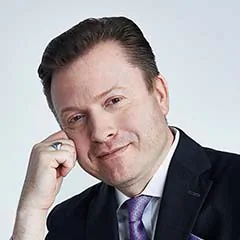
[FULL TRANSCRIPT BELOW] “I was drinking alcohol, I was smoking cigarettes, I was snorting cocaine, I was snorting crystal meth, and I was freebasing—all in the same day. And I was a complete wreck,” says Joe Polish.
A former addict turned successful entrepreneur, Mr. Polish is the founder of Genius Recovery, a nonprofit that’s trying to change how society approaches addiction, and Genius Network, a network of high-achieving entrepreneurs.
In this episode, we explore what’s broken in our society, what’s fueling the opioid crisis that is killing 100,000 Americans a year, and how to rebuild connection, community, and purpose.
“Don’t ask the question ‘why the addiction?’” he says. Instead ask: why the pain?
All addiction is a response to trauma, Mr. Polish says, and that’s where the focus of recovery should be.
Views expressed in this video are opinions of the host and the guest, and do not necessarily reflect the views of The Epoch Times.
*Big thanks to our sponsor for this episode Patriot Gold Group. Check them out here: https://ept.ms/3sr5LhH
FULL TRANSCRIPT
Jan Jekielek:
Joe Polish, such a pleasure to have you on American Thought Leaders.
Joe Polish:
Jan, it’s great to be here, thank you.
Mr. Jekielek:
You run the very ambitiously named Genius Network and you invited me to attend for a day. This was the first time I had been invited to Genius Network, and it was honestly very surprising, because 100 percent of the people that wanted to have further interaction offered me something. Not a single person asked me for anything. Please tell us about this network that you’ve created.
Mr. Polish:
This is many years in the making. I had a carpet cleaning business back in 1990. For two years I lived off credit cards and I was broke. Prior to that, I was a drug addict and struggling with addiction, so my entrepreneurial endeavors were very difficult. I got into a business that nobody wanted to buy. I had to figure out how to successfully connect with people and how to sell something that nobody wanted to buy.
Fast forward to today, many years later. For over 30 years I’ve been in business, and now I have a connection network. What I was starving for as a kid growing up was connection. When it comes to business, it’s really about bonding. It’s really about connecting. But connecting with who? Who are you aligned with?
The Genius Network is really a connection network of high-level entrepreneurs that want to meet each other and want to share. We’ve cultivated a group of givers. My goal and objective is to have the most non-standard, non-narcissistic group of achievement-focused, high-level entrepreneurs that are givers.
Mr. Jekielek:
Everybody is obviously very type A, highly motivated, and already doing good stuff. But they put this idea of giving of themselves in the first position, which is definitely counterintuitive to a lot of people. I’m sure you get a ton of people that are looking to game the system.
Mr. Polish:
Yes, all the time. Oftentimes, we have to kick people out. We’ll have conversations with people. Everyone has something to sell and everybody wants something. That’s one thing I have realized. I want something, you want something, we all want something. Humans want something. There’s nothing wrong with wanting something.
However, what we really do our best to cultivate, and we’ve done a really good job at it and it’s taken a lot of work, is to make sure that when you show up and want something that your give is equal. Think about the people that you like the most when they call you on the phone or they text you and you get this feeling of, “I’m so happy to be hearing from this person,” vs. the whole bad feeling you get from takers. They’re not showing up with a give. They’re showing up with a take.
With the Genius Network we really emphasize that there’s nothing wrong with pursuing opportunities. You are here to reach your opportunities, deal with your challenges, deal with your problems, get better as an entrepreneur, and build a bigger business. There’s nothing wrong with that, and you all have opportunities. But there’s a difference between pursuing an opportunity vs. being an opportunist. I hate that whole energy of someone trying to take something from me.
Marketing is important. Selling is important. Think of marketing as storytelling and selling as influence. How do you tell a better story? How do you tell it to connect with people? I make the distinction between connectors and people that connect by conning people. They’re very manipulative, and that doesn’t feel good.
Mr. Jekielek:
I’ll also mention that people pay a lot to participate in your network.
Mr. Polish:
Yes.
Mr. Jekielek:
It’s for the benefit of being among these like-minded people, and it’s a surprising model.
Mr. Polish:
Here’s the secret, I love what I do. I would still do Genius Network even if I didn’t charge for it. What is a Genius Network? It’s a group of people that have skills and capabilities in a particular area that they share with each other. Anyone can have a Genius Network, that’s just what I call it. I just happen to have a business and a group called Genius Network. Now, the fee is $35,000 a year for the lower-level group, and $100,000 a year for the higher-level group.
Mr. Jekielek:
For most people that’s a sizable investment.
Mr. Polish:
I’ll explain it, while also telling people the formula for how much you should charge for something. I always use this as a bit of a trick. Again, I used to be a carpet cleaner. People ask, “How much do you charge for carpet cleaning? What is the price? What does price even mean?
The formula for how much you charge for something is based on your ability to sell it. That’s the formula. Someone could buy a Timex watch, an Apple watch, or a Rolex watch. Are they buying a watch or are they buying jewelry? If you buy a purse or a handbag at Louis Vuitton, what are you actually buying? Are you buying status? There are all kinds of things to consider with pricing.
Now, as it relates to groups and what people invest in, most people that come to Genius Network have to be at a high enough level. From just a revenue standpoint, they have to make at least $1 million a year to even come to my group. I have books and courses, and I give most of it away for free. I have podcasts that I’ve done for years and I have videos online. I also have higher-priced services, products, and groups. I give a lot away for free just to expose people to it.
But here’s the key. Most people that come to the group, they’re not paying for who’s in the room. They’re paying for who’s not in the room. Because we don’t have that annoying factor of people constantly trying to sell something, so there’s safety. There’s a sense of relaxation, because no one is going to get hit up. We have some very high-level people in the group, and they usually can’t go to events without constantly getting mobbed.
That is what Genius Network provides, a space where you can come and not only deal with your business issues, but also your life issues. I think about selling people what they want, and giving them what they need. The ego part of us wants to pursue financial success, more best-selling books, more high-level people, more status, but that all requires money.
What people often need is better sleep. They need to get rid of what I call half-relationships, which are hard, annoying, lame, and frustrating relationships, and replace them with people that are ELF [Easy, Lucrative, Fun]. Replace activities that are hard, annoying, lame, and frustrating with people that are ELF.
Mr. Jekielek:
Yes, I remember learning these acronyms at the event. I met at least three people who offered me something that, while it hasn’t manifested yet, is on the road to becoming something quite constructive. It opened my mind that something like this could actually exist.
Mr. Polish:
That’s what I hear all the time. People say they have never been to a group like this. Usually, everyone’s just trying to sell them something. If we can remove that pressure and create this new and special environment, even those people that behave that way will behave differently when coming into this environment.
I know this so well because I’ve sat in hundreds of 12-step meetings for my own recovery. I’ve seen people go into that environment and become a different person. I see them get better. You can create an environment that helps people to become more aware and to get better.
That’s what we try our very best to do with Genius Network. I encourage other people to do it. We help people become better givers. But realistically, that is difficult to do with sociopaths, psychopaths, and really traumatized narcissists.
I look at the people I associate with and the groups that I do. Does it expand me or does it contract me? I don’t want to contract people—I want to expand people. If you’re running a group and care about everyone having a powerful and useful experience, you have to be useful yourself. You have to put useful people in the room. I believe life gives to the giver and takes from the taker. I believe that.
Mr. Jekielek:
You experienced a lot of childhood trauma that you’ve dealt with in not so good ways in the past. But you have also turned that into a piece of genius that is this recovery network and a unique approach to dealing with addiction. Let’s start with your story.
Mr. Polish:
I didn’t have a happy childhood and it was pretty miserable. I had a lot of crazy stuff happen. I was scared, I was afraid, and it wasn’t fun. I also don’t get caught up in woundology, because we live in a world where people often use their stories and their pain to gain sympathy, and then they use that to manipulate people.
I always caution people, “Share your story, but don’t become your story.”
Maybe at a certain point everyone is their story. But my goal is to increase my level of awareness and consciousness, and never use bad things that have happened to me as a way to just get people to say, “Poor Joe, he went through some difficult stuff.”
Because everyone watching this has had pain, challenges, angst, betrayals, and abandonment. Oftentimes, it’s mental, physical, or sexual abuse. I just want to say that at the very beginning. My friend, Dr. Don Wood, one of my Genius Network members, has this great line, “If you understood the atmospheric conditions of somebody’s life, it would make sense why they do what they do.” I think like that about everyone.
Think of all the people in the world that are doing pretty bad stuff, that are lying, and that are in high positions of power. If you went and looked at the atmospheric conditions of their life, you would say, “Oh, that’s what influenced this person. That’s what has caused them to become that way.”
As an adult, we can not only reframe our atmospheric conditions, we can change them. If we do that, then it changes the atmosphere of our families, our business, and our community. These were some of my conditions. My mother was a former nun. My father met her in church after she had left the convent. I was told it was because she had gotten ill.
They met and ended up getting married. My father had found the love of his life. Early on, they were very poor. My father was a locksmith. In 1972, when I was four years old, my mother died from ovarian cancer at age 41. It just broke my father’s heart and he was just devastated. He never recovered from it.
Every year or two years for my entire childhood, we would move to different parts of Arizona, New Mexico, and Texas. He would establish a clientele for his locksmith emergency service. He would get calls in the middle of the night for couples kicking someone out, drunk drivers, keys locked in cars, robberies, and break-ins. It was all kinds of crazy stuff.
It wasn’t an easy business, but he would establish a certain level of clientele. Then he would uproot us, and we moved to another town, so I never had long-term friendships. I was very scared, but I smiled all the time. Everyone thought I was a happy kid, but I was a scared kid. I was small and skinny and frightened. I got bullied and picked on all the time.
Between the ages of 8 and 10-years-old, I started getting sexually molested by a male and I was paid money not to say anything. I was raped and molested as a kid. At that point, I just didn’t know how to identify any sense of self-worth and didn’t have any language for it. I was just a scared kid.
Then I became a teenager and was in a constant stage of anxiety and fear all the time. A lot of bad things happened in my youth. I would pray to a God that I never felt connected with. It was just awful, so I became a drug addict. Early on, I started smoking pot in school.
By the time I was 18-years-old, I was smoking cocaine, which is called freebasing. Right out of high school, for three-and-a-half months, I was smoking coke every single day.
Here’s a crazy story that I remember. There was one day when I had done LSD, I was drinking alcohol, I was smoking cigarettes, I was snorting cocaine, I was snorting crystal meth, and I was freebasing—all in the same day. I was a complete wreck. At that time, I weighed about 120 pounds, which was my average weight.
When you’re 5’10 and you’re male, that’s pretty skinny. There was one week when I barely ate anything, because I was just doing speed and doing coke the whole week. I weighed 105 pounds. My eyes were sunken and people would tell me that I looked terrible. We would be at the house and all of us were doing drugs together.
When you’re living that type of life, all your relationships circle around that type of behavior. I was dealing drugs in order to get drugs—that’s how I lived. People would tell me, “Man, you really need help.” That would just piss me off and I would say, “Don’t tell me what to do.” Everything was fear and reaction.
Then there was this major blow up. I was living with my brother and one day this guy came over. There were always people coming over. There were constant drugs being done in the house. I was watching TV with a friend and this guy came over.
He burst into the house and was just screaming. It was almost like the cops were breaking into the house. He had a can of lighter fluid and just started spraying it everywhere. He screams, “I’m gonna burn this effing place down. This guy is spraying lighter fluid all over the place. I had long hair at the time and some of it got on my head.
Then he pulls out a lighter and yells, “I’m going to torch this freaking place.” It was like a scene out of a crazy movie. I said to him quietly, “Put the lighter down. Turn it off.” I talked him out of it. But he was ready to burn down the whole place. At that point, I thought, “If I don’t get out of here, I’m going to die. I’m going to kill myself with drugs.”
I packed up my belongings and moved to New Mexico where my father was living in a trailer by himself. The story I was telling back then was that I went to New Mexico State University. But I was really just escaping drugs, and I did end up getting sober. One of the jobs I had there was selling gym memberships.
That was so funny, because I was this skinny guy that really wasn’t working out. But I ended up getting a job selling gym memberships, and I started exercising. I became the top salesperson at this gym in Las Cruces, New Mexico. Then I met someone that was running a mental hospital and he offered me a job as a mental health tech.
When I started working there, I had to drive patients to meetings; Alcoholics Anonymous, Cocaine Anonymous, and Narcotics Anonymous.
I would sit in those meetings as an employee of this mental health institute and started to listen. I didn’t realize how important that would become later in life, experiencing the community aspects of the 12-Step program.
Because 12-Step programs are great for the community, but they’re not the end all, be all. A lot of people don’t like 12-Step groups. The people that don’t like them haven’t done the steps, and they haven’t got a sponsor. Most people that do the steps, even if they don’t love it, they get improvement. It’s free and available to most people. That was my first exposure. I was there for a couple years, then came back to Arizona, and I have been here ever since.
Mr. Jekielek:
You always had this natural sales personality.
Mr. Polish:
Here’s the thing. I have a friend named Dean Jackson and we’ve been doing a podcast called I Love Marketing for years. In 1997, he invented what’s called the squeeze page, where you put your name in, put your email in, and then it opens up the next page. That has now become the modern day opt-in page that people use for lead generation.
He has a great line where he says, “A compelling offer is 10 times more powerful than a convincing argument,” so I always try to help business owners and entrepreneurs. Don’t try to convince somebody of anything or try to compel them. Because when you’re trying to convince, then it feels like someone’s trying to pressure you. It goes back to what I said earlier, people love to be sold, but they hate to be pressured.
I wasn’t very good at sales and was actually terrible at it. I was scared to talk to people and didn’t really know what to do. It wasn’t until I began reading really good, old school marketing books that I started to understand writing sales copy, creating compelling offers, using headlines, using emotional language, and setting things up to attract people. Everything that I say, you say, or anyone says is going to either attract people or repel people.
Mr. Jekielek:
Selling gym memberships would be my worst nightmare, but somehow you succeeded.
Mr. Polish:
I have to mention this too and I hardly ever talk about this. The Bible for addiction recovery in the 12-step program is the “big book,” Alcoholics Anonymous, written by Bill W. and Dr. Bob. All throughout the original manuscript, you will find the word sell. Bill W. was a stockbroker and he wrote the big book. They had him change it because they thought the term sell would make people think he was trying to convince you to sell. He was actually trying to convince people to do something. It’s fascinating.
Go online and type in, “Is selling evil? You could also type in, “Is selling evil Joe Polish? There’s a 3:52 clip of a video that was B-roll for a documentary that I was in. This footage never showed up in the documentary, but J.R. who works for me thought, “Wow, that’s a really good riff.” I ask the question, “Is selling evil?” Actually, that depends.
Hitler was effective at selling. He was effective at convincing people, but what he did was not helpful. I have this definition that I love from my friend Dan Sullivan, founder of Strategic Coach. I asked him years ago, “What’s your definition of selling?”
He said that selling is getting someone intellectually engaged in a future result that’s good for them, and getting them to emotionally commit to take action to achieve that result. I memorized that—getting people intellectually engaged in a future result that’s good for them, and getting them to emotionally commit to take action to achieve that result.
I’ll ask people, “What do you think are the most important words in that sentence?” People will say, “Engaged.” If you’re just talking about ethics, it’s the phrase, “good for them.” Because you can get people intellectually engaged in a future result that’s not good for them and which kills people. It’s like the propaganda in so many things that you cover on your show which exposes all these people that are bad actors.
Mr. Jekielek:
To paraphrase C.S. Lewis, the people that torment us for our own good are the worst. There are people in positions of authority and power that seem to truly believe they know what is good for us and are very happy to enforce that on the population.
Mr. Polish:
Yes, and that’s complicated.
Mr. Jekielek:
There are people who believe they have the right to impose their ideas on you.
Mr. Polish:
Yes, totally. Here’s how I try to come to grips with that for myself, because almost everyone thinks they’re right. People constantly think they are right, even if they are dead wrong. There have been many times in my life in the past and probably in the future where I will be convinced that I’m right.
Being in recovery has really helped me to have some awareness that I could be wrong. Stephen Covey has said it and I’ve heard other people say that people judge themselves by their intentions. They judge others by their actions. A friend of mine was with a small group of people and he said, “How many of you in this room have ever been taken advantage of by other people?” A good portion of the people raised their hands.
Then he said, “OK, how many of you have ever taken advantage of other people?” Just a couple of people raised their hands. He said, “Isn’t that interesting? Most of you think that someone screwed you, but you don’t see how you screwed other people.” The reason is because we judge ourselves by our intentions and we judge others by their actions.
Look at Anthony Fauci. In his mind, he probably thinks he’s doing the right thing. I can name tyrants and those that I consider mass murders who are not doing humanity any good. In their minds, they think they have a justification for it. One person’s freedom fighter is another person’s terrorist.
That’s that line. It’s difficult and it’s complex because we have to look at the bottom line which is a byproduct of our actions. Are our actions helping ourselves? Are they helping other people? Are they hurting them? Do you think that unlearning is actually more important than learning?
Mr. Jekielek:
If you are financially motivated to hold a certain belief, it’s a lot harder to shake that belief, even if it is false. Some people take strong positions, like with TikTok, an app controlled by the Chinese regime which seeks to destroy our free society. Some people say that it’s primarily a free speech issue, and I can see why they have that position. But then I wonder if this is their self-interest.
Mr. Polish:
Yes, it’s complicated. In one of his talks Jordan Peterson says that some questions can’t be answered right away. Some take hours, some take days, some take weeks, and some take lifetimes. There are a lot of things that are really hard to soundbite and get to someone’s motives. I’ve written five books. My latest book is called, What’s in it for Them?
The title is about how I live my life if I think no one really cares about me and all they care about is themselves. Now, certainly people do care about me. Thank God there are humans that care about others. Jan, I see that you actually care about other humans, and talk about being of service to other people. I learned something early on when I felt my life was bad.
I have been suicidal and I’ve had guns in my mouth. I’ve done things where I’m lucky I did not die. I put myself in extremely dangerous situations. I have done some really stupid stuff. When I felt my life was bad, I’ve been in the middle of what many people would consider paradise. I could not see the beauty of it and could not feel the joy, having been so depleted.
When I put myself in a situation where I go and help someone who’s doing as bad or worse than me, it’s bizarre how good it is at lifting me out of a difficult situation. It may not solve it, but it certainly makes it better.
We really become better versions of ourselves when we become of service. If people are constantly taking and taking, that’s hard to accept.
People in high positions in pharmacy, government, central banking, and tech that are rich and wealthy with enormous power and status are doing awful things. That’s hard for people who are givers. They say, “Life is so not fair. How is this happening? Do I have to become like that?” That is something we all have to grapple with.
Mr. Jekielek:
It isn’t an easy question. There are many things that even two years ago I was pretty sure were a certain way, like a good route for cancer treatment,for example. Dr. Paul Marik just published a monograph on deeply researched methods you could apply yourself without a doctor’s help to prevent and treat cancer. But you actually facilitate ways that people can see things they might not necessarily want to see.
Mr. Polish:
Yes, and that’s a tough thing. Of course, you can’t be a tyrant. Do you force people to pay attention? Doing things in the right way vs. doing the right things are two completely different things. There’s a right way to screw people over, but is it the right thing to screw people over? It’s really weird, but my brain remembers all kinds of quotes. There was one from The Book of Survival, written in the 90s. I will paraphrase it—in order to get to an impossible situation, you don’t need the reflexes of a Grand Prix driver, the muscles of a Hercules, or the mind of an Einstein, you simply need to know what to do.
Let’s take cancer as an example. There’s another saying that they’ll never find a cure for cancer because four times as many people make a living off of it than die from it every year. As you know, if you just follow the money, that will explain it.
Mr. Jekielek:
You can be blind to good solutions if you’re financially motivated. It goes back to that same issue. You could just want the money and there is certainly a lot of that.
Mr. Polish:
Is that bad? Is pursuing money bad, or is it the way you go about pursuing money bad? Is it greed? Is it just, “I’m willing to do whatever it takes, including hurting other people?” What is someone’s motivation? The ego, the reactive body, and the pain body, to use an Eckhart Tolle term, are all quite prevalent.
I can view the whole pandemic through the lens of power addiction. What is addiction? Addiction is doing something that you cannot stop and control that has negative consequences. The world is being run by people at very high levels that are highly addicted.
Nazi Germany invented crystal meth. The majority of the Nazi army, along with Hitler, was being given purpatine. I believe that’s what they called it. It’s documented and there are movies about this. There are books like, Blitzed: Drugs in the Third Reich. When you give crystal meth to people for long periods of time, research has now shown that it removes empathy. Their ability to have concentration camps and to do awful things to people is because it zapped their empathy.
Mr. Jekielek:
This is astonishing. I had not heard of any of this.
Mr. Polish:
With everything I just said, read the book. They even made a movie about it. This is documented and no one tells the story. The Hardcore History podcast had an episode where the night before the Battle of Waterloo, Napoleon was pretty much whacked out on opiates. Winston Churchill was constantly intoxicated.
There are many examples in history concerning inebriation. Pre-pandemic, I believe that 20 percent of American women were estimated to be on antidepressants. We are living in an inebriated world.
Mr. Jekielek:
I just had Dr. Michael Nels on the show talking about fear porn. This constant incessant pushing on people actually has a profoundly negative impact on our cognition and specifically on the hippocampus, which is very important to our autobiographical memory. There are also all these different environmental agents that are neuropathogenic, including things like the spike protein. Let’s talk about your understanding of addiction, because it’s not typical. You’ve come to this understanding the hard way, and you’ve developed the Genius Recovery Network that is helping people. Please tell us about it.
Mr. Polish:
I created Genius Recovery back in 2015. I was doing a Genius Network annual event, and I decided to get up on stage. I was nervous as hell, because I was feeling like this line that I have heard a million times, “You’re as sick as your secrets.” I’ve heard that and the silent battles are the hardest battles to fight. I had been in recovery for many years, but the drugs were easier than sexual addiction.
People will ask, “What is sex addiction? I was paid money to not say anything when I was a kid. It was wired in my head that sex is shameful and dirty unless you pay for it. My father never remarried. I didn’t see sexual relationships as being an intimate act of love and oneness. I looked at it as something you do to get off. I was introduced to sexuality in a very filthy, degrading, and humiliating way.
When I finally shared my story publicly, I thought this might ruin my career But I was sick of it. For whatever reason, I felt that it was important. That was the seed of what became GeniusRecovery.org, which is the 501c3 that we have now. I shared my story and I had very successful men and women come up to me.
A couple of women told me, “I’ve sold my body.” Some men said, “I’m a porn addict. I’m doing drugs.” They told me this sort of stuff. I then realized that which we think is most private is most public. You think you’re the only one, but there are a lot of other people dealing with it too.
I created Genius Recovery with the goal of changing this. My goal is to change the global conversation about how people view and treat addicts, who really need to be treated with compassion instead of judgment. We find the best forms of treatment that have efficacy and share it with the world. Currently, it’s an educational platform and we don’t have a treatment facility.
We educate people. We have videos and links of where to go to get help and support. We have a really cool recovery bot that we have been testing, but we haven’t made it live yet. People can text and talk to it, and it helps guide and direct. We are getting ready to start putting out physical recovery kits.
I have learned a lot through lots of interviews, conversations, and just talking about this. I appreciate you bringing this up. Hopefully this gets the message out to more people—if a family member is struggling with addiction, don’t look at them as a moral degenerate. Look at them as a person that is in pain.
I have a friend, Dr. Gabor Mate, who I’ve done a couple interviews with. Gabor has this great line where he says, “Don’t ask the question, why the addiction? Ask the question, why the pain? Addiction is a response to pain and it is a connection disorder. The opposite of addiction is connection. If you feel disconnected as a person, you’re going to look for other ways to connect.
This is one of my favorite lines from Bill W., the founder of AA. He said, “As alcoholics, we’re trying to drink God out of a bottle.” Even if you’re an atheist, you can understand what that means. We’re trying to find meaning and connect with the source.
You’re either trying to drink your way to God, snort your way to God, gamble your way to God, game your way to God, porn your way to God, or eat your way to God. There are all these ways that we try to scratch the itch and they all work. Addiction is a solution. I view addiction as a solution to pain.
Mr. Jekielek:
It kind of works, but addiction only works for the moment.
Mr. Polish:
But it has consequences. It’s like going back to doing something that has negative consequences, but you can’t stop. There is a compulsivity
attached to it. There is nothing wrong with wanting to be out of pain. If you’re depressed, if you’re lonely, if you’re sad, or if you’re anxious, there’s nothing wrong with wanting that to go away. But by scratching that itch, you are destroying your life and hurting other people. When they are in an active state, addicts lie, cheat, and steal, and you cannot not do that.
Mr. Jekielek:
It is a compulsion that you can never really satiate. It just keeps coming back.
Mr. Polish:
Yes, exactly. It’s an addictive cycle. People often think that it’s about drugs or the porn or the violence or the gambling. That’s how you act out and how you do the thing. But what really consumes the addictive mind is cultural in many ways. It starts with the preoccupation where you’re thinking about it. You’re thinking about the thing that makes you feel good, that dopamine.
Then there is the ritualization where your life is built around the ritual. Finally, there’s the compulsive act: the drinking, the drugging, the porn, or the gambling. Once you do that, you go into a state of despair. When you’re in despair, you feel shame and guilt. Guilt is regretting what you did and thinking, “I wish I hadn’t done that. Shame is feeling, “I am bad.” It’s identifying yourself as bad.
When you’re in despair and feeling shame and guilt, the addictive mind starts the whole cycle all over again. You start thinking about it, and then start the ritualization. That’s why you can’t get out of that addiction loop unless you put yourself into a different environment. What I’ve learned is that in order to get sober and stay sober, the first thing that people need is community.
People use the word sober, but there’s a lot of dry drunks in the world. Dry drunks are people that quit drinking, but they haven’t dealt with the underlying relationship issues which caused them to drink in the first place. Stopping drinking is one part of recovery. Then there is dealing with the relationship with yourself, and also with others.
As I said earlier, you are sick as your secrets. Silent battles are the hardest battles to fight, so you need some form of community. The 12-Step programs have done the best job worldwide because they are free. They are run by the voluntary contributions of its members. People can donate and that’s how they keep going.
They are pretty accessible in most places. If you can’t get to a physical meeting, there are a lot of online meetings. There are also many non-12-step communities for addiction recovery. There is a lot of help out there, it’s just that most people don’t know it exists.
The first thing is community. The second thing is looking at biochemistry; serotonin and dopamine. My friend, Dr. Anna Lemke, wrote an amazing book called, Dopamine Nation. If anyone wants to really understand the biochemical aspects of addiction, that’s a great book. You can learn about what to eat, water intake, sunshine, and how your body works. All these things affect you.
The third thing is the underlying trauma work. That’s where breathing, meditation, EMDR, plant medicines, somatic therapy, and psychedelics, when used in the right setting, can all be helpful. It could be anything that gets you physically engaged, because the issues are in the tissues. It could be yoga. You can learn how to do Tension & Trauma Releasing Exercises [TRE]. You can find these videos online by David Berceli who invented this process just to help people at no cost.
The fourth thing is the environment, based on the Rat Park studies by Dr. Bruce Alexander. This is where if you put rats in a cage, and give them the choice of regular water and drug water, most rats will drink the drug water over food, sex, or sleep. But if you put them into a more healthy environment that’s enjoyable with other rats and companionship, given the choice of regular water and drug water, they won’t drink the drug water.
Even if you give drugs to them, most of them will not drink the drug water unless those rats are traumatized. A lot of addiction is a response to trauma. I’m definitely from that school of thought. I also know that there’s a lot of people that have not been severely traumatized, but they have been exposed to opiates.
I recently interviewed Robert Kennedy, Jr. He made the analogy that we had 50,000 soldiers die in Vietnam, and now, we have more than that dying in America. Approximately 190 people a day are dying from opiate addictions alone, and it’s rising. It’s the equivalent of a plane crash every single day. If there was a plane crash every single day in America, that would be on the news nonstop.
Mr. Jekielek:
This is all being enabled by the Chinese regime where all these precursors for fentanyl come from. They say, “We’ll work on that,” but nothing changes. That’s how it’s been so far.
Mr. Polish:
That conversation, and you even bringing that up, is so important for people not to brush aside. This is done by certain people by design. Who are they? This is insidious. It is evil. It is awful. It’s horrible. There’s lots of people in pain.
I hope that we can change the global stage now. One thing that I do my best to emphasize is that you cannot punish pain out of people. You can’t throw someone with addiction into prison or look at them as an immoral degenerate, even though you could be very angry with them. I understand that addicts are difficult. They’re a pain in the butt. They lie, they cheat, and they steal.
You have to bring love and compassion to someone who’s stealing from you, lying to you, and misleading you. The symptoms of addiction are that they do bad stuff, not always, but on some of the most important things. For some of the most creative, loving, caring people, it’s just a reverse way.
Let me say this. Sexual addiction is an intimacy disorder. My favorite definition of intimacy was given to me by an 80-year-old gay man who now spends his life helping people that struggle with sexual addiction. I never met this guy in person. He said this to me years ago over the phone, because a friend I had been sponsoring in a 12-step group had introduced me to this guy.
He said, “Intimacy is a mutual exploration of a shared safe place. Abuse is anything that takes away the safe place. Addictions are what we do to make ourselves feel good when we don’t have a safe place.” If you don’t feel safe in the world, you’re going to look for a way to scratch the itch.
We don’t feel safe in the world most of the time if we’re watching media or if we’re living in any sort of environment like communism where people are wanting to oppress you. You just don’t feel safe. If you constantly hit people with fear porn, they become addicted to it. We’re also culturally addicted to war. Therefore, you manufacture addiction.
Then you provide fentanyl and all these opiates and you can kill populations. You can control them. It is another form of slavery. Hopefully, if we make it out, we can look back and understand all this.
Mr. Jekielek:
Yes, we’ve got a long road ahead of us.
Mr. Polish:
Anyone can come from this place of compassion and empathy and do their best to live their life that way and be of service to other people. This is an important conversation, but most people are scared, because authority tries to cancel, tries to oppress, and tries to stop these kinds of messages. Those people are addicts who hurt and control other people.
The people that are hurt are the most caring, kindest, and compassionate individuals. Those are the ones that I admire, the people that have been through hell. People will say to me, “I’m not going to go through all that. But you’ve done a lot of stuff and you’re helping.”
I meet people everyday that have gone through stuff that are still loving, caring, compassionate people. I can’t even imagine how they managed to overcome their challenges. I met men and women that were sold into sexual slavery, that were continuously abused, and that lived such painful lives. Then these angels come out of these individuals. Most of them have a lot of scar tissue mentally and physically. But somehow they’re still here, and they’re still pure.
Mr. Jekielek:
As we finish up here, I was very lucky to know my wife’s father, who passed away a couple of years ago. He survived the Buchenwald concentration camp and was able to move on. We actually made a film about him, “Finding Manny,” which I will recommend to people. He was able to move on and create great lives for many people through his generosity, hard work, and entrepreneurship. He was a genius entrepreneur, so we’ve come full circle here.
Mr. Polish:
Yes, it all ties together. A lot of the entrepreneurs in the world who are successful are struggling with addiction. But it boils down to connection. When my life works, I’m responding to life, which means responding with ability. That’s what responsibility means. When my life is not working, I’m reacting. Therefore, I created Genius Network as a connection network.
I created Genius Recovery as a way to help people with connection and to help them look at their own addictions. We want to put as much useful information out as possible. I want to be a hero to the legitimate, ethical, awesome entrepreneurs. I want to be a hero to people that struggle with addiction. I have both of those things. It’s really important for my skill set, and it makes me feel good. It helps me do a lot of good work in the world because it’s about connection. That’s my work.
Mr. Jekielek:
Joe Polish, it’s such a pleasure to have you on the show.
Mr. Polish:
Thank you, so great to be here.
Mr. Jekielek:
Thank you all for joining Joe Polish and me on this episode of American Thought Leaders. I’m your host, Jan Jekielek:
This interview was edited for clarity and brevity.