
Commentary
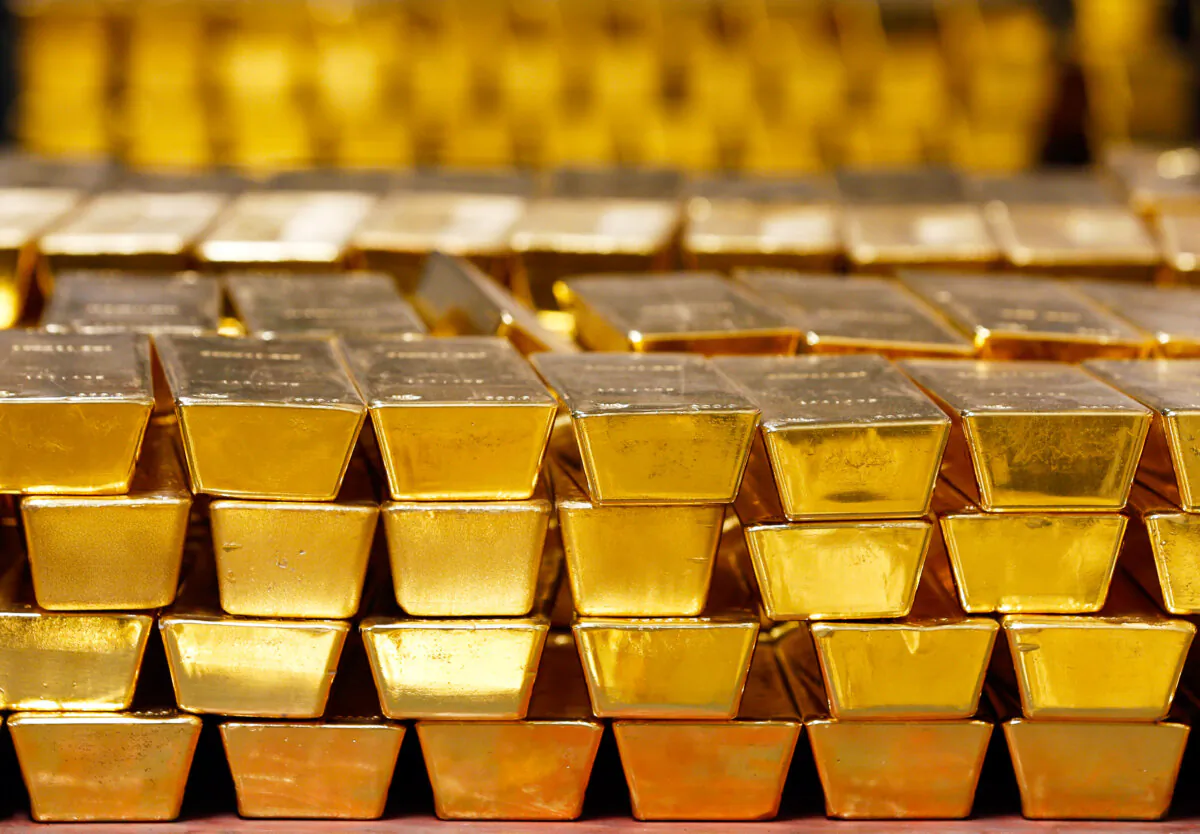
The price of gold recently breached $4,000 per ounce for the first time ever. That is an extraordinary move in the price of an asset that in most years can be described as stodgy, if not boring. Gold never traded above $3,000 per ounce until last March, and $4,000 per ounce is more than double the price that the yellow metal was trading at a mere two years ago.
Not only is the size of the price move highly unusual, but so is the public reaction. When the price of gold briefly soared from less than $400 per ounce to more than $800 per ounce in 1979–1980, the story was big news. Today, by contrast, the price of gold is barely a blip on most investors’ radars. The investing public seems to think that the doubling of the price of gold in a mere two years is no big deal. I think that it probably is. Let’s look at what might be the causes of this extraordinary price increase.
Let me start with disclaimers: I am not an investment adviser, and nothing that I write here is to be construed as investment advice. Although I have above-average familiarity with the gold market and financial markets, I am by no means a student of those markets. I have no desire to take a wild guess at what will happen to the price of gold after today.
Gold is commonly regarded as a hedge against inflation—that is, against the depreciating purchasing power of our fiat currency, the Federal Reserve Note (FRN). (“Fiat” means: unbacked by anything real or physically substantial but having monetary value only by government decree.) I prefer the term “Federal Reserve Note” to “dollar,” because historically in the United States, the word “dollar” denoted a specific quantity of gold and/or silver. We use the word “dollar” today out of force of habit, but Federal Reserve Note better describes the reality and essence of our money.
Unlike the gold bull market of 1979–1980, we are not currently experiencing double-digit inflation (at least, according to official statistics, which I fully admit are often, shall we say, “inaccurate”). Nevertheless, with the Federal Reserve committed to debasing the “dollar” (FRNs) at a rate of 2 percent per year and currently accepting a rate of debasement that is even faster, one can see the value of owning some gold as a hedge or insurance policy to preserve purchasing power.
Still, as insidious as the ongoing debasement of the FRN is, the rate of debasement doesn’t seem to be sufficient cause for the price of gold to have doubled in only two years. There must be other factors involved. The most obvious of these is the national debt, which today is close to $37.9 trillion. The perennial $64 million question about the national debt has been: Will we ever get to a point where there are not sufficient buyers for that debt?
Perhaps the most significant warning sign on the road to national bankruptcy is when a country gets to the point at which its debt grows faster than its gross domestic product (GDP). That is where the United States finds itself today.
While the final figures for fiscal year 2025 aren’t available yet, GDP has risen by approximately $1.2 trillion over the past 12 months, while the national debt increased by approximately $1.8 trillion over the same span. It used to be that we could count on foreigners to purchase our national debt, but a combination of fewer imports because of increased tariffs and less foreign willingness to hold FRNs because of increased weaponization of the FRN by Uncle Sam is reducing the foreign demand for FRNs and U.S. debt instruments. This suggests that the Federal Reserve will have to print additional currency to finance the debt, resulting in a more rapid depreciation of the FRN down the road.
Another possible factor pushing the price of gold higher is the fear of potential war. Certainly, between Russian President Vladimir Putin’s mad aggression and Chinese leader Xi Jinping’s ideological fanaticism, armed conflict is a possibility. While I’ll favor our military over the Russian and Chinese militaries any day of the week, the strain of financing a major conflict might be the straw that breaks the back of our national debt. Then the price of gold would soar far higher than it already has.
The simplest explanation for why the price of anything goes up is that the demand for the product is increasing more rapidly than the supply. We don’t need to know why the demand is going up, although in the case of gold, there is a consensus that foreign central banks have been aggressively accumulating gold in an effort to establish an international currency as an alternative to the FRN. Will they succeed in doing so? I surely don’t know, but the simple fact that they are adding to their reserves of gold implies higher prices for the metal in the absence of offsetting factors.
The precious metals-related websites are full of dazzling predictions of $5,000, $8,000, $10,000, $50,000 prices for gold in the future. Could any of those predictions come true? Yes, they COULD, but that is not to say they will.
As Yogi Berra would say, “It’s tough to make predictions, especially about the future.”
The only sort of “advice” I would offer is the comment that we indeed live in an unusual time and that it wouldn’t hurt for you to consult a financial planner to discuss the pros and cons of owning some gold. Caveat emptor, and may wisdom guide you.
Views expressed in this article are the opinions of the author and do not necessarily reflect the views of The Epoch Times.
 Friends Read Free
Copy
Facebook
Tweet
Friends Read Free
Copy
Facebook
Tweet