
Commentary
The Super Bowl is over. This is the time of year when America’s football fans resign themselves to the grim fact that it will be another half-year before we see our favorite college or NFL football team compete again.
Some fans will enter the off-season exhausted, many will feel the pangs of disappointment, and a few will even suffer withdrawal symptoms. But those effects tend to be short-lived. The sentiment that will grow among the vast majority of football fans will be hope—the deep yearning that next season “the good guys” (one’s own team, of course!) will achieve more success.
The just-concluded season provided a wealth of vivid memories from both the pro and college games for us to savor while we wait. Let’s start by reviewing the NFL season, and then the college game.
Many commentators have said that Super Bowl LX between the Seattle Seahawks and New England Patriots was a not-so-super ending to the season. “Where were the points?” “The offenses were pathetic,” and “What a boring game” were common complaints. Indeed, if you were hoping for a high-scoring shootout, it didn’t materialize. As for me, though, call me “old school,” but I thoroughly enjoyed watching the defenses excel and dominate.
I should explain my bias: I became a Detroit Lions fan in 1959. In the early ‘60s, our offense was mediocre, but the defense was elite. My Lions fielded the original Fearsome Foursome (Sam Williams, Alex Karras, Roger Brown, and Darris McCord) on the line; Hall of Famer Joe Schmidt and multi-year All-Pro Wayne Walker at linebacker, and three Hall of Famers in the defensive backfield—Night Train Lane, Dick LeBeau, and Yale Lary.
Watching those players throttle opposing offenses was a treat. Tough defense is what the Seahawks, especially, but also the Patriots, brought to Super Bowl LX. For fans who appreciate suffocating defenses, Sunday’s game was an outstanding exhibition.
Since I am still a hardcore Lions fan, I didn’t have a horse in this race, so I just sat back and enjoyed the hard-fought game. The Seahawks’ defense was awesome. Seahawk running back and Super Bowl MVP Kenneth Walker III showed an uncanny ability to break tackles and keep his balance when getting hit. Quarterback Sam Darnold deftly escaped numerous close calls to complete just enough passes to put his team in position for a Super Bowl-record five field goals by Jason Myers while also connecting on one TD pass.
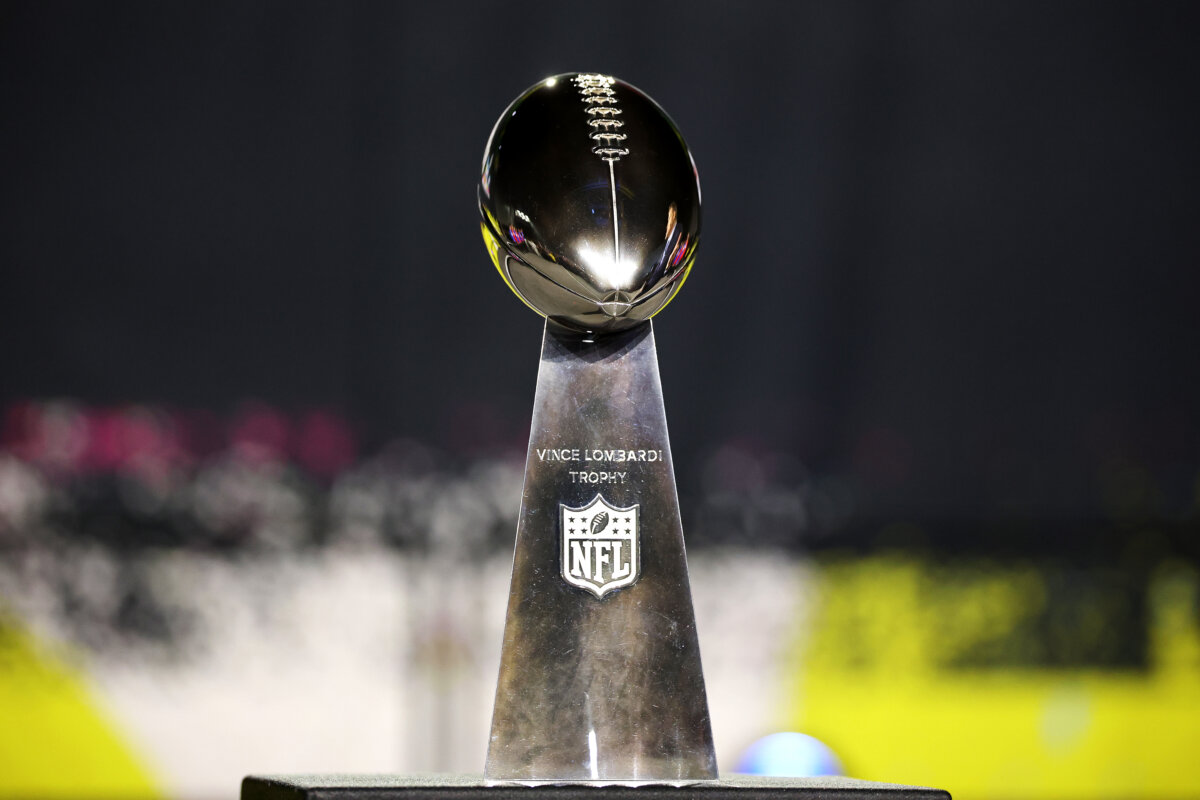
Perhaps the biggest subplot of the game was the ultimate redemption for Darnold. Having had the misfortune of being drafted by the Jets eight years ago, he bounced around between several teams before finally proving to be one of the sport’s finest quarterbacks when he led the Vikings to 14 wins last year. The Vikings are probably kicking themselves for declining to extend Darnold’s contract. Instead, the Seahawks happily signed him and watched him become the first QB to win 14 games in consecutive seasons for two different teams on the way to hoisting the Lombardi Trophy.
One of the most impressive moments of the evening was the awards ceremony. The graciousness, composure, and sincerity of Darnold, Walker, and their young head coach, Mike MacDonald, were touching. These men deserve to be heroes and role models for the younger generation (if not for older generations, too).
The NFL once again reaffirmed its position as the leading team sport in the United States. With the help of a salary cap and awarding the highest draft picks to the teams with the worst records, the league has made it possible for downtrodden teams to quickly improve and challenging for successful teams to remain on top.
This past season, my Lions, the Baltimore Ravens, and, most notably, the Kansas City Chiefs, faltered and failed to even make the playoffs. On the other hand, the Patriots soared to the Super Bowl after having won only four games the previous season. Other teams that registered quantum improvements were the Chicago Bears, Jacksonville Jaguars, and Denver Broncos. Who will emerge next year? Tens of millions of NFL fans will watch that intensely.
Switching over to the college game, the ultimate Cinderella story dominated the headlines. The perennial doormats, the Indiana Hoosiers (who, up until last season, had the most losses in college football history) went 16–0 to win what many considered the most improbable national championship. And they did so in style, dominating perennial powers Alabama and Oregon in the playoffs before prevailing against a Miami team that had multiple high draft picks on its roster in the national championship game.
Coach Curt Cignetti may shake up the college sport with his unconventional approach of keeping contact practices to a minimum, while Heisman Trophy winner, QB Fernando Mendoza—he of the cherubic countenance and unspoiled wonderment of a child—will inspire thousands of young football players.
While many of us fans found the emergence of a new champion a breath of fresh air, there are dark clouds hovering over college football. The pay that players are receiving sometimes exceeds what they could earn playing in the NFL. As a result, many players good enough to earn a roster spot in the pros remain in college where they can receive more playing time and more money.
A year ago, national champion Ohio State paid its football players approximately $20 million. This past season, OSU’s payroll soared to $35 million, yet the Buckeyes were eliminated in the quarterfinals of the playoffs.
Currently, more than 4,000 college players have entered the transfer portal, where they are free to accept the most lucrative offer that comes their way. Will NCAA football become a contest of which universities can raise the most money for football players? What will that do to continuity, team spirit, and loyalty?
It seems to me that the NCAA will have to try to emulate the NFL by imposing the equivalent of a salary cap. If they don’t, elite college players will soon earn more than all but the highest-paid professional players. I can almost guarantee that whatever steps are taken to try to bring some order and financial stability to the college game, there will be complaints.
I can absolutely guarantee something else: Football fans will follow their teams as avidly as ever next year, regardless of the financial machinations taking place behind the scenes. I just hope NCAA football can approximate the NFL’s parity-producing policies so the sport isn’t divided between financial royalty and perennially poorer also-rans.
Views expressed in this article are the opinions of the author and do not necessarily reflect the views of The Epoch Times.
 Friends Read Free
Copy
Facebook
Tweet
Friends Read Free
Copy
Facebook
Tweet