Commentary
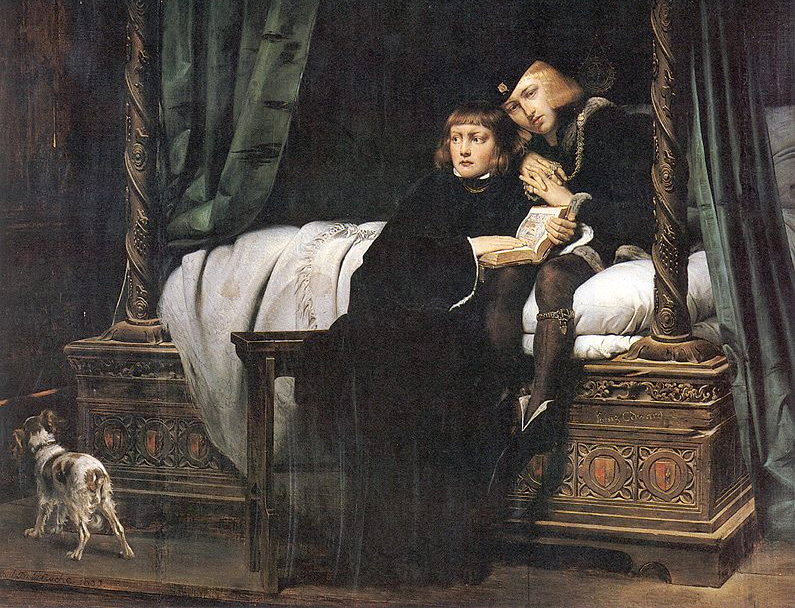
In the summer of 1483, the doors of the Tower of London closed behind two boys, children of the late King Edward IV. One was his oldest son, the new King Edward V (age 13), and the other was Edward V’s younger brother Richard, Duke of York (age 10). They had been sent there by their uncle, Richard, Duke of Gloucester, who soon manoeuvred to have the boys declared illegitimate and himself declared king. The so-called “Princes in the Tower” were never seen alive and free again.
In 1674, workmen tearing down a staircase in the Tower of London, digging close to the foundations, discovered an elmwood chest containing two small skeletons. It was decided almost at once that these were the remains of Edward V and his brother Richard. At the behest of King Charles II, the bones were transferred to a marble urn and buried with the bodies of other English kings in Westminster Abbey.
The inscription on the urn reads: “Here lie the relics of Edward V, King of England, and Richard, Duke of York. These brothers being confined in the Tower of London, and there stifled with pillows, were privately and meanly buried, by the order of their perfidious uncle Richard the Usurper.”
The urn was opened and examined in the 1930s by eminent physicians who concluded that the oldest of the skeletons was no more than 13 and the youngest about 10; as the princes were born in 1470 and 1473, this would place the date of death in 1483, the year that Richard III threw them into the Tower. The doctors’ opinion was that death was the result of suffocation, indicated by a suffusion of blood in one of the skulls.
For years it was widely believed that their deaths had been ordered by Richard III, whose memory would be besmirched by 16th-century historians and who would be chiefly remembered as the hunchbacked villain crying “A horse! A horse! My kingdom for a horse!” in Shakespeare’s play. Richard certainly had a motive—by eliminating the princes his very shaky claim to the throne would be bolstered—and he controlled access to the boys in the Tower. His earlier political actions certainly fit those of a scheming murderer: he was already linked to the assassinations of political rivals (including his own brother George, Duke of Clarence) and he had accused both his brother Edward IV and his mother of adultery.
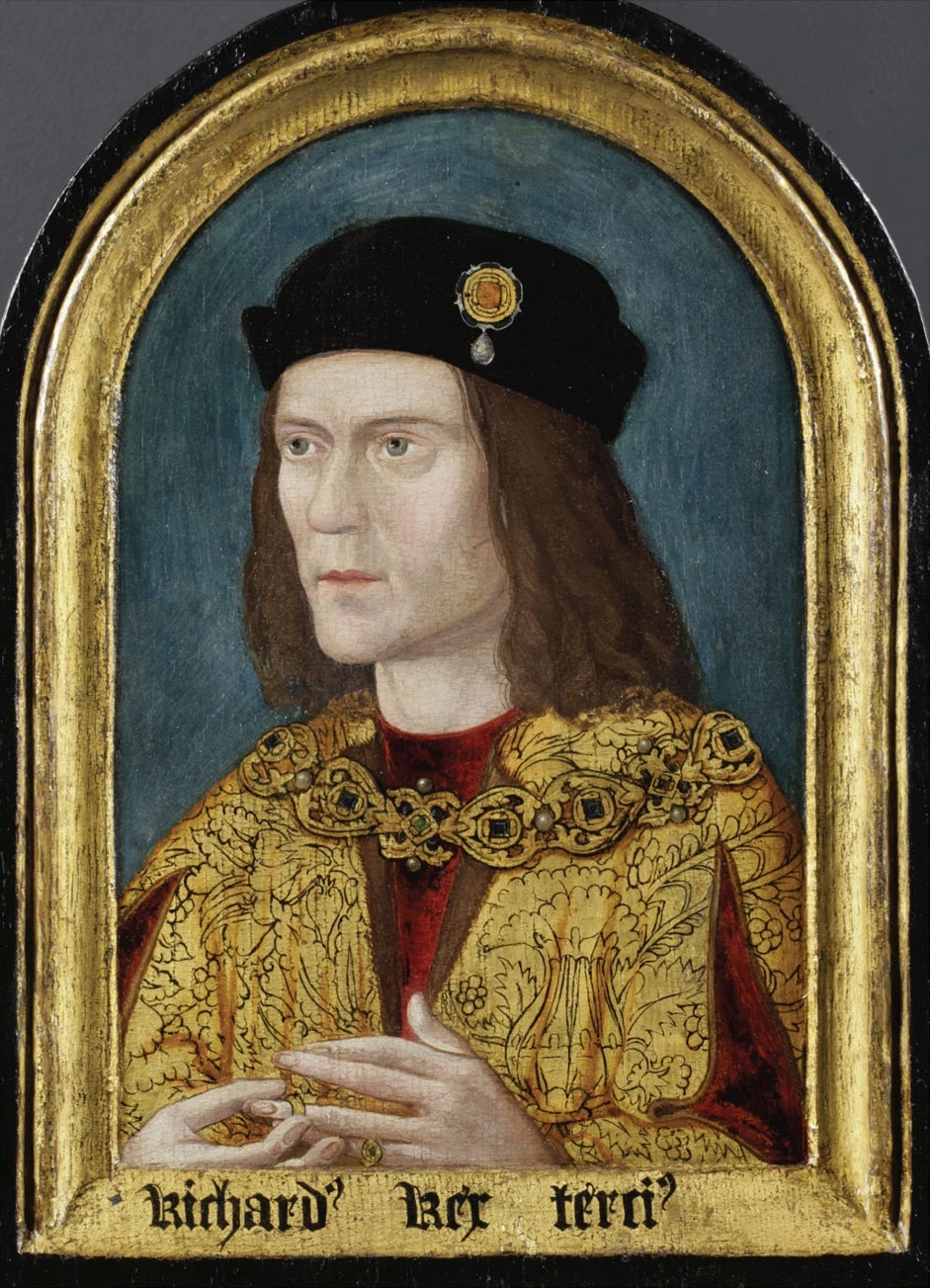
But Richard has his share of defenders. Known as “Ricardians,” they have mounted campaigns over the last 100 years to rehabilitate his memory. Central to their work is blaming others for the deaths of the princes. Chief among their candidates were Henry Stafford, the Duke of Buckingham, and Henry Tudor, whose victory over Richard III in the 1485 Battle of Bosworth brought him to the throne as Henry VII, the founder of the Tudor dynasty.
But perhaps all this speculation about the boys being murdered is in vain? Suppose that the princes had really not died in 1483 but lived on? There is some evidence to suggest that might have been the case.
In 1490, a man appeared at the court of Margaret of Burgundy, the sister of Edward IV, claiming to be her nephew, Richard Duke of York, who had escaped the Tower of London and been secretly sheltered by supporters of his family. The next year he surfaced in Ireland and claimed the English throne. He won support from the Kings of France and Scotland, and the Holy Roman Emperor, but when his forces were defeated in 1497 he was captured and confessed to be merely Perkin Warbeck. The ambitious imposter soon lost his head.
Recently, researchers from “The Missing Princes Project” claimed to have found evidence that Edward V had escaped to the Continent where his aunt, Margaret of Burgundy, seems to have bought weapons in 1487 for an army to aid in his recovery of the throne. Other findings suggest he may have spent his life in obscurity as a man named John Evans in Coldridge, a village in the west of England. Evans is known to have reached the village in 1484 and been named Lord of the Manor. Very suggestive is the fact that Yorkist symbols and stained glass windows depicting Edward V still exist in the Church of St. Matthew in Coldridge, commissioned by Evans and built around 1511.
The mystery continues.
Views expressed in this article are the opinions of the author and do not necessarily reflect the views of The Epoch Times.