
Commentary
This is the fifth and final installment in the “Ancient Rome and the Constitution” series.
The first installment depicted the leading place of Roman writings in the Founding Era educational curriculum and the popularity of Roman references among the general public.
The second installment thumbnailed Roman history and identified those Roman writers with major influence on the Founders’ political thought. The third described the process by which the Constitution was proposed and adopted and showed how Roman history offered moral lessons to the Founders. The fourth illustrated how Roman precedents affected specific parts of the Constitution.
This installment discusses the influence of leading Roman authors on the language used in the ratification debates of 1787–1790.
The Value of Rhetoric
Because Latin was such an important part of the 18th-century educational curriculum, many of the leading Founders were bilingual. Because so many educated people understood at least some Latin, speakers resorting to Latin words and phrases could be assured that their messages were received.
This bilingual and cultural knowledge provided an enormous vocabulary and a massive store of literary references. As a result, educated members of the founding generation were highly adept in expressing their ideas and sentiments.
Understanding how Founding Era speakers employed Roman history and Latin expressions can be useful for grasping the purpose and scope of constitutional clauses. By way of illustration, an Antifederalist writing under the name “A Farmer” quoted lines from the poem known as Virgil’s third eclogue to compare the collection of direct taxes to over-milking female sheep. As explained below, this comparison helps us understand the definition of the Constitution’s phrase “direct Taxes.”
Another incident involved the Constitution’s impeachment-and-removal procedure for federal officers. The framers adopted a compromise between those who favored impeachment-and-removal for almost any reason and those who either wanted no impeachment procedure at all or one that was severely limited.
When the Antifederalist framer George Mason said that the Constitution’s method for impeaching the president brought to his recollection “the remarkable trial of Milo at Rome,” he was telling his audience that the document’s impeachment-and-removal provisions were defective. His point was that even after being impeached, the president—before and during trial in the Senate—would still be commander-in-chief of the armed forces and might use those armed forces to intimidate the Senate into acquitting him.
On the other hand, popular acceptance of the Constitution suggests (although it does not prove) that most people did not think this was a significant risk and that the framers’ impeachment-and-removal compromise was adequate.
Plutarch and Pseudonyms
After the Constitution was drafted and proposed, the in-state debates over ratification ensued. Participants in the ratification debates, like participants earlier in the constitutional process, relied on Polybius, Cicero, Virgil, Livy, Tacitus, Plutarch, and other authors. But they utilized Plutarch, Cicero, and Virgil most of all.
The fourth installment of this series discussed the influence on the framers of Plutarch’s reports on Greek confederations. During the ratification era, his influence was felt more in how disputants used his biographies of famous Greeks and Romans. To explain this, however, some background is necessary:
Modern writers on the Constitution—including, alas, the Supreme Court—regularly confuse the First Amendment’s protection of freedom of speech with its protection of freedom of the press. In the Founders’ view, these were different. “Speech” was in-person discourse. “The press” was communication through a medium, such as a newspaper, pamphlet, or poster. “Speech,” once uttered, disappeared into thin air. “The press” preserved communication in permanent form. “Speech” was local. “The press” could be worldwide. In the course of “speech,” the audience knew, or could easily find out, the identity of the speaker. When communication was via “the press,” the identity of the author was usually hidden.
For these reasons, the rules limiting freedom of speech were different from those limiting freedom of the press. Moreover, the right to remain anonymous, except in cases of defamation or crime, was absolutely central to freedom of the press. Most participants in the ratification debates who used “the press” hid their identity with pen names. They wanted their arguments assessed on their merits, rather than dismissed or accepted because of who they were.
Writers in the ratification debates commonly used characters in Plutarch’s biographies as pen names. Among the principal subjects of Plutarch’s biographies, about 40 percent were employed as pseudonyms. Authors identified themselves as “Brutus,” “Caesar,” “Camillus,” “Cato,” “Cicero,” and “Fabius,” among many others.
Sometimes the author selected his or her pen name to send a message. A populist writer might adopt the name “Publicola” to indicate that he was a “friend of the people.” A person seeking to communicate rustic values might call himself “Agricola” (farmer). Several called themselves “Brutus” to indicate dedication to republican values, because the Brutus who assassinated Caesar purportedly did it to preserve the republic, which five centuries earlier an ancestor—also named Brutus—had helped to establish.
Cicero
Cicero’s fervid oratory provided a rich supply of expressions for communicating ideas and emotions. Consider an essay by an anonymous New York Antifederalist. His argument was that the Constitution’s advocates were trying to rush Americans into approving a defective document. He could have written it that way, but it was much more effective to compare Federalist pressure to Cicero’s description of Rome during Catiline’s conspiracy:
“There is treachery within, danger within, an enemy within; we must fight against dissipation, insanity, and crime!”
(Original: Intus insidiae sunt, intus inclusum periculum est, intus est hostis. Cum luxuria nobis, cum amentia, cum scelere certandum est!)
On the other hand, a supporter of the Constitution, North Carolina’s James Iredell (later a Supreme Court justice), argued that the Constitution embodied another saying by Cicero: Salus populi suprema lex esto. “The safety of the people shall be the supreme law.”
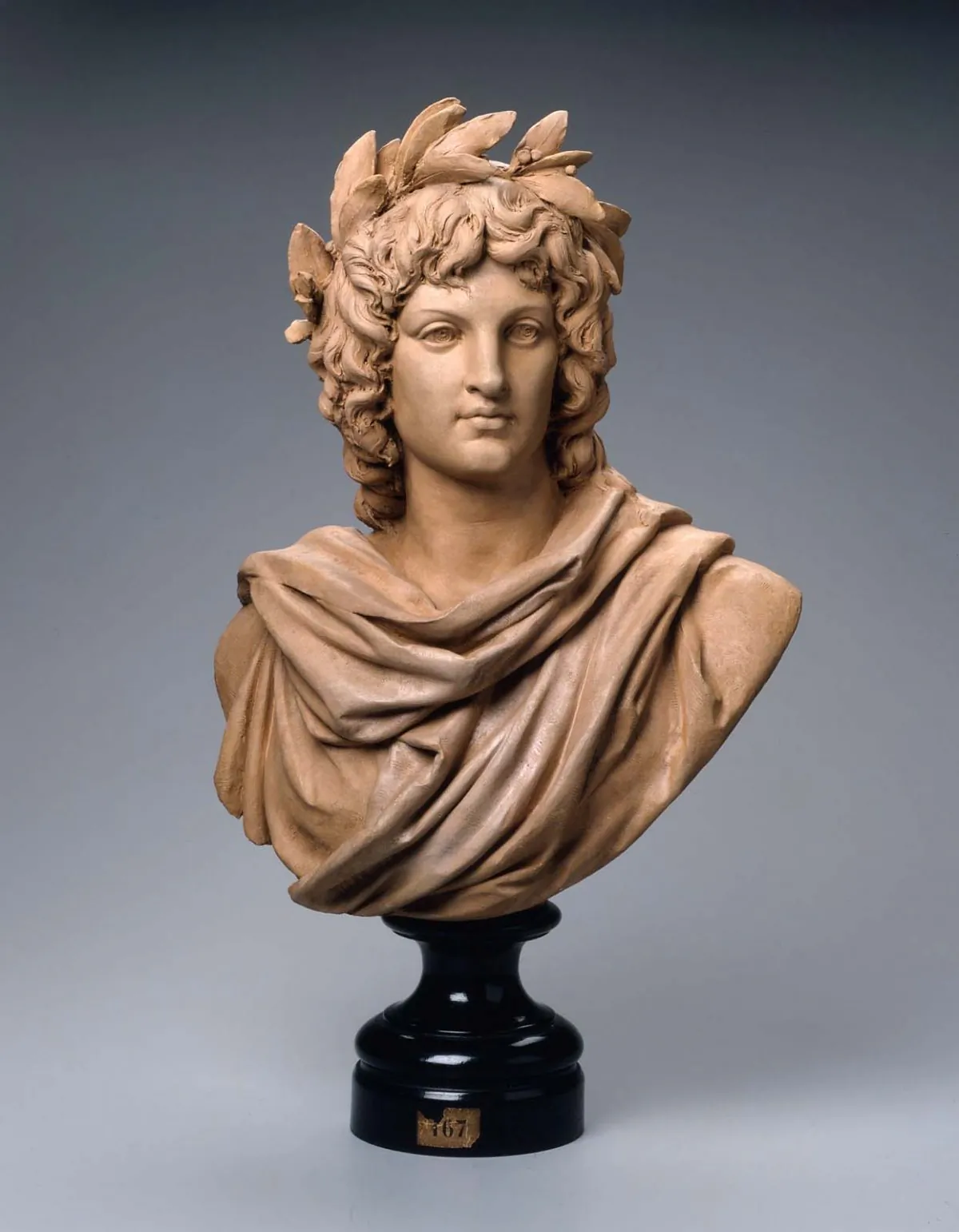
Virgil
The poetry of Virgil was an even more powerful vehicle for communicating ideas and emotions than the oratory of Cicero. Here are some illustrations:
Antifederalists who believed that the Constitution’s supporters were railroading the public quoted the lines from the “Aeneid” describing how the trusting Trojans dragged the infamous and fateful wooden horse into their city:
Instamus tamen immemores caecique furore
et monstrum infelix sacrata sistimus arce.
“Yet we push forward, unmindful, blinded by madness,
and erect the ill-omened monstrosity within our sacred citadel.”
Mason, a Virginian, believed adoption of the Constitution could lead to the dispossession of thousands of Virginia farmers. He drove home his point by paraphrasing the lament of a dispossessed farmer in Virgil’s first eclogue: Nos patriae fines et dulcia linquimus arva—“We leave the bounds of our homeland, we leave our sweet fields.”
As mentioned earlier, an author writing as “A Farmer” quoted Virgil’s third eclogue to warn that the Constitution would permit Congress to levy direct taxes. In doing so, Congress would act like the unscrupulous custodian of sheep entrusted to his care:
hic alienus ovis custos bis mulget in hora,
et sucus pecori et lac subducitur agnis.
“This custodian milks sheep that don’t belong to him twice an hour;
Thus, the juice of the ewe is taken stealthily from the lambs.”
As noted earlier, this quotation is useful for interpreting the Constitution’s phrase “direct Taxes.” Again, some background is necessary:
For many years, apologists for federal power have tried to circumvent the Constitution’s restrictions on direct taxes by arguing that only head taxes and real estate levies are direct—that all other taxes are indirect, and therefore free from the Constitution’s restrictions. But the quoted lines suggest that direct taxes may burden milk (i.e., the products of property) as well as sheep (the property itself). In other words, direct taxes include income as well as property levies. My own research has shown that this is definitely the case.
Another example—this one from advocates of the Constitution:
Virgil’s fourth eclogue was particularly famous for its prediction that the birth of a special child would usher in a new “reign of Saturn”—that is, a new Golden Age. This poem is called the “Messianic Eclogue,” and for centuries, Christians identified it with the birth of Jesus of Nazareth.
While the Constitution’s ratification was pending, some Federalist newspapers in Massachusetts printed cartoons depicting 13 columns representing the 13 states. As each state ratified the Constitution, its column rose from a prostrate to a vertical position, producing a growing colonnade. The Massachusetts Centinel celebrated the predicted ratification by Virginia with a cartoon showing vertical columns for the eight states that had already approved the Constitution, together with Virginia’s column in a 45-degree position. Above the columns was the fourth eclogue’s phrase, REDEUNT SATURNIA REGNA—“the reign of Saturn (i.e., the Golden Age) returns.”

However, as it turned out, New Hampshire ratified before Virginia. Shortly thereafter, the Boston Independent Chronicle commemorated New Hampshire’s adherence to the Union with a similar cartoon. It showed nine vertical columns, with Virginia’s column in the 45-degree position, and New York’s still lying flat. The legend over this cartoon was another line from the fourth eclogue: INCIPIENT MAGNI PROCEDERE MENSES!—“The great months (i.e., the new era) will now begin!”
Conclusion
The Founders were fascinated with the history of Ancient Rome and educated in Roman language, history, and literature. In writing and adopting the Constitution, they drew many lessons from the Roman experience—lessons in morality, constitutional history, and rhetoric.
Understanding how they resorted to ancient Rome is central to a deeper understanding of the Constitution itself.
Robert G. Natelson, a former constitutional law professor who is senior fellow in constitutional jurisprudence at the Independence Institute in Denver, authored “The Original Constitution” (4th ed., 2025) and is a contributor to the Heritage Foundation’s “Heritage Guide to the Constitution.” He also authored the scholarly article Virgil and the Constitution, whose publication is pending in Regent University Law Review.
Views expressed in this article are the opinions of the author and do not necessarily reflect the views of The Epoch Times.
 Friends Read Free
Copy
Facebook
Tweet
Friends Read Free
Copy
Facebook
Tweet