Commentary
There was something strange in the air at the pet store today.
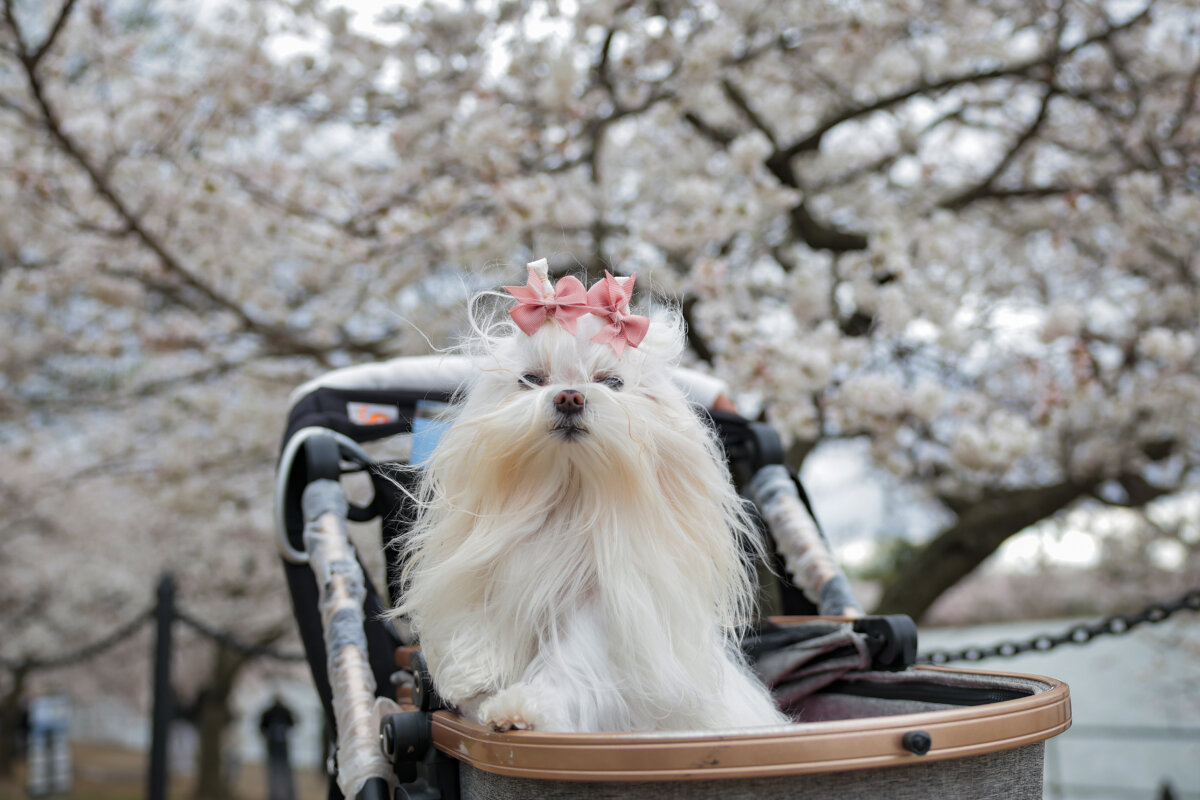
Maybe it was because it was Memorial Day weekend and everybody was out with their families. Maybe it was because I had already spent the morning at the Pearl in San Antonio watching people walk around with cats in backpacks and dogs in strollers. Or maybe it’s because once you notice something, you suddenly start seeing it everywhere.
A young couple walked by wearing matching Hawaiian outfits with their dog. A blue floral shirt for him. A matching dress for her. A matching shirt for the dog.
Another couple had just adopted a new puppy after their previous dog died. They stood there discussing how to raise him, what food was best, what schedule would be healthiest, debating details with the seriousness and tenderness of new parents naming a baby.
Around them were people pushing animals in strollers, carrying tiny dogs in slings strapped to their chest, or walking cats through the store in clear backpacks like little astronauts.
And I found myself wondering something that probably would have sounded absurd 20 or 30 years ago, but now somehow feels almost offensive to ask:
Are we using pets to replace the children we are no longer having?
I love animals. I grew up around them. I raise them. I understand bonding with them. We had ranch dogs growing up that we loved deeply. I had an aunt and uncle who never had children, and they absolutely treated their dogs more tenderly than we treated our farm dogs. They called them their babies.
And honestly, before I had children, I did some of this, too.
I had little dogs: Pomeranians and Min Pins. I traveled with them. They slept in the bed. They were a huge part of my emotional life at the time.
But I was also an adult woman who had delayed childbearing much longer than I probably should have.
Looking back now, I think some of that nurturing instinct had nowhere real to go.
The other day in Boerne, Texas, we were trying to find a pet store and accidentally walked into what is technically a pet store, but is primarily a bakery for cats and dogs. There were a few supplies, but the focus was clearly the baked goods. Glass display cases filled with decorated treats, muffins, cakes, biscuits, and cookies for what the sign called your “fur children.” You could special-order birthday cakes for your dog.
Twenty or thirty years ago, most people would have found that bizarre. Now, we are expected to treat it as completely normal, and questioning it at all can make people uncomfortable.
Today at the pet store, there were freezers full of ice cream treats for dogs. Ben & Jerry’s makes them now, along with other companies. I picked one up and looked at the ingredients: water, sugar, milk, and cream.
That struck me, too.
Dogs are not naturally sugar-eating animals. They would probably be healthier if they ate frozen cream blended with liver, heart, or animal fat. But the treats aren’t really designed around what dogs biologically need. They’re designed around what humans emotionally associate with love and celebration.
Honestly, it’s not even that different from how we feed ourselves anymore.
We live in a culture where almost every instinct gets redirected toward consumption.
Birth rates are collapsing across the developed world. Young adults are delaying marriage, delaying children, or opting out altogether. Many people are lonely. Many are financially overwhelmed. Many are scared of commitment, instability, or losing freedom.
In some ways, modern life almost seems designed to make pets easier than children. Dogs fit into apartments, careers, travel, delayed adulthood, and highly individualistic lives. Children require permanence, sacrifice, stability, community, and time. They force us to organize our lives around something larger than ourselves. A dog can often be integrated into modern life. A child requires modern life to change.
But the instinct to nurture doesn’t disappear.
So maybe it gets redirected.
Into dogs.
Into cats.
Into “pet parenting.”
Into strollers and matching outfits and birthday cakes and bakery cases.
We have friends who live part-time on the ranch, and their nieces, who are in their 30s, spend around $1,200 a month on doggy daycare. These are successful women with good jobs paying roughly $25,000 a year between daycare, grooming, veterinary care, treats, and everything else that comes with modern pet culture.
At some point, when we believe our dogs need constant entertainment, socialization schedules, daycare, birthday parties, and emotional enrichment every hour we are away, we are no longer treating them like pets. We are treating them like children.
What struck me most today was that most of the people I saw doing this were not elderly empty nesters whose children had already grown and left home. They were young people. Couples in their 20s and 30s. Single women carrying cats in backpacks with tattoos of the same cat on their legs.
And I couldn’t shake the feeling that what I was really seeing was misplaced motherhood and fatherhood.
I don’t mean that cruelly. I don’t think loving animals is wrong. I think animals are one of God’s gifts to humanity. I think companionship matters. I think caring for living things is healthy.
But I also think there is a difference between loving animals and replacing children with them.
People with young children generally do not revolve their entire identity around their pets. They are too busy raising actual humans. Their nurturing energy already has somewhere to go.
And maybe that is part of why this all feels so new.
A society that stops having children does not suddenly stop needing something to nurture. The desire remains.
But if that energy no longer flows toward family, where does it go?
More and more, it seems to flow toward pets.
Maybe that sounds judgmental. I don’t entirely mean it that way. Some people cannot have children. Some people truly do not want them. Some people are lonely. Some people simply love animals deeply.
Still, I can’t help feeling that something deeper is happening culturally.
I sometimes wonder if part of why this conversation feels uncomfortable is that, deep down, many people already know it’s true.
Because 20 or 30 years ago, if someone told you there would someday be dog bakeries, cat meetups in luxury shopping districts, sugar-loaded ice cream for pets, strollers designed for dogs, and young couples dressing like their Labradoodle for family outings, most people would have thought society had lost its mind.
Now, we call it normal.
And maybe the strangest part is that almost nobody seems willing to ask what changed.
Views expressed in this article are the opinions of the author and do not necessarily reflect the views of The Epoch Times.
 Friends Read Free
Copy
Facebook
Tweet
Friends Read Free
Copy
Facebook
Tweet