Commentary
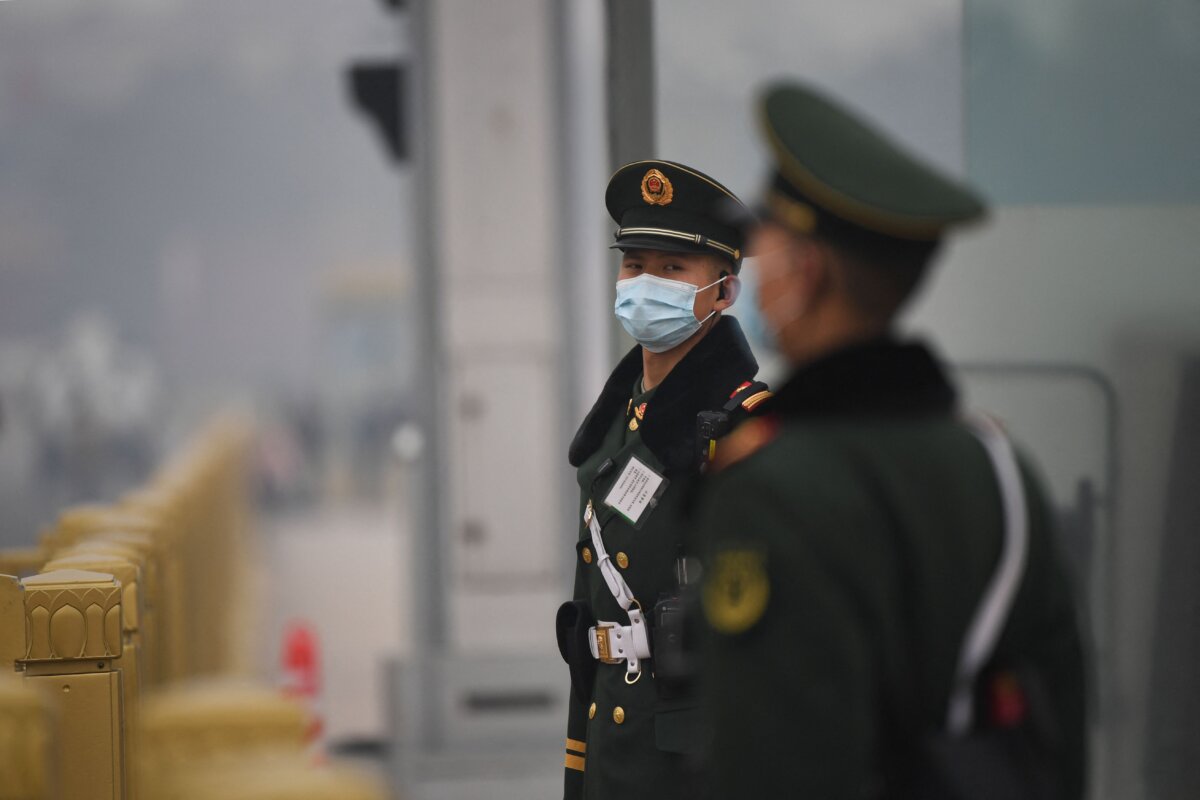
China’s top judicial bodies—the Supreme People’s Court and the Supreme People’s Procuratorate—issued a new interpretation on April 10 regarding corruption-related crimes, sharply raising the threshold for the offense of illicit wealth of unknown origin.
Under the new rules, the amount required for criminal liability has been raised to 3 million yuan ($439,222) from 200,000 yuan ($29,281), as set in the 2016 interpretation—a stunning 15-fold increase.
For more than a decade, Chinese leader Xi Jinping has framed his anti-corruption campaign as “zero tolerance.” Yet after 14 years of crackdowns, corruption appears not to have been curbed. The latest legal changes signal a shift back toward governance through corruption, a practice inherent to the Chinese Communist Party’s (CCP’s) authoritarian nature.
Abusing Power for Personal Gain
The scale of the new threshold stands in stark contrast to average incomes in China.
In 2020, then-Premier Li Keqiang said at a news conference that about 600 million Chinese people earned about 1,000 yuan ($146) per month. A later income distribution report by Beijing Normal University’s research institution found that nearly 40 percent of the population earned less than that amount, while more than 960 million people earned less than 2,000 yuan ($292) monthly.
Against this backdrop, 3 million yuan is an enormous sum. Yet under the new rules, officials with such unexplained wealth may no longer face criminal charges, revealing a system that prioritizes officials’ personal interests over those of ordinary citizens.
Anti-Corruption Drive Yields More Corruption Cases
Despite years of Xi’s so-called anti-corruption campaigns, the number and scale of corruption cases have continued to rise.
In 2025, authorities convicted 31 officials in cases involving more than 100 million yuan ($14.6 million) each, with publicly disclosed amounts totaling more than 7.7 billion yuan ($1.1 billion). Bai Tianhui, former general manager of China Huarong International Holdings, took the largest share of bribes. Official disclosures put the total at 1.1 billion yuan ($161 million).
On top of that, Beijing also investigated 115 officials at or above the provincial/ministerial level, the highest figure since the 18th Party Congress. Investigations into senior officials whose appointments are controlled directly by the Party’s central leadership totaled 181 cases, nearly double the previous year’s 92.
The trend continued into 2026. In the first quarter alone, 30 provincial/ministerial-level officials were investigated—exceeding the combined total for the same period in 2024 (16) and 2025 (13).
In an April report, a Chinese-language news portal based in Canada and linked to Beijing quoted Zeng, a legal insider from Guangdong Province identified by only his surname, as saying: “The amounts involved in corruption these days are just huge. For a civil servant, taking a few hundred thousand yuan doesn’t even register as corruption anymore—no one really sees it that way.
“Ten or 20 years ago, when I handled bribery cases [involving such an amount], prosecutors didn’t even want to file them because the sums were considered too small. Now it’s even worse—there are hardly any civil servants immune to corruption.”
Looser Rules Seen as Encouraging Corruption
By raising the bar to 3 million yuan, the new rules may create a safe zone for illicit gains below that threshold. Multiplied across thousands of officials, the cumulative sums could be substantial.
Li Chengpeng, a critic of China’s social affairs, said the higher threshold effectively shields officials from prosecution for corruption below that amount.
He pointed to a surge in interest in government jobs, which he attributed to the opportunities for personal gain that often accompany the power those positions carry. Applications for the civil service exam reached a record 3.72 million in 2026, up sharply from 1.4 million a decade earlier, according to Li Chengpeng. Competition has intensified, with acceptance rates dropping from 33 to one to 98 to one.
Here’s an extreme example reported by the Chinese news portal Sina in 2026: A position on the enforcement team at the Ruili Repatriation Center under the National Immigration Administration is recruiting just one person, yet it has allegedly attracted 7,591 applicants.
Diverging From Global Anti-Corruption Practices
When Xi launched his anti-corruption campaign in January 2013, he said power must be “locked within a cage of regulations”—a metaphor for using rules and oversight to prevent officials from abusing power for personal gain.
In fact, he doesn’t even need to build the cage himself. Internationally established asset disclosure systems for public officials are proven and effective tools for combating corruption.
According to the World Bank, more than 160 countries had established such systems by 2023.
However, China has yet to implement a comprehensive public asset disclosure mechanism, despite proposals dating back to the 1994 conference of China’s rubber-stamp legislature, the National People’s Congress.
On Dec. 22, 2019, Zheng Yefu, a retired, outspoken Peking University sociology professor, published an article titled “Asset Disclosure Should Start With the Standing Committee,” calling on members of the CCP’s Politburo Standing Committee, the highest decision-making body in China, to take the lead in publicly disclosing their personal assets.
“The current anti-corruption approach simply cannot get the job done, and it will also end up undermining China’s judicial system,” Zheng wrote.
To date, no such system has been introduced at the top level.
Concluding Thoughts
In 1999, then-CCP top leader Jiang Zemin launched a nationwide persecution of the spiritual discipline Falun Gong. To achieve his stated goal of “eradicating” the spiritual practice, he emphasized loyalty to the campaign above all else. Officials who adhered to his directives—regardless of their corruption—were promoted and appointed to key roles; often, the more corrupt they were, the quicker their rise. Consequently, a significant number of highly corrupt officials were promoted during his leadership, laying the foundation for what some describe as a “rule by corruption” system.
Under Xi’s anti-corruption campaign, the system hasn’t fundamentally changed—instead, it’s increasingly come to resemble the pattern set under Jiang. The recent interpretation of corruption-related offenses has, in practice, left officials more room to use their power for personal gain.
Views expressed in this article are the opinions of the author and do not necessarily reflect the views of The Epoch Times.
 Friends Read Free
Copy
Facebook
Tweet
Friends Read Free
Copy
Facebook
Tweet