
Commentary
If you have visited the gas pump and been watching the news, you know California is in the middle of an energy crisis. This crisis didn’t happen overnight—it’s the direct result of decades of environmental regulations that have strangled domestic oil production and refining. Since the 1980s, the state has lost more than 30 refineries, with recent closures reducing operable facilities from 40 in 1982 to just six or seven left operating by mid-February 2026.
Refining capacity has plummeted to about 1.3 million barrels per day today from 2.5 million barrels per day in 1982—a drop of 48 percent. During this same period, oil pumped from California wells dropped to a little more than 300,000 from more than 1 million barrels per day, a 70 percent decrease. However, during this same period, California’s population went to about 40 million from about 24 million, a 62.7 percent increase.
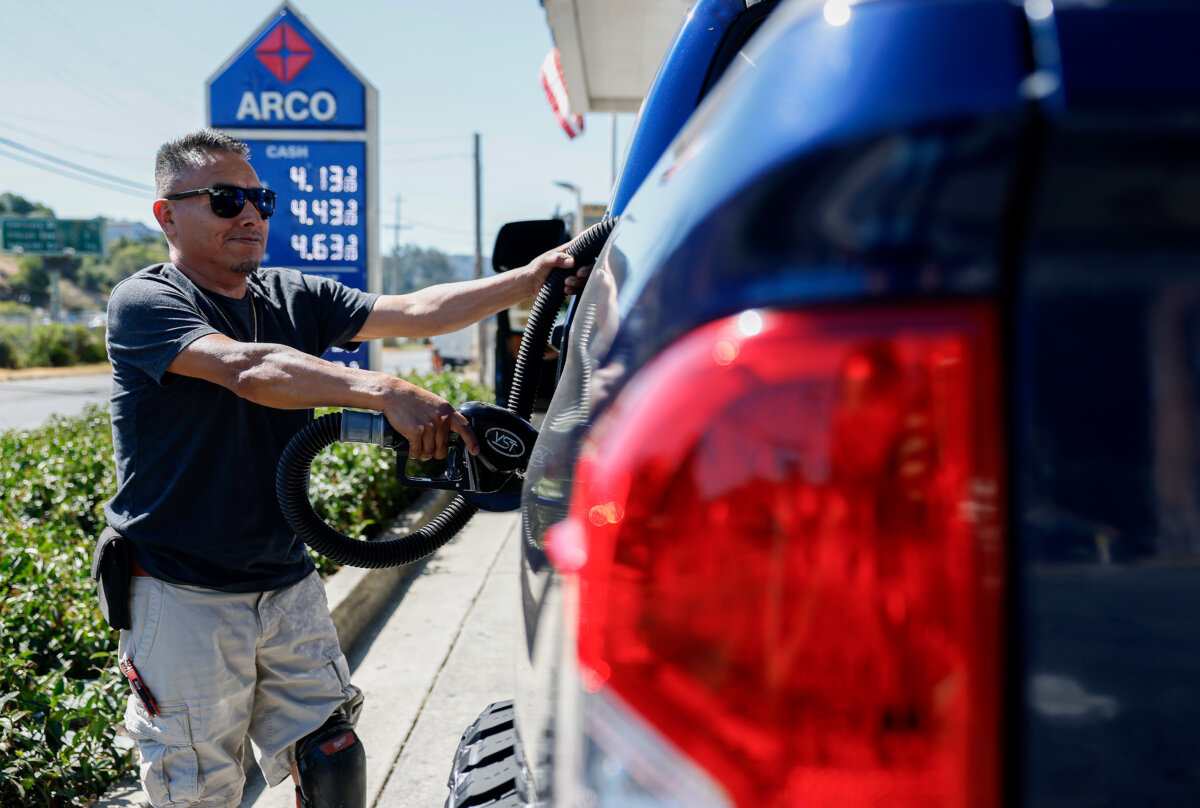
This means that on a per-capita basis, California refinery capacity decreased by 68 percent, and its oil well production decreased by about 80 percent. This leaves California capable of processing approximately 1 million to 1.3 million barrels per day total versus a daily need of about 1.6 million barrels of oil per day. Gasoline production has fallen by 6.2 million to 9.3 million gallons per day, leading to chronic shortages, price increases that have seen prices of $1 to $2 above the national average, and warnings that prices could climb to $8 per gallon and higher.
The huge premium Californians pay for a gallon of gasoline can be attributed to three things. The first is a general hostility to the oil and gas industry, as embodied in unreasonable and unscientific environmental standards, that created an environment that has caused all but a few very hardy oil and gas companies to flee the state.
To compensate for the loss of domestic production, California not only buys crude oil from other countries but is now paying other countries to produce its special California-only gas and diesel formulation. And these countries largely depend on energy from coal-fired power plants to provide the power to produce the gas for California.
Speaking of the California Air Resources Board (CARB) mandate, it turns out that the special California-only gas that is supposed to lower pollution also reduces the miles per gallon of vehicles by 1 percent to 3 percent. This means drivers burn 1 percent to 3 percent more gasoline to go the same distance, adding more than 268 million more gallons required and more than 2 million more tons of CO2 to the atmosphere every year. Over the same period (1980 to 2025), Dallas, despite experiencing much faster population and vehicle growth, matched Los Angeles’s decline in nitrogen oxide and aromatic pollution, about 75 percent, without having to resort to using a “boutique” CARB gas formulation.
California’s CARB mandate forces drivers onto a “fuel island,” cut off from the nation’s competitive supply. By prioritizing a “special” boutique blend over the already stringent and cheaper Federal Tier 3 standards, California has abandoned the volume efficiencies of a national market, leaving its drivers to pay a massive premium for a fuel that actually offers less energy per gallon and actually puts more greenhouse gases into the atmosphere.
Finally, California’s gasoline taxes and fees are the highest in the country, totaling roughly $1.27 per gallon on average versus 40 cents to 50 cents per gallon on average in the other 49 states. A breakdown of California’s main gas taxes and fees (as of 2026):
- State excise tax—61.2 cents per gallon (July 2025 to June 2026 rate, second-highest in the country behind Illinois at 66.4 cents)
- Cap-and-trade program costs—23 cents in 2024 (Cap-and-Trade varies by year. Only California and Washington levy participate in Cap and Taxes on their residents)
- State and local sales taxes—population-weighted average of 41 cents per gallon (applied to the full retail price, including excise, using average gas price and the Tax Foundation average state and local sales tax of 8.99 percent)
In comparison, the national average state excise tax is about 33.5 cents per gallon, and total state-level taxes and fees across the United States typically range from 40 cents to 50 cents per gallon when including similar fees and sales taxes. The bottom line is this: Californians pay 77 cents to 87 cents more per gallon in state taxes and fees than the average U.S. resident, largely because of the high excise rate, cap-and-trade pass-throughs, and additional environmental fees. This contributes significantly to California’s pump prices being consistently $1.00 to $1.67 higher than the national average.
While the above analysis has primarily focused on normal gasoline, all the base reasons apply to diesel costs and availability as well.
All of this adds up to California creating extraordinarily high gas prices while also causing a fragile gas and energy infrastructure teetering on collapse.
Views expressed in this article are the opinions of the author and do not necessarily reflect the views of The Epoch Times.
 Friends Read Free
Copy
Facebook
Tweet
Friends Read Free
Copy
Facebook
Tweet