
Commentary
In Canada, cartel activity is framed as a crime problem, a public health problem, or a border problem. Those are real. They are also incomplete. Cartels increasingly resemble criminal regimes that compete with the state for control over markets, territory, and legitimacy. That is why labels like narco-terrorist do not capture the full threat.
Terror is a tactic. The cartel system is an economy.
When policymakers use terrorism designations, the goal is straightforward. Gain stronger tools, widen jurisdiction, and hit the entire network, not only street-level traffickers. Yet the defining feature of modern cartels is not ideology. The defining feature is coercive market power backed by violence, corruption, and logistics.
Cartels operate in the white, grey, and black markets simultaneously.
In the black market, the core business remains drugs, especially synthetic opioids and methamphetamines. Cartel power expands through smuggling, protection systems, and capture of state-adjacent services. It then normalizes through the white market, using legitimate companies and professional facilitators to launder proceeds and buy access.
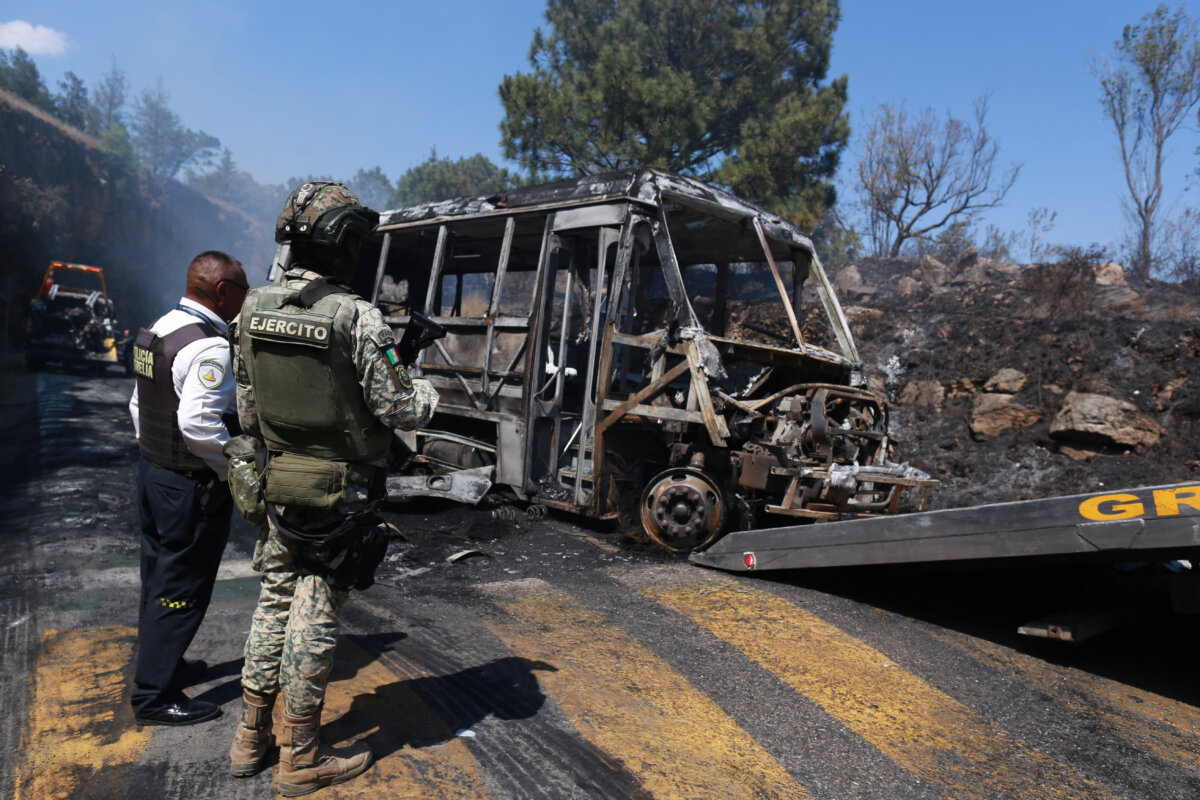
In cartel-contested regions of Mexico, threats and violence can disrupt inspections and exports tied to cross-border commerce. When security can pause inspections, shape routing, and raise uncertainty, the cartel is shaping trade conditions.
This is why narcoterrorism falls short. The violence is real, but cartel power is often quieter and more durable. It is the slow replacement of lawful governance with criminal governance. In parts of Mexico, cartels set rules, resolve disputes, and tax commerce through extortion. Over time, cartel control becomes embedded in local life because the cartel decides what is allowed and what is punished.
The bigger risk is legitimacy. When businesses pay for protection and communities learn that reporting crime carries personal risk, trust in the state erodes. That erosion drives migration pressure, investor caution, and normalizes corruption as a cost of doing business.
Canada needs to look harder in the mirror.
Canada is no longer only a downstream consumer market. Canada is a production site for synthetic drugs, including fentanyl and methamphetamine, with large labs dismantled that were linked to distribution and export. Canada is also a transshipment and outbound corridor for moving narcotics to other jurisdictions. Canada is also a high-value node for laundering, professional enabling, and trade-based schemes. Low conviction rates in complex cases, long timelines, and uneven sentences can make the country attractive to networks that price risk carefully.
Cartel-aligned networks target Canada because the risk calculation can look favourable. Laws and procedures can constrain long investigations. Enforcement capacity is limited relative to the scale of the threat. Complex financial cases remain difficult to prove, and outcomes often fall short of deterrence. Cartels only need a predictable gap between detection and consequences.
The China connection strengthens the system.
The cartel supply chain runs on procurement and logistics. Precursor chemicals, dual-use equipment, shipping routes, and trusted brokers matter as much as gunmen. Money movement is the other half. U.S. financial authorities have warned that Chinese money laundering networks support Mexico-based trafficking organizations. That enabling layer uses underground banking and trade misinvoicing to move and clean value across borders.
If economic stability is tied to national security, cartel systems are a direct challenge to governance.
Legitimacy rests on the public belief that rules apply, contracts are enforceable, and corruption is punished. Cartels corrupt procurement, penetrate ports and trucking, intimidate regulators, and distort competition. When enforcement is inconsistent, the signal is permissiveness.
That brings us to the Canada-United States-Mexico Agreement.
CUSMA depends on a predictable rule of law across an integrated economic space. It cannot perform as designed if key corridors and sectors are vulnerable to intimidation, corruption, and criminal financing. The agreement faces a major review window in 2026. Trade will be conditioned on trust.
If cartel-driven instability and illicit finance keep expanding, border friction will rise. Compliance burdens will grow. Investor confidence will weaken. The debate will shift from tariffs to credibility.
The right response is broader than a narcoterrorism label. Canada needs a strategy that treats cartels as criminal regimes operating across markets.
Target enablers as aggressively as shooters. Treat trade-based laundering as an economic security exposure. Harden ports and logistics, and resource financial prosecutions that deter professional facilitation. Align with U.S. and Mexican counterparts on corridor targeting and precursor interdiction.
Canada is proficient in diagnosis. The test is enforcement.
Cartels thrive when states outsource consequences to press releases, periodic task forces, and narrow prosecutions. Criminal regimes interpret that as permission. If CUSMA is to survive its next phase as a serious North American project, the cartel problem must be treated as a governance problem, an economic security problem, and a legitimacy problem. Not just a drug problem.
Views expressed in this article are the opinions of the author and do not necessarily reflect the views of The Epoch Times.
 Friends Read Free
Copy
Facebook
Tweet
Friends Read Free
Copy
Facebook
Tweet