
Commentary
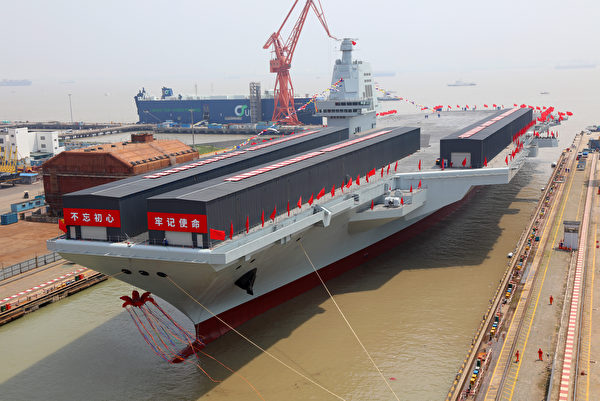
On Sept. 11, the Japanese spotted China’s yet-to-be-commissioned aircraft carrier, the Fujian, sailing toward the Taiwan Strait. According to Chinese state media, the ship was merely heading to the South China Sea for routine testing and training, and was not targeting any specific country.
However, the timing of this move—on the anniversary of the 9/11 terrorist attacks—suggests a symbolic provocation of the United States, despite Beijing’s denial. Aware of its military inferiority, the Chinese regime continues to play political games.
To commemorate the 80th anniversary of the end of World War II, Beijing on Sept. 3 held a military parade, which showcased various aircraft intended for the Fujian carrier, including the KJ-600 airborne early warning plane, the J-35 stealth fighter, the J-15T fighter, and the J-15DT electronic warfare jet.
Since the Fujian could not be transported to Tiananmen Square, it would have made far more sense to launch the carrier’s debut voyage on Sept. 3 and splice footage of the carrier into the parade’s media coverage. However, the launch was delayed and appeared to be strategically scheduled for Sept. 11.
China’s aircraft carrier program is fundamentally about competing with the United States and is fueled by fantasies of a new Pacific war. It has long been evident that the United States and its allies are viewed as the adversaries of the Chinese Communist Party (CCP). The decision to launch the carrier on 9/11 appears too intentional to be merely a coincidence.
Through military parades and carrier demonstrations, the CCP seeks to intimidate the United States and its allies while pretending to advocate for peace.
Notably, just two days after Beijing’s parade, on Sept. 5, U.S. President Donald Trump signed an executive order authorizing the Department of Defense to use “Department of War” as a secondary title.
Key Lessons From World War II
As China uses World War II victory anniversaries to stage parades, the global community should reflect on the real lessons of the war.
Some argue that if the United States had rearmed before the start of World War II by organizing its defense industry, stockpiling weapons, and maintaining a prepared military, Japan and Germany might have been deterred, potentially preventing a global catastrophe.
At the time, the United States was fully aware of Japan’s ambitions but did not strengthen its military quickly. Even after Japan invaded China, no serious alarm was raised until the surprise attack on Pearl Harbor, Hawaii.
History can’t be rewritten, but its lessons are urgent and clear.
Ironically, on a day meant to commemorate victory over fascism, the CCP adopted the same militaristic mindset it once condemned, threatening its neighbors, seeking Pacific dominance, and ultimately undermining its stated commitment to peace.
Fujian’s recent transit through the Taiwan Strait is a stark warning: The United States and its allies must strengthen their forces and visibly demonstrate readiness to deter the Chinese regime.
The Fujian’s ‘Training Mission’: Intimidation Campaign
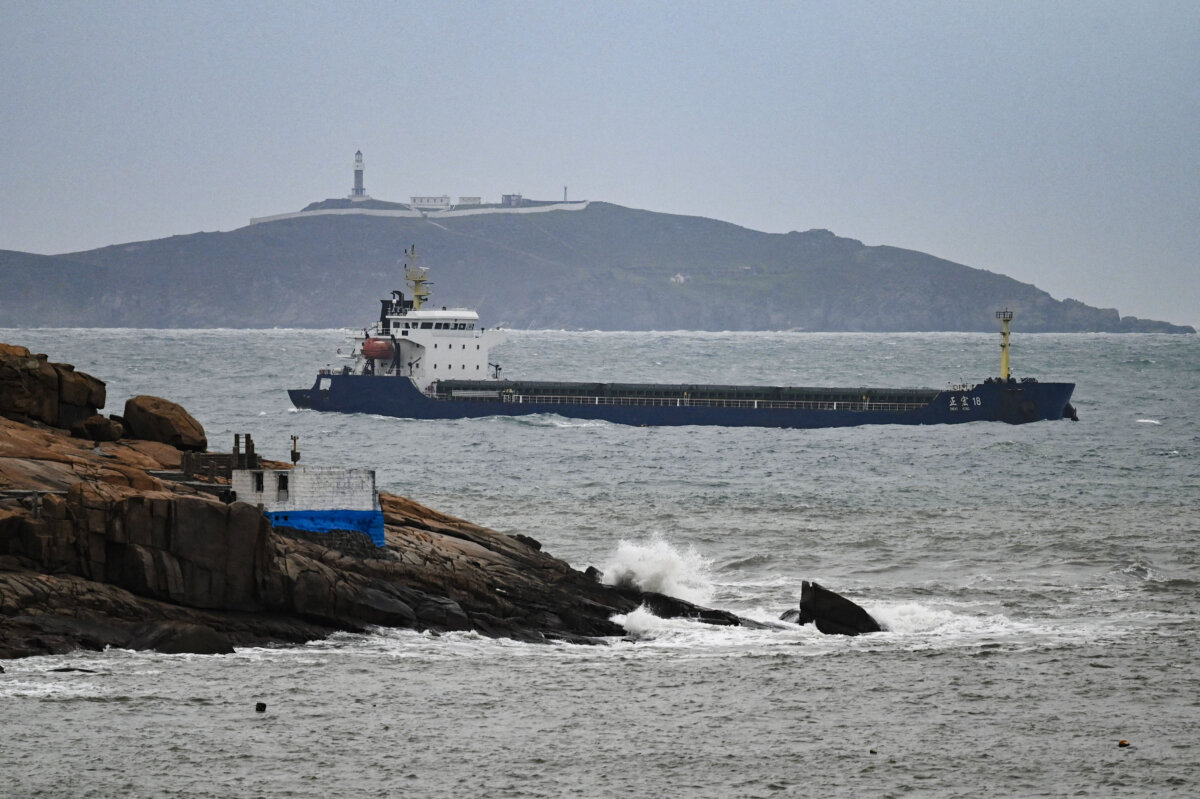
The Chinese navy claims that the Fujian’s recent voyage was merely a sea trial and a “training mission” conducted during its construction phase. But how can a carrier that has not yet been officially delivered or commissioned already be assigned training tasks?
Chinese state media reported that two Chinese destroyers from the Eastern Theater Command were deployed to escort the Fujian.
If the primary objective was to reach the South China Sea, it would have been safest to travel closely along China’s coastline to avoid potential incidents.
Instead, the carrier group departed from near Shanghai and traveled deep into the East China Sea. At one point, it came within approximately 124 miles of the disputed Senkaku Islands. In response, the Japan Self-Defense Forces immediately began shadowing the fleet. The Fujian then turned south, making its route appear more like a simulated assault on Taiwan rather than a straightforward, cautious trip to the South China Sea.
This appears to be yet another intimidation campaign by Beijing, targeting Japan and Taiwan simultaneously.
Another question remains: Under which theater command will the Fujian ultimately serve?
Where Will the Fujian Be Stationed?
The Liaoning aircraft carrier operates under the Northern Theater Command, which is based in Qingdao, China. The Shandong carrier serves the Southern Theater Command out of Sanya, Hainan Province, China. While it would make sense for the Fujian to be assigned to the Eastern Theater Command, Beijing has announced that it will be heading to the South China Sea instead of the East China Sea for trials and training.
Some observers speculate that the Fujian may be assigned to the Southern Theater because of its current lack of onboard aircraft. This theory suggests that Beijing might prefer to not establish another full carrier and air wing base in the Eastern Theater. Once the Fujian arrives in Sanya, it will be able to load aircraft at that base.
The Eastern Theater Command dispatched two destroyers to escort the Fujian in this recent “training mission”: the Sovremenny-class destroyer Hangzhou (136) and the Type 052C destroyer Jinan (152). Both are older and less capable than the 10 modern Type 052D destroyers in the theater’s arsenal.
If the Fujian is expected to join the Southern Theater, this choice of escort begins to make sense. The Eastern Theater would have little incentive to assign its top-tier assets to an operation involving a carrier that ultimately won’t fall under its command.
I believe that the CCP would like to station an aircraft carrier in the Eastern Theater, closer to Taiwan and Japan, but that it doesn’t dare to do so, at least for now.
If war were to break out in the Taiwan Strait, the naval base in Zhoushan, located in the Eastern Theater, would likely be among the first targets of U.S. and allied airstrikes. Stationing an aircraft carrier there would make it vulnerable.
Why? Because Japan is preparing to deploy Tomahawk cruise missiles and the United States recently deployed its Typhon missile system to Japan, all within range of China’s Zhoushan base. Some of Taiwan’s missiles can also reach the area.
Conclusion
It is timely, and possibly long overdue, for the U.S. Defense Department to revert to the name “Department of War.” The threat posed by the CCP is becoming increasingly serious: The deployment of the Fujian on the anniversary of the 9/11 terrorist attacks was a provocative act and serves as yet another wake-up call for the United States.
Although the Chinese regime’s military has grown rapidly, it still faces entrenched problems, including political instability, widespread corruption, and an increasingly hostile international environment. If the United States and its allies remain vigilant and use their collective strengths such as strategic alliances, technological superiority, combat experience, and geographic advantages, as well as exploit the weaknesses in China’s military, they can effectively deter Beijing from making the first move.
Additionally, if the United States and its allies are serious about preventing war, they must take action on multiple fronts, including cutting off funding sources to China to weaken its military capabilities. If the CCP continues to pursue aggressive policies, it could collapse because of the consequences of its actions, such as becoming involved in a destructive arms race of its own making.
Views expressed in this article are the opinions of the author and do not necessarily reflect the views of The Epoch Times.
 Friends Read Free
Copy
Facebook
Tweet
Friends Read Free
Copy
Facebook
Tweet