
Commentary
China’s National People’s Congress recently passed a new Law on Promoting Ethnic Unity and Progress, which will have a major effect on minorities and overseas Chinese. The law codifies Chinese leader Xi Jinping’s ethnic policy and is not what its title implies, despite a gaslighting headline from a China Daily article on April 21: “Xinjiang will only prosper further under new law.”
Let us examine the new law, with emphasis on its friction with international law.
The Extraterritoriality Clause
Article 63 of the new Law on Promoting Ethnic Unity and Progress (the final version; the earlier draft numbered it Article 61) asserts that the law applies to foreign organizations or individuals who “commit acts targeting the [People’s Republic of China] that undermine ethnic unity and progress or create ethnic division.” The law leaves the actual penalties to be imposed under other applicable laws. Thus, inciting ethnic hatred or discrimination is punishable (as determined arbitrarily by the state) by up to 15 days of detention under the public order offenses law, or up to 10 years in prison under the criminal code.
Importantly, the law’s reach is not purely punitive. Article 17 calls for promoting its ideological framework through exchanges with foreign academia, civil society groups, and think tanks, and for fostering such consciousness among overseas Chinese communities to strengthen their understanding that they belong to the Chinese nation. This creates a dual track: soft ideological penetration through the United Front Work Department (UFWD) on one side, and hard legal liability under Article 63 on the other. This is the basis for transnational repression.
The Broader Architecture of Extraterritorial Legal Reach
The ethnic unity law’s Article 63 does not exist in isolation. It is the latest addition to an increasingly elaborate body of Chinese extraterritorial laws, all of which share the same structural problem from an international law perspective: They criminalize conduct that is lawful—and often constitutionally protected (e.g., free speech rights)—in the countries where it takes place.
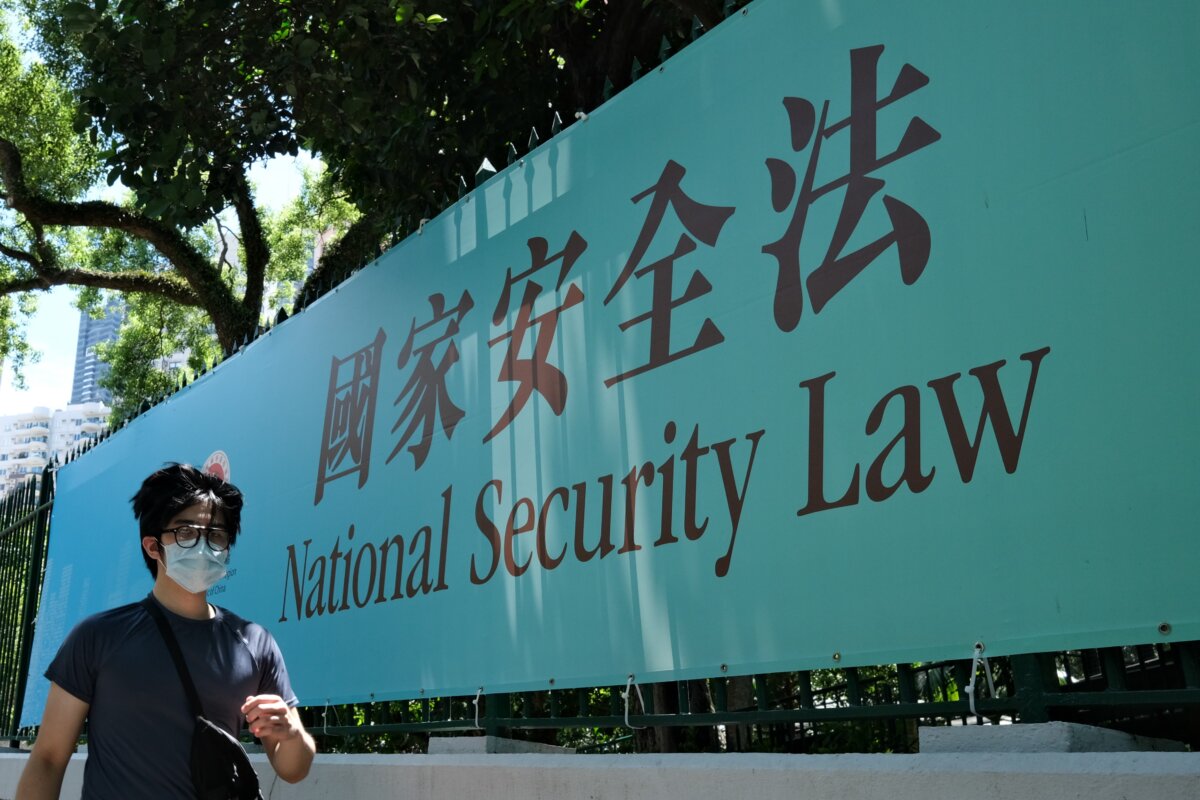
The 2020 Hong Kong National Security Law (NSL) is the most notorious precedent. Article 38 of the NSL exerts extraterritorial jurisdiction over persons outside Hong Kong who are not Hong Kong residents, criminalizing acts of subversion as defined in the law. The NSL is even broader in scope than China’s own criminal law.
The 2024 “diehard separatist” guidelines on Taiwan pushed this further still. China already has laws and regulations against Taiwanese independence supporters, including guidelines published in 2024 to punish “diehard” activists—including with the death penalty—even though Chinese courts have no jurisdiction on the island.
The ethnic unity law extends this architecture from political dissent specifically to ethnic and cultural expression broadly. Taiwanese officials noted that the law represents a shift in tactics: Whereas previously Chinese legislation was about opposing certain beliefs, now it threatens punishment if people do not actively promote China’s unity.
What About International Law?
Under customary international law, a nation state may exercise jurisdiction on several recognized bases: territorial (where the act occurs), nationality (the actor is a citizen), passive personality (the victim is a citizen), the protective principle (acts targeting the state’s vital interests), and universal jurisdiction (reserved for the gravest crimes such as genocide and piracy). China’s extraterritorial claims in the NSL and the ethnic unity law rely primarily on the protective principle but apply it to conduct so vaguely defined and so far removed from traditional national security threats that the claimed justification strains legal credibility.
The U.N. Human Rights Committee stated in July 2022 that the NSL was incompatible with the International Covenant on Civil and Political Rights (ICCPR). China is not a party to the ICCPR, which limits formal legal leverage, but the committee’s analysis is instructive: The vagueness of offenses such as “undermining ethnic unity” fails the requirement under human rights law that restrictions on expression be necessary, proportionate, and precisely defined.
The UFWD’s Enforcement Role
The ethnic unity law explicitly assigns implementation authority to the UFWD and the National Ethnic Affairs Commission (the latter having reported to the former since 2018). This is the critical institutional linkage. The UFWD was already the primary machinery for extending Chinese Communist Party control over diaspora communities; the law now gives that machinery a statutory foundation.
The UFWD manages relations with, gathers intelligence on, and attempts to gain influence over elite individuals and organizations inside and outside mainland China. It focuses on people or entities outside the Party—especially in the overseas Chinese diaspora—who hold political, commercial, religious, or academic influence.
United front pressure and harassment tactics, including threats against family in China, are deployed against diaspora members of China’s persecuted ethnic and religious minorities. The ethnic unity law provides legal cover for these tactics.

Where Does the MSS Fit In?
While the UFWD conducts influence operations and soft coercion, the Ministry of State Security (MSS) provides the covert intelligence and enforcement arm. Domestically, the MSS undertakes surveillance of ethnic minorities, especially in Tibet and the Xinjiang region. One of the MSS’s acknowledged responsibilities is penetrating Chinese dissident groups abroad—what they call the “five poisons”: democracy advocates, Taiwan, Tibetans, Uyghurs, and Falun Gong.
China is engaged in overseas espionage directed through diverse methods via the MSS, the Ministry of Public Security, the UFWD, the People’s Liberation Army Intelligence Bureau, and numerous front organizations. MSS agents and their proxies engage in unsanctioned and covert law enforcement activity on foreign soil, including surveillance, stalking, and harassment of their targets, many of whom are legal residents or even citizens of their host countries. A key and particularly cruel tactic is “coercion by proxy.” That is, in order to force a target to return to China, MSS authorities will harass, detain, and sometimes torture family members who remain in communist China.
The UFWD and MSS are not wholly distinct. The UFWD and its affiliated front organizations have served as cover for intelligence agents of the MSS. State security officers have donned the guises of united front departments, overseas Chinese affairs offices, and foreign affairs offices as “official cover” for intelligence operations. The ethnic unity law, by formally tasking the UFWD with overseas implementation, further blurs this already porous boundary, making it harder for foreign counterintelligence services to distinguish between ostensible community-building activities and active intelligence operations.
Institutional Synergy
The most important point is that Article 63 of the ethnic unity law, the NSL, the UFWD, and the MSS are not four separate problems—they are components of a single, coordinated system of transnational control. The architecture works as follows.
The NSL established the precedent that China’s criminal law can reach anyone, anywhere, for political speech. The ethnic unity law extends that principle from purely political dissent (secession, subversion) to ethnic and cultural expression (criticizing ethnic policies, maintaining minority identity outside China). The UFWD provides the soft-power infrastructure: a global network of community organizations, Confucius Institutes, student associations, and chambers of commerce that collect intelligence, enforce social conformity within diaspora communities, and identify targets for harder enforcement. The MSS provides the hard-power infrastructure: covert surveillance, cyberespionage, harassment of family members, and coercion to secure “voluntary” returns to China.
The ethnic unity law now provides the statutory predicate for these actions.
Concluding Thoughts
Sadly, international law is poorly equipped to constrain China’s transnational repression architecture. Two reasons stand out.
First, China is not a party to the principal international human rights treaties that would provide the most direct legal constraints—notably the ICCPR—and has ratified others, such as the International Covenant on Economic, Social, and Cultural Rights, that have interpretive reservations that strip them of practical enforceability.
Second, the primary enforcement body for these matters, the U.N. Human Rights Council, is subject to political vetoes, and China has successfully mobilized blocs of developing nation support to deflect accountability resolutions. For example, the Human Rights Council’s 2022 vote on whether even to discuss a report on Xinjiang region abuses was defeated by a margin of 19–17, with China’s allies providing the decisive votes.
What international law can offer is primarily normative and indirect: extradition requests will fail in most democracies, foreign agent registration laws will expose and disrupt UFWD front organizations, and targeted sanctions will be implemented against alleged human rights violators.
The ethnic unity law’s extraterritoriality clause will simply not be enforced through international courts or extradition proceedings in democratic countries. Its real enforcement mechanisms are the UFWD’s social pressure networks, the MSS’s coercive operations, and the permanent threat hanging over the family members left behind in China. These operate below the threshold of formal international law and are largely invisible to it—which is precisely why Beijing designed the system the way it did.
These are not the actions of a civilized society.
Views expressed in this article are the opinions of the author and do not necessarily reflect the views of The Epoch Times.
 Friends Read Free
Copy
Facebook
Tweet
Friends Read Free
Copy
Facebook
Tweet