
Commentary
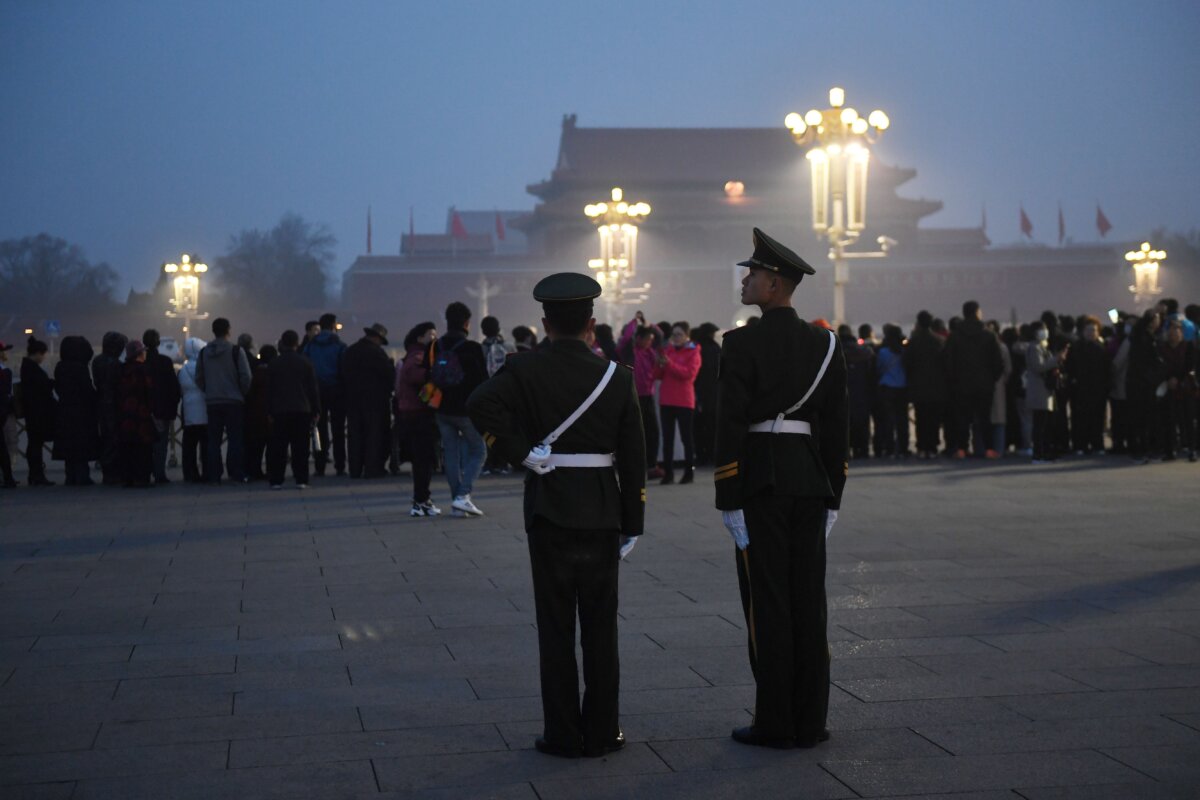
Is communist China an alternate universe? The leader of an atheist communist regime is speaking about what state-run media outlet China Daily describes as “the strategic importance of intellectual and moral development for minors,” while calling for “joint efforts to create a sound social environment conducive to the healthy growth of young people.”
Is Chinese leader Xi Jinping serious? The Chinese Communist Party (CCP) has gone against the grain of human experience and traditions by substituting “scientific atheism” for traditional Chinese values and universal morals while actively eliminating or subverting any religions that could provide alternative—and often transcendent—bases for morals and ethics such as compassion, justice, or accountability to a higher power.
This is eerily similar to the Superman comics’ Bizarro World, where the motto was “Us do opposite of all Earthly things! Us hate beauty! Us love ugliness! Is big crime to make anything perfect on Bizarro World!”
Let us unpack Xi’s incredible statements to discover the reality behind the clichés.
What Is Morality?
Morality refers to the principles, standards, or codes that determine what is right and wrong, good and bad, in human thought, behavior, and character. It guides how individuals ought to behave in society, especially toward others. It involves judgments about obligations, virtues, harm, fairness, and justice. That is, morality involves obligations to others’ welfare, rights, fairness, and justice, as well as related reasoning, emotions, and actions.
Over the centuries, the concept of universal morals has developed to promote cooperation, reduce harm, and enable social living. According to a survey by anthropologists at the University of Oxford, there are seven generally accepted cooperative principles across most, if not all, human cultures: “Help your family, help your group, return favors, be brave, defer to superiors, divide resources fairly, and respect others’ property.”
The Chinese version of universal morals was developed over more than 2,000 years through debate, state endorsement, and cultural synthesis. It prioritizes harmony, virtue cultivation, and human-centered order over coercion or divine mandate. Confucianism’s emphasis on universal virtues such as benevolence and righteousness made it the closest to a shared ethical foundation across classes and eras of Chinese history.
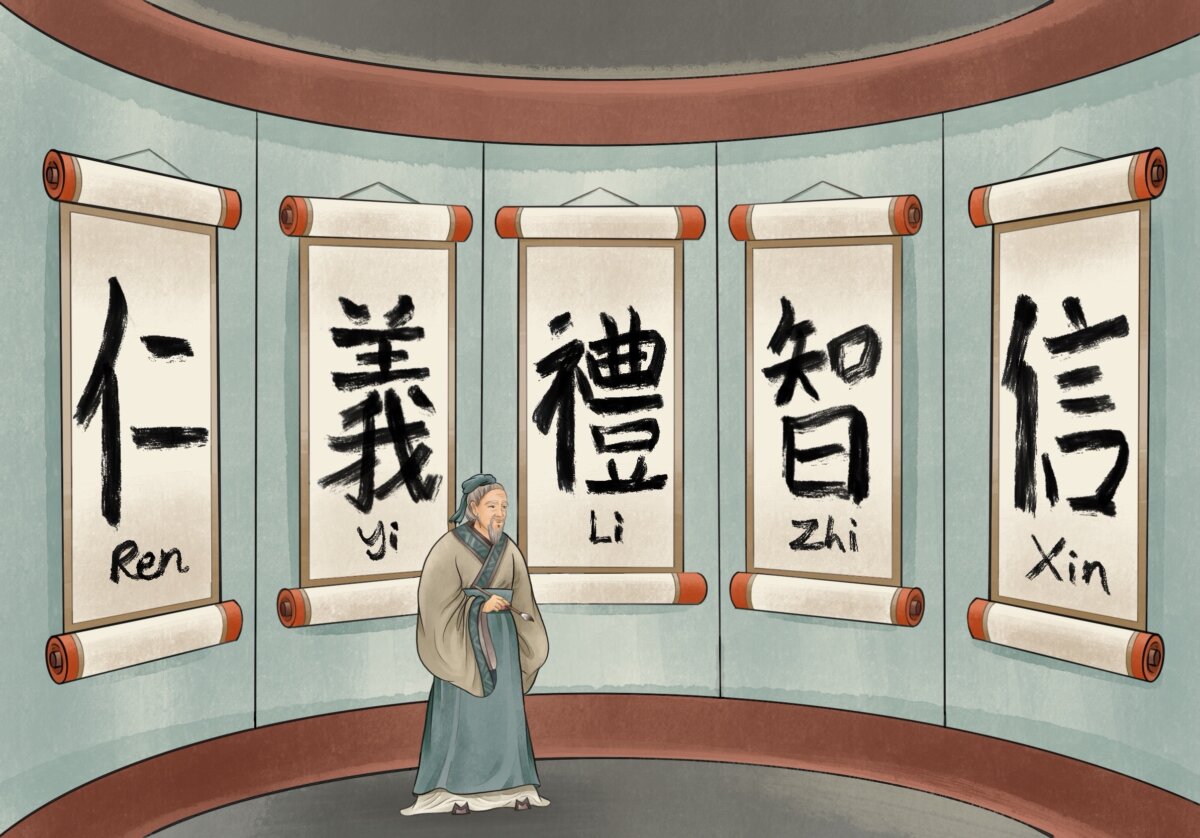
Confucius emphasized moral self-cultivation and virtues applicable to all people: ren (benevolence/humaneness), yi (righteousness), li (propriety/ritual), zhi (wisdom), and xin (trustworthiness). These were universal in aspiring to foster harmony through proper relationships among all people.
CCP Morality
Along came the communists in 1949, who turned universal morals upside-down in their quest to dominate and control society—and micromanage all human interactions—by suppressing religion and enforcing ideological purity and subordinating natural human bonds associated with the universal morals to loyalty to the state and the Party.
Under the CCP’s rule, morality is not derived from transcendent or religious sources but is rather a state-constructed framework designed to align individual behavior with the Party’s collectivist goals, ideological conformity, and social stability.
Ideological conformity and social stability (often referred to as “social harmony” or “harmonious society”) serve as the foundational pillars of the Party’s definition of morality. This is not accidental but stems from the CCP’s Leninist nature as a vanguard party, its historical lessons learned, and Xi’s explicit vision for sustaining one-party rule amid rapid socioeconomic and geopolitical change. To make the CCP’s definition of morality more palatable to the Chinese people, a smattering of elements of traditional Chinese philosophy is incorporated to lend legitimacy.
Out the door went compassion, justice, fairness, accountability, and the seven cooperative principles. In came strict adherence to Marxist-Leninist ideology (with severe punishments for nonconformity and dissent), suppression of religious and minority groups, informing on family and friends, forced collectivization, and the abolition of private property (and the respect previously earned for owning property). Fairness, once seen as divinely ordained or evolutionarily beneficial, as it had been throughout Chinese history? Forget about it! The communists see fairness as “unscientific.”
The dilemma for the Chinese communists is that an atheist regime coopts tradition while eroding the spiritual foundations of society, as shown through those seven cooperative principles. This ultimately leads to a “moral crisis” in which state-defined morals and ethics serve the CCP rather than the universal truths most Chinese people inherently understand. In short, morality becomes arbitrary in serving the state while undermining the traditional fabric of Chinese society.
The Corroding Effect on Chinese Youth
Ample evidence suggests that “communist morals” face significant pushback among the young Chinese (typically those younger than 35), who are increasingly exploring spirituality, religion, or folk practices amid modern economic pressures, mental health issues, comparisons with youth in other societies, and a general search for meaning in the arbitrary society created by the CCP.
Chinese youth (aged 16 to 24) face high unemployment (more than 15 percent since 2022), economic slowdown brought about by U.S. tariffs and over-capacity policies, and general inequality (in terms of opportunities, social mobility, and fair outcomes). As a result, there is a growing rejection of the CCP’s policies, expressed through individualism, apathy, or subtle rebellion. This manifests in movements such as “lying flat” (tangping), consumerism, and spontaneous protests that erode CCP-promoted values such as filial piety and Party devotion.
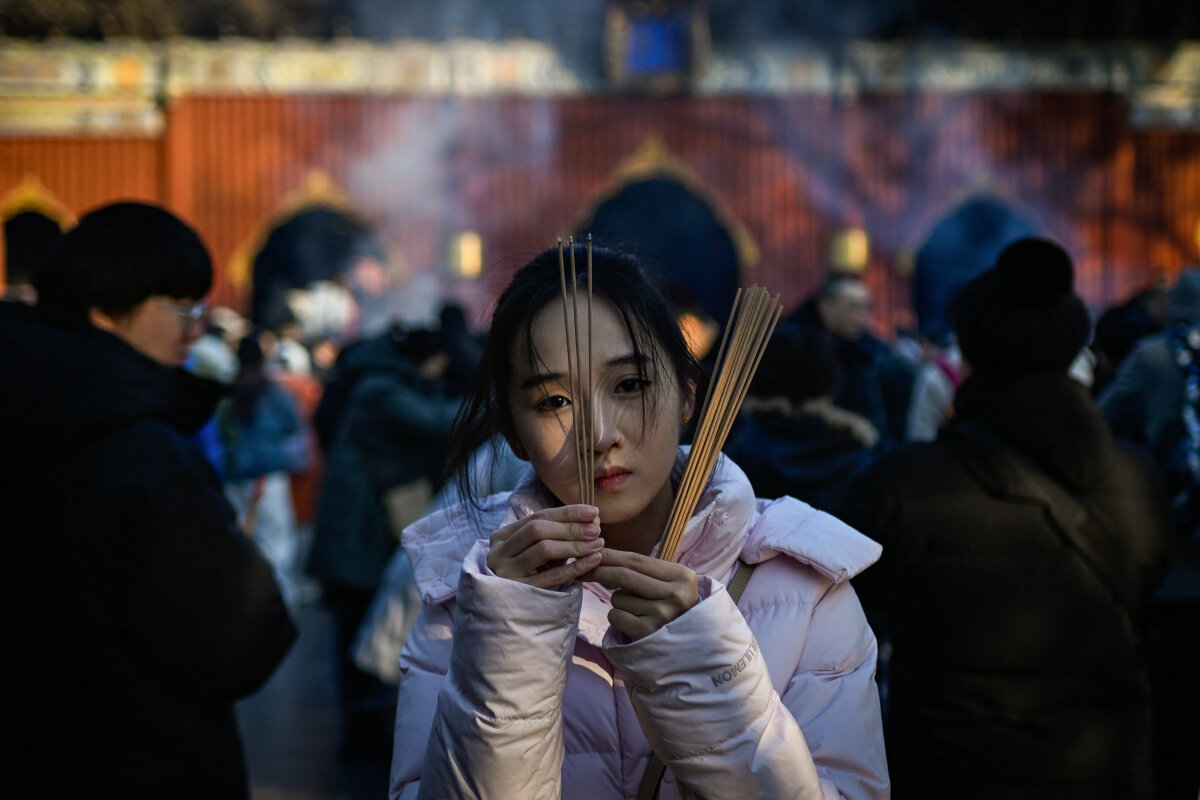
In recent years, young Chinese have been flocking to religious sites for stress relief, contradicting the strict atheism policies of the CCP. A South China Morning Post article notes a surge in young people visiting temples to escape life’s pressures, with social media amplifying the trend.
For example, influencer Zhao DaShuai posted this on X: “Some young Chinese are moving away from the prescribed path of endless academic grind; we see more of them enjoying the less materialistic side of life, such as taking a break to become a Daoist priest. Others pursue their true passion, from sports to animation to filmmaking to music, regardless of financial returns.”
Such anecdotes may reflect a pragmatic turn among some young Chinese toward Buddhism or Daoism for mental solace, not necessarily a full conversion back to Chinese traditions. Nevertheless, they undermine the CCP’s narrative of science as sufficient for personal well-being.
Official figures claim a high rate of atheism. A 2018 survey found that 67 percent of respondents in China considered themselves “convinced atheists.” However, Chinese youth often participate in rituals without identifying them or themselves as religious. An X discussion noted that 80 percent engage in holidays, ancestor worship, or veneration of local gods, viewing “religion” as extreme devotion.
The “lying flat” movement started in the early 2020s. This form of passive resistance opposes the “996” work culture (9 a.m. to 9 p.m., six days per week) promoted by the CCP and the constant pursuit of collective progress. Young people choose minimalism, avoiding marriage, children, or career ambitions and viewing personal sacrifice as useless in a rigged system. They are embracing single lifestyles, consumerism, and self-focus while pushing back against collectivist norms.
These pressures have led to spontaneous protests, too. Events such as the 2022 White Paper Protests and the Zhengzhou students’ mass bike rides in 2024 are greatly feared by the CCP as uncontrolled and unsanctioned organizing by the masses.
The White Paper Protests (also known as the A4 Revolution) erupted in late November 2022 across China, including in major cities such as Shanghai, Beijing, and Chengdu. Protesters held up blank sheets of white paper (A4 size) as a symbolic protest against strict COVID-19 pandemic lockdowns, censorship, and government overreach. These were largely spontaneous, youth-led gatherings that spread via social media, representing rare public defiance against CCP policies.
The mass bike ride is a viral social media-driven phenomenon in which tens of thousands (some estimates ranged from 100,000 to more than 200,000) of university students in Zhengzhou, Henan Province, rode shared bicycles overnight to the neighboring ancient city of Kaifeng, roughly 50 kilometers (about 31 miles) away. The rides were primarily motivated by a desire to eat Kaifeng’s famous oversized soup dumplings (guantangbao or tangbao) for breakfast, turning a simple food quest into a large-scale, spontaneous group activity.
The white paper protests and the Zhengzhou bike rides showed symptoms of Chinese youth dissatisfaction with the CCP’s carefully curated moral management of society, as well as how easily youth energy can create “uncontrolled” public events that prompt fears in Zhongnanhai of repetition or evolution into something far more subversive. This fits broader patterns of Chinese youth seeking meaning or escape through trends such as tangping, which challenge the CCP’s official narratives of harmonious, directed productivity for the collective good.
The CCP’s “scientific atheism” and other Marxist malarkey don’t seem to be working.
No wonder Xi is emphasizing “moral development for minors.” What he really means is ratcheting up communist ideological purity as a means of maintaining CCP control. That’s Bizarro World thinking!
Views expressed in this article are the opinions of the author and do not necessarily reflect the views of The Epoch Times.
 Friends Read Free
Copy
Facebook
Tweet
Friends Read Free
Copy
Facebook
Tweet