
Commentary
While Alberta Premier Danielle Smith tries to maintain a balancing act between sovereigntists in Alberta and federalists, Prime Minister Mark Carney is walking a tightrope between factions within his own party that is no less precarious. The risk in trying to placate disparate views for too long is having a faction break away in discontent. Carney can only maintain equilibrium for so long before he finds himself forced to stand solidly on one side of his party or the other.
Canada is entering a unity crisis unlike any seen since the 1995 referendum in Quebec. Support for provincial independence is at an all-time high in Alberta, and a referendum on unity has been scheduled for October. While the vote presented to Albertans will be non-binding, a vote rejecting federalism would rattle Canadian stability and set the path for a Clarity Act-compliant referendum on provincial separation. Support for independence in Alberta is still well shy of a majority, but things can change quickly, and the movement must be taken seriously.
One of the prime frustrations for Albertans has been an inability to garner federal support for expanding oil and gas production and exports. The Trudeau administration was ideologically opposed to facilitating any growth in oil and gas output. Over the years, his government either cancelled projects altogether, such as the Northern Gateway Pipeline, or regulated others to death, like the Energy East project. Emissions caps were imposed, carbon taxes were raised, and a tanker ban was placed on the West coast, which shut out the possibility of new export ports.
Trudeau’s obsession with net-zero emission goals included painting a target on Western industries at every opportunity. It fostered the rage and frustration among Albertans that created the strong sovereigntist movement of today.
When Trudeau resigned, his departure was celebrated in Alberta. When Canada re-elected the Liberals with a stronger government under Mark Carney, however, secessionist sentiment exploded. Citizens expected the province to suffer under the same yoke of climate change that the Trudeau government had imposed.
Carney has taken what appears to be a more pragmatic approach to Alberta than his predecessor did. He has developed a congenial relationship with Danielle Smith, and they have been working toward getting a new oil pipeline approved, which would reach Canada’s West Coast. While many Albertans are skeptical of the memorandum of understanding (MOU) signed between the two leaders, it has caused some Albertans to take a wait-and-see approach. If it truly appears that a new pipeline will be facilitated, it will have a cooling effect on sovereigntist sentiment. Patience in Alberta is thin, though, and Carney must start moving faster on the projects.
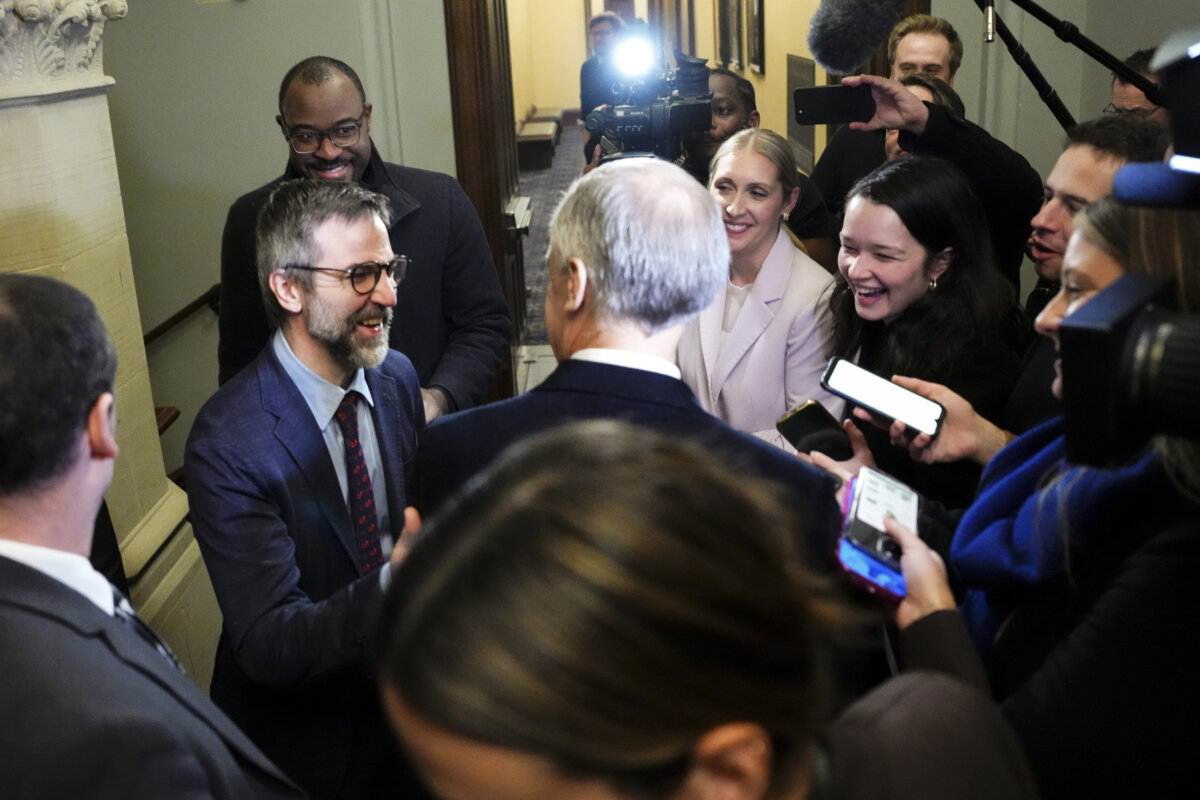
While the prime minister’s strategy may be helping quell the unity issue in the West, it has led to some disunity within his own party. In response to Carney’s pipeline permissiveness, 14 Liberal MPs signed a letter to him expressing discontent with his actions. Carney managed to negotiate himself into a majority government position through coaxing MPs to cross the floor to his party, but it is a thin majority and fragile. Having over a dozen MPs hinting at a caucus revolt can threaten the stability of his administration.
Former Environment Minister Steven Guilbeault has long been the symbolic leader of the climate-change wing of the Liberal Party. His sudden resignation and harsh words for the prime minister illustrate the depth of the party divide. In an interview with CTV’s Vassy Kapelos, Guilbeault said yes when asked if the recently signed MOU contributed to his resignation.
Big-tent parties are perilous, as factions on the edges can be coaxed away by competitors. Newly minted NDP Leader Avi Lewis is eager to find some ground to carve out support for his ailing party. Lewis may not be able to draw disenchanted MPs to his side of the House of Commons, but he can corner a significant portion of the electorate if he can paint Carney as pro-oil and gas while saying only the NDP remains committed to net-zero emission policies. A strong NDP makes things much more difficult electorally for the Liberals.
Much like Danielle Smith, who has earned the ire of both sovereigntists and federalists with her conciliatory, non-binding referendum question on independence, Carney looks to have upset factions on both sides of his party. Economic moderates within the Liberals see the merit of oil and gas exports, while climate change-driven MPs won’t support any expansions.
Eventually, Carney must pick a side. If he refuses to remove the federally imposed barriers to oil and gas development, the Canadian economy will suffer, and independence sentiment in Alberta will grow. If he fast-tracks a pipeline, he risks splitting his own party and losing support to the NDP.
The clock is ticking, and the prime minister can’t afford to rag the puck much longer.
Views expressed in this article are the opinions of the author and do not necessarily reflect the views of The Epoch Times.
 Friends Read Free
Copy
Facebook
Tweet
Friends Read Free
Copy
Facebook
Tweet