
Commentary
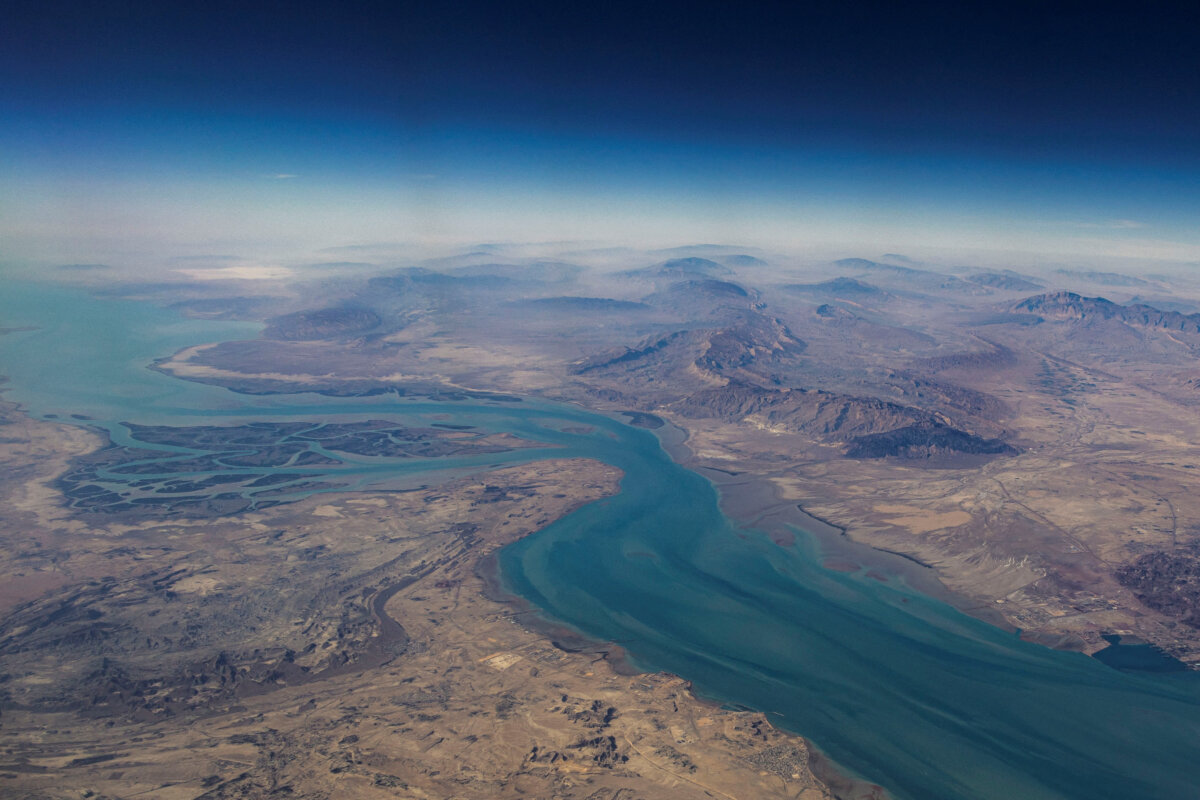
The narrow Strait of Hormuz has long been the world’s most precarious energy artery. At its tightest point—about 21 miles across—roughly 20 million barrels of oil per day flow through, accounting for about 20 percent of global oil consumption and about 25 percent of seaborne oil trade.
Liquefied natural gas (LNG) from Qatar adds to the vulnerability. For decades, the scenario of its closure remained largely hypothetical: a flashpoint in war games, think tank reports, and contingency planning.
But in early 2026, escalating conflict involving Iran has turned that hypothetical into a harsh reality, though one that was probably gamed in the Trump administration before Operation Epic Fury was launched. Tanker traffic has plummeted—sometimes to near zero—amid attacks, threats, and insurance refusals. Shipping companies have suspended operations, naval escorts are routine, and governments are scrambling for alternatives.
Oil prices have spiked sharply. Insurers such as Lloyd’s have pulled back, forcing the U.S. government to step in with emergency coverage or guarantees. The question the world has long sidestepped is now unavoidable: If the Strait of Hormuz can no longer be relied upon as the primary exit for Gulf energy, how does the world keep the lights on and economies moving?
The immediate options are limited but real. Gulf states anticipated this risk long ago, especially during the Iran–Iraq War of the 1980s, when tanker attacks became commonplace. Saudi Arabia constructed the East–West Crude Oil Pipeline (Petroline), a 750-mile line running from eastern oil fields across the kingdom to the Red Sea port of Yanbu. Recent expansions have pushed its capacity to about 7 million barrels per day, and in the current crisis, Aramco has ramped it toward full utilization to reroute exports westward to Europe and beyond, avoiding the strait entirely.
The United Arab Emirates (UAE) has its own bypass: the Habshan-Fujairah pipeline, stretching from Abu Dhabi’s onshore fields to the Gulf of Oman port of Fujairah. With a capacity of about 1.5–1.8 million barrels per day, it allows UAE crude—particularly Murban—to reach open seas without entering the strait. These routes have proven their value in past tensions and are now operating at elevated levels.
Yet even at maximum throughput, these pipelines can handle only a fraction—perhaps 8–9 million barrels per day combined—of the roughly 20 million barrels that normally transit Hormuz. Much of the oil from Iraq, Kuwait, Qatar, and other producers remains effectively trapped behind the choke point. Storage tanks are filling, production cuts or halts loom, and global markets brace for prolonged shortages.
History Makes a Comeback
This is where history may offer a surprising lesson. The idea of rerouting Middle Eastern oil away from the Persian Gulf is not new. Nearly a century ago, as oil reshaped global power, British strategists and the Iraq Petroleum Company confronted the same geographic vulnerability. In the early 1930s, enormous reserves had been discovered near Kirkuk in northern Iraq. Shipping south through the Gulf and around Arabia was long and exposed. The shorter, more secure path lay west—across the desert to the Mediterranean.
By 1934–1935, a major pipeline system was operational: twin lines from Kirkuk splitting at Haditha. One branch headed north to Tripoli in Lebanon; the other led south to Haifa, then under British Mandate Palestine. For more than a decade, this corridor delivered Iraqi crude directly to Mediterranean ports, where tankers could load for Europe without the long sea voyage. The logic was impeccable: The Levant provided the natural land bridge between Gulf and northern Middle Eastern energy and European markets.
Why did this route fade? Mostly, politics overpowered geography. The 1948 establishment of Israel triggered regional boycotts; Arab states refused transit via Israeli territory, shutting the Haifa branch. The Tripoli line persisted intermittently but suffered from transit fees disputes, Arab–Israeli wars, and Cold War tensions.
Meanwhile, postwar innovations—supertankers and economies of scale—made long sea routes cheaper than maintaining vast pipelines across fractious borders. The Kirkuk–Mediterranean system gradually fell into disuse, its strategic promise buried under new realities.
But geography endures. The oil fields remain where they are. Europe lies across the Mediterranean. The shortest overland connection still crosses the Levant. For most of the late 20th century and early 21st, the Arab–Israeli conflict made revival politically unthinkable. Cooperation on massive infrastructure seemed impossible.
Possible Again?
Recent shifts, however, have cracked that door open. The Abraham Accords normalized relations between Israel and several Arab states—UAE, Bahrain, Morocco, Sudan—paving the way for economic ties once considered heretical. Shared concerns over choke points have grown: The 2021 Suez Canal blockage, Red Sea disruptions from Houthi attacks, and now Hormuz itself have exposed the fragility of maritime arteries.
Enter the India–Middle East–Europe Economic Corridor (IMEC), announced at the 2023 G20 summit. This ambitious multimodal initiative links India to the Gulf (via the UAE and Saudi Arabia), then onward through Jordan, Israel, and potentially others to Europe. It envisions rail networks, upgraded ports, electricity grids, digital cables, and—critically—energy infrastructure, including possibilities for hydrogen pipelines, green energy transmission, and integrated logistics.
While primarily focused on trade, connectivity, and clean energy rather than massive crude oil pipelines, IMEC revives the old strategic map: using the Levant as a bridge to bypass vulnerable sea lanes. It also serves as a counterpoint to the Chinese regime’s Belt and Road Initiative, where Iran has been an important node, for exactly the same reasons.
Realizing such a corridor faces steep hurdles—ongoing conflicts, funding needs, political coordination, and construction timelines measured in decades. Yet the incentive has never been stronger. A durable westward route would forever dilute Iran’s leverage over global energy markets, regardless of who rules there and for how long. Threats to Hormuz would lose much of their bite if Gulf oil could flow in multiple directions—east to Asia via existing routes and west across land to the Mediterranean.
Implications
The broader implications are profound. New infrastructure could foster economic interdependence in a region long defined by rivalry, turning former adversaries into stakeholders in shared prosperity. Mediterranean ports might regain their historic role as gateways for Middle Eastern energy. Europe could diversify supplies away from overreliance on seaborne Gulf imports and perhaps Russian imports to a degree.
None of this will happen quickly. Massive projects demand billions of dollars in investment, stable politics, and years of engineering. But crises accelerate change. The current Hormuz disruption—far from hypothetical—could force policymakers to dust off old maps and confront enduring truths.
The Strait of Hormuz may reopen eventually, but trust in it as the unchallenged artery may not fully recover. When the next crisis looms, the question will not be whether alternatives are needed, but how fast they can be built. History shows that when geography and necessity align, even long-abandoned ideas can find new life.
Views expressed in this article are the opinions of the author and do not necessarily reflect the views of The Epoch Times.
 Friends Read Free
Copy
Facebook
Tweet
Friends Read Free
Copy
Facebook
Tweet