
Commentary
Europe’s average gas price has climbed to $7.15 per gallon, more than 70 percent above the average U.S. retail gasoline price and well above China’s national level of $5.50 per gallon, according to official figures. Meanwhile, European benchmark natural gas prices are up by 38 percent compared with one year ago, while U.S. natural gas prices are down significantly, by almost 26 percent, according to the latest Bloomberg figures.
However, the problem is not just expensive energy; it is a structural burden on households and businesses in two regions in which average salaries are also significantly lower than in the United States. All of this comes on top of much higher wage, corporate, indirect, and environmental taxes. And no, it is not compensated with radically better public services.
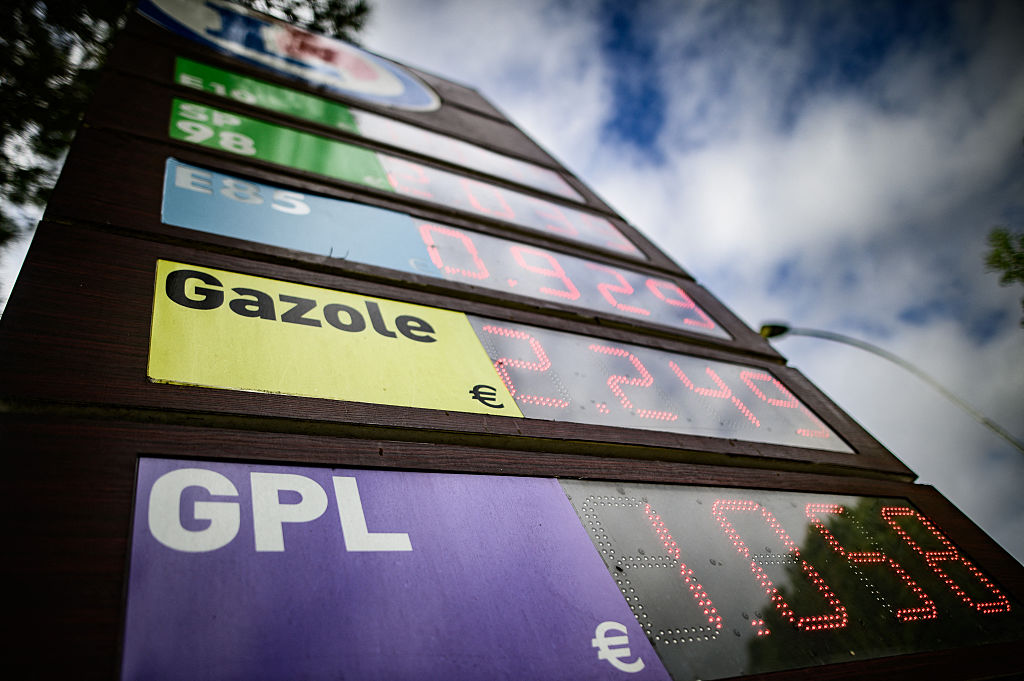
As of April 20, the average European Union (EU-27) price for Euro 95 petrol (gasoline) stood at 1.764 euros per liter, equivalent to about $7.15 per gallon. The same weekly data show a sharp difference between countries, with Malta the cheapest at 1.340 euros per liter, or about $5.50 per gallon, and the Netherlands the most expensive at 2.279 euros per liter, equivalent to $8.63 per gallon. However, the United States averaged $4.18 per gallon in the week of April 20, according to the U.S. Energy Information Administration (EIA). None of the EU countries has a cheaper gasoline price than the most expensive state in the United States: California.
The European Commission’s Weekly Oil Bulletin explicitly tracks retail fuel prices with and without taxes, as well as value-added tax (VAT) and excise duties, making clear that taxes are not a minor part but one of the most important elements of the final price. That matters because when European consumers see a price at the pump, they pay not only for crude oil, refining, transport, and retail margins, but also for multiple layers of government-imposed charges. In fact, taxes account for between 52 percent and 65 percent of the final price in some European countries.
Furthermore, “environmental” taxation is not a single final charge that replaces other taxes or makes green energy cheaper. It is added on top of preexisting taxes, and then VAT is applied to the tax-inclusive price in most European systems, creating a compounding effect that magnifies the total burden on customers.
European energy policy has increasingly combined climate targets with higher fuel taxation, emissions pricing, and regulatory compliance costs. Even when one measure is described politically as a green or environmental surcharge, households still face the cumulative effect of older fuel taxes, carbon-related costs, renewable-support mechanisms embedded elsewhere in energy systems, and VAT layered on top of all of it.
The European system is a revenue-collection machine for governments. When crude prices rise, taxes keep the retail level much higher, and when crude falls, the layered tax wedge means that consumers still pay a structurally high baseline compared with the United States.
The effect on consumers of the current energy spike shows huge differences across major economies. Europe’s average gasoline price of about $7.15 per gallon is far above the U.S. level of near $4.18 per gallon, while China’s national gasoline price on April 20 was about $5.30 to $5.43 per gallon, using official figures and exchange rates. Thus, the European average is almost 71 percent higher than the U.S. price using the EU average and the U.S. weekly retail average for the same period. In the Netherlands, citizens pay double the U.S. average price.
However, this difference is even larger when put in the context of wages. Eurostat reported the average annual full-time adjusted salary in the EU at 39,800 euros in 2024, while recent U.S. summaries place average annual earnings at about the mid-$60,000 range.
Converted at current exchange rates, the EU figure is about $42,000 to $43,000, which suggests that the average salary in the EU is about one-third lower than in the United States. As such, Europeans are not only paying more for gasoline than Americans; most are paying those higher prices out of significantly lower gross salaries.
European governments justify higher fuel taxes as necessary for decarbonization, fiscal stability, and limiting demand. However, the real result is regressive pressure on consumers, small businesses, delivery services, and low-income households. Furthermore, environmental taxes have not eased prices for consumers elsewhere. Citizens and businesses are paying enormous taxes on electricity as well, suffering a combination of old and new levies that together produce some of the highest retail energy prices in the developed world, even as Europe’s average wages remain below those in the United States.
Europe has some of the world’s highest energy prices, which come from adding several layers of taxes, and the burden hurts competitiveness and affordability in a region where salaries are significantly below U.S. levels. The excuse tends to be that Europeans receive so-called “free” public services, but their salaries already suffer a large tax wedge of more than 40 percent, according to the latest Taxing Wages report.
The lesson for America is clear. Energy policy and tax layering have eroded Europeans’ purchasing power and businesses’ competitiveness. Gasoline is 71 percent more expensive than in the United States. Diesel is 59 percent more expensive. The average salary in the United States is 35 percent to 40 percent higher than the EU average. No EU country has cheaper gasoline prices than the most expensive U.S. state: California.
For years, progressives in the United States have demanded the same taxes on gasoline as in Europe. Imagine if they succeeded.
Views expressed in this article are the opinions of the author and do not necessarily reflect the views of The Epoch Times.
 Friends Read Free
Copy
Facebook
Tweet
Friends Read Free
Copy
Facebook
Tweet