
Commentary
The global push toward electric vehicles (EVs) is creating a dangerous new dependence on China, whose dominance in battery production and critical minerals could trigger a supply shock worse than past oil crises.
U.S. Commerce Secretary Howard Lutnick told the World Economic Forum audience in Davos, Switzerland, earlier this year that by committing to net zero by 2030, Europe was effectively “deciding to be subservient to China.” He argued that by switching to fully electric cars, European countries would be making themselves even more dependent on China because “they don’t make a battery.”
The secretary then said the United States should never make the same mistake.
“Why would the United States of America, which has oil and natural gas, try to convert to all electricity?” he asked. “China does not have oil and natural gas. Electricity and electric cars make perfect sense to them.”
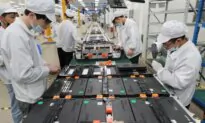
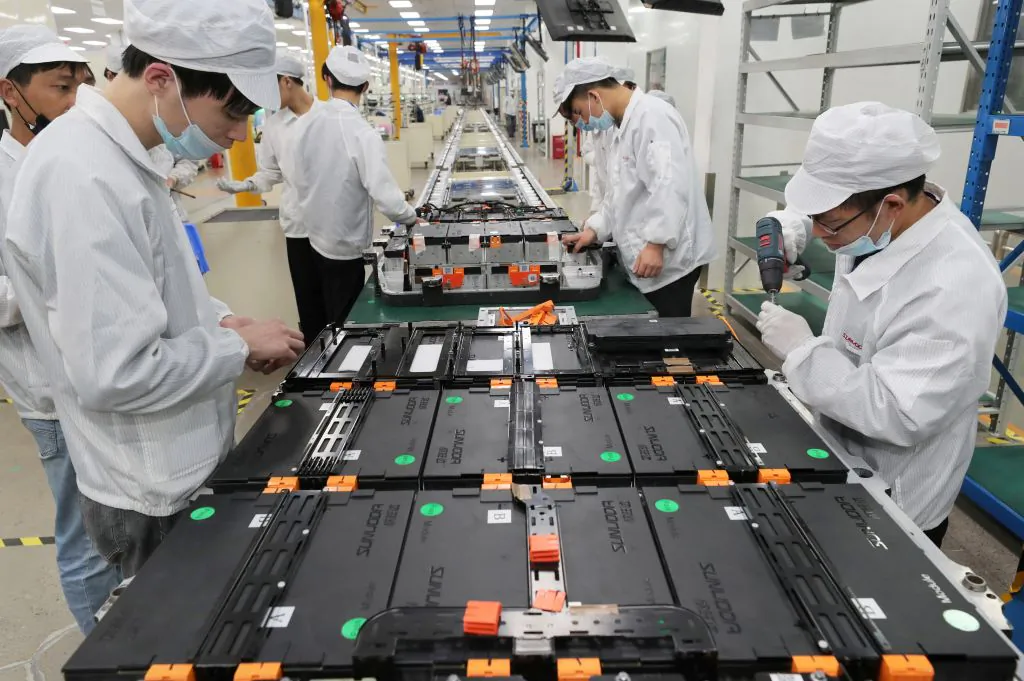
The Chinese Communist Party is using the recent Beijing Auto Show to promote itself as the world’s dominant EV manufacturer. Currently, China produces 70 percent of the world’s total EVs, and Beijing would like to see that number rise. At the same time, China was responsible for 80 percent of global battery cell production in 2024. So, even if a consumer purchases a domestic EV, he is still dependent on the Party for the battery.
In practical terms, Tesla, BMW, Mercedes-Benz, and Volkswagen, alongside Chinese brands such as Zeekr and Li Auto, source some or all of their EV batteries from Contemporary Amperex Technology Co., a Chinese battery manufacturer. Even Western-branded vehicles that do not carry a fully Chinese battery use cells whose cathode materials were almost certainly processed in China. China produces more than 98 percent of the world’s lithium iron phosphate active materials, the dominant and cheapest battery chemistry globally.
To make matters worse, the 80 percent figure understates the depth of the world’s dependence on China because it captures only the final assembly of batteries. The real chokehold is in the manufacturing supply chain. China dominates midstream and downstream battery production, with shares of 80 percent or more in many key areas. In segments such as precursor cathode materials and lithium iron phosphate cathode materials, China maintains a near-monopoly, with shares of 95 percent or more.
A crucial component in battery production is rare-earth minerals, and China leads the globe, accounting for 85 percent to 90 percent of rare-earth element refining, as well as processing 68 percent of the world’s cobalt, 65 percent of nickel, and 60 percent of the lithium of the grade needed for EV batteries.
The Trump administration has criticized Europe for its dependence on China. On Inauguration Day, executive orders 14156 and 14154 declared the supply gap a national security emergency. A March 2025 order created the National Energy Dominance Council, and an April 2025 order opened U.S. seabed resources to development. A Section 232 investigation concluded in January 2026 with an order directing the Commerce Department and U.S. trade representative to pursue price floors and trade restrictions with partner nations.
The United States signed a minerals deal on April 30, 2025, with Ukraine for access to titanium, lithium, graphite, cobalt, and nickel, followed by a December 2025 partnership with Congo and frameworks with 11 additional countries at a February 2026 ministerial attended by 54 nations. The administration also launched Project Vault, a strategic critical minerals reserve to buffer the defense and industrial base against supply shocks while domestic processing capacity is built out.
With all these steps and initiatives, a U.S. transition to EVs by 2030 would still be impossible to execute. It will take years to expand extraction, refining, and production enough to support a fully electric fleet. Meanwhile, Europe has taken no comparable steps and is committing to EVs, while the United States has ended the non-binding EV targets set by then-President Joe Biden.
The U.S.–Iran conflict, which resulted in the closure of the Strait of Hormuz, a global oil choke point, demonstrated how damaging it can be when even a small share of the world’s energy supply is restricted. However, with oil, there are workarounds. About 98 countries produce oil, so a supply cut from one source can be offset by others.
With EV batteries, there is no substitute and effectively only one country producing at scale. China has already shown its willingness to restrict access to critical minerals and could do the same with batteries. Even without deliberate action, supply shocks can result from natural causes or disasters. A peer-reviewed study published in March 2026 quantified the risk. A Monte Carlo simulation of 50,000 iterations found a 92 percent probability that a moderate supply shock in China would trigger a severe global battery shortage.
Views expressed in this article are the opinions of the author and do not necessarily reflect the views of The Epoch Times.
 Friends Read Free
Copy
Facebook
Tweet
Friends Read Free
Copy
Facebook
Tweet