
Commentary
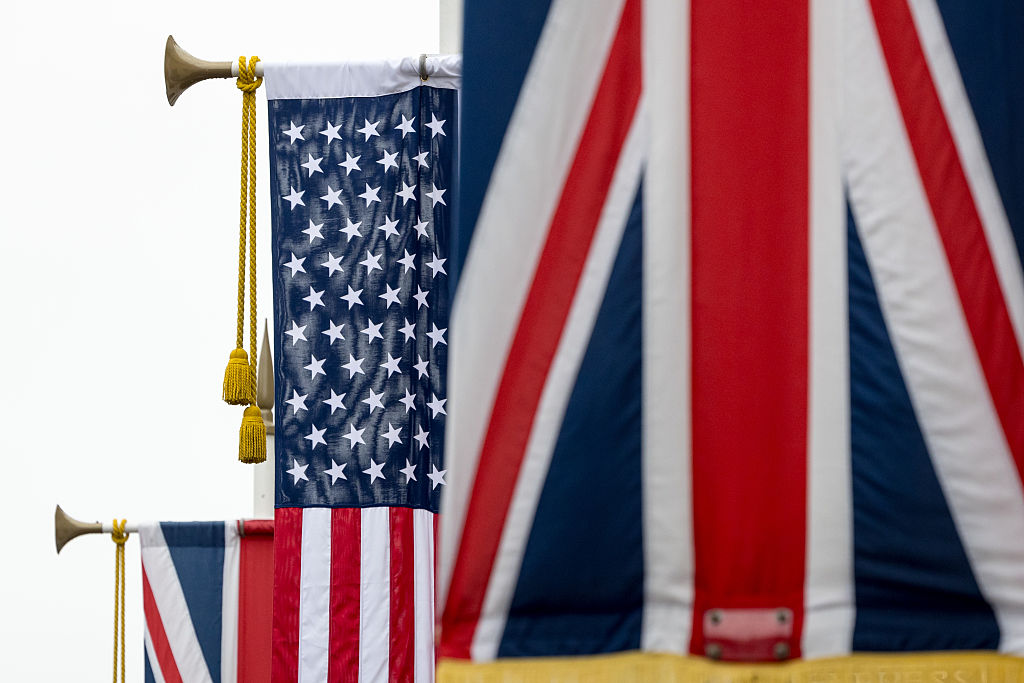
In late April 2026, King Charles III will arrive in Washington for the first state visit of his reign. He will address Congress, attend a state dinner, and help commemorate the 250th anniversary of American independence. The symbolism is striking: a British monarch—heir to Magna Carta—standing before the inheritors of the Declaration of Independence. It is the sort of moment history rarely produces, and even more rarely repeats.
Yet this visit is more than ceremony. It comes at a moment of growing uncertainty in the international system—rising great-power competition, persistent terrorism, and the fragmentation of Western unity. In such a world, the Anglo-American relationship is no longer a matter of tradition or sentiment. It is once again a matter of necessity.
The defining moment in which a British leader gave public voice to that necessity did not occur in Washington, but in Fulton, Missouri, during another spring, on March 5, 1946. There, Winston Churchill, with President Harry Truman seated behind him, warned that peace would not endure without what he called a “fraternal association of the English-speaking peoples”—a special relationship between Great Britain and the United States. It was a call not only to alliance, but to shared purpose—and, more importantly, to responsibility.
This relationship is greater than any single American or British leader or government; it is multigenerational. Edmund Burke understood this on the eve of the American Revolution, when he observed that the colonists were “not only devoted to liberty, but to liberty according to English ideas, and on English principles.” The Revolution did not destroy that inheritance; it carried it forward. It was the culmination of the English philosopher John Locke’s argument for legitimate government, grounded in the preservation of “Life, Liberty, and Property.”
Eighty years later, Churchill’s warning is widely remembered, but its central prescription is often overlooked. The Anglo-American relationship was never meant to be merely convenient. It was meant to be foundational. In an era again defined by ideological conflict and geopolitical rivalry, that foundation is not simply relevant—it is indispensable.
Churchill’s argument at Fulton was not simply strategic—it was civilizational. He spoke of a shared inheritance: a common legal, political, and moral tradition rooted in Christian civilization that bound Britain and the United States across centuries. This inheritance runs from Magna Carta through the English Enlightenment to the American founding, where the principles of natural rights and liberty under law found their most enduring expression.
This foundation explains the relationship’s resilience. Alliances built on interest shift with circumstances; those rooted in shared principles endure. Britain and the United States have not always agreed, nor always acted together. But at decisive moments—from the world wars to the Cold War—they have been drawn together not only by necessity, but by a shared understanding of what they were defending.
During the Cold War, that understanding took on a hard, practical form. American power was projected from British soil. Nuclear deterrence, intelligence cooperation, and joint planning created an integration unmatched in modern history. There were tensions—over sovereignty, control, and risk—but they were contained within a framework of trust. The relationship endured not because it was harmonious, but because it was grounded in something deeper than immediate advantage.
With the Cold War’s end, that necessity seemed to recede. The 1990s were marked by drift. The United States stood alone as a global superpower, while Britain looked increasingly toward Europe. Without a common enemy, the “special relationship” appeared to many as a relic.
That illusion did not survive Sept. 11, 2001. The attacks forced a reassessment. Britain stood immediately with the United States. What followed was not simply cooperation in war, but the reemergence of a shared strategic outlook—one shaped by common threat and common purpose.
At its core, this outlook combined moral conviction with strategic realism—what might be called a form of Anglo-American “crusading realism.” It recognized that deterrence and containment were ill-suited to transnational terrorism and rogue actors. It emphasized preemption and prevention, but also the promotion of democratic governance as a long-term answer to instability. In this sense, it was less a break from tradition than a return to it—a reaffirmation of the principles of natural law and human dignity that have long shaped both nations’ political thought.
The Anglo-American relationship again became central to this approach. It was Britain and the United States that acted most closely, shared intelligence most deeply, and aligned most consistently. The partnership showed its capacity to adapt while remaining anchored in its core principles.
Over time, however, that momentum faded. Fatigue, political division, and shifting priorities led to a gradual retreat. The relationship did not disappear—it rarely does—but it slipped back into assumption rather than strategy.
The conditions that gave rise to Churchill’s warning are now returning—albeit in new forms. Not identically, but recognizably. Great power competition has returned, particularly from Russia and China. The West faces internal division. New domains of conflict—cyber, artificial intelligence, and information warfare—demand closer coordination and deeper trust.
In this environment, broad alliances are no longer sufficient. Large institutions struggle to maintain coherence amid diverging interests. What is required is a core relationship capable of operating across multiple domains—military, intelligence, economic, and ideological. The Anglo-American partnership remains uniquely suited to that role.
Nowhere is this clearer than in intelligence. The cooperation between the United States and the United Kingdom forms the backbone of a wider network, but its core remains distinctly Anglo-American. It rests on decades of shared practice and an unusual degree of trust. The same holds in military affairs, where British and American forces operate together with a level of integration that few others can match.
The deeper question raised at Fulton, however, remains unresolved: can the West sustain a common moral and political purpose? Churchill understood that peace depends not only on power, but on a shared commitment to principle. Those principles—liberty under law, the dignity of the individual, and democratic legitimacy—are again under pressure, both from external rivals and internal doubt.
It is here that the Anglo-American relationship takes on its greatest significance. It is not merely a tool of policy, but a foundation for renewal. If Britain and the United States can align not only their interests but their sense of purpose, they can provide a model for a broader rearticulation of Western strategy.
King Charles III’s visit should be understood in this light. It is not simply ceremonial. It is a reminder—quiet but unmistakable—that the relationship is moving again from assumption to necessity.
Eighty years after Fulton, Churchill’s central insight endures. Peace requires more than institutions; it requires partnerships grounded in shared principles and sustained by trust. The Anglo-American relationship was conceived as such a partnership. Its relevance today lies not in nostalgia, but in necessity.
From Magna Carta to the present, Britain and the United States have been bound by more than circumstance. They have been bound by a common understanding of liberty and order—and by a willingness, however imperfect, to defend both.
In an age of uncertainty, that bond may once again prove decisive. History suggests it will.
Views expressed in this article are the opinions of the author and do not necessarily reflect the views of The Epoch Times.
 Friends Read Free
Copy
Facebook
Tweet
Friends Read Free
Copy
Facebook
Tweet