Commentary
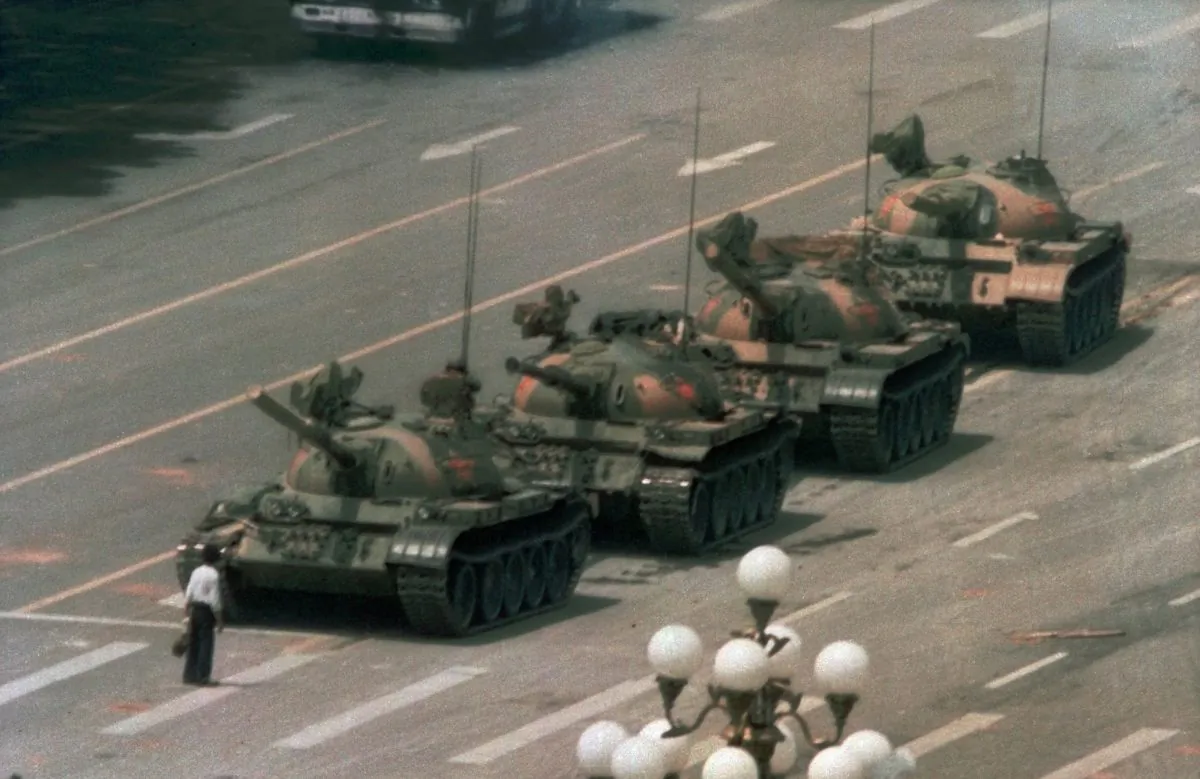
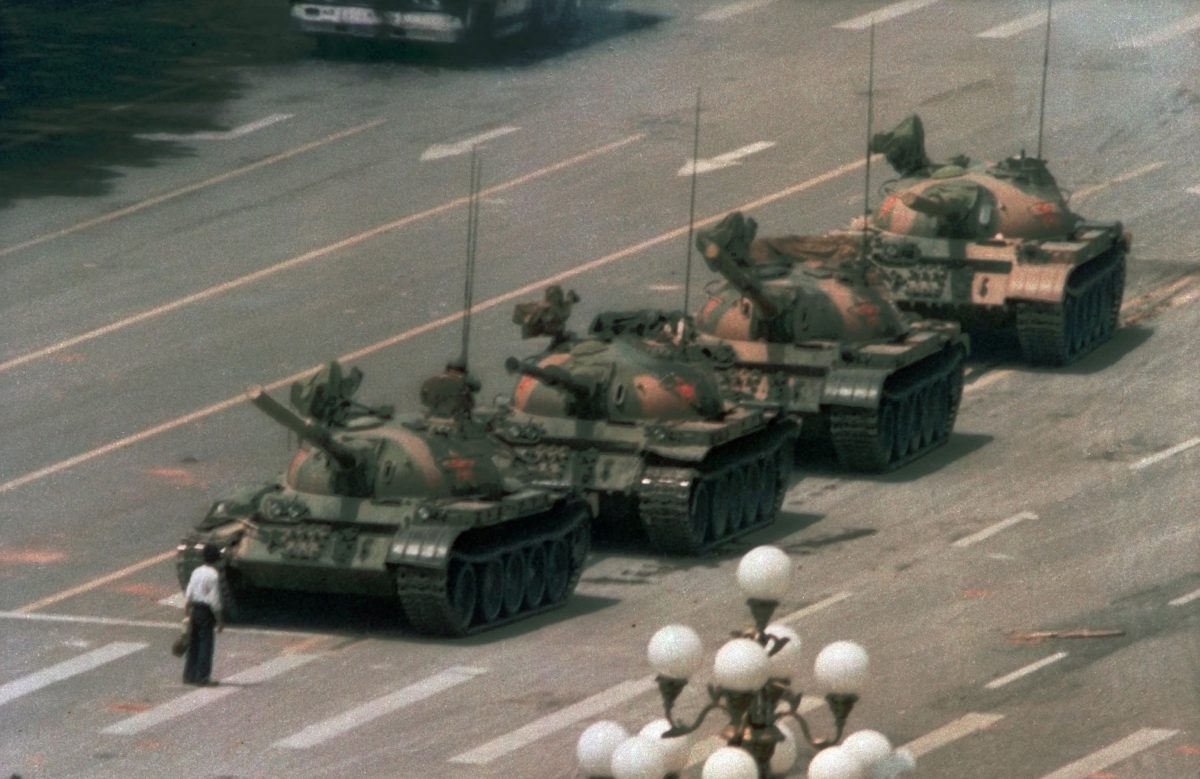
Next month marks the 37th anniversary of the Tiananmen uprising and subsequent massacre. The event is often reduced to a single image: a lone protester standing before tanks in Beijing.
The image endures. The understanding does not.
Tiananmen was not confined to a square, nor was the violence that followed. Protests spread across China, and the regime’s response extended far beyond Beijing. What has been remembered as a moment was, in reality, a nationwide confrontation between a ruling party and its own people.
That outcome should not have surprised anyone familiar with the history of the Chinese Communist Party (CCP).
From its earliest consolidation of power, the Party fused ideology with coercion. Mao Zedong stated the governing principle plainly: Political power comes from the barrel of a gun. That principle was not rhetorical. It defined the regime. Land reform campaigns, collectivization, the Great Leap Forward, and the Cultural Revolution demonstrated a consistent willingness to use force on a massive scale to maintain control. Tens of millions died in famine following the Great Leap Forward. The Cultural Revolution destroyed institutions, shattered social order, and unleashed violence across an entire generation.
Violence was not an aberration. It was a method.
The CCP is not simply an authoritarian system. It is a totalitarian communist dictatorship—one that seeks to control not only political behavior, but thought, memory, and historical truth itself.
Tiananmen did not depart from that system. It confirmed it.
By 1989, economic reforms had altered elements of Chinese society, but the structure of political authority remained intact. When protests spread across the country, the CCP did not interpret them as civic expression. It treated them as a direct challenge to its authority. Martial law was declared. The People’s Liberation Army was deployed. Lethal force followed.
The deaths in Beijing are well known. The deaths outside Beijing are not. In cities such as Chengdu, credible reports indicated that dozens, and possibly hundreds, were killed in the days following the initial clampdown. Protests spread to other major urban centers, although the regime ensured that the full scope of violence would never be fully known. Official figures placed the number in the hundreds. Independent estimates have ranged into the thousands, with some higher-end claims extending beyond that range.
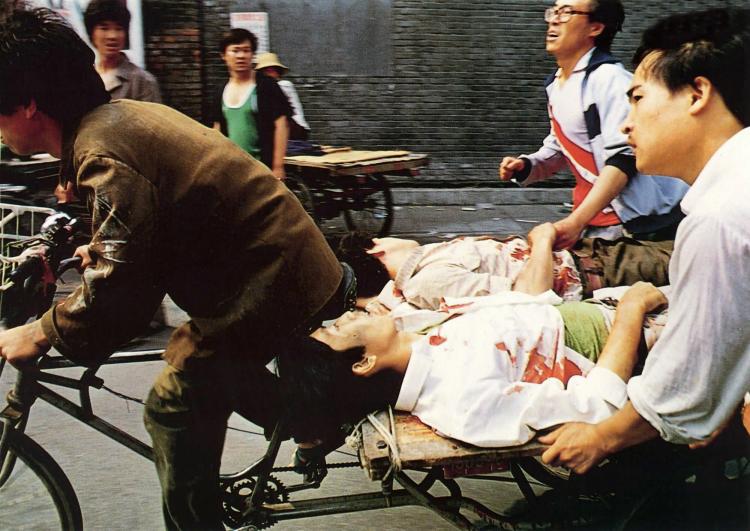
Most serious historical and diplomatic estimates place the likely death toll in a band of roughly 1,000 to 3,000. At the same time, some intelligence-based and dissident claims have suggested figures approaching or exceeding 5,000. The absence of a definitive number is not accidental—it reflects the structure of the regime itself.
The uncertainty is not a failure of recordkeeping; it is the product of control.
The CCP did not simply suppress dissent. It suppressed the memory of dissent. What remains is a symbol in place of a full accounting, an image that obscures as much as it reveals.
As George Orwell warned: “Who controls the past controls the future. Who controls the present controls the past.”
After the initial clampdown, the regime did not continue mass killing at scale. Instead, it shifted to targeted repression: arrests, imprisonment, selective executions, and long-term silencing. Tiananmen was a concentrated act of violence followed by enforced historical amnesia.
That same pattern is visible today in Iran—on a scale that demands attention.
Since late 2025, protests have spread across Iran, reaching into scores of cities and provinces. These were not isolated disturbances. They represented a nationwide expression of opposition to the regime itself. Students, workers, and ordinary citizens took to the streets in numbers that made clear the breadth of dissatisfaction.
The Iranian regime’s response followed a familiar logic.
Security forces, including the Islamic Revolutionary Guard Corps and the Basij militia, moved quickly to suppress demonstrations. Live ammunition was used. Snipers were deployed. Mass arrests followed. Internet blackouts were imposed to prevent communication and documentation. Hospitals reported treating large numbers of gunshot wounds, while independent verification became increasingly difficult as the state tightened control over information.
The number of those killed is contested. The scale is not.
Human rights reporting has confirmed that thousands have died in the clampdown. Verified figures reach into the several thousands, with many additional cases under investigation. Other estimates, drawn from medical sources and internal accounts, place the total significantly higher, in some cases into the tens of thousands. These figures remain difficult to confirm under conditions deliberately designed to prevent confirmation.
The Iranian regime has ensured that uncertainty.
Bodies have been removed from hospitals. Families have been pressured into silence. Reports describe overwhelmed morgues, mass burials, and systematic efforts to conceal the scale of the dead. In some cases, families have reportedly been forced to pay for the bullets used in executions.
These practices are not incidental. They are methods of control designed to extend repression beyond the act of killing itself.
The killing has not been confined to the streets.
Executions have followed as a continuation of the clampdown. Individuals accused of participating in protests have been subjected to opaque judicial proceedings and put to death. The judiciary functions not as an independent institution, but as an extension of regime authority.
Children have been among the victims. This is not crowd control. It is regime preservation.
The Iranian regime is not a conventional authoritarian state. It is an authoritarian theocratic dictatorship—a system in which political authority is fused with the regime’s claim of religious legitimacy, and dissent is treated not only as political opposition, but as moral and ideological deviation.
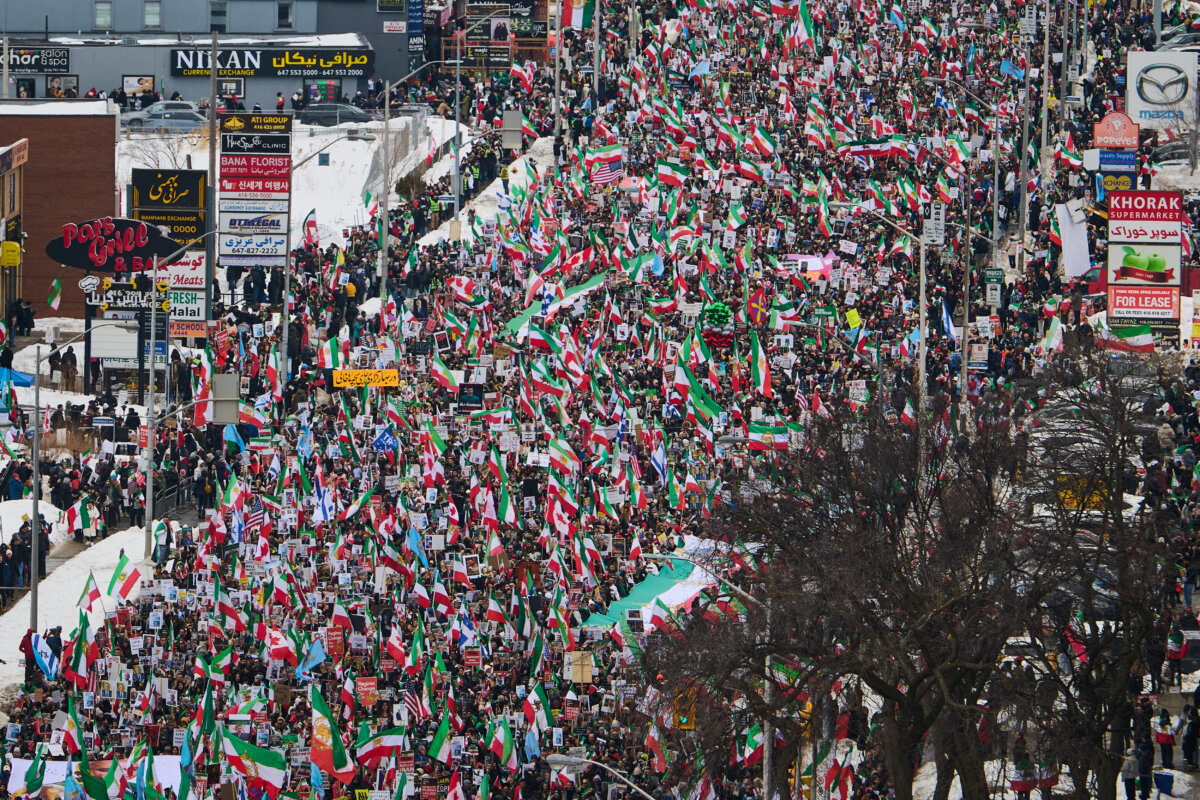
The available data, while incomplete, provides a basis for comparison.
In China in 1989, official figures placed the number of dead in the hundreds. Independent estimates have generally ranged from roughly 1,000 to 3,000, with some higher-end claims extending beyond that range. The true number has never been confirmed.
In Iran today, verified deaths already reach into the several thousands. Additional estimates—drawn from medical reporting and internal accounts—place the total significantly higher, in some cases into the tens of thousands. However, these remain difficult to confirm under conditions of state control.
At a minimum, the Iranian clampdown reaches the scale most commonly associated with the Tiananmen clampdown. It may exceed it.
The uncertainty in both cases is not a limitation of the analysis. It is a feature of the regimes themselves.
There is, however, an important difference.
In China, the killing was concentrated in a short, violent period and followed by repression.
In Iran, the killing did not end with the protests.
It has continued through executions, detention, and state-directed violence carried out after the initial clampdown.
Tiananmen was a massacre followed by silence.
Iran is a massacre followed by continuation.
Yet the global response has not followed the same pattern.
Tiananmen became a defining image. It fixed itself in the world’s memory as a symbol of resistance and repression. Iran has produced no such singular moment. Its violence is dispersed across cities, fragmented in reporting, and contested in real time.
A concentrated event becomes a symbol. A dispersed event becomes a statistic.
There is a persistent tendency to treat these events as separate: China as history, Iran as current affairs. That distinction is misleading.
These are not isolated events. They are expressions of regime type.
The Chinese Communist Party and the Iranian regime differ in ideology. One is rooted in Marxist-Leninist doctrine, the other is grounded in a revolutionary theocratic framework.
As Sun Yat-sen observed, “The foundation of a nation is its people.” In both cases, the regimes have inverted that principle—the state is preserved, even if the people must be sacrificed.
Different ideologies. Different justifications.
The same logic of evil and power.
Both are systems in which ultimate authority is unchecked. Both interpret dissent as illegitimate. Both rely on force to suppress opposition. Both control the information that shapes the narrative that follows.
In such systems, there are no meaningful limits on power.
Where there are no limits, force becomes inevitable.
The American political tradition emerged from a different premise—that authority is constrained, that rights exist independent of the state, and that individuals possess a moral claim that power must recognize.
Where that premise is absent, the outcome is predictable.
Force replaces legitimacy.
Power replaces accountability.
The question is not whether such regimes will act in this way. History has already answered that question.
The question is whether we are willing to recognize the pattern when it appears again—even when it lacks a single defining image. It must drive our view of the current situation in Iran.
Tiananmen was not an exception.
It was a precedent.
Views expressed in this article are the opinions of the author and do not necessarily reflect the views of The Epoch Times.
 Friends Read Free
Copy
Facebook
Tweet
Friends Read Free
Copy
Facebook
Tweet