
Commentary
At the entrance, the first friction came quietly. Her passport—perfectly valid in the world she actually lives in—became a problem in the world she was trying to enter. Not because it was forged. Not because it had expired. Because the system at the desk didn’t recognize the legitimacy of the identity printed on the cover.
So she did what people do when a gatekeeper says NO: She tried to explain. She offered additional documents. She asked who she could speak with. She lowered her voice because raising it would only make her sound unreasonable. She watched the line behind her grow, felt the heat of other people’s impatience, and understood the real lesson. This wasn’t a misunderstanding to be clarified. It was a reality to be enforced.
That’s the point of gaslighting in geopolitics. It doesn’t require the lie to be persuasive. It only requires the lie to be operational.
The House Select Committee on China titled its Feb. 11 hearing “Lies, Lawfare, and Leverage” for a reason: Beijing’s campaign to marginalize Taiwan is a layered way of changing the status quo through language, procedure, and coerced compliance—long before anyone hears a shot.
Gaslighting, the American Way
Most Americans don’t need an academic definition of gaslighting to understand it. They’ve seen a version of it in everyday life.
It’s the landlord who insists the leak you keep reporting is “just humidity,” even as the ceiling stains spread. It’s the company that loses your paperwork and then tells you that you “never submitted it,” forcing you to prove your own memory. It’s customer service reading from a script that denies what you can plainly see on the screen, and then treating your insistence on reality as the problem.
The power move is always the same. First, they state a premise that isn’t true. Then they repeat it until it sounds like the only respectable thing to say. Then they redesign the rules so that everyone around you has incentives to act as if it were true. Finally, they punish anyone who refuses to play along, not always with dramatic retaliation, but with friction: delays, exclusions, “technicalities,” and “process.”
Applied to Taiwan, gaslighting isn’t primarily about convincing the world that the island’s democracy is illegitimate. Beijing wants the world to behave as if Taiwan’s legitimacy is a taboo. It’s about training institutions to treat Taiwan’s presence as a disruption and Beijing’s demands as routine.
The best example is one that sounds boring until you notice what it does in practice: United Nations General Assembly (UNGA) Resolution 2758.
The Script: ‘The UN Already Decided’
Beijing increasingly treats UNGA Resolution 2758 as a global “terms of service.” The claim is straightforward: The United Nations “settled” Taiwan’s status decades ago; Taiwan is not a separate entity; Taiwan cannot participate meaningfully in the U.N. system; any effort to include Taiwan is therefore illegitimate.
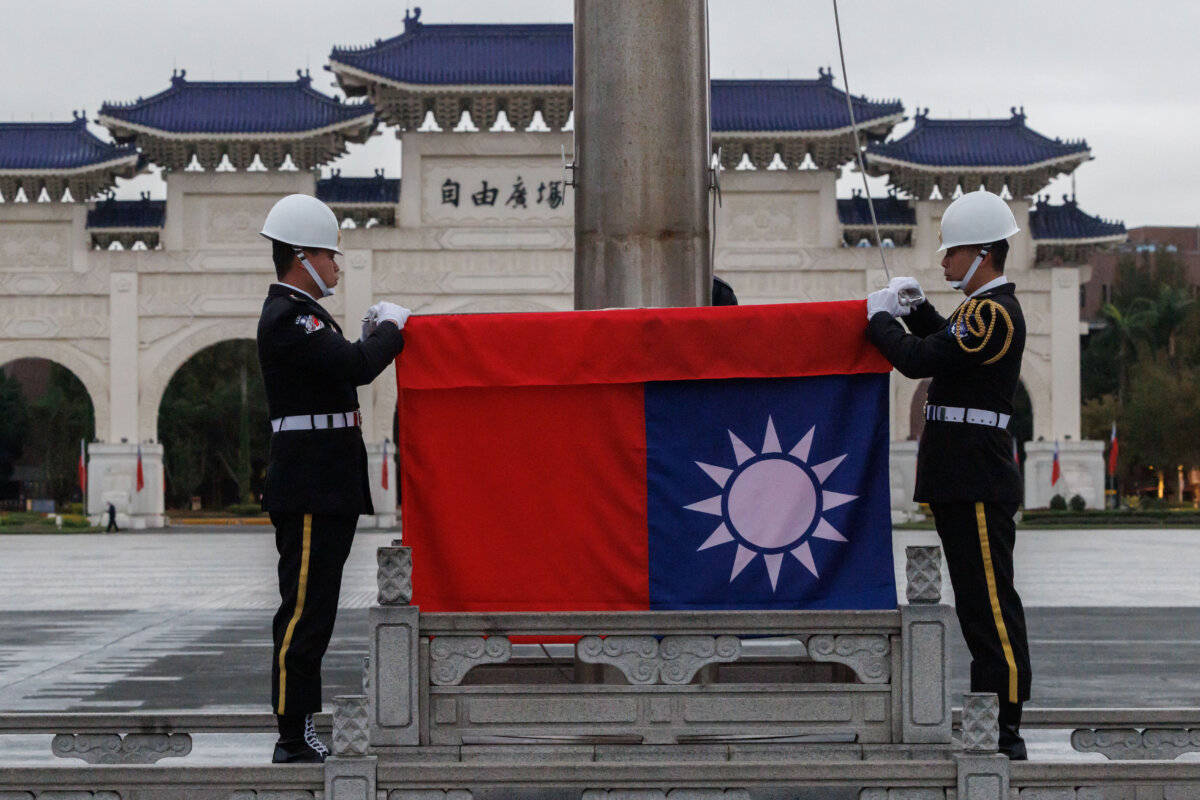
The problem is that this goes well beyond what UNGA Resolution 2758 actually did. The resolution addressed representation—recognizing the representatives of the People’s Republic of China as the lawful representatives of China at the United Nations and expelling the representatives of Chiang Kai-shek. It does not, on its face, resolve Taiwan’s political status. It does not mention Taiwan. Yet Beijing’s campaign aims to make the world treat its preferred interpretation as binding and to convert institutional habit into political fact.
This is where gaslighting becomes more than rhetoric. Once a script becomes the default language of international organizations, it begins to govern what is “normal.” Staffers, conference planners, and officials don’t need to personally endorse Beijing’s theory; they only need to believe it is safer to follow the script than to question it. Then the lie stops being debated and starts being administered.
The German Marshall Fund’s legal analysis describes this as a persistent, multifaceted effort to secure international acceptance of Beijing’s “One China” principle by leveraging pressure within the U.N. system and benefiting from acquiescence, misinterpretation, and a forum in which many states have limited incentive to pick a fight over Taiwan.
The U.S. government has been explicit about what is happening here. In March 2025, a State Department spokesperson described Beijing’s “intentional misuse and mischaracterization” of UNGA Resolution 2758 as part of China’s broader coercive effort to isolate Taiwan from the international community, stressing that the resolution puts no limits on countries’ sovereign choices to engage substantively with Taiwan and does not preclude Taiwan’s meaningful participation in the U.N. system and other multilateral fora.
How Enforcement Happens Without a Single Soldier
The power of Beijing’s gaslighting of Taiwan lies in the paperwork. It is how international organizations quietly change the way they label Taiwan in documents, and what happens when conference organizers are told, off the record, that certain passports “create problems.”
Watch what happens when Taiwan is required to apply under a “Chinese” designation for participation, or when a Taiwanese expert is told they can attend only as a private citizen while officials from authoritarian states attend under flags and titles.
It’s manufactured to look administrative, like compliance.
It also creates a trap that Americans should recognize. When Taiwan objects—when it insists on being named correctly, represented fairly, and allowed to participate—Beijing portrays that insistence as “provocation.” The institution, eager to keep the peace, pressures the smaller party to be “flexible.” The victim is asked to be reasonable about their own erasure.
The European Parliament has warned about this dynamic directly, condemning what it calls the PRC’s misinterpretation of UNGA Resolution 2758 and linking it to continued provocations around Taiwan. The significance of this is that Beijing’s narrative is now so aggressive and operational that it has forced democratic institutions to respond to the administrative fiction.
The Psychological Effect: A Democracy Asked to Doubt Itself
Gaslighting targets the mind before it targets the map, a core concept of cognitive warfare.
For Taiwan, the cumulative effect is not only diplomatic isolation. It is the slow, grinding suggestion that self-government is a temporary exception that polite people shouldn’t mention too loudly. It is the experience of being treated as a “problem” in rooms where your expertise would otherwise be welcomed.
Gaslighting teaches allies to treat engagement with Taiwan as a “risk management” exercise rather than a matter of democratic principle. It encourages a culture of euphemism: Don’t say “Taiwan,” say “the Taiwan issue.” Don’t describe coercion; describe “tensions.” Don’t contradict Beijing’s narrative too directly; it might complicate a summit or invite retaliation. Taiwan becomes a story about “complexity” rather than a democracy facing coercion.
This is why the Feb. 11 hearing matters, even if many Americans will never watch the full proceedings. Naming the tactic matters. “Gaslighting” is not a slogan; it is an accurate description of how power can corrode reality within a rules-based system.
What to Do With a Lie That Has a Budget
The policy answer to gaslighting is not a single press release or a clever phrase. It is a repeated, disciplined refusal to outsource reality to Beijing’s script.
Start with the basics. If Beijing is using UNGA Resolution 2758 as an all-purpose legal weapon, then democratic governments and institutions should say, plainly and consistently, what it does and does not do. The German Marshall Fund analysis argues that pushback must clarify the flaws in Beijing’s legal arguments and resist acquiescence by U.N. entities.
Institutions should demand transparency around agreements and practices that constrain Taiwan’s nomenclature, access, and participation. Governments that support Taiwan’s meaningful participation should treat exclusions as political acts, not “technicalities.” Most importantly, stop asking Taiwan to be quiet about its own existence. That habit is not diplomacy; it is conditioning.
Taiwan’s democracy does not need the world to make an ideological pledge. It needs the world to stop enforcing Beijing’s fiction at the security desk.
Views expressed in this article are the opinions of the author and do not necessarily reflect the views of The Epoch Times.
 Friends Read Free
Copy
Facebook
Tweet
Friends Read Free
Copy
Facebook
Tweet