
Commentary
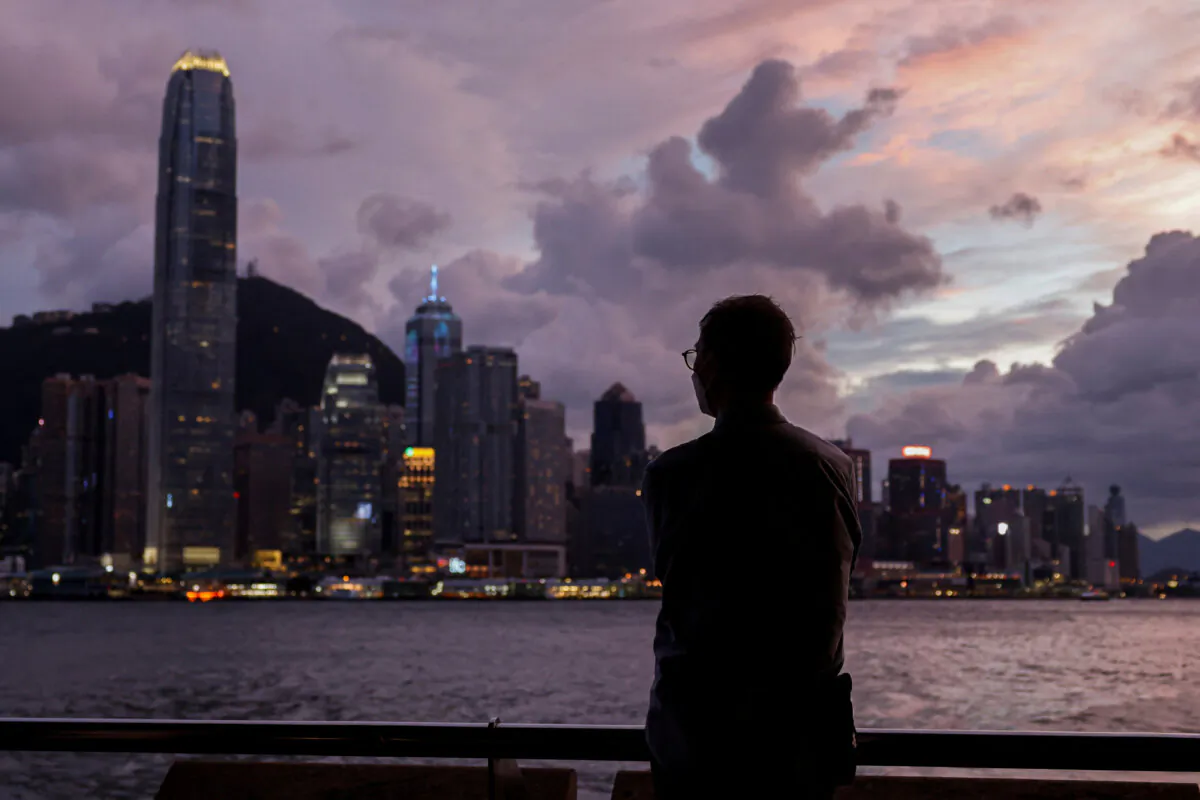
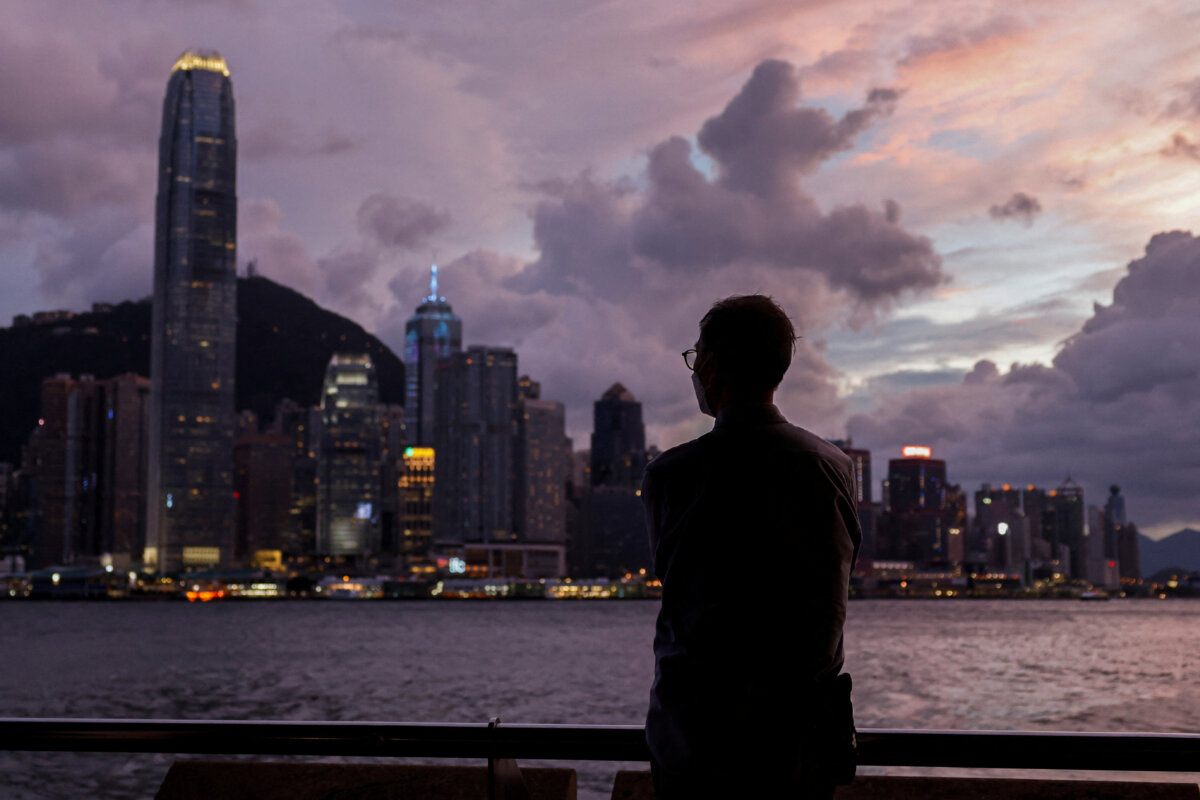
For decades, Hong Kong stood as one of the freest and most international cities in Asia. It was not only a financial hub but also a meeting place of ideas—where East met West, where cultures blended, and where the free flow of information was not only tolerated but also celebrated.
Its success rested on more than capital markets, infrastructure, or geography. At its core was a system built on trust—trust in the rule of law, trust in institutions, and trust that individuals could speak, read, write, and think without fear of crossing invisible political boundaries.
Bookstores carried titles from across the ideological spectrum. Universities hosted debates on sensitive topics. Journalists asked difficult questions. Business leaders operated in an environment in which information flowed freely and predictably. This openness was not incidental; it was foundational. But today, that foundation is being quietly, steadily reshaped.
When a Bookstore Becomes a Target
Pong Yat-ming is not a household name in global politics. He is, however, emblematic of a deeper transformation taking place in Hong Kong. A free-spirited individual—someone I have known for nearly two decades—Pong once stepped briefly into the political arena, contesting the 2016 Legislative Council election. Yet politics was never his primary calling. His passion lay in culture, human interaction, and the exchange of ideas.
In 2020, he opened Book Punch, an independent bookstore in Sham Shui Po. It was conceived as a modest but meaningful space: a community hub where people could gather, browse books, and engage in thoughtful conversation. There was nothing unusual about this. Around the world, independent bookstores serve precisely this role. They are places where ideas breathe.
At Book Punch, small-scale activities took place, including lectures on social and cultural topics, language classes, and informal seminars and discussions. These were not mass rallies or political campaigns. They were intimate, community-level interactions. Yet in today’s Hong Kong, even such activities have drawn increasing scrutiny.
According to Hong Kong local sources, on the eve of March 24, Pong and three other staff members were arrested for allegedly “knowingly selling a publication that has a seditious intention.” This is an offense under Hong Kong’s homegrown security law, the Safeguarding National Security Ordinance, commonly referred to as Article 23.
While details continue to emerge, the arrest is widely believed to be linked to the sale of the Chinese translation and original English edition of the biography of Jimmy Lai titled “The Troublemaker,” written by Mark Clifford.
The implication is stark. A book—documenting the life of a prominent Hong Kong figure—has become the basis for a potential criminal charge. This is not merely a legal matter—it is a signal. To sell a book is no longer a neutral act. It is an act that can be interpreted, scrutinized, and potentially criminalized based on perceived intent.
Pong had previously faced regulatory action for hosting lectures and seminars at his bookstore. What once might have been treated as minor licensing issues has now evolved into something far more serious. Taken together, these developments redefine what a bookstore represents. It is no longer simply a place of ideas. It is a space of risk.
Taken together, these developments send a clear and troubling message: A bookstore is no longer just a bookstore. It is a space that can be investigated, regulated, and, if necessary, criminalized.
When Your Phone Is No Longer Yours
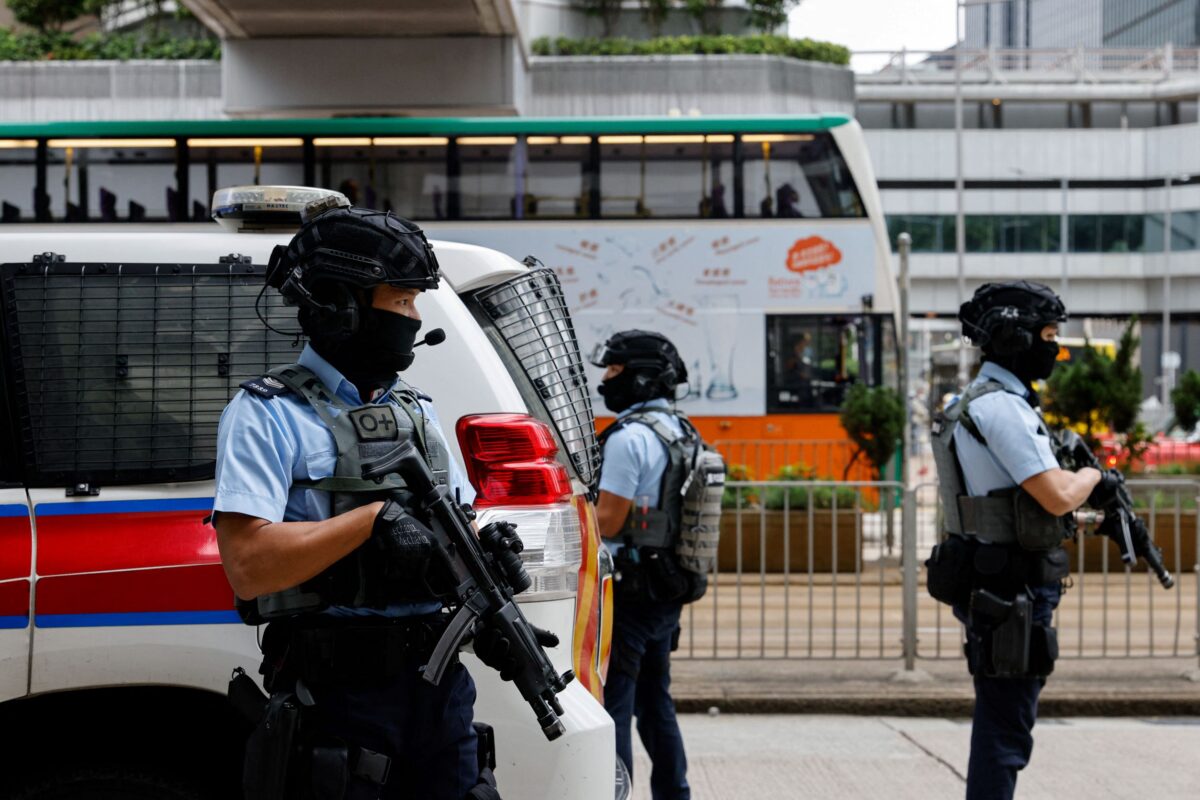
If the bookstore case signals a tightening grip on physical expression, the latest amendments to Hong Kong’s national security implementation rules extend that control into the most intimate corners of daily life—your own devices.
On March 23, the Hong Kong government formally announced amendments to the Implementation Rules of Article 43 of the National Security Law, with immediate effect. Under these new provisions, police officers may require any “specified person” to provide passwords or otherwise assist in decrypting their electronic devices. Failure to comply is now a criminal offense, punishable by up to one year in prison and a fine of 100,000 Hong Kong dollars (about $12,800). Even more striking, providing false or misleading information when handing over such access can result in penalties of up to three years’ imprisonment and a fine of 500,000 Hong Kong dollars.
This is not merely a legal technicality—it represents a profound shift in the boundary between private life and state power. Your phone is no longer just your phone. It is your memory bank, your communication hub, your personal archive. Messages, photos, contacts, browsing history, financial records—even unsent thoughts stored in drafts—can now be subject to compelled access under threat of criminal punishment.
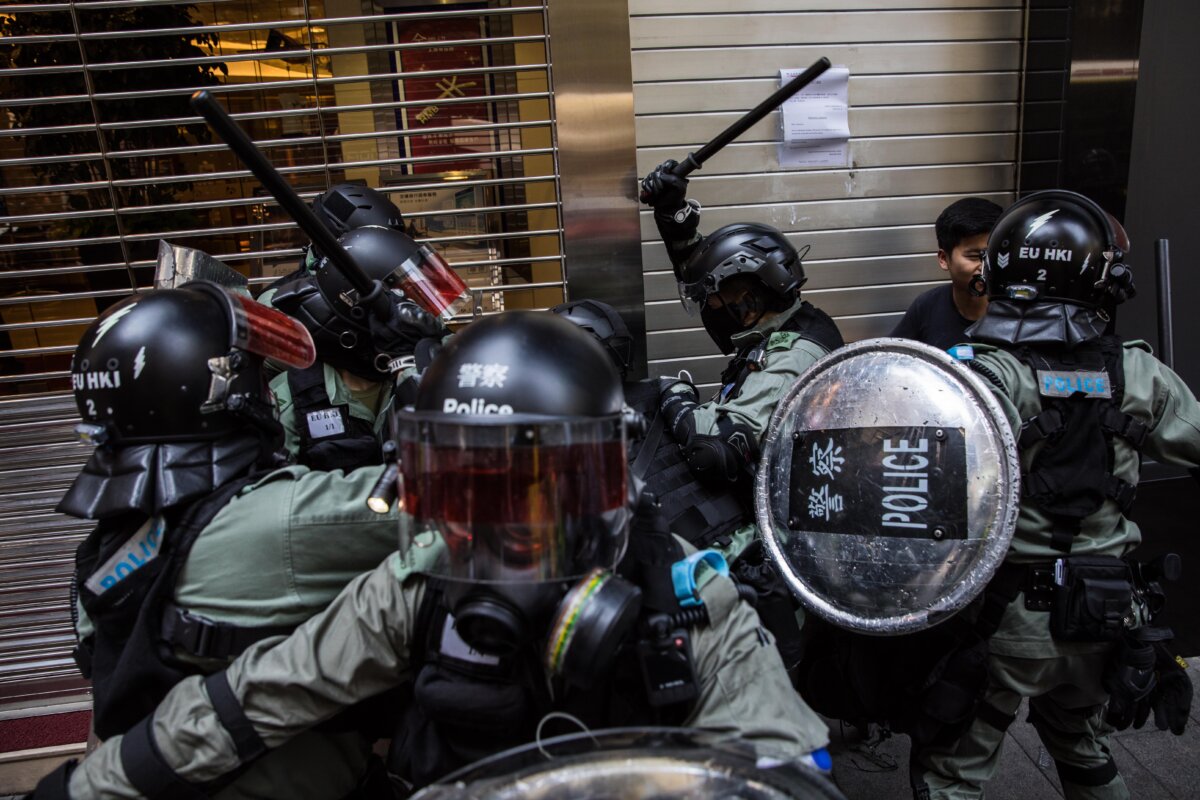
The implications are sweeping: Privacy becomes conditional, encryption becomes uncertain, silence becomes rational. People begin to think twice before typing a message, saving a document, or even keeping a contact. Conversations that once flowed freely now carry an invisible weight.
In such an environment, the question is no longer whether one has done anything wrong, but whether anything one has ever said or stored could be interpreted as such. And that is the moment when a society changes—quietly, but irreversibly.
A Quiet but Telling Response
The implications of these changes are already visible in the behavior of those who interact with Hong Kong from the outside world. A quiet but telling shift is underway.
Overseas executives increasingly travel with “burn phones,” carrying minimal or no personal data; communications on platforms such as Signal or WhatsApp are deleted prior to arrival; sensitive information is deliberately removed to minimize potential exposure.
These are not the habits of individuals operating in a high-trust environment. They are people’s adaptations to a new and uncertain reality. Even if such precautions are not formally required, their growing prevalence reflects a deeper perception: that the scope of investigative power has expanded to a point where privacy can no longer be assumed.
From Rule of Law to Rule by Uncertainty
Hong Kong’s reputation was built on a legal system that was clear, predictable, and trusted. Today, the concern is no longer limited to what the law explicitly states, but extends to how broadly it may be interpreted and enforced. When a bookstore sale becomes a potential criminal offense, a private device may be subject to compelled access, and ordinary activities are assessed through a national security lens, the result is not simply enforcement—it is uncertainty.
And uncertainty reshapes behavior. Individuals begin to self-censor, and organizations become more cautious. International confidence adjusts, often quietly but decisively.
Hong Kong’s transformation is not defined by a single dramatic event. It is incremental—built through a series of small but significant changes. One arrest. One new provision. One expanded authority. Individually, each may appear limited. Together, they form a trajectory. The city is shifting from openness to caution, from confidence to calculation, from freedom to conditionality.
A Surveillance City in the Making
Taken as a whole, these developments suggest that Hong Kong is evolving into a highly surveilled city, where both physical and digital spaces are increasingly subject to oversight. The comparisons are becoming more difficult to ignore. Within mainland China, regions such as Xinjiang and Tibet have long been associated with extensive surveillance systems and tight control over social and cultural life.
Hong Kong was once distinct, protected by a different legal and institutional framework. Yet today, the trajectory points toward convergence rather than separation. The tools may vary, and the intensity may differ, but the direction is unmistakable: a steady expansion of mechanisms that enable monitoring, access, and control.
For those who have known Hong Kong in earlier decades, this transformation is deeply personal. It is not only about legal provisions or enforcement actions. It is about the gradual erosion of everyday freedoms, such as the ability to browse a bookstore without concern and to communicate privately without hesitation.
The ability to think, speak, and engage without second-guessing unseen boundaries—these are not luxuries. They are the foundation of a free society. And when they begin to erode, the impact is felt not only in headlines, but in the quiet decisions that people make each day.
A Warning in Plain Sight
Hong Kong’s story is still unfolding, but the direction is increasingly clear. From the arrest of a bookstore owner for allegedly selling a “seditious” publication to the expanding authority over personal digital devices, the boundaries of freedom are narrowing.
The transformation is not always dramatic; it does not always announce itself—but it is steady and consequential. Hong Kong is becoming a city where surveillance is woven into daily life—where caution replaces confidence and privacy is no longer assumed but conditional. In many ways, it is beginning to resemble other highly monitored regions within the Chinese system.
And in such a city, one cannot help but recall a warning that once seemed distant, even fictional: Big Brother is watching you.
Views expressed in this article are the opinions of the author and do not necessarily reflect the views of The Epoch Times.
 Friends Read Free
Copy
Facebook
Tweet
Friends Read Free
Copy
Facebook
Tweet