
Commentary
The siege of Hong Kong started long before the suppressive legislation and spontaneous crackdowns. It began in Beijing and has been brewing since the 1997 handover from the UK. China has steadily eroded the promises it made under the 1984 Sino-British Joint Declaration, which guaranteed Hong Kong a “high degree of autonomy” for 50 years.
British Prime Minister Margaret Thatcher hoped to preserve Hong Kong’s capitalist system, civil liberties, and independent judiciary. Instead, Beijing has created a siege state of authoritarian control, exporting repression across borders and silencing dissent at home and abroad.
Weaponizing Legal Definitions
The most aggressive instrument of this transformation was the National Security Law (NSL), imposed unilaterally by Beijing in June 2020. While the Chinese Communist Party (CCP) and Hong Kong authorities assert that it was necessary to maintain stability, it was drafted without public consultation and is enforced by mainland Chinese authorities.
The law uses terms such as “subversion,” “secession,” “terrorism,” and “collusion with foreign forces” to target activists, opposition lawmakers, and public dissension. The Chinese regime now targets peaceful protest, journalism, and international advocacy.
For example, 47 opposition politicians and activists were charged with subversion simply for organizing a primary election to select pro-democracy candidates, and in May 2024, 14 of those activists were convicted of conspiracy to commit subversion.
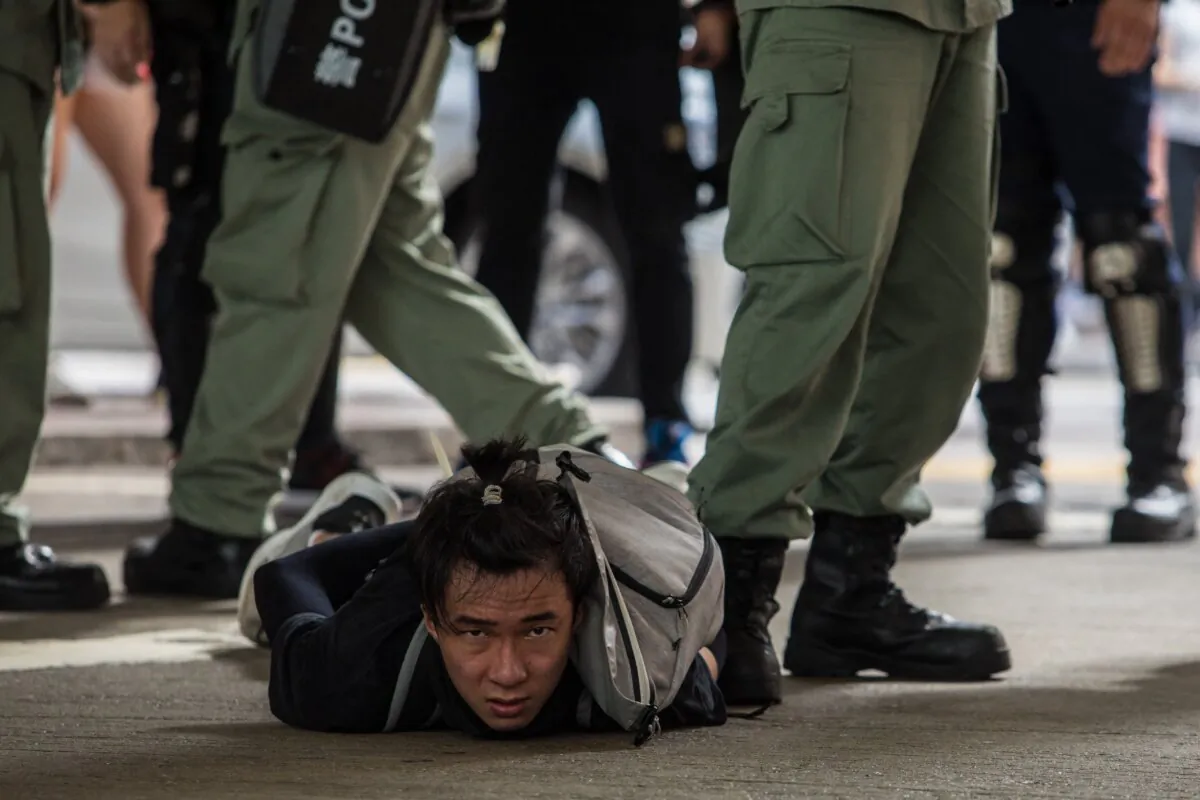
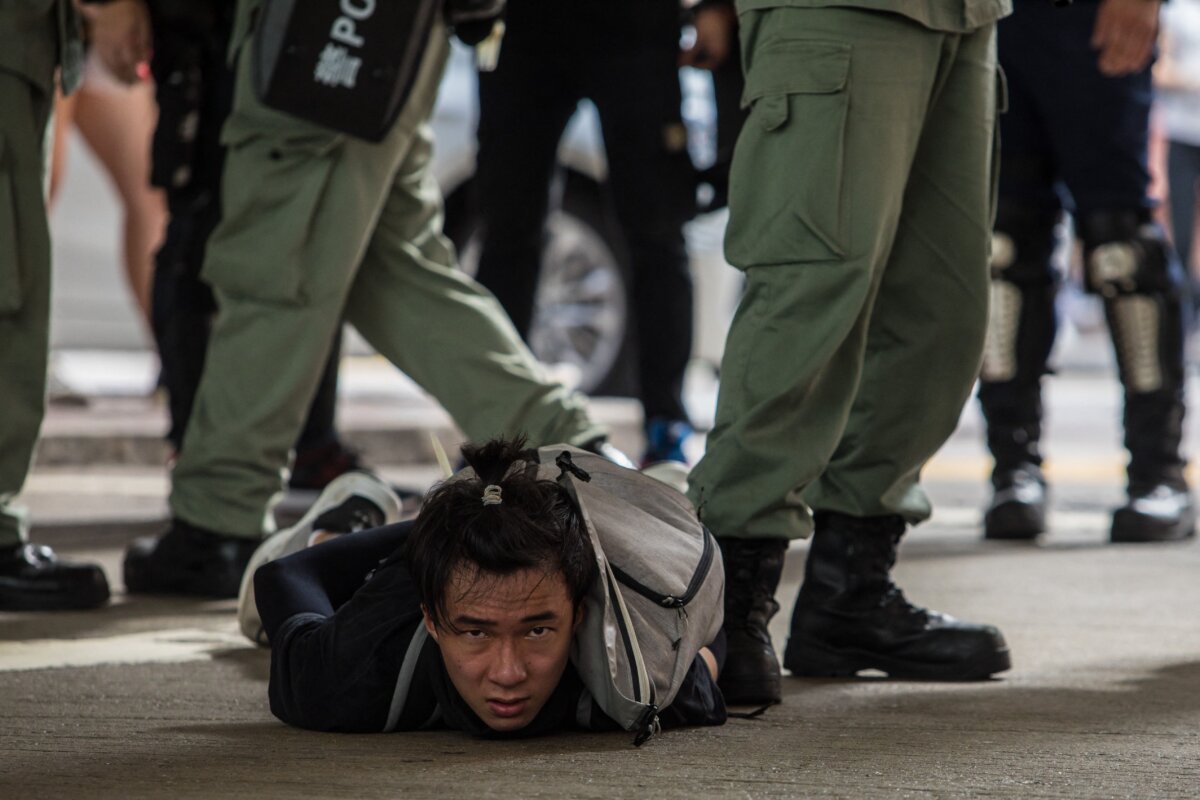
In addition, during the protests leading up to the NSL, more than 10,000 people were arrested, and some 1,300 remain in custody.
The charge of secession has been weaponized against symbolic speech. The slogan “Liberate Hong Kong, revolution of our times,” once ubiquitous during the 2019 pro-democracy protests, was banned outright. Possessing a sticker or T-shirt bearing the phrase became grounds for arrest. Artistic and academic expressions supporting autonomy have been censored or punished, even when shared privately. Hong Kong and CCP authorities use surveillance systems and facial recognition to target those who choose not to conform.
Under Beijing’s definition, terrorism includes protest tactics such as roadblocks and throwing objects. Actions such as these, while disruptive, fall far short of international standards for terrorism. Sharing protest footage or expressing solidarity with demonstrators is now considered incitement. The law’s reach is so expansive that even symbolic gestures, such as holding a blank sheet of paper, have been treated as criminal acts.
Collusion with foreign forces has become a catchall for international engagement. Jimmy Lai, founder of the now-defunct Apple Daily, was charged for allegedly calling for foreign sanctions against Chinese and Hong Kong officials. Moreover, activists attending overseas conferences or receiving donations from abroad have been accused of collusion—even if they reside outside Hong Kong.
Use of technological targeting has created an oppressive environment and enabled Beijing to dismantle Hong Kong’s civil society. Independent media outlets such as Apple Daily and Stand News were shuttered following police raids and arrests in 2021. Civil society organizations, labor unions, and political parties have been disbanded under pressure. The Democratic Party dissolved in February this year, and the League of Social Democrats disbanded in June, citing “immense political pressure.”
Article 23 Adds 5 Categories of Crimes
In March 2024, Hong Kong passed Article 23, a local security law that expanded surveillance and censorship. Katrina Chan, a former district councilor and theater performer, was among its first targets. Her alleged offense was managing a Facebook page commemorating the Tiananmen Square massacre. Her post reads, “Beneath the harmony and ‘business as usual,’ people’s voices are being erased.” She was fired, was removed from a theater production, and could face up to seven years in prison.
The CCP’s influence has also gutted Hong Kong’s electoral system. In the 2019 (before the NSL) District Council elections, voter turnout reached a historic high of 71.23 percent, with pro-democracy candidates winning more than 80 percent of seats. But after Beijing’s overhaul, the 2021 Legislative Council elections saw turnout plunge to 30.2 percent.
By 2023, District Council turnout had fallen to 27.54 percent, the lowest since the handover. Of 470 seats, only 88 were directly elected. The rest were filled through appointments or nominations by government-aligned bodies. Beijing’s “patriots-only” rule ensures that only loyalists will hold office.
Global Reach: Silencing the Diaspora
The CCP’s repression doesn’t stop at Hong Kong’s borders. Authorities issued arrest warrants and bounties of 1 million Hong Kong dollars for overseas activists, including Carmen Lau, Tony Chung, and Victor Ho Leung-mau. Passports were revoked for Frances Hui and Joey Siu, effectively rendering them stateless. Officials have suggested that these individuals could return “through illegal means.” Most see this as a veiled threat of abduction.
Families of activists have been interrogated. Carmen Lau’s aunt and uncle were questioned. Chung Kim-wah’s wife and son were detained for questioning by national security police. Bank accounts have been frozen. Employers have been pressured to sever ties. Activists abroad report being followed, photographed, and harassed—echoes of the Chinese regime’s overseas police stations that have drawn international condemnation.
This is not a local crackdown. It is a coordinated campaign by the CCP to extinguish dissent, rewrite history, and export authoritarianism. The transition of Hong Kong has become a cautionary tale and a warning of Taiwan’s potential fate.
The NSL and Article 23 have not only criminalized speech and assembly, but have also globalized fear. Activists abroad live in exile, not freedom; their families are pawns, and social networks are monitored, with dissenting views being labeled as crimes.
Additional Observations
Correspondent banks, especially those in democratic jurisdictions, have scaled back exposure to Hong Kong because of the extraterritorial reach of the NSL and Article 23. These laws have been used to target overseas activists with arrest warrants, asset freezes, and passport cancellations.
As a result, transaction costs for local enterprises have risen, and Hong Kong’s reputation as Asia’s premier offshore dollar center has eroded. Financial professionals now operate under the shadow of vague definitions of “state secrets” and “foreign interference,” which threaten to criminalize routine international business dealings.
Multinational corporations are diversifying their supply chains and financing away from a jurisdiction that can weaponize legal processes. Regional financial centers from Singapore to Dubai are redrawing trade and capital flows.
Conclusion: The Global Cost of Repression
Beijing’s campaign in Hong Kong poses an existential threat to the city’s reliability as an international trading hub. According to the ASEAN+3 Macroeconomic Research Office, Hong Kong’s gross domestic product growth is set to slow to 1.9 percent in 2025 under rising protectionism and policy unpredictability.
As the city’s legal and institutional safeguards erode, investors and traders will no longer regard Hong Kong as a neutral, rule-based platform. Higher risk premiums, the flight of professional talent, and the relocation of corporate and legal services will fragment capital and supply chains.
On a broader scale, the CCP’s extraterritorial repression signals to authoritarian regimes worldwide that domestic dissent can be criminalized abroad. It undermines the norms of sovereign immunity and sets a dangerous precedent for cross-border enforcement of vague security laws.
Views expressed in this article are the opinions of the author and do not necessarily reflect the views of The Epoch Times.
 Friends Read Free
Copy
Facebook
Tweet
Friends Read Free
Copy
Facebook
Tweet