Commentary
“A British subject I was born. A British subject I will die,” was Sir John A. Macdonald’s last rallying cry in 1891. The Liberals, running under rookie Wilfrid Laurier, campaigned for free trade with the United States. Free Trade was well within the British Empire’s Radical and Liberal traditions, including Macdonald’s Liberal-Conservatives before the National Policy. But in 1891, the Grits walked into a trap as the Tories trounced them in a patriotic anti-annexation campaign for independence from the United States. It wasn’t the last.
Macdonald’s slogan was opportunistic bluster. Every Canadian was a British subject by virtue of his birth in the British Empire. That’s where our tradition of birthright citizenship came from—English common law—though higher non-resident births in modern times have made it unpopular. A British passport was a ticket anywhere the flag flew, from Hong Kong to Singapore to Sydney and Cape Town, to Gibraltar, Cairo, Bombay, and Vancouver. (Of course, if your ship was a deliberate provocation, some conditions might apply.)
To be a British subject in 1891 was nearing a zenith, captured in Gilbert & Sullivan’s mock-stirring song from H.M.S. Pinafore, “He is an Englishman,” which includes the lines:
For he might have been a Roosian,
a French, or Turk, or Proosian,
or perhaps Ital-i-an!
Chorus:
Or perhaps Ital-i-an!
All:
But in spite of all temptations
to belong to other nations,
he remains an Englishman!
One of the best film renditions of the song appears in Chariots of Fire.
Englishness began to evolve with the Anglo-Saxons, conquered by the Normans in 1066, and was refined over many centuries in conflict with the Welsh, Scots, Irish, Spanish, Dutch, French, and so on. Some jumped on the bandwagon, and the cachet of “Britishness” grew as the British learned to “think big” around 1850 during the Don Pacifico Affair, a key test of the meaning of citizenship.
David Pacifico was a polyglot of Spanish and Italian descent, born in Gibraltar, raised in Portugal. When a prominent French financier, a Rothschild and therefore Jewish, visited Athens, where Pacifico was the British consul, the Greek government banned the annual Greek Orthodox burning-in-effigy of Judas Iscariot (who betrayed Jesus to the Herodians), concerned it would cause offence. Rumour had it that Pacifico was behind the ban. When a “Christian” mob attacked his house, beat his family, and smashed his property, the Greek police stood by, because Pacifico was a mere Jew. And so he wrote to the British ambassador “as an English subject to beg your protection.”
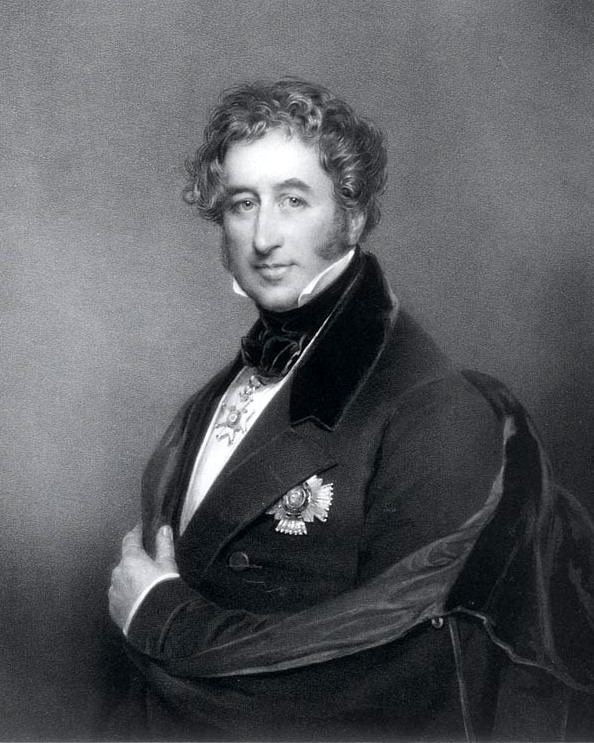
Lord Palmerston, the prime minister, decided to give the world a lesson: don’t mess with a British subject. When Greece refused responsibility, the Royal Navy blockaded Athens to exact restitution, an early case of “sending a gunboat.” In Parliament, Palmerston compared Pacifico to St. Paul of Tarsus, who confronted his Jewish persecutors with the assertion, “Civis Romanus sum.” (“I am a Roman citizen”). Even as a Christian ex-Pharisean Jew, Paul had the right, as a Roman citizen, to appeal to Caesar.
As we see in Acts 22 in the Bible, the Tribune of Jerusalem asked Paul, “Tell me, are you a Roman citizen?” “Yes, I am,” Paul replied. The Tribune said, “I had to pay a lot of money for my citizenship.” And Paul replied, “But I was born a citizen.” Verse 29 says: “Those who were about to interrogate him withdrew immediately. The commander was alarmed when he realized he had put Paul, a Roman citizen, in chains.”
Palmerston also spoke eloquently against anti-Semitism. His critics, he said, implied that “because a man is of the Jewish persuasion, he is fair game for any outrage,” words that are just as valid today. The principle and the mystique grew even more: If you are a British subject in trouble, Her Majesty’s government will back you to the hilt.
And it is that sense of rights and responsibilities, protection and obligation, that Ottawa tapped into with the Canadian Citizenship Act, which took effect on Jan. 1, 1947. The Liberal government packaged it as part of Canada’s rise to post-colonial nationhood and its embrace of postwar human rights and equality. But here again there was more than meets the eye.
Another dimension of the 1947 act was the ascendancy of the “little Canada” mentality associated with Prime Minister Mackenzie King since the 1920s. It meant thinking of Canada alone, pure Canada, all Canada, and deprecating external allegiances, counterweights, and traditions in the Empire-Commonwealth. As if to symbolize this inward turn, Mackenzie King, still Prime Minister in 1947, put himself at the centre of attention.
In 1947, the legal status of Canadian citizenship could easily have been clarified by simple amendments to the Immigration Act (1910), Canadian Nationals Act (1921), and so on. Instead, the Liberals decided to make a big public spectacle of a shiny Citizenship Act. Using the “neutral” bureaucracy rapidly expanded during the war, the Liberals orchestrated a television ceremony on Jan. 3, 1947, with media-savvy ceremonies all across Canada for the first “Citizenship Week,” Jan. 5–11, 1947.
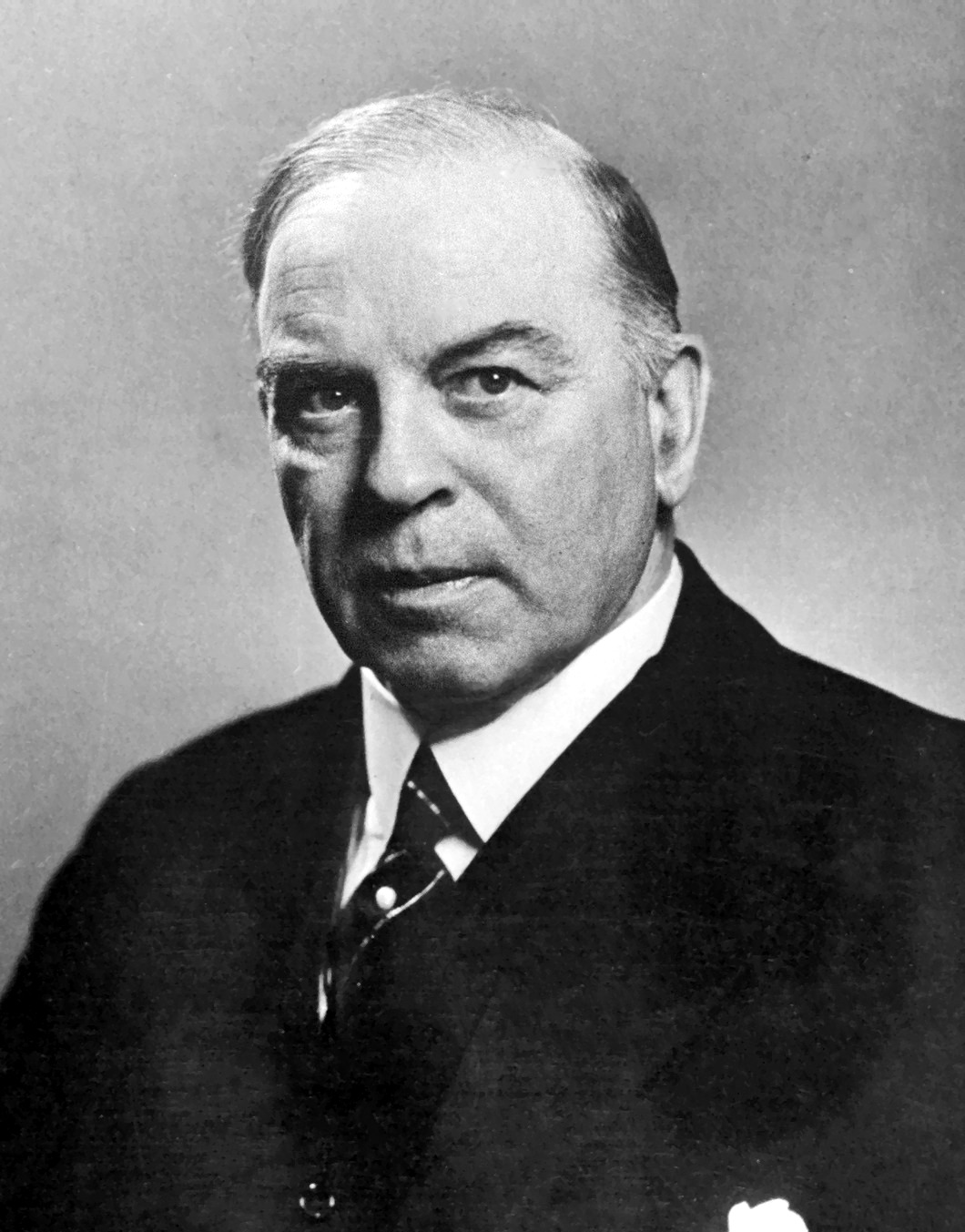
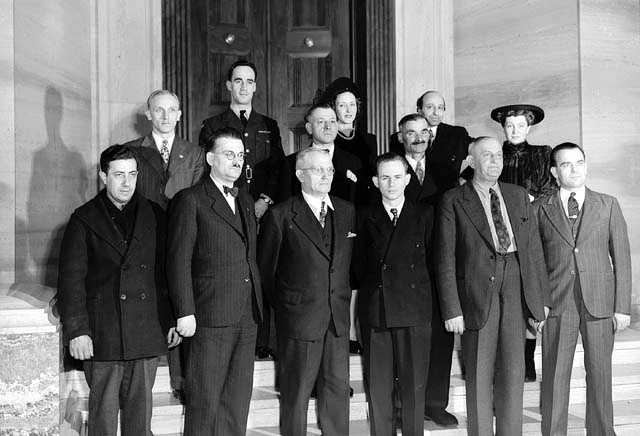
True to form, King made sure the very first “certificate in proof,” Number 0001, was presented to himself, “walking up slowly” in front of the cameras at the Supreme Court building. He then got “Passport No. 1,” issued by External Affairs—to himself.
This was a bold pretence because “Canadian citizens” had existed since the Immigration Act of 1910, Canadian passports had been issued as early as 1862 by the Province of Canada, and Canadian passport booklets had been issued since the Canadian Nationals Act of 1921. The latter defined a “Canadian national” as “any British subject who is a Canadian citizen within the meaning of The Immigration Act” (that is, born in Canada), or his wife, or “any person born out of Canada, whose father was a Canadian national at the time of that person’s birth.” Over time there were inconsistencies, but these could have been easily ironed out.
Some Canadians saw through it. “The whole song and dance, unfortunately, is unworthy of our national dignity,” said Winnipeg South MLA Lloyd Stinson of the socialist CCF, as reported by the Winnipeg Tribune. “Canadian citizenship is a great possession, but the present attempt to make a newsreel movie out of it is so much hokum.” In fact, Paul Martin Sr., the secretary of state, admitted that his bill was substantially an amendment of the Naturalization Act of 1914. He also admitted that the ceremony was based on the American model.
The night before, King wrote in his diary that the numerals of the year, 47, were the reverse of the year of his birth, 74, and rejoiced at “Being the first citizen at a time the new citizenship law comes into force when we will be known as Canadians, and that an enactment of the government of which I am the head.” He then saw the profile of his mother in his shaving cream with an angel’s wing on her shoulder. Later he wrote, “I was given the first certificate,” and “thinking much of what it signified in my own life.”
It was all about him!
The best thing about the ceremony was that it included a cross-section of 24 Canadians receiving certificates too, taking the oath “in common loyalty to the King.” They included the Armenian-born photographer Yousuf Karsh; Mrs. Stanley Mynarski, mother of Victoria Cross winner Pilot Officer Andrew Mynarski; Wasyl Elyniak, 87, of Calgary, supposedly one of the first two Ukrainians to enter Canada; and Giuseppe Agostini, father of the CBC’s music director (an example of government political courtship of the news media). There was also a Lithuanian tailor, a Norwegian instrument technician, a Romanian harness-maker, a Yugoslavian shoemaker, and a Russian labourer and veteran of the Canadian Army in two wars.
Some Quebec MPs, like Édouard-Gabriel Rinfret, a Liberal, thought the bill “meaningless” because it addressed legal niceties and yet would “cost hundreds of thousands of dollars to enforce.” And more civil service empire-building followed, with a “two-headed tax-eating agency,” the Citizenship Branch (22 employees) and the Citizenship Registration Branch (65 employees) with a combined budget of $155,075 (which would be $2,494,273 in 2026 dollars). It was a “peculiar merry-go-round” with a common question still heard today: “What do they all do?” Newspapers called it an “unnecessary” “tax-eating duplication of effort,” “official hokum” and “waste.”
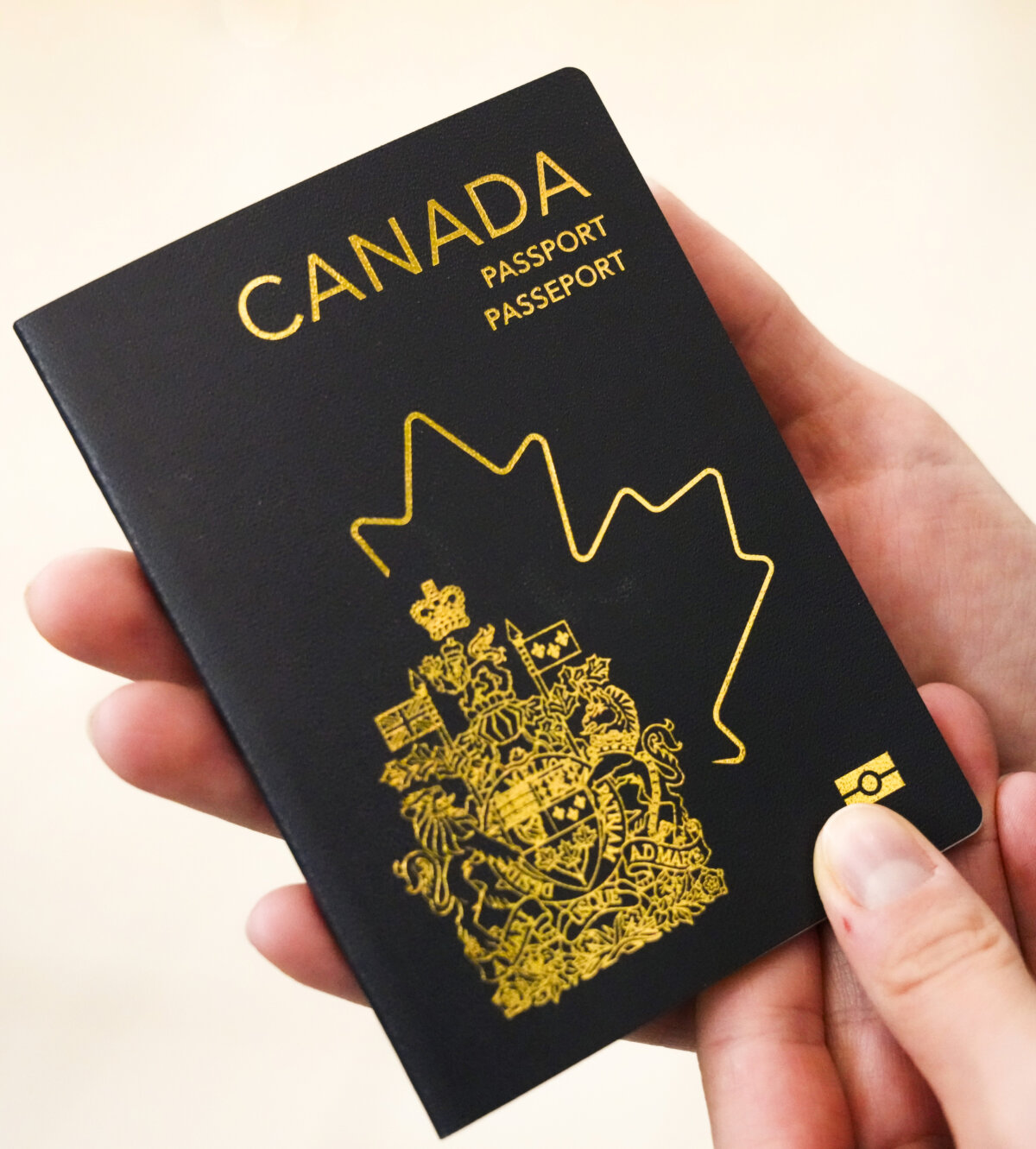
Ironically, the 1947 Citizenship Act says: “A Canadian citizen is a British subject,” the same words as the 1910 version. And this is a point that many journalists and historians still get wrong. They say “the act created a category of nationality separate from British subjecthood.” No, that had already happened. Yet the CBC has said, “Up until the time the Canadian Citizenship Act came into effect … Canadians were British subjects who lived in Canada,” still getting it wrong. On the 70th anniversary, a government web page was created that asks, “Did you know that until January 1, 1947, a person born in Canada was considered a British subject?” Wrong again: that definition held true until 1977.
Only then did the Pierre Trudeau government take it out. But a Canadian passport still said: “In the event that Canadian assistance is not available, please report to the nearest British consulate/embassy,” and that was only dropped in 2023 when Canada’s 24/7 Emergency Watch and Response Centre was introduced at the Global Affairs department.
Not surprisingly, there have been multiple recent reports of Canadians overseas feeling abandoned. The passport of a Nova Scotia woman living in Qatar was locked up inside a closed Canadian Embassy, so she couldn’t leave. And an Alberta mother in Qatar was unable to get emergency documents for her young son after renewal was delayed by bureaucracy. She said: “I’ve been up in the middle of the night calling Global Affairs Canada, speaking to people in Ottawa, and no one has given me a solution for how my Canadian citizenship son can get any documents.”
She turned to the British Embassy, which, since the boy’s father is British, quickly issued an emergency passport.
Views expressed in this article are the opinions of the author and do not necessarily reflect the views of The Epoch Times.