
Commentary
Here at The Epoch Times, Jeff Minick recently wrote that the country now needs MAMA, meaning “make America moral again.” My response is “Great, where do we start?”
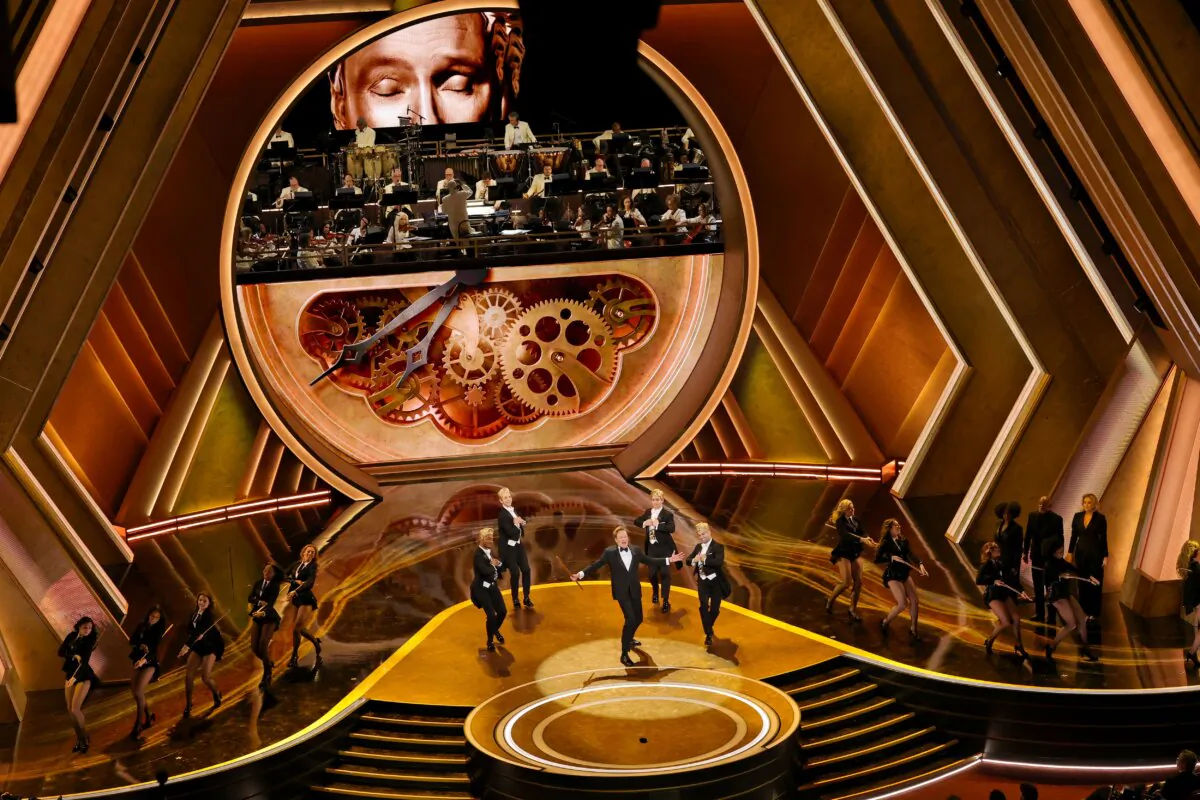
Among other signs of moral erosion, Minick cites a Netflix series with protagonists who swear excessively and launder drug money. This is a good place to start. Last year’s best picture, according to the Academy Awards, took a sex worker as its protagonist, and the year before that, the best picture featured a philandering communist sympathizer. Meanwhile, the American Film Institute ranks “The Godfather”—which is arguably just an apologia for criminal behavior—as the third best movie ever made.
These examples highlight a basic contradiction: Everyone wants a society with no crime and healthy, productive citizens, yet what is exalted in society are movies that show crime and impropriety unpunished and extramarital sexual relationships.
It is a fact that a strong, healthy society is built on traditional married couples with children. This is what can stem the current trajectory of population decline facing the nation. Also, as much research has shown, children are more likely to thrive in married-parent households. This was highlighted by the recent Heritage Foundation report “Saving America by Saving the Family: A Foundation for the Next 250 Years.” The report concluded that traditional households are more likely to create neighborhoods with “greater public safety and fewer social problems.” Children not raised in traditional families, which is an increasing number since the 1960s, are more likely to commit crime, abuse substances, and suffer from mental problems. Movies and television series that show crime, extramarital sexual activity, and terrible human behavior without also showing the real, negative consequences are directly contributing to this societal decay.
What can be done? In an ideal world, the movie industry would curb its greed and self-regulate itself as it did from 1935 to 1955. Thanks to the Hays Code, a moral baseline was created, laying a strong foundation upon which good storytelling and acting could shine. Imagine a traditionally elevated stage; that was the Hays Code. In comparison, what we have now in movies and television is a frothing-at-the-mouth mob crowding around a cockfight.
Under the Hays Code, Hollywood had its Golden Age and produced better movies than any other 20-year period by most film scholars’ standards. Just watch movies from this era yourself (in a genre you prefer); the superiority is palpable.
The Hays Code states: “Motion picture producers … recognize their responsibility to the public … because entertainment and art are important influences in the life of a nation. … The motion picture within its own field of entertainment may be directly responsible for spiritual or moral progress, for higher types of social life.”
Spiritual progress from a movie? A higher type of social life? It all sounds too good to be true. But this was the reality less than a century ago. It also makes perfect sense. Rigorous standards and a sense of propriety tend to create better art. Compare the rhyme and meter of a Shakespearean sonnet or a Robert Frost poem with the gobbledygook or emotional spasms that pass for poetry today. Or, compare a Jackson Pollock painting, which resembles a child’s ketchup splotches, with a fine work of Renaissance art by Raphael or Da Vinci. Raw skill and craftsmanship, a sense of responsibility to society, and a touch of inspiration woven together create delightful, meaningful entertainment.
What if American movie producers were to take their moral responsibility more seriously and set limits on entertainment shown in theaters? Less excessive swearing, nudity, and extreme violence would be the immediate changes. Undoubtedly, it would lead to better movies with better writing.
In fact, I’m not the first to think of this. Angel Studios, founded in Utah in 2021, has taken a crack at it. Angel originally produced the hit series on Jesus titled “The Chosen” (although it splintered off), as well as the award-winning movie on child-trafficking “The Sound of Freedom.” It now has in theaters the romantic-comedy “Solo Mio.” Angel has created a guild with its own take on a movie code. It doesn’t have the long list of restrictions that the Hays Code had and instead states that it wants movies that “amplify light,” “bring goodness into the world,” and “reintroduce positive values.”
What exactly do they mean? I’m not sure, and they never say. So far, Angel’s work has been pretty good, although it still often comes off as amateurish and leans heavily on Christian content. Something I’ve learned from running the Society of Classical Poets, which has lofty artistic goals as well, is that it has to be about the art first. We want great work that will entertain and inspire people with its skill. That’s something Angel needs to develop more, possibly through greater competition in the scripts and projects it accepts. We need the best writers working on a new golden age of movies.
The nice thing about the Hays Code is that it puts its requirements all on the table. It doesn’t lean on any particular religious perspective and just states that any religion, Christian or otherwise, cannot be ridiculed in movies. That’s the kind of art-first attitude on an elevated stage that can truly make American movies great again.
Views expressed in this article are the opinions of the author and do not necessarily reflect the views of The Epoch Times.
 Friends Read Free
Copy
Facebook
Tweet
Friends Read Free
Copy
Facebook
Tweet