
Commentary
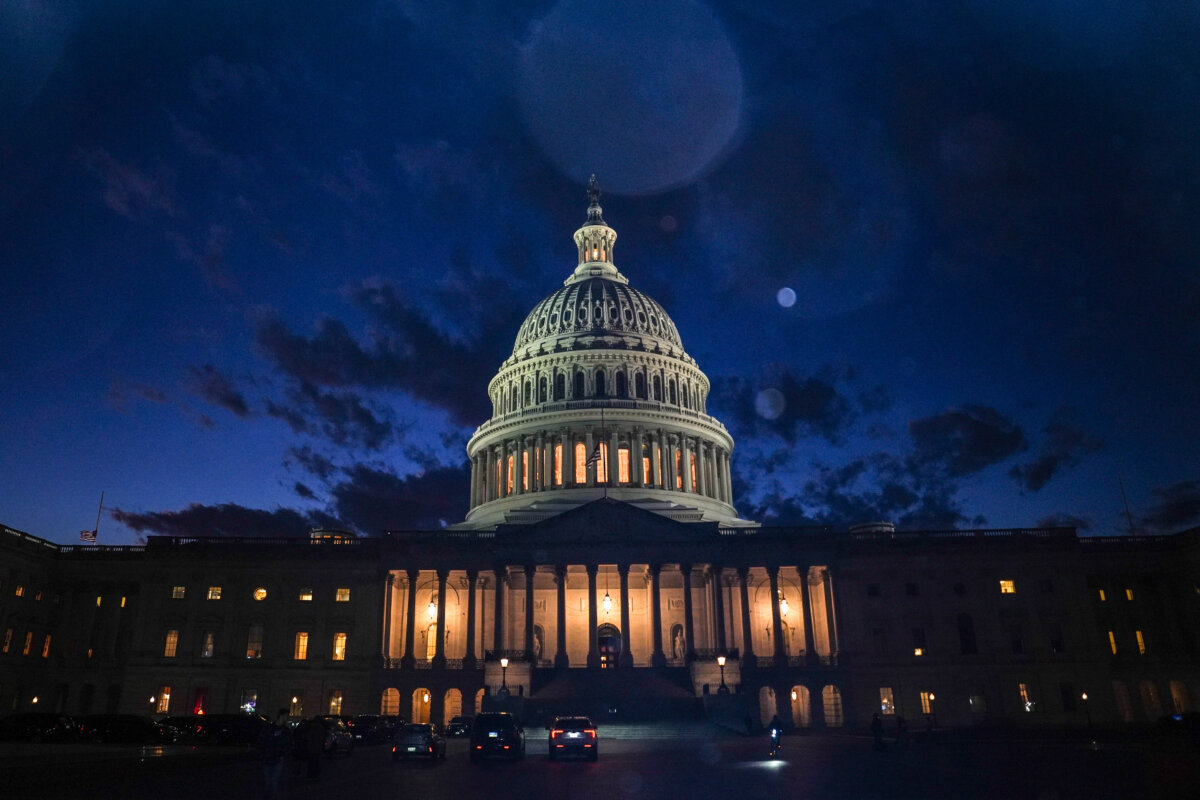
Last fall, Americans endured a six-week federal government shutdown. Members of both major parties were at loggerheads over hot-button issues such as health care and immigration, and both dug in their heels rather than reach a compromise. Thus, brinkmanship ensued, leading to the shutdown.
Essential services such as the armed forces and law enforcement maintained operations, but employees didn’t get paid, which hurt their families. The transportation grid, especially air travel and some shipping, almost ground to a halt, causing frustration for the public. It generated instability and a degree of economic negatives in the distribution of the crucial supply chain.
Fast forward to this February, and another partial shutdown is underway. Congress members once again failed to reach a consensus on issues related to immigration funding and Department of Homeland Security activities. However, the department is already funded for the current fiscal year, so it is puzzling why a shutdown would produce a positive outcome. Or is it merely a political stunt in an attempt to score points?
Some might argue that these shutdowns can be helpful, since legislation is stalled, meaning more regulations and taxes would be put on the back burner. Spending slows as gridlock sets in, and this could be an appropriate time to brainstorm downsizing government ideas, with reduced debt and deficit spending akin to the Department of Government Efficiency.
Visualize for a moment if a shutdown were initiated at the city, county, or state level of government. What might unfold? If “non-essential” employees aren’t on the job, it would be difficult to collect revenue and disburse services in a timely manner. Normal services such as trash collection and street sweeping likely would be delayed or disrupted. Tax-funded clinics and schools would likely continue operating, while public safety personnel such as fire crews and police departments would operate without pay. However, public safety response times could be adversely affected.
This lack of predictable continuity and stability can harm not only employees but also the general public, and it can erode public trust in governing institutions. Remember that governing entities contract out many of their services to the private sector, and those services could slow down. Likewise, if tax-funded institutions are affected by unionized strikes, the delivery of a range of services can be impeded. Strikes or walkouts usually occur when employees fight for better benefits, wages, and working conditions.
If a shutdown or strike continues for weeks, it can be highly disruptive to government operations and to the folks who depend on social services. It can also hamper the ability of contracted services to carry out routine operations because fewer government personnel are carrying out the duties usually assigned to a larger workforce.
Not all employees are in favor of shutdowns or strikes. Like most folks, they prefer to maintain a routine of productivity and purpose in their lives and dislike uncertainty. During my college years, I was involved with copper and zinc mining in northern Manitoba during the summers. Union mine workers (United Mine Workers) were involved in a strike with the large mining company. I didn’t enjoy sitting around doing little, so I foolishly stood up in a meeting and declared that I wanted to go back to work. That was a dangerous thing to say, and I was fortunate to go unscathed after the meeting!
Government shutdowns or strikes by unionized government workers are often controversial, with plenty of arguments on both sides of contention. Some might be justified if workers are treated with disrespect and human dignity is under siege. However, in most scenarios, no side gets everything that it reasonably demands or requests.
Our Adversaries Are Watching
One aspect to bear in mind regarding government shutdowns is that our global adversaries are highly likely to be aware of social disruptions in other nations. Despite the fact that these countries have plenty of internal challenges, they can chew gum and walk at the same time. Authoritarian and autocratic leaders have nearly full control over their own citizens, and they exploit any signs of weakness emanating from democratic societies.
They can view a shutdown in the United States as an opportunity to disseminate disinformation regarding the West or even attempt a cyberattack against what they might view as a soft target. That is why it is critical to harden the grids for digital platforms, energy, food supply, national security, and water systems to deter disruptive cyber intrusions during a crisis event or government shutdown.
What can be done to prevent or mitigate the impact of government shutdowns? Good-faith negotiations by all concerned parties should be a starting point so that a horse-trading consensus can emerge to resolve specific issues. Don’t let the perfect be the enemy of the good. Before a potential shutdown, political leaders should reflect on the repercussions it could generate against the constituents they are supposed to protect and serve. Does any side truly win when a government shutdown is implemented?
Views expressed in this article are the opinions of the author and do not necessarily reflect the views of The Epoch Times.
 Friends Read Free
Copy
Facebook
Tweet
Friends Read Free
Copy
Facebook
Tweet