Commentary
All freedom defenders must welcome former Venezuelan leader Nicolás Maduro’s arrest as the beginning of a democratic transition process in Venezuela. The economic and political debate often ignores that the Maduro dictatorship weaponized the national oil company to use it as a cash machine to enrich the leaders of the socialist regime and finance the demolition of democratic institutions all over Latin America, creating an international group of allies with the main objective of demolishing the U.S., European, and Latin American democracies from inside.
Some commentators erase from the economic debate the deliberate collapse of PDVSA, Venezuela’s institutional destruction, and the use of oil as an international political weapon, as well as a tool for the personal enrichment of Maduro and his allies. Maduro’s personal wealth is estimated at $3.8 billion. The United States had previously seized $700 million of his assets.
The selectively outraged now must recognize that Maduro’s arrest was carried out without violating international law—precisely when they admit the reality of more than 800 political prisoners, 10,085 killed, and an election process that was stolen by Maduro, who usurped power. By acknowledging that Chavismo is a dictatorship, that Maduro usurps power illegitimately, and that the regime imprisons hundreds of political prisoners, they invalidate all the propaganda from past weeks accusing the United States of acting against international law and sovereignty.
The reality is that the only one who has acted against international law, human rights, and sovereignty in Venezuela has been Maduro.
The figures are clear: Provea, a Venezuelan human rights organization, reported that the regime has murdered 10,085 people since 2014. As of January 2026, major human rights nongovernmental organizations estimate that about 800 to 900 political prisoners remain detained in Venezuela, with a cumulative total of more than 18,000 politically motivated detentions since 2014. Amnesty International reports unfair trials, torture, arbitrary detention, and institutional abuses against dozens of children. More than 8 million Venezuelans have had to leave the country. Jorge Giordani, Venezuela’s former planning minister, calculated that an uncontrolled diversion of about $300 billion in oil revenues occurred between 1999 and 2014. Credit Suisse estimates that at least $11 billion was drained between 2004 and 2014 through corruption schemes and accounts linked to Chavista executives and politicians. Gross domestic product (GDP) today is still lower than 27 years ago; 90 percent of the population live in poverty, and 76 percent live in extreme poverty.
Maduro and the socialist dictatorship have plundered Venezuela’s oil wealth, and citizens see almost nothing of those enormous riches.
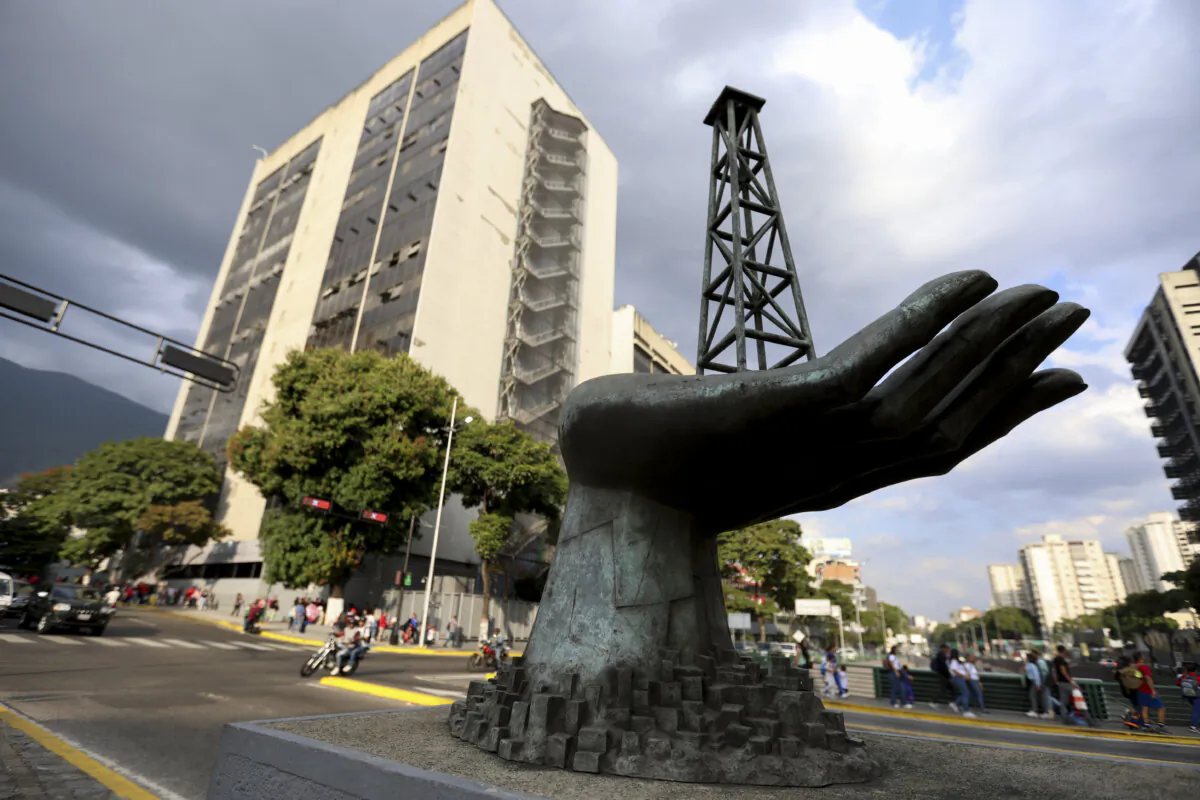
The Chavista dictatorship has weaponized PDVSA, the national oil company, as a cash machine to pillage, steal, and grant favors to political allies who kept Maduro in power. The country’s total external debt, including PDVSA obligations, may exceed $150 billion, according to analysts.
After squandering more than $300 billion in oil revenue to finance the Cuban dictatorship, support extremist parties worldwide, strengthen Iran’s ties to Hezbollah and Hamas, and promote the Bolivarian socialist project globally, some individuals have the audacity to complain about the supposed impact on the country’s sovereignty resulting from Maduro’s arrest and the beginning of the democratic transition.
The theft of Venezuela’s oil wealth has been especially obscene on the part of the Cuban dictatorship, which receives more than 50,000 barrels of free oil daily in exchange for sending thugs and agents to repress the Venezuelan people and protect Maduro. This situation is similar to what occurs with Iran. The Maduro dictatorship has been a key factor in financing the regime, sending gold and oil, as well as helping to fund terrorist groups in exchange for protection and a money laundering scheme for the Chavista regime.
After Hugo Chávez came to power, he began delivering oil to Cuba almost for free in exchange for military support, including the fearsome “black wasps” and other thugs of the Cuban regime. Venezuela sent up to 115,000 barrels per day of oil and derivatives to Cuba for free. Despite the collapse of Venezuelan production, Cuba continued to receive more than 50,000 barrels per day, which it neither pays for nor uses to benefit Cubans.
When you read that the United States wants Venezuela’s oil, remember that the ones that have drained the country’s oil resources are Cuba, Iran, Russia, and China.
The three companies with the largest reserves after PDVSA in Venezuela are two Chinese (Sinopec and CNPC) and one Russian.
In addition to direct embezzlements, PDVSA accumulates more than $21 billion in unpaid accounts.
Because of the enormous amounts moved in those contracts, Venezuelans have seen nothing but misery.
As I mentioned, Venezuela’s GDP is today lower than it was 27 years ago, with poverty reaching 90 percent and a currency that lost 12 zeros in 10 years. That is a real attack on sovereignty.
Venezuela was not destroyed by sanctions. The economy was already in depression before any U.S. sanctions against its political leaders. Venezuela has trade agreements and financial relations with all the major economies of the world; the United States is one of its major trading partners, and it has received tens of billions in aid and investment from China, Russia, and European Union countries.
What destroyed Venezuela is socialism.
Venezuela is a relevant country for the United States and the West. The use of vast amounts of money stolen from oil wealth to undermine Western democracies, finance terrorism, and demolish U.S. institutions is a serious problem. Maduro’s complicity with drug trafficking also facilitates the entry of drugs, weapons, and human trafficking into the United States.
Maduro’s dictatorship is not just a machinery of theft and repression against Venezuelans; it is an international alliance between theocratic and communist dictatorships, united with drug cartels with a common objective: to undermine Western democracies’ institutions, interfere in elections, and destroy the West from inside.
The alliance of the Cuban and Venezuelan dictatorships with the global radical left through the Grupo de Puebla is relevant. It not only seeks to whitewash those dictatorships and spread their political project, but also to interfere and manipulate—as they did in Colombia or Chile—in the elections of key countries.
The United States does not need Venezuela’s oil, as it is the world’s largest oil producer and is energy-independent, and if it needs heavy crude, it can obtain it from Canada, Mexico, Kuwait, Saudi Arabia, the United Arab Emirates, and many others. The Venezuelan people desperately need the plundering of oil wealth to stop so that it can reach citizens in a manner consistent with a normal country that has transparent agreements.
The transition plan outlined by the United States is complex because actions must be taken to enable a democratic transition. It is difficult when Chavismo has established a system of parallel power networks with Iranian and Cuban “agents” that make it challenging to recover independent institutions. For this, it is essential to control and oversee the transition and make it clear to the generals and members of the regime that they have two options: Be part of the solution or lose everything. Freezing Maduro and his family’s assets in Switzerland is a clear warning.
This transition plan requires that the democratic opposition, led by María Corina Machado, can govern as the ballot boxes unequivocally stated, but with a serious plan that prevents Chavismo from controlling and sabotaging any change. The transition process will therefore require the support of global democracies and some current leaders, but only as pawns who obey what they are told to advance Venezuela’s liberation.
Reconstruction will come by returning expropriated properties, restoring economic freedom, freedom of expression, and legal security, as well as a credible investment plan to recapitalize PDVSA, recover the industry, and expel the criminal web. The process will require a significant amount of time and funds, but I am sure it will eventually succeed.
The European elites, who now speak of international law and sovereignty but remained silent when Maduro demolished them, have a problem: Their proposal is to do nothing. Doing nothing in Venezuela is to whitewash the murderous dictatorship, perpetuate it, and allow the anti-Western and anti-U.S. international network operating from Caracas to advance in its destructive objective.
Global democracies cannot ignore the threat to all from this anti-freedom network that was operating from Venezuela. They must join the solution instead of complaining that they were not invited to a committee.
Views expressed in this article are the opinions of the author and do not necessarily reflect the views of The Epoch Times.
 Friends Read Free
Copy
Facebook
Tweet
Friends Read Free
Copy
Facebook
Tweet