
Commentary
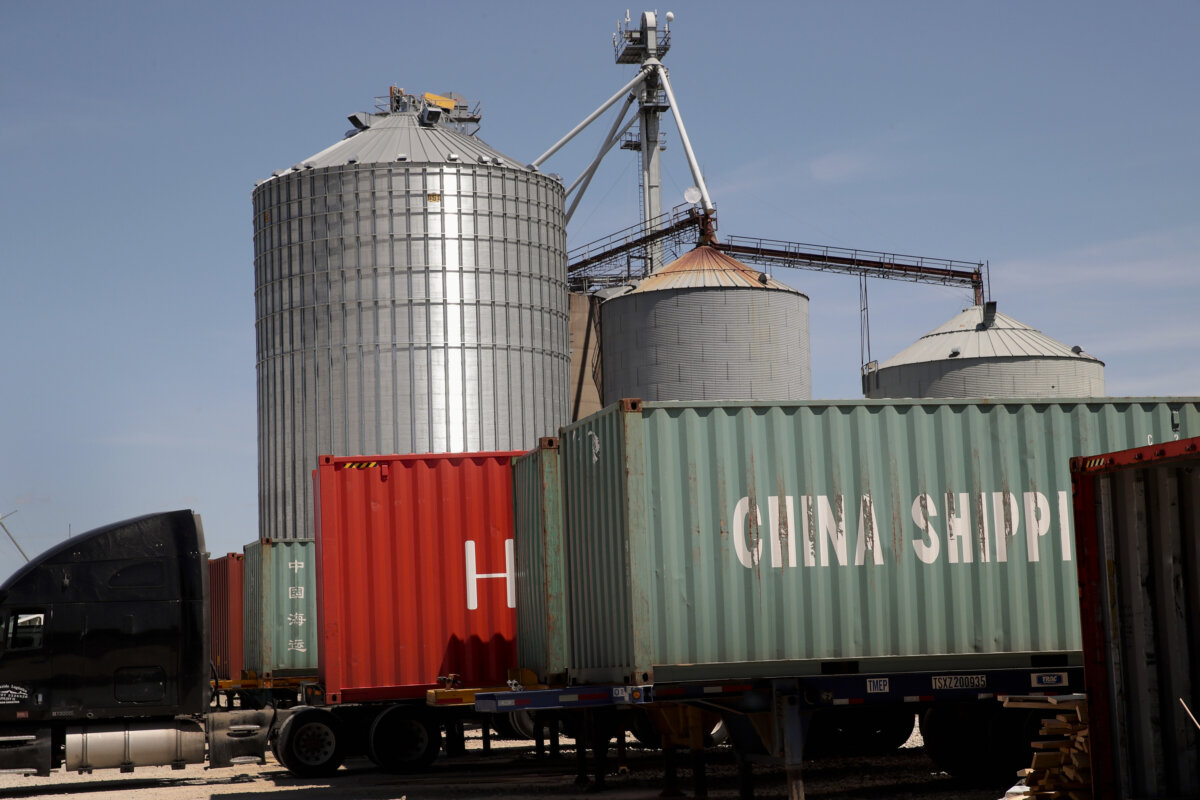
China is punishing U.S. soybean farmers in retaliation against U.S. tariffs. Soy is the biggest U.S. agricultural export, including $12.6 billion in exports to China in 2024. But since May, China has imported zero soybeans from the United States.
Beijing is targeting soy farmers because the Chinese Communist Party (CCP) perceives them to be pro-Trump, and the regime wants to interfere in our elections by influencing pro-Trump farmers. The soy issue is also part of the escalating trade war between the United States and China over tariffs and export controls on nonstrategic and strategic goods ranging from semiconductors to rare earths.
While the United States tries to sever China’s access to the most advanced computer chips capable of lightweight, high-speed artificial intelligence, China cuts rare-earth exports to the United States. Rare earths are critical to military applications such as the F-35 fighter jet and the Tomahawk cruise missile. Both countries are imposing fees on each others’ shipping and trying to extend extraterritorial rules to leverage their control of key technological resources globally.
One Chinese official warned of “global chaos” from the trade war, and U.S. Secretary of the Treasury Scott Bessent said that Beijing’s extraterritorial rare-earth rules will lead to the decoupling of China from not only the United States, but the world.
While some analysts will be tempted to equate U.S. and Chinese trade war tactics, there is a critical difference. The United States has a long history of fighting communist dictatorships to protect democracy, free markets, and human rights, while the CCP has consistently done the opposite. In a trade war, as in other wars, both sides use some of the same tactics, including industrial policy. But in this case, the CCP’s authoritarianism and aggression against the global rule of law led by the United States after World War II indicates that it is the wrongful party in the dispute. The CCP is the aggressor against the international system that keeps the peace (on a good day) while the United States is its defender.
So the United States is right to fight back against the CCP’s attempts to control international technology through rare-earth export licenses. Instead of caving to Beijing’s growing power and the so-called decline of the West, the Trump administration is finding creative ways to protect the U.S. economy and national security, including industrial policies such as forward buying of rare earths from U.S. suppliers with a price floor. That combination guarantees U.S. rare-earth refiners the necessary purchases for their substantial investments, which may result in long-term U.S. self-sufficiency in rare earths. The United States is doing the same in other strategic industries to protect them from the CCP’s strategy of dumping product at less than market value to bankrupt strategic U.S. companies.
All goods, including soybeans, are arguably strategic, as they contribute to a strong economy, upon which the military depends. In the case of soybeans, U.S. exports to China were abundant in the past, but since tariffs and counter-tariffs between the two countries earlier this year, they dropped to zero from the fall harvest. The Trump administration has proposed subsidizing farmers hit by China through tariff revenues. Unfortunately, the government shutdown has stalled plans for a relief package.
The administration is also looking at retaliating against China through decreased imports. Soy is the basis of approximately half of China’s cooking oil. Once used, much of that oil received tax relief from Beijing when exported as “used cooking oil” (UCO) for processing into biofuels.
Trump has raised the possibility of ending the import of UCO from China. U.S. tariffs and an end to Beijing’s tax relief already decreased UCO exports to the United States from China to 387,000 tons from January to July, about half of exports from the same period last year. So it shouldn’t be too difficult to decrease those exports further by purchasing from other countries.
Aside from China, the United States imports most of its UCO from Australia, Canada, and South Korea. Due to their status as U.S. allies, it would be far preferable to import more from these countries while decreasing purchases from China. This should have been done long ago. The United States can also increase its processing capacity to turn more of the soybeans we would have exported to China, into biofuel.
In 2024, China shipped $1.2 billion in UCO to the United States, while the United States shipped more than 10 times that amount of soybeans in dollar terms to China. So the leverage that the Trump administration will use against China must go beyond just a tit-for-tat approach limited to a ban on UCO imports. Beijing’s hardball tactics, rather than achieving a more compliant administration in Washington, will toughen U.S. attitudes toward Beijing while increasing the depth and length of the trade war.
The only enduring way for China to rejoin the international system as a responsible member is to reform not only its economy into more of a market player, but its political system into more of a democracy that respects international human rights and the territorial integrity of its neighbors. Until that day, the regime in Beijing will always be seen as a pariah by peace-loving countries like the United States of America.
Views expressed in this article are the opinions of the author and do not necessarily reflect the views of The Epoch Times.
 Friends Read Free
Copy
Facebook
Tweet
Friends Read Free
Copy
Facebook
Tweet