Commentary
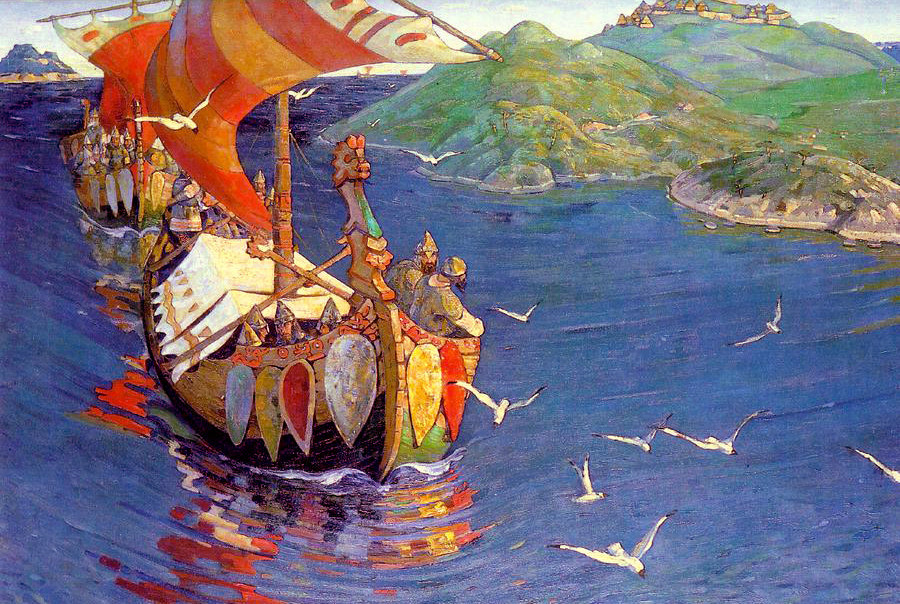
Around the year 800, attacks by Viking raiders erupted all over Europe. Scarcely anywhere on the continent was safe from these barbarians who used their dragon-prowed longboats to sail up river systems and cross seas to carry out rapine, looting, burning, kidnapping, murdering, and pillaging.
From islands in the North Atlantic, to the coasts of the Mediterranean, and up to the great walls of Constantinople, Vikings were a menace to civilization for centuries. Sometimes, they took a fancy to the lands they were despoiling and settled down, as in Ireland or Ukraine. In 911, King Charles the Simple of France gave Hrolf the Ganger (a.k.a. Rollo), chieftain of a band of Norse killers, a whole French peninsula to call his own if he would convert to Christianity, swear loyalty to the king, and prevent other Vikings from sailing up the Seine to ravage Paris. The peninsula was named “Normandy” (the land of the Northmen) and its new rulers were dubbed “Normans.”
But just because they had gotten haircuts and occasionally attended church did not mean that the Normans had lost their Viking impulses. They still yearned to sail to new lands, meet new peoples, kill them, and take their stuff. From Normandy, they continued their campaigns of conquest. In 1057, they took southern Italy; in 1066, they captured England; they invaded the lands of the Eastern Roman Empire; they fought in Spain against the Moors; they captured cities in North Africa; in 1199, Norman knights were a key part of the First Crusade and the reconquest of the Holy Land; in 1130, they made themselves kings of Sicily. In 1169, they set their sights on Ireland.
In the 12th century, the Emerald Isle was a patchwork of petty kingdoms with rival lords vying for the title of High King of Ireland. One of these lords, Diarmuid Mac Murchada, who had been forcibly expelled from the island, sought the assistance of some Norman knights in Wales and England to help him regain his territory in Leinster, in the southeast of Ireland. With the approval of Henry II, Norman king of England, a small army landed in Ireland which soon restored Diarmuid to his lands. This encouraged the intervention of other Anglo-Norman lords. In 1170, Richard de Clare, the Earl of Pembroke, nicknamed “Strongbow,” arrived with a larger force which captured Dublin. He married Diarmuid’s daughter, Aoife, and was promised the kingship of Leinster after the death of his father-in-law.
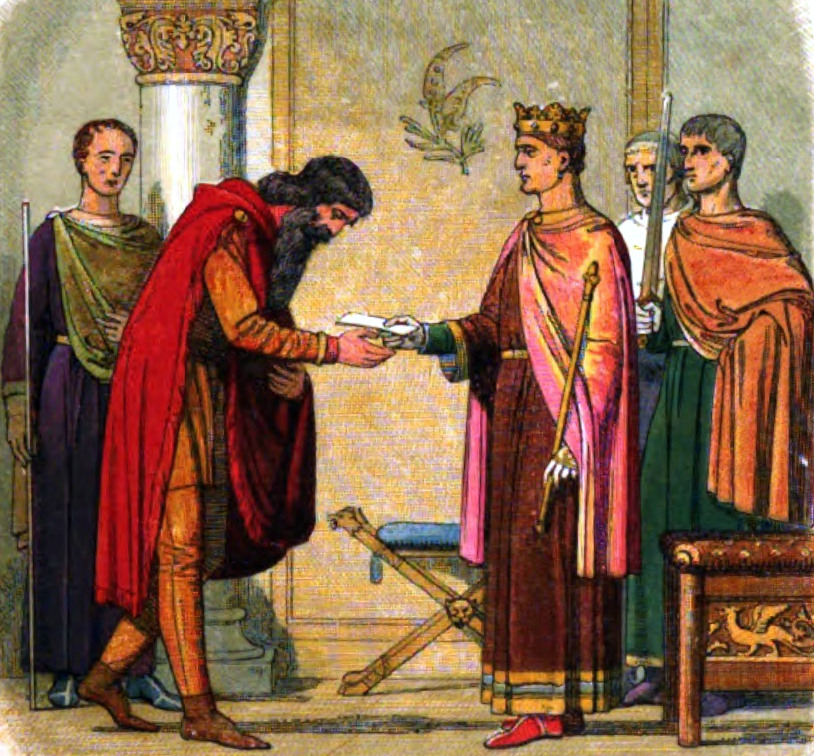
The Irish High King Ruaidrí and his native Irish allies conducted a vigorous fight-back against the Normans, and at one point had Strongbow besieged in Dublin and anxious for peace. But the situation changed in 1171 with the arrival of King Henry. Henry feared that Strongbow and the other Normans were close to setting up an independent kingdom in Ireland, which did not suit his plans at all. He demanded that all the Anglo-Norman lords, his subjects, return to England or yield up their conquests to him.
Henry thought he had the right to interfere in Irish affairs because of an earlier decision by the Pope. In 1155, Pope Adrian IV, the only English pope in history, had issued the decree Laudabiliter which granted Henry the right to invade and conquer Ireland “for the purpose of enlarging the boundaries of the church, checking the descent of wickedness, correcting morals and implanting virtues, and encouraging the growth of the faith.” The fact was that the Pope believed that the Irish Church was too loosely tied to Rome, followed its own centuries-old Celtic Christian traditions, and was in need of reform. Pope Adrian also felt he had the right to hand crowns to kings of his own choosing because of a widely believed eighth-century forgery, the “Donation of Constantine,” which claimed that the Roman Empire had bequeathed all of Western Europe to the papacy.
Henry soon brought the Norman lords on board, granting them some of their conquered territory in return for their allegiance to him as “Lord of Ireland.” He came to an agreement with King Ruaidrí in the 1175 Treaty of Windsor by which the Irishman maintained control of most of the island but acknowledged Henry as his feudal superior and paid him an annual tribute.
The Normans never had much of a reputation for honesty or adhering to treaties, so it was no surprise that the agreement was soon broken by further war and conquests. Ruaidrí would be the last of the native High Kings, dying in 1198, and Ireland would remain a battlefield for centuries.
Views expressed in this article are the opinions of the author and do not necessarily reflect the views of The Epoch Times.