
Commentary
In 1967, Canada was the world’s shining star. Expo 67 in Montreal was called “The Billion Dollar Birthday Party” and it welcomed over 50 million visitors. Never before did Canadians have so many reasons to be proud.
It was a bit remarkable that Canadians had such patriotism right next door to the brash United States of America. How did that happen? It was because Canadians built and wrote their own stories.
One of Canada’s great storytellers was broadcaster John Fisher. He called the stories “pride builders.” These were stories about great minds like Frederick Banting, bold explorers like Alexander Mackenzie, or the Klondike Gold Rush, the Bluenose, Western pioneers, brave war heroes, and many many others.
Compared to America, Canada’s folklore wasn’t nearly as spicy. Some even called it tepid. But it was our own folklore, and almost everyone agreed with Stephen Leacock who wrote “Canada won’t go Yankee.”
But the U.S.-cousin relationship was always plain to see. Both countries grew from an English seedling and have the same pop culture, consumer culture, fast-food culture, and geography. We shop at Walmart and Costco. Not to mention the Blue Jays, the NHL, and Toronto’s endless wish for an NFL team.
A New York Times article in 1993 examined how dozens of Canadians found success in the U.S. entertainment industry. The article concluded, “Assimilation was easy. Canada is in many ways a slice of the same white bread American heartland.”
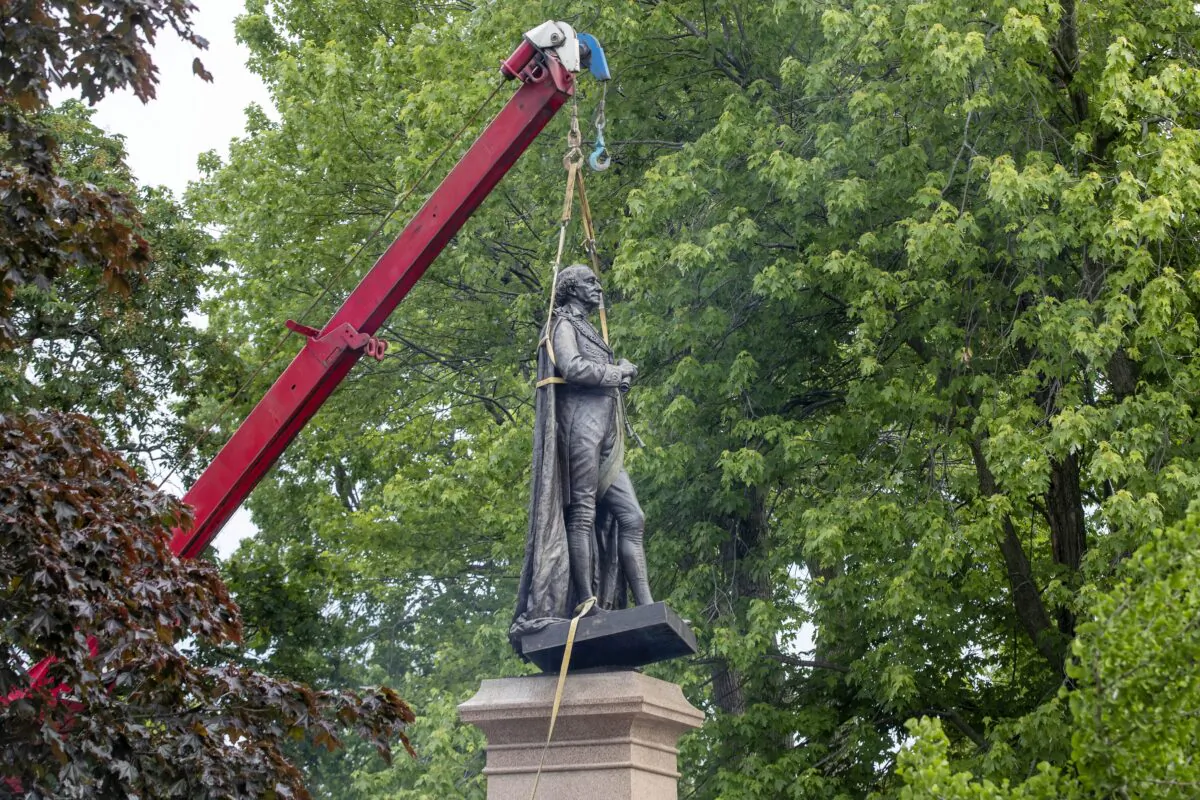
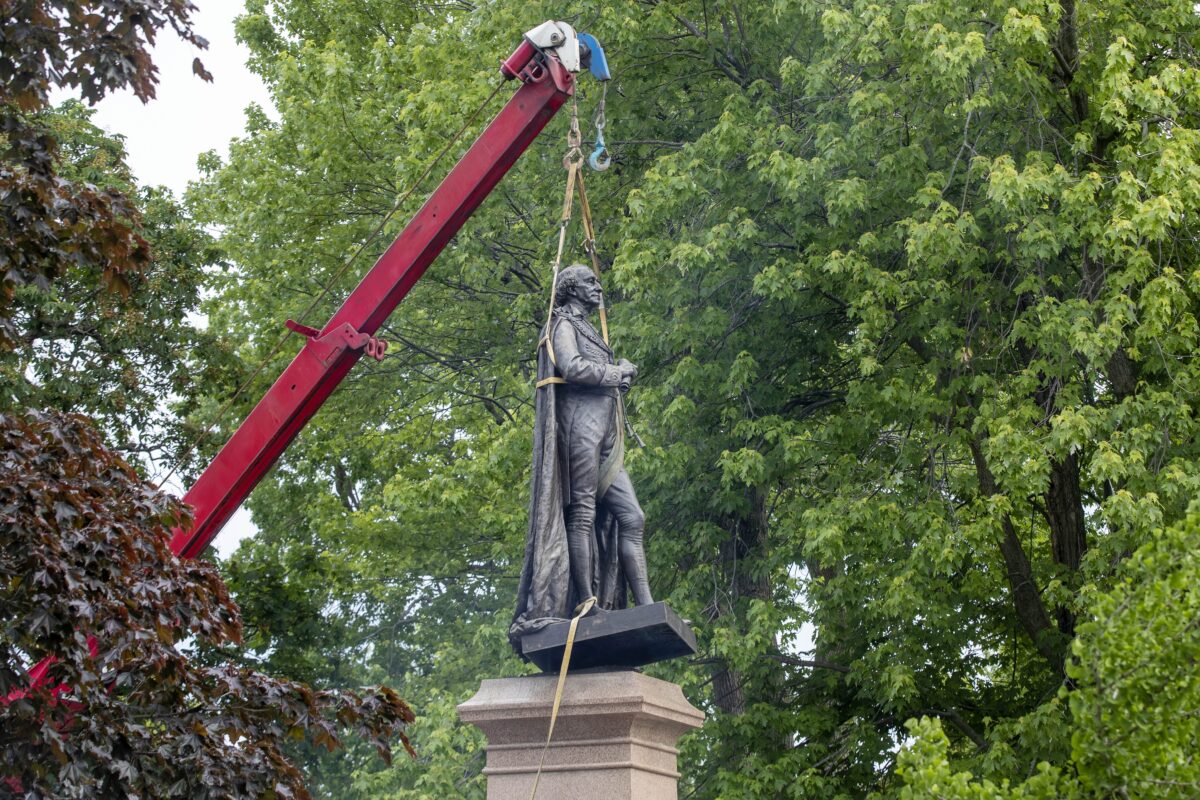
But the last 10 years have brought many assaults on Canada’s heritage. Like other Western countries, Canada has been flooded by an activist wave that knocks down old things.
In the last 10 years, page after page has been torn out of our history books with bewildering excuses like dismantling the patriarchy, resisting white supremacy, and reversing colonialism. The smears and degradations of the last decade are many: statues defaced, signs torn down, heroes re-labelled as villains, great achievements re-branded as insignificant, and previously celebrated things cancelled. And all this occurred with nodding approval from many high offices.
While some Canadians might praise the last decade as progressive enlightenment, others see it very differently. J. K. Rowling says that “the left in the West has taken a dangerous and self-defeating turn.” British writer Andrew Doyle calls it “The New Puritans” with “grand claims of moral purity.” And Elon Musk says it’s a “woke mind virus” with a “shield to be mean and cruel, armoured in false virtue.”
Regardless, this movement has pulled apart the garment of heritage that, for years, held Canadians together.
These new thinkers have created a revised Canada that glorifies different things: fighting climate change, making land acknowledgements, and celebrating seasons of LGBT Pride. The new Canada wants bigger friendships with China and the European Union and tells its citizens “diversity is our strength.”
While many Canadians are pleased with this, others are more than just unhappy. They feel betrayed. So much so that the previously unthinkable idea of U.S. assimilation is being talked about, a lot.
Writing in the Winnipeg Sun, Kevin Klein reports that ordinary Canadians are asking “Do we stay?” and “What are we staying for?” A BBC story on Albertans reports, “We have more in common with America than the rest of Canada.” And pundit Zachary Tisdale says, “As time goes on, more and more Canadians will become comfortable with the idea of Canada as the 51st state.”
Believe it or not, these rebels have concluded they now have more interest in America, the land of cowboys, surfboards, and Cadillacs, than in the new Canada—the land that has discarded so much.
This discontent has not gone unnoticed. Think what you want about Donald Trump, he understands patriotism.
Like an old boyfriend moving in on a cheating husband, the U.S. president has told Canadians they would be a “cherished” part of America. And when Trump called out “Governor Trudeau” he was giving credit to the architect of what might be the 51st U.S. state.
This storm is not going away. In 2026, there may be an Alberta referendum on independence. The New York Times says it would be “A Long Shot Bid to Secede.” But, no one knows.
What then is the price tag for 10 years of tearing down Canada’s heritage? Writing in The Epoch Times, Conrad Black has this to say: “Alberta independence would be the death knell for Canada.”
Views expressed in this article are the opinions of the author and do not necessarily reflect the views of The Epoch Times.
 Friends Read Free
Copy
Facebook
Tweet
Friends Read Free
Copy
Facebook
Tweet