

News Analysis
What do you expect? According to Joseph Biden, as conveyed through the teleprompter, we are already in the clear:
“‘No,’ Biden said when asked by CNN’s Jake Tapper if Americans should prepare for a recession.
“‘It hadn’t happened yet,’ the president added later. ‘I don’t think there will be a recession. If it is, it’ll be a very slight recession. That is, we’ll move down slightly.’”
No, not even close. The virulent inflation that has been unleashed on the world by the central banks and the Washington war machine is now so deeply embedded that it will require what President Eisenhower’s Treasury Secretary back in the day called “a hair-curling recession” to bring it to heel.
Oct. 12 PPI report for September should remove any cause for doubt. That is to say, the Fed has raised interest rate by 300 basis points in the last six months, yet the upstream inflationary pressures embodied in the producer price index have not even budged.
In fact, so-called “core inflation” for finished goods less food and energy came in at 8.4 percent Y/Y. That’s the highest level since July 1981.
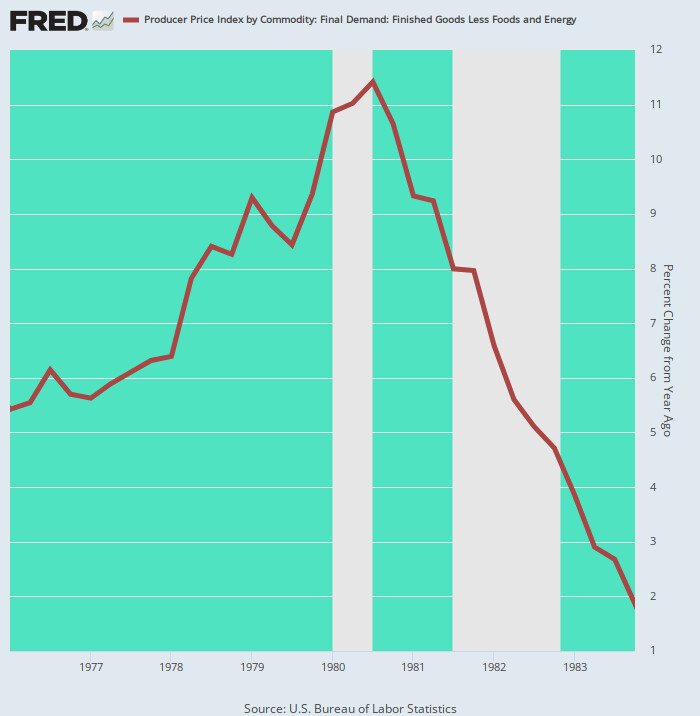
Yes, monetary policy is held to work with a lag. But there is still no way to read the chart below and conclude that the Fed is even close to being done in its anti-inflation campaign. In fact, from the bottom (January 1976) to the top (April 1980) of the 1970s inflation cycle, the rise in the core PPI amounted to 600 basis points (@5.0 percent to @11.0 percent).
By contrast, from the low in February 2020 to September 2022, the core PPI has risen by 740 basis points (from 1.0 percent to 8.4 percent) on a Y/Y basis. Moreover, it only took 31 months to happen compared to 51 months during the 1976–1980 cycle.
So what we have is the very opposite of Powell’s hideous “transitory” inflation. We are talking about the so-called core index here, thereby excluding the even more vicious up-cycle in food and energy.
At bottom, therefore, this inflation is virulent, embedded, and not going to be easily eliminated, even by a miraculous collapse of gasoline or grocery store prices.
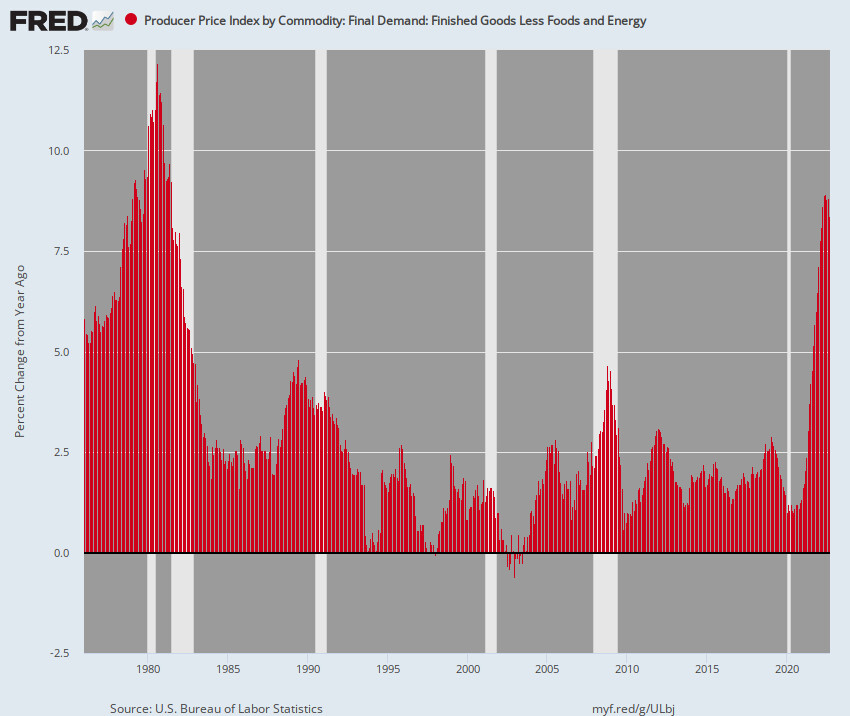
To be sure, we have no idea as to how high and how long the Fed will require to bring inflation under control during this cycle. But it will surely be far, far in excess of 300 basis points and the pain will be spread over years, not months, as has been the case to date.
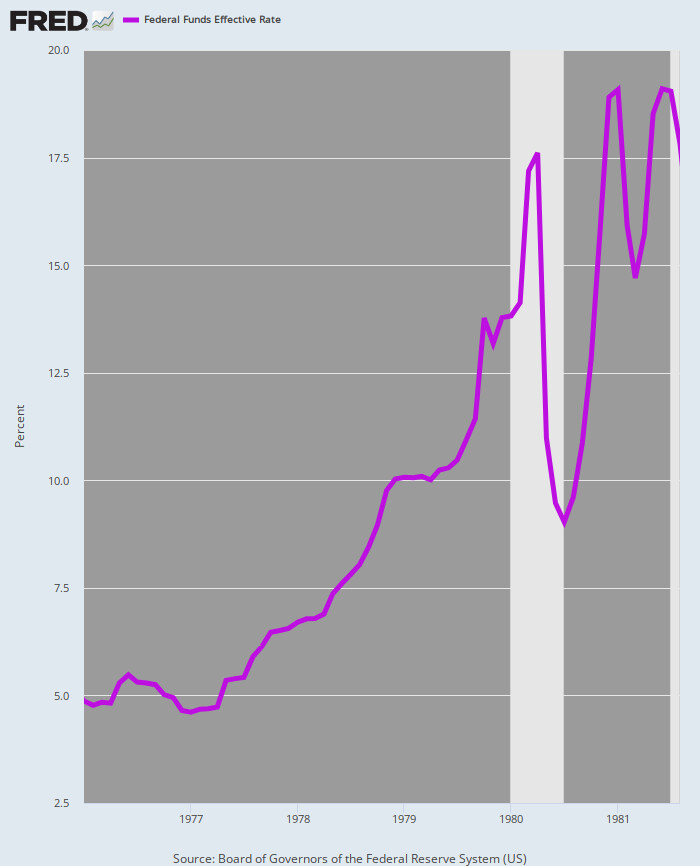
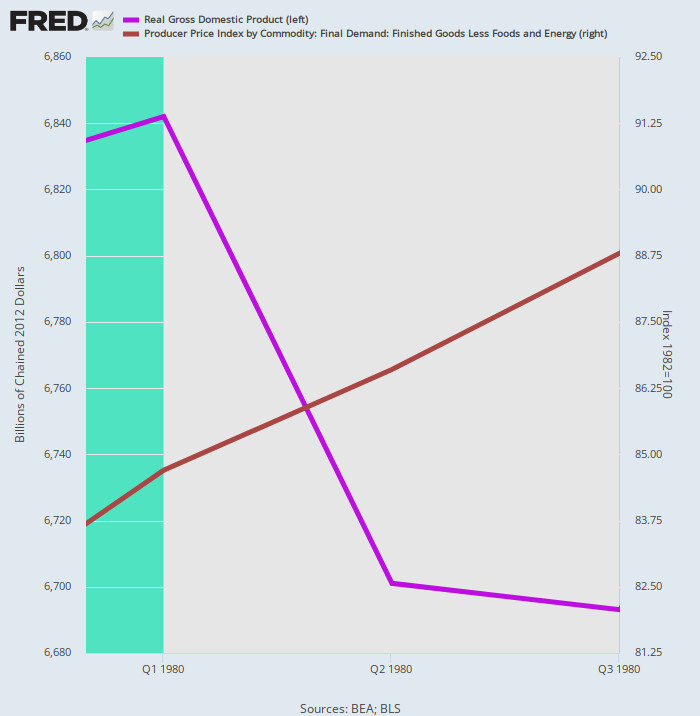
The fact is, we have a live fire historical demonstration about why the “soft landing” hopes of the Fed, the permabulls and the Biden crowd is sheer fantasy. We are referring to the fact that Volcker did engineer a mini-recession in the spring of 1980, but it didn’t put a dent in the inflation momentum.
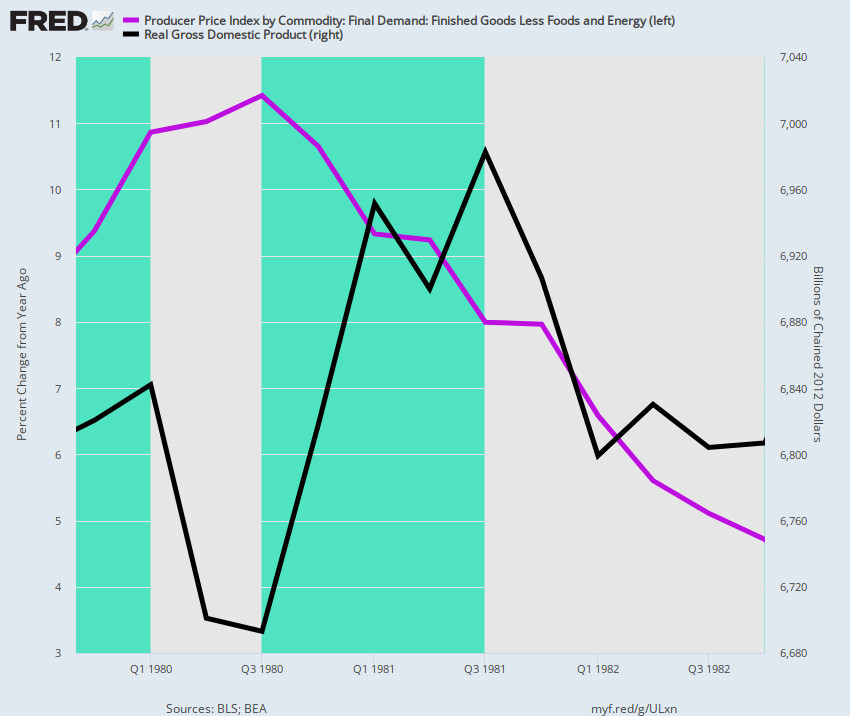
As shown below by the purple line, real GDP peaked in Q1 1980 and then declined thru Q3 1980 during Volcker’s mini-recession. During that two-quarter interval of “shallow and short,” real GDP contracted by just 2.2 percent. But the inflation rate (brown line) just kept on climbing, rising at an annualized rate of 9.5 percent during the period.
That is to say, the mule needed a stronger 2X4 betwixt the eyes, a therapy that Volcker soon realized was unavoidable.
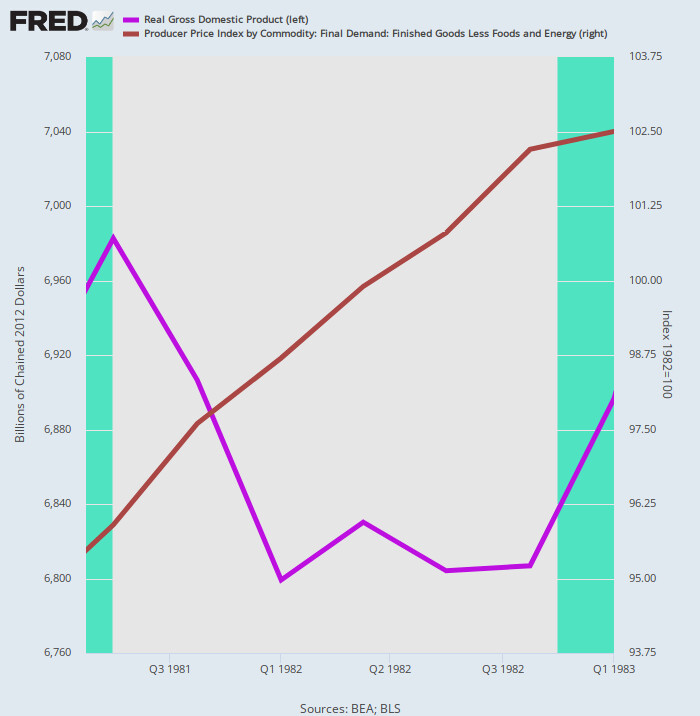
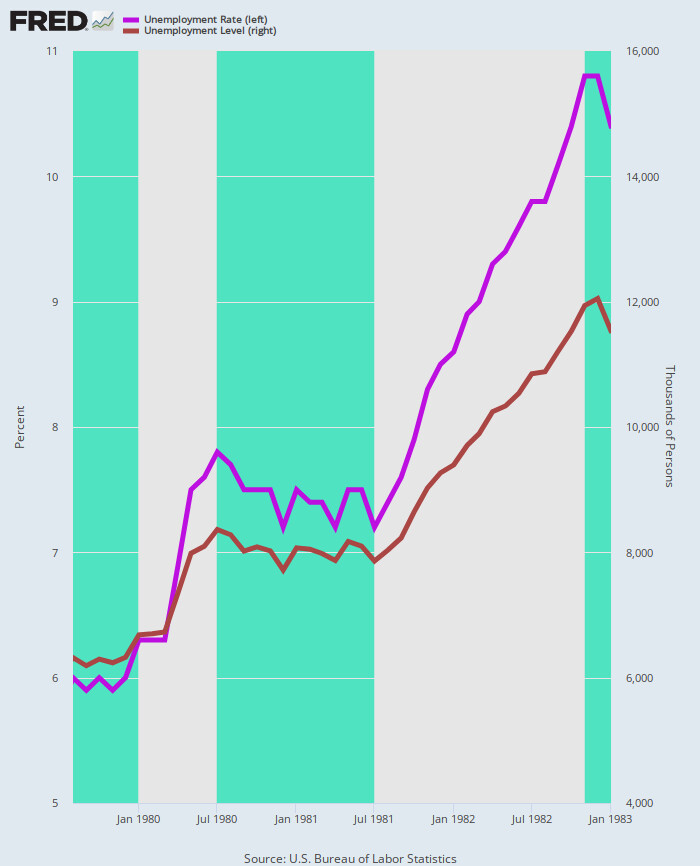
Likewise, the number of unemployed nearly doubled during this period, rising from 6.3 million to 12.1 million. Accordingly, purging the virulent inflation that became embedded in the wage-price-cost nexus looked nothing like Joe Biden’s itty bitty recession, nor the “soft landing” that Wall Street bulls never stop peddling.
In fact, the chart below makes the cost of the double-dip recession plain as day: To wit, real GDP of $6.82 trillion in Q4 1979, when Volcker threw on the monetary brakes, was still at $6.81 trillion by Q4 1982, when the economy finally hit bottom. That is to say, three years of zero net growth in real output.
But even then, the core PPI—which runs lower than the CPI—was still at 4.7 percent in Q4 1982. Consequently, Volcker did not get the Fed funds rate under 6.0 percent until October 1986.
The soft drink and snack giant said its expected 2022 revenue growth of 12 percent on the back of a 17 percent increase in average price across its entire product portfolio!
The math obviously speaks for itself, even though Pepsi understandably sought to spin the implied 5 percent shrinkage in volume as a “slight decline” in overall sales volume.
In short, a bad stagflation is here. Since the Fed will be locked in a battle to tame the price side of the equation even as real output falters for months and years to come, we seriously doubt that the economic contraction to be recorded on Joe Biden’s watch will be described in the history books as a “very slight recession.”
Originally published on StockmansContraCorner, reposted from the Brownstone Institute
Views expressed in this article are the opinions of the author and do not necessarily reflect the views of The Epoch Times.
 Friends Read Free
Copy
Facebook
Tweet
Friends Read Free
Copy
Facebook
Tweet