
Commentary
Whether China’s role in the U.S.–Israel war with Iran is as overt as some might contend, it is deliberate and strategic. The consequences could—and probably will—directly affect U.S. military competitiveness with China in the very near future.
Iran as a Strategic Test Environment
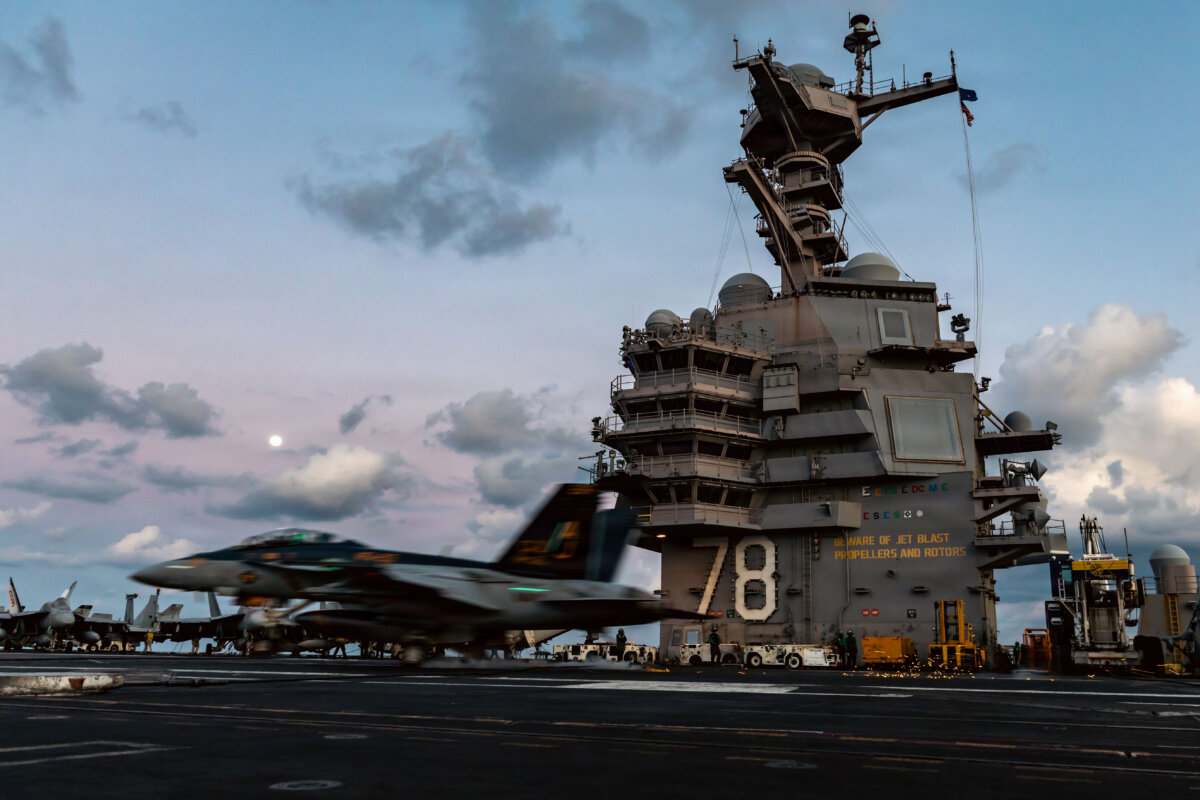
The Middle East conflict offers Beijing’s military planners a rare opportunity to not only observe sustained U.S. military activity and strategic execution, but also capture a windfall of invaluable data from multiple sources in a complex operational, live-fire data environment. Fortunately for China, it is gaining all of this without direct involvement in the war.
In short, the war has given China a tremendous opportunity to test and refine its artificial intelligence-driven war-planning models under real-world conditions, with little risk of escalation to itself.
Analysts increasingly describe this dynamic as a form of proxy experimentation, in which the true objective is not to influence the immediate conflict but to prepare for a future one.
A New Kind of Battlefield
Obviously, war is not defined solely by missiles, aircraft, or troop deployments. Intelligence has always played a critical role, with military decisions often influenced or even defined by data. But the speed of data capture and analytics is also a factor: who collects it, who analyzes it, how fast it can be analyzed, and who acts on it first. In the pre-artificial intelligence (AI) era, intelligence gathering and analysis required tremendous intellectual effort and thousands of work hours by analysts to turn raw information into verifiable and actionable data.
The emergence of AI, however, has radically altered information gathering and analysis. AI has expanded and deepened the data and intelligence-gathering process and capabilities. Perhaps even more critical, it has compressed the entire intelligence-data-action time frame.
Of course, China understands this and is taking full advantage of this unique opportunity.
Thus, while the United States engages in kinetic operations and strategic positioning in and around Iran, Chinese companies—many operating under Beijing’s military-civil fusion doctrine—are quietly turning the region into a real-time laboratory for AI-driven warfare.
Again, the Chinese regime’s objective is not participation, but observation, analysis, and, ultimately, gaining accurate predictive capabilities.

The Weaponization of Open-Source Intelligence
At the center of China’s AI-driven data-gathering and analytical efforts is open-source intelligence, which is simply publicly available data that, until recently, was considered fragmented and of limited strategic value.
That assumption is now obsolete.
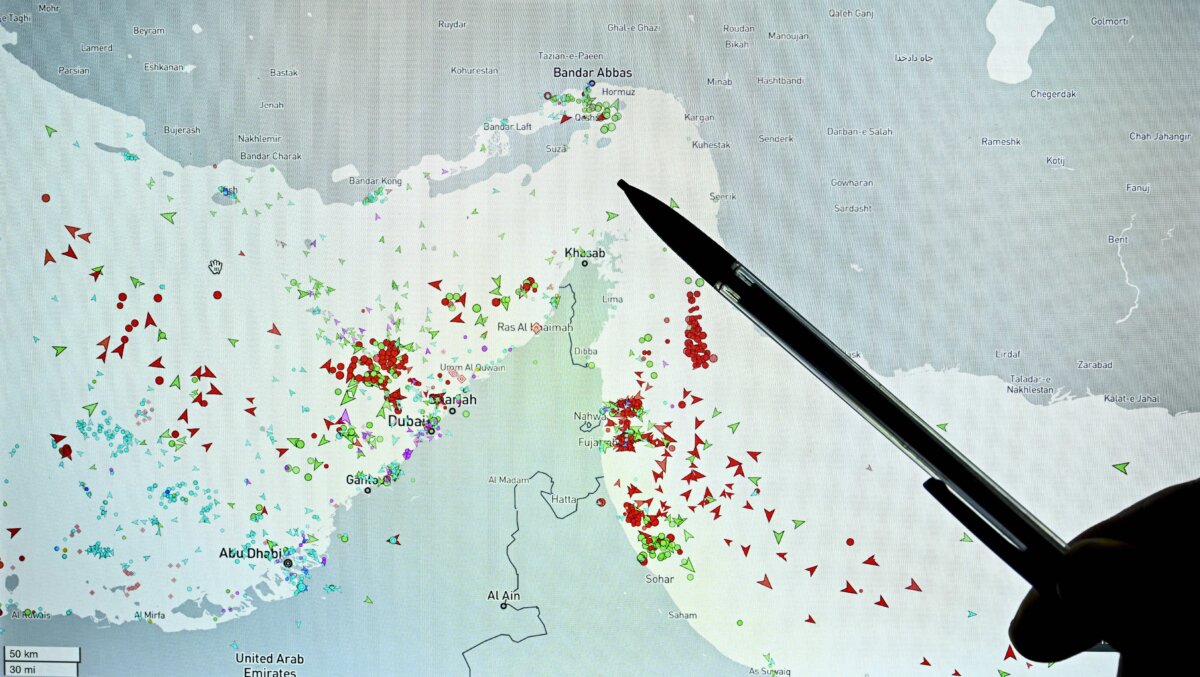
Chinese AI systems are ingesting and synthesizing massive volumes of data, including commercial satellite imagery, aircraft transponder signals, maritime tracking data, and social media content. Individually, these data streams offer only partial visibility. But when they’re combined and processed through machine learning, they provide something far more powerful: pattern recognition at scale.
The result is a continuously updating picture of U.S. military posture, potential moves, and outcomes. Supporting this shift is the ability of AI to fuse multimodal data—which includes text, imagery, and signal inputs—into coherent intelligence assessments in near real time.
Satellites, Algorithms, and Persistent Surveillance
China has intelligently positioned itself to take full advantage of the “Iran lab” in both software capabilities and infrastructural development. Beijing has invested heavily both in indigenous satellite constellations and in gaining access to global commercial imagery markets. For example, systems such as the Jilin satellite network provide frequent, high-resolution imaging that feeds directly into AI-driven analysis pipelines.
These systems are not simply collecting images; they’re interpreting them. That means any changes in airfield activity, naval deployments, or logistical buildup are detected, flagged, and analyzed within hours, not days.
Advances in AI-enabled geospatial modeling now allow analysts to generate highly detailed terrain maps and identify military assets with remarkable precision, further compressing the intelligence cycle.
From Tracking to Anticipation
What makes China’s approach strategically significant is not simply its ability to track U.S. forces—it is its growing ability to anticipate them.
By analyzing historical deployment patterns, logistical behavior, and operational timing, AI systems can identify indicators that precede military action. Aircraft clustering, fuel movement, changes in base activity—these are no longer isolated signals. They are inputs into predictive models.
In some cases, Chinese analysts have identified likely pre-strike conditions before U.S. operations occur, which marks a fundamental shift from intelligence as observation to intelligence as foresight. This means that military AI doctrine increasingly centers on generating a common operating picture, enabling faster and more informed decision-making based on predictive insights.
The Ground-Level Data Layer
But satellite imagery and signal tracking are only part of the equation for intelligence gathering and data analysis. China’s AI systems are also harvesting data from the ground across a range of open sources, including social media posts, civilian video, local reporting, and other publicly accessible content. These inputs are then geolocated, cross-referenced, and validated against satellite observations, providing a layered intelligence architecture that reduces uncertainty and fills observational gaps.
The results are incredibly powerful. Even informal, decentralized networks have demonstrated the ability to track military activity using open data, underscoring how accessible—and powerful—this approach has become.
The Strategic Consequences
China’s ability to gain deep insights into U.S. warfare thinking and planning, and to predict warfare actions, both immediate and long-term, is unprecedented. For the United States, the implications are staggering.
First, U.S. military strategic and operational secrecy is eroding. Movements that were once classified can now be inferred through aggregated public data. Second, intelligence is being democratized. Capabilities once reserved for nation-states are now accessible to private firms, and by extension, their adversarial governments. Third, the tempo of warfare is accelerating. AI compresses the time between detection, analysis, and action, leaving less margin for error.
The integration of AI into military systems is fundamentally reshaping the nature of conflict—prioritizing speed, automation, and information dominance.
The Real Contest Is Still Ahead
What’s unfolding is not simply a benign technological evolution; it’s a strategic recalibration where to finish second is to finish last. China is not trying to match the United States platform for platform, ship for ship, or aircraft for aircraft. It is pursuing advantage where it matters most in the modern era: information. By combining AI with open-source data, satellite systems, and real-time analysis, Beijing is building a persistent surveillance and prediction capability that operates continuously, quietly, and at scale.
The Iran conflict is merely the proving ground for China’s evolving, AI-driven warfare planning; the real contest lies ahead. And it will not be decided solely by firepower—but by who sees first, understands faster, and acts before the other side even realizes what is happening.
The Chinese regime understands this.
Views expressed in this article are the opinions of the author and do not necessarily reflect the views of The Epoch Times.
 Friends Read Free
Copy
Facebook
Tweet
Friends Read Free
Copy
Facebook
Tweet