
Commentary
Over the past week, multiple news organizations have reported that Russia has been supplying Iran with intel, including the current disposition of U.S. forces in the Gulf region. The reports, citing anonymous sources familiar with U.S. intelligence, should come as no surprise, as the United States has been giving Ukraine real-time targeting data directly responsible for the killing of thousands of Russian soldiers, the sinking of Russian ships, and attacks on Russian energy infrastructure.
This intelligence has allowed Ukraine to rapidly reposition its artillery to attack concentrations of Russian forces, acting as a potent force multiplier. Given how instrumental U.S. intel has been in killing and injuring Russian troops, Russia wouldn’t likely forgo an opportunity to respond in kind.
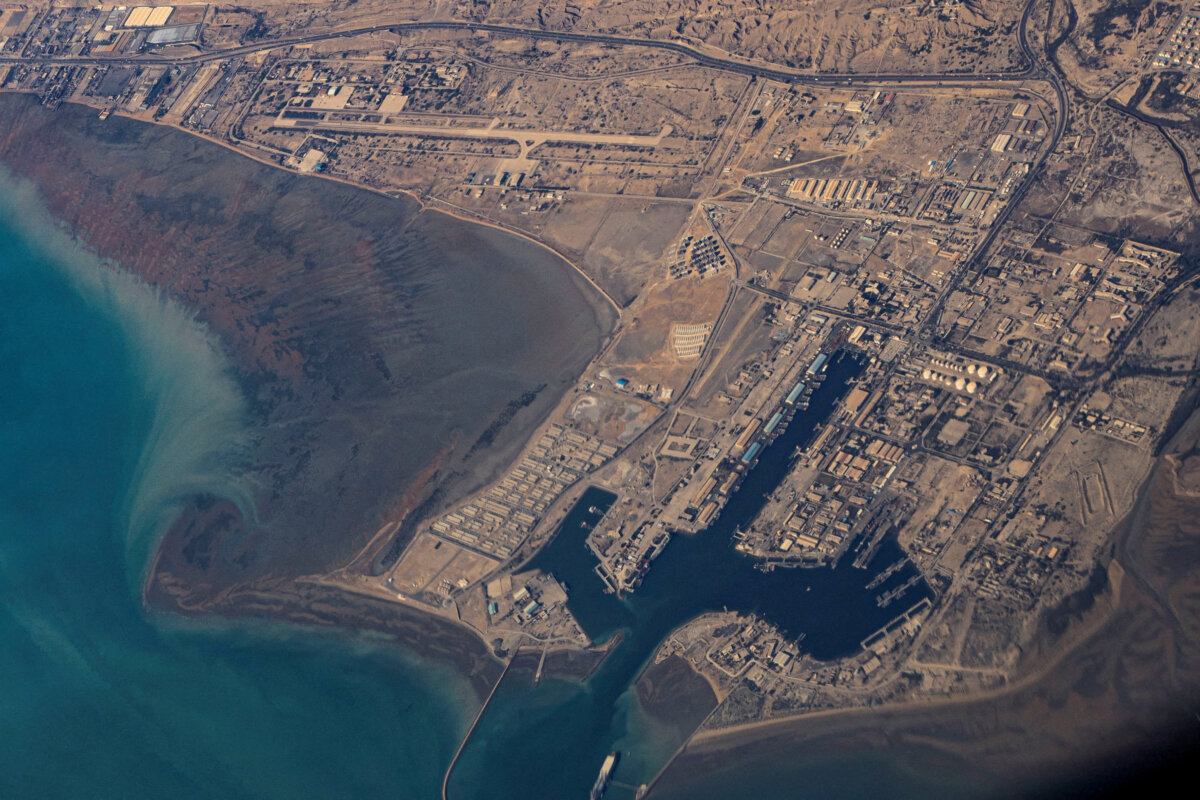
But Iran is also benefiting from high-resolution imagery, provided by China’s dual-use (commercial/military) satellites, of U.S. carriers, F-22s, AWACS, anti-missile batteries, and bases across Saudi Arabia, Bahrain, Qatar, and beyond. Some of the imagery is just hours old on release, making it highly useful for tactical targeting of U.S. troops and equipment. Western commercial providers such as Planet Labs, in contrast, have implemented a delay, originally 96 hours and recently extended to two weeks, greatly limiting the military value of the imagery.
Additionally, there are reports that China has deployed its specialized intelligence ship, Liaowang-1, to the Gulf of Oman near Iran and that it may be escorted by two powerful Chinese missile destroyers, a Type 055 and a Type 052D. This raises another question: Is the one other nation in the world with satellite capabilities comparable to those of the United States giving Iran more intelligence than just the static satellite imagery?
While the United States and China lead the world in military-oriented satellite intelligence and surveillance capabilities, Russia rounds out the top three with significant satellite capabilities that are likely providing great value to Iran. These include high-resolution optical reconnaissance from systems such as the Persona series and Bars-M satellites, which deliver detailed visible-light imagery that can pinpoint ship positions, aircraft on the ground, troop concentrations, radar installations, and temporary bases. These low-Earth orbit platforms provide sub-meter to meter-level resolution under clear conditions, offering Iran a critical boost over its own limited satellite capabilities.
Russia’s Luch series (including Luch-1 and Luch-2) adds signals intelligence and electronic intelligence capabilities, intercepting communications and radar emissions to locate active U.S. systems or cue optical assets. Recent maneuvers by Luch-2 and newer Cosmos satellites near Western geostationary platforms highlight Moscow’s ability to shadow and potentially intercept signals across regions, including the Middle East.
Indeed, Russian intelligence has reportedly been providing Iran with high-resolution imagery and electronic signatures, allowing it to better target U.S. command centers and radar sites. Although Russian intel support likely played a key role in enabling Iran to strike billions of dollars’ worth of U.S. radars and communication equipment—strikes that also could have played a role in the deaths of U.S. military personnel—it pales in comparison to the quality and quantity of intel the United States has routinely been providing Ukraine.
Russia can’t keep airborne warning and control system aircraft in the air 24/7 as the U.S. and its allies have been doing for Ukraine, nor can it maintain the same level of persistent satellite coverage as the United States. This means Russia can’t give Iran the kind of real-time targeting data and surveillance needed to seriously threaten U.S. naval forces.
That could change should China, with its persistent satellite coverage, either directly or with Russia as a middleman, supply Iran with what China claims is the capability to provide near real-time tracking of U.S. forces. This would include tracking highly mobile targets such as U.S. carrier task forces, which can maneuver unpredictably, severely diminishing the value of nonpersistent satellite coverage that Russia could offer.
China, with its large and rapidly growing stable of militarily capable satellites, could definitely cause the United States serious grief. But, unlike Russia, which holds an intense grudge over all the deaths it has suffered at the hands of U.S. intelligence, Beijing remains deeply dependent on global trade, U.S. markets, and the stability of international shipping lanes and oil supplies.
Providing Iran, via Russia, with minute-to-minute, even second-to-second, targeting data that enables the sinking of U.S. warships or the killing of large numbers of American personnel would almost certainly trigger massive repercussions, including severe sanctions, severed trade access, frozen assets, naval blockades, or even direct military confrontation. Given these stakes, it seems unlikely that China would risk direct, kill-chain-enabling intelligence. U.S. intelligence would undoubtedly detect it, even if it were laundered through Russia.
Beijing seems likely to limit intel support to what we have seen so far. Russia, on the other hand, is highly motivated to provide Iran with the best possible intel. Frankly, it would be surprising to find out that Russia is not doing everything it can to provide useful intelligence to Iran. And given that support substantially upgrades the effectiveness of Iranian missiles and drone attacks, it will likely continue to be responsible for U.S. casualties. How many casualties? We don’t know, and we won’t know until the dust settles and the propaganda that dominates all wars gives way to the less biased analysis only possible once the war is concluded.
Views expressed in this article are the opinions of the author and do not necessarily reflect the views of The Epoch Times.
 Friends Read Free
Copy
Facebook
Tweet
Friends Read Free
Copy
Facebook
Tweet