
Commentary
In the 1970s, many people said that suburbanization would spell the end of Canada’s downtowns.
But that didn’t happen. In cities big and small, business leaders rolled up their sleeves and went to work. “Downtown revitalization” was their rallying cry. The bright, upscale shopping mall was one of the big initiatives that kept Canadians commuting downtown through the 1980s and beyond.
But in 2025, there is a darker cloud hanging over Canada’s downtowns. It is so worrisome that the suburbanization threat of over 40 years ago looks rather tame.
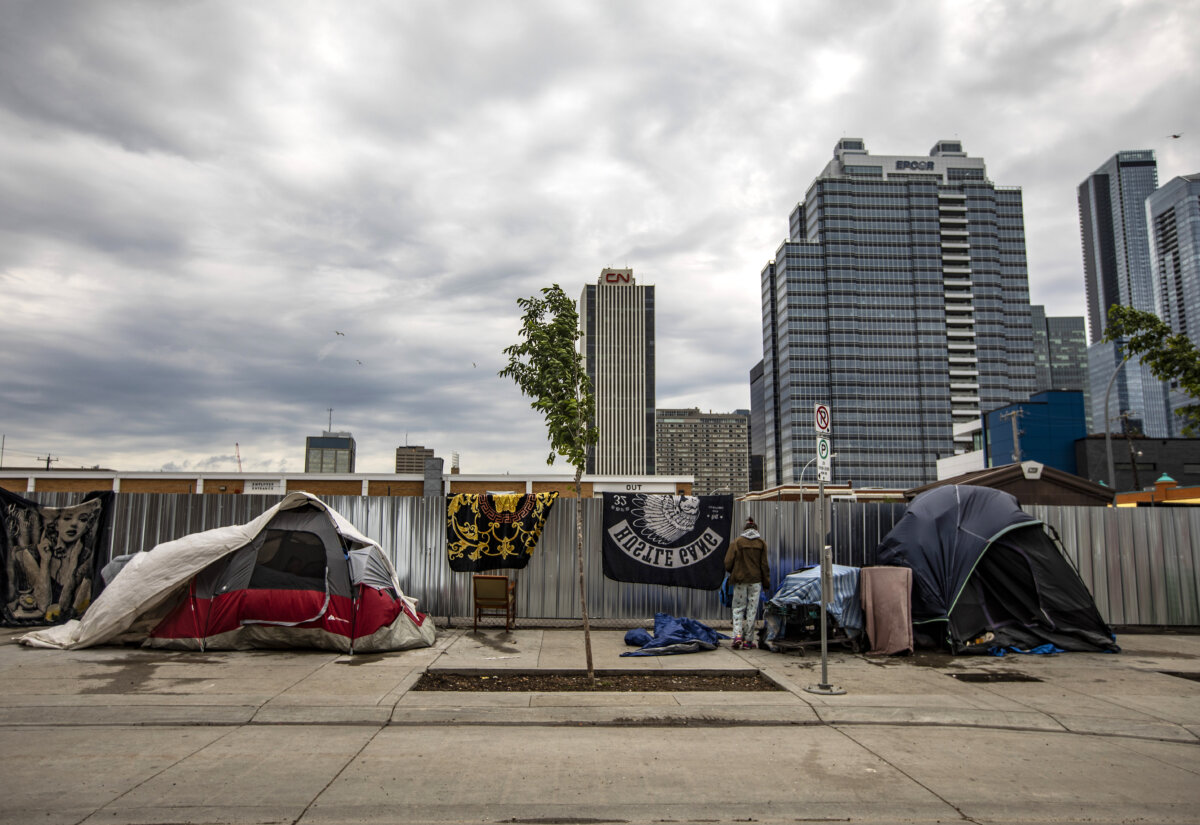
In April 2024, Parliament’s human resources committee heard about this problem loud and clear. Timmins, Ont., MP Charlie Angus broke it down, stating, “Nobody wants to go into the downtown anymore because we are hit with the triple crises of mental health, opioid addiction, and homelessness.” Thunder Bay MP Marcus Powlowski said other areas have the same problem. “There is certainly the perception by a lot of Canadians that a lot of downtown cores are basically out of control,” he said.
A short walk today in any Canadian downtown likely means an encounter with a drug addict, someone suffering from mental illness, or a homeless person—and frequently all three. In the United States, a recent news story described downtown Kansas City as a “Mad Max-style hellhole” where locals are afraid to go out after dark. Canadians can only wonder if that’s around the next corner here.
No one can say how it started—the opioid crisis, people working from home, online shopping, better suburbs—but the downtown blight grew bigger each year. It didn’t help that downtowns were also the centre of attraction for loud showdown events like today’s anti-Israel marches.
At a certain point, anywhere else in the city seemed better than downtown and so the people voted with their feet. “Why on earth would I go downtown?” say the elderly, the timid, parents with children, and the fed up. Today’s suburbs aren’t just defined by what they offer, but perhaps even more by the unpleasant things they lack.
As sure as night follows day, business follows the customer. Bloomberg reports that retailers are abandoning “city centers in favor of neighborhood locations.” And New York publication City Journal reports, “We seem to be on the verge of a new era of retail deserts.” In February, the downtown mall in Regina announced a new tenant. But the mall wasn’t celebrating the arrival of some big-name retailer—the new addition was a stand-alone police detachment.
People are stepping forward with fix-it plans, but traditional business owners are fewer and quieter than in the past because, quite simply, many have left. In his article “A Hidden Reason Cities Fall Apart,” Thomas Edsall says that losing business leadership is a big problem for downtowns. He describes it as the “erosion of local establishment and the loss of civic and corporate elites.”
For good or bad, today’s progressive thinkers are taking the lead. Some are activists who see little or no value in things like pretty shop windows and family picnics. For example, the City of Regina recently produced a glossy downtown map and guide. But the guide is not about interesting galleries or tasty restaurants, far from it. It is a map to locate needle exchange sites, overnight shelters, and food handouts.
Solving the mess is not easy, but some of the proposed solutions stir up as much argument as the problems.
For example, a group of Ontario mayors wants the power to dismantle homeless encampments. They are asking the provincial government to suspend civil rights using the Charter’s notwithstanding clause.
Alberta intends to implement the Compassionate Intervention Act. That legislation will allow officials to remove drug addicts from the street and put them into treatment.
And there is an ongoing war over supervised drug consumption sites and so-called safer supply drugs. No sooner does one of these programs start up, than another one is shut down as city councils and citizens argue about the good and bad of such things.
The debate can be even more fierce, though, when city councils discuss one of the biggest issues: constructing permanent homeless shelters.
One thing is sure about all these new solutions. Downtown revitalization looks a lot different in 2025 compared to the past.
As for the many people who have given up going downtown altogether, there is, unfortunately, very little to coax them back.
Views expressed in this article are the opinions of the author and do not necessarily reflect the views of The Epoch Times.
 Friends Read Free
Copy
Facebook
Tweet
Friends Read Free
Copy
Facebook
Tweet