
Commentary
For decades, many Japanese companies followed seikei bunri—the separation of politics and economics. This allowed them to depend on the U.S.–Japan security alliance for defense while building deep economic ties with China, including extensive supply chains, factories, and market growth on the mainland.
As geopolitical tensions rose in the 2020s, firms turned to the “In China, For China” strategy: creating localized operations for the Chinese market while trying to maintain separate supply chains for the West.
Extracting profits from China, however, has grown increasingly difficult. The state tightly controls capital outflows. Foreign subsidiaries must complete annual audits, settle local taxes, and allocate 10 percent of after-tax profits to a mandatory reserve fund before remitting dividends. Remaining funds face withholding taxes, and workarounds such as service fees or intercompany loans frequently trigger audits and penalties. Thus, many Western companies ostensibly make profit in China but have no practical way to get the money out.
Protecting proprietary technology remains a major challenge. Once advanced know-how enters the Chinese ecosystem, it faces systematic reverse-engineering by local partners, poaching of senior engineers by state-supported rivals, and uneven enforcement of trade secrets in local courts. Domestic firms often reach cost parity and scale before legal remedies take effect.
This dynamic has trapped many multinationals in a sunk-cost dilemma. Leaving means surrendering China’s vast market to local competitors, who can then use stolen intellectual property and domestic revenue to expand globally. As a result, many companies have chosen to treat ongoing capital and technology risks as the cost of doing business.
Beijing Ups the Ante
In April 2026, Beijing sharply raised the stakes. The State Council issued two key regulations with immediate effect:
Decree No. 834 reclassifies routine commercial decisions as potential national security threats. “China+1” diversification efforts can now trigger investigations for “interrupting normal transactions.” Article 13 subjects supply chain due diligence, supplier audits, and data collection—required by Western laws such as the U.S. Uyghur Forced Labor Prevention Act—to strict national security review.
Decree No. 835 targets companies and individuals complying with foreign sanctions. It creates a “Malicious Entity List,” expands corporate veil-piercing, and imposes personal penalties on executives, including exit bans, travel restrictions, and potential criminal liability.
These directives represent an institutional confession that the Chinese Communist Party (CCP) has been unable to stop the steady hemorrhaging of its manufacturing base and the relocation of Western capital to friendlier jurisdictions. So it is attempting to halt an industrial “run on the bank” by locking the doors from the inside.
The Air Force One Conversation
While multinational companies navigate tightening regulations in China, geopolitical coordination between Washington and Tokyo has elevated.
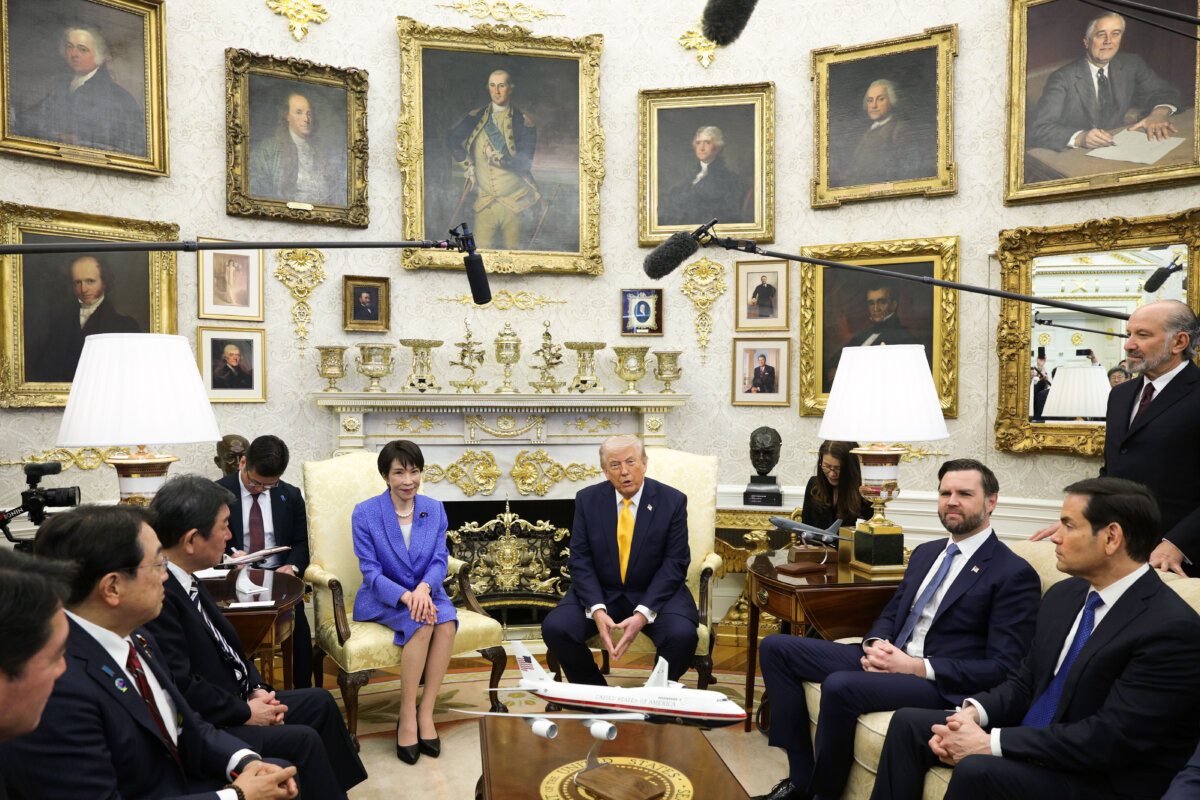
Hours after concluding a multi-day summit with CCP leader Xi Jinping in Beijing on May 15, U.S. President Donald Trump called Japanese Prime Minister Sanae Takaichi from Air Force One. In the 15-minute secure conversation, Trump provided Takaichi with a detailed, confidential briefing on his discussions with Xi, before sharing with any other allies.
By prioritizing Japan so visibly, the United States reinforced the strength of the alliance and provided Takaichi with stronger domestic leverage to advance Japan’s security reforms.
The Intelligence Revolution
Japan’s intelligence community has been operating for years as a collection of fragmented, siloed agencies that have often fiercely competed. The main pillars included the coordinating Cabinet Intelligence and Research Office, or CIRO (Naicho), the National Police Agency Security Bureau, the Public Security Intelligence Agency (Koancho), the Defense Intelligence Headquarters (Johohonbu), and the Ministry of Foreign Affairs intelligence unit. But an increasing threat environment has made reform more necessary than ever.
In late April 2026, Takaichi pushed through legislation to overhaul the system. The reforms create the National Intelligence Council, chaired by the prime minister, which serves as the top decision-making body.
It also created the National Intelligence Bureau/Secretariat, an upgraded CIRO, now with authority to compel data sharing from the various agencies. It also includes a new unit to counter foreign influence and gray-zone activities, as well as strengthened capabilities to protect economic security and prevent corporate technology leaks.
The roadmap targets full implementation by the end of fiscal year 2027, including the creation of a dedicated foreign intelligence service with HUMINT (human intelligence) capabilities—a Japanese CIA or MI6—and new anti-espionage laws modeled in part on the U.S. Foreign Agents Registration Act.
The changes have sparked domestic debate over civil liberties and drawn sharp criticism from Beijing, which has labeled them a step toward “neo-militarism.”
Unlocking the Defense Industry
For decades, Japan’s defense sector was under strict postwar restrictions, including a near-total ban on exporting lethal weapons. Limited to supplying their own military, companies like Mitsubishi Heavy Industries (MHI), Kawasaki Heavy Industries, and IHI struggled with high unit costs and limited economies of scale. Defense work remained a small share of revenue, and more than 100 specialized subcontractors exited the sector since 2003.
In April 2026, the Takaichi cabinet enacted a major policy shift, with the government now allowing exports of fully operational lethal systems, with streamlined approval processes. Exports are now permitted to 17 partners, including the United States, the UK, Australia, India, several Asian nations, and others such as the United Arab Emirates.
Results are already showing. The combined defense order backlog for Japan’s major contractors has reached 6.25 trillion yen (roughly $40 billion). MHI is significantly expanding its aerospace and defense workforce, with plans to increase headcount in its defense unit by up to 40 percent by March 2027. Japan is now partnering on major programs such as the Global Combat Air Programme with the UK and Italy and offering Mogami-class frigate designs to allies such as Australia.
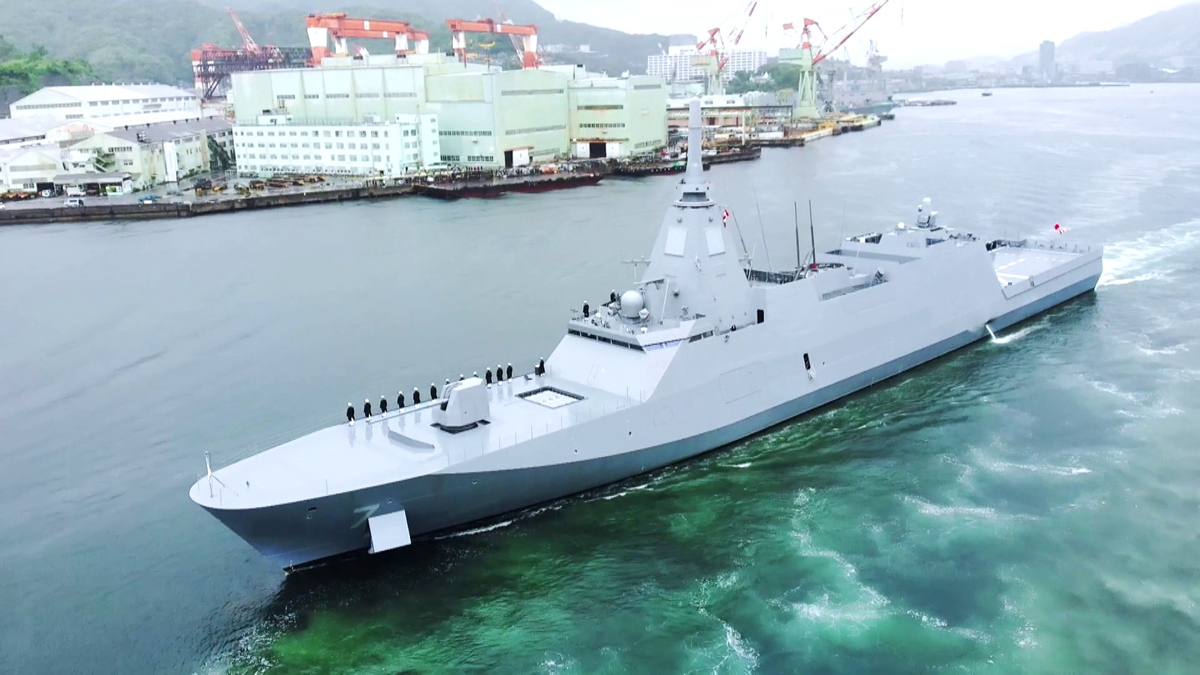
Trading houses (sogo shosha) such as Mitsubishi Corp, Mitsui, and Itochu have taken on key roles in marketing and logistics, due to their global connections and experience.
By aligning commercial incentives with national strategy, Japan is transitioning to a growing contributor in the allied arms market—and positioning itself as a more capable security partner.
Allied Defense Industrial Base
Much like the 1970s auto industry, where Japanese manufacturers challenged complacent U.S. giants, today’s U.S. prime contractors have struggled with large backlogs, cost-plus contracting inefficiencies, and slow delivery timelines.
In contrast, Japanese firms, such as the above-mentioned, bring deep commercial manufacturing expertise rooted in monozukuri—the culture of continuous improvement, precision, and efficient scaling. One may look at some countries facing long U.S. delivery backlogs and see some opportunities for these firms.
To address its own challenges, the U.S. Department of War is actively restructuring the procurement model to ensure that both legacy primes undergoing radical internal reform and aggressive new American manufacturing upstarts can deliver mass at scale.
The convergence of Japan’s defense industrial base growth and U.S. procurement reforms has the potential to reshape the allied defense ecosystem. This might lead to a more resilient and responsive allied defense industrial base.
Views expressed in this article are the opinions of the author and do not necessarily reflect the views of The Epoch Times.
 Friends Read Free
Copy
Facebook
Tweet
Friends Read Free
Copy
Facebook
Tweet