
Commentary
In our hyperefficient modern world, something curious has happened to many preindustrial arts, crafts, and skills. What was once ordinary daily practice—making shoes by hand, riding horses for transport, growing food without synthetic chemicals—has largely vanished from mainstream life.
Yet these traditions have not disappeared. Instead, they have been elevated, refined, and preserved as stylized luxuries for the upper echelons of society. Modernity has not erased the old ways—it has turned them into “luxury fossils.” This pattern reveals something deeper about how civilizations evolve, preserve knowledge, and build resilience.
The Economic and Cultural Mechanism
This shift is driven as much by the hard necessities of manufacturers as by consumer demand. In a competitive marketplace, producers must relentlessly pursue efficiency, scale, and lower costs to survive. Factories can churn out thousands of shoes, watches, or textiles at a fraction of the price and time required by hand. Industrial agriculture can feed millions of people where small traditional farms cannot.
So manufacturers had two choices: adapt to mass production or become maisons of luxury. This is the “barbell economy” we’ve previously discussed. Manufacturers’ survival imperative, not merely nostalgia, is what has quietly preserved these skills in stylized form.
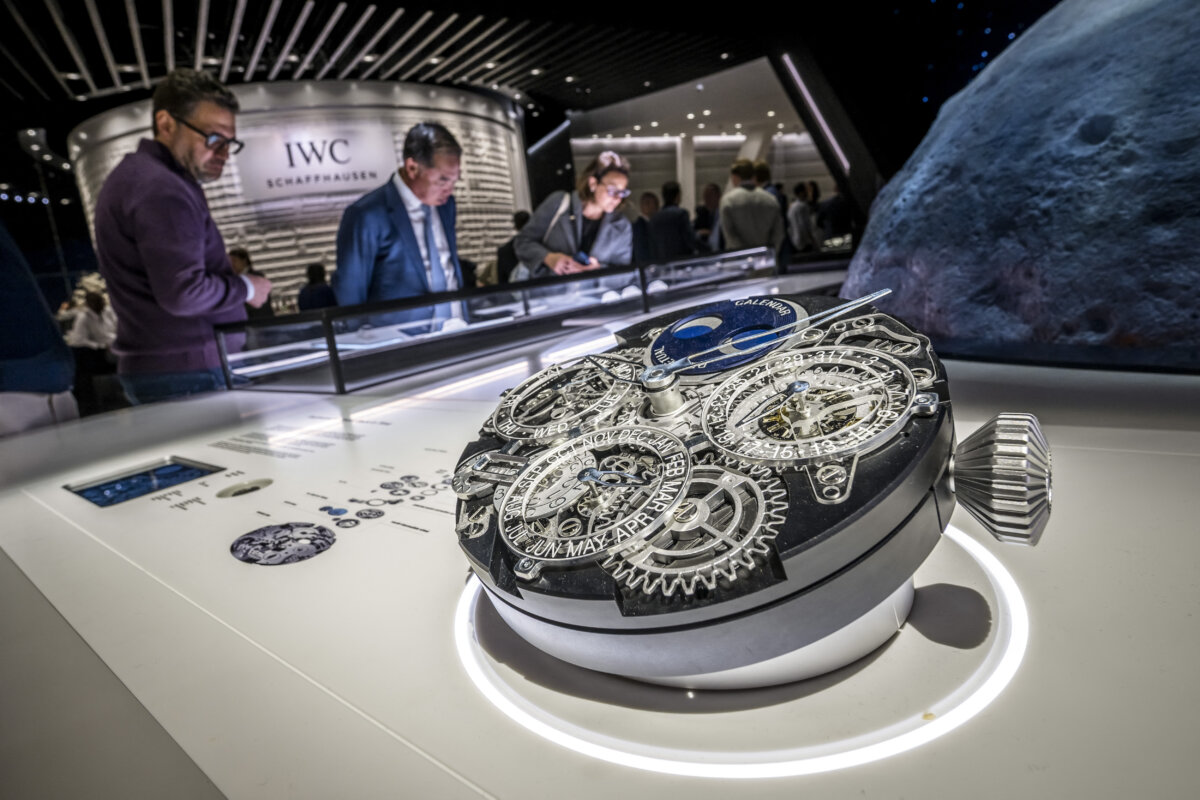
Traditional artisans and small producers pivoted toward the luxury segment, in which customers willingly pay premiums for quality, uniqueness, heritage, and authenticity. Here, inefficiency becomes an advantage—slow, skilled work signals exclusivity. Collectors pay tens or hundreds of thousands of dollars for a Patek Philippe or A. Lange & Söhne—despite a smartphone delivering superior timekeeping—because they embody centuries of human craftsmanship, patience, and mechanical ingenuity.
The Preservation Pattern
This dynamic has created a recognizable pattern across many domains.
A compelling case study is the Quartz Crisis of the 1970s. The flood of accurate, affordable Japanese quartz watches devastated the Swiss industry, slashing employment from roughly 90,000 to fewer than 30,000. In response, consultant Nicolas G. Hayek orchestrated the merger of two struggling conglomerates—ASUAG and SSIH—into SMH (later the Swatch Group). He launched the inexpensive, fashionable Swatch watch in 1983, using its massive profits to finance the revival and acquisition of traditional brands.
Meanwhile, Jean-Claude Biver boldly revived Blancpain by doubling down on pure mechanical tradition with a provocative slogan: “Since 1735, there has never been a quartz Blancpain watch. And there never will be.” Independent icons such as Patek Philippe, Audemars Piguet, and Rolex largely resisted quartz dilution, reinforcing their focus on haute horlogerie, complications, and heritage. Through consolidation, strategic innovation, and a return to craftsmanship, the mechanical watch industry transformed an existential threat into a renaissance, elevating mechanical watches from everyday tools to ultimate symbols of luxury.
In personal adornment, we see bespoke tailoring (for example, Savile Row), hand-lasted shoemaking (for example, John Lobb), and fine leatherwork thriving as elite signals. Cabinetmaking and traditional woodworking produce heirloom furniture that commands premium prices over flat-pack alternatives.
The food and land category follows suit. Organic and regenerative farming, artisanal cheese and charcuterie production, and small-scale viticulture with heritage grapes now serve discerning consumers and high-end restaurants. What was universal peasant knowledge is now a marker of sophistication and health consciousness.
Materials and making reveal further examples: hand-thrown pottery, glassblowing, traditional weaving with natural dyes, and blacksmithing for custom knives or architectural ironwork. These crafts maintain deep material mastery that mass production cannot replicate.
Finally, in mobility and tradition, horse riding, saddlery, wooden boat building, and falconry persist within affluent equestrian and maritime circles. Each preserves not just techniques, but an embodied relationship with materials, animals, and tools.
Civilizational Preservation
Beyond status and aesthetics lies perhaps a more profound role for these “luxury fossils.” In a major civilizational crisis—such as a supply chain collapse, energy shortage, or systemic disruption—these preserved skills could serve as living seed banks, accelerating recovery.
Much like the rediscovery of Greek and Roman statues, texts, and ideas helped ignite the Renaissance, today’s high-end artisans maintain tacit knowledge that could prove invaluable. A master cabinetmaker understands how to work with local woods without global supply chains. Regenerative farmers know how to restore soil and grow food with minimal inputs. Traditional leatherworkers, blacksmiths, and boat builders hold low-tech solutions that industrial systems forget.
At the same time, and perhaps ironically, technology softens the elite-only dynamic: YouTube or Gan Jing World tutorials, makerspaces, and affordable tools have created a vibrant amateur and middle-tier scene that keeps traditions alive beyond pure luxury.
Conclusion
Of course, the pattern is not absolute. Not every craft survives this. Many may have faded beyond recovery when economic incentives vanished entirely, although some areas—particularly in organic farming and natural materials—actually offer genuine advantages in sustainability and long-term resilience. The romantic and the practical sometimes converge.
As artificial intelligence and automation advance, we might expect this pattern to continue: More human skills will migrate from necessity to stylized luxury, preserving the embodied knowledge. Perhaps the very things that we prize for their inefficiency could one day help restart the world.
Views expressed in this article are the opinions of the author and do not necessarily reflect the views of The Epoch Times.
 Friends Read Free
Copy
Facebook
Tweet
Friends Read Free
Copy
Facebook
Tweet