
Commentary
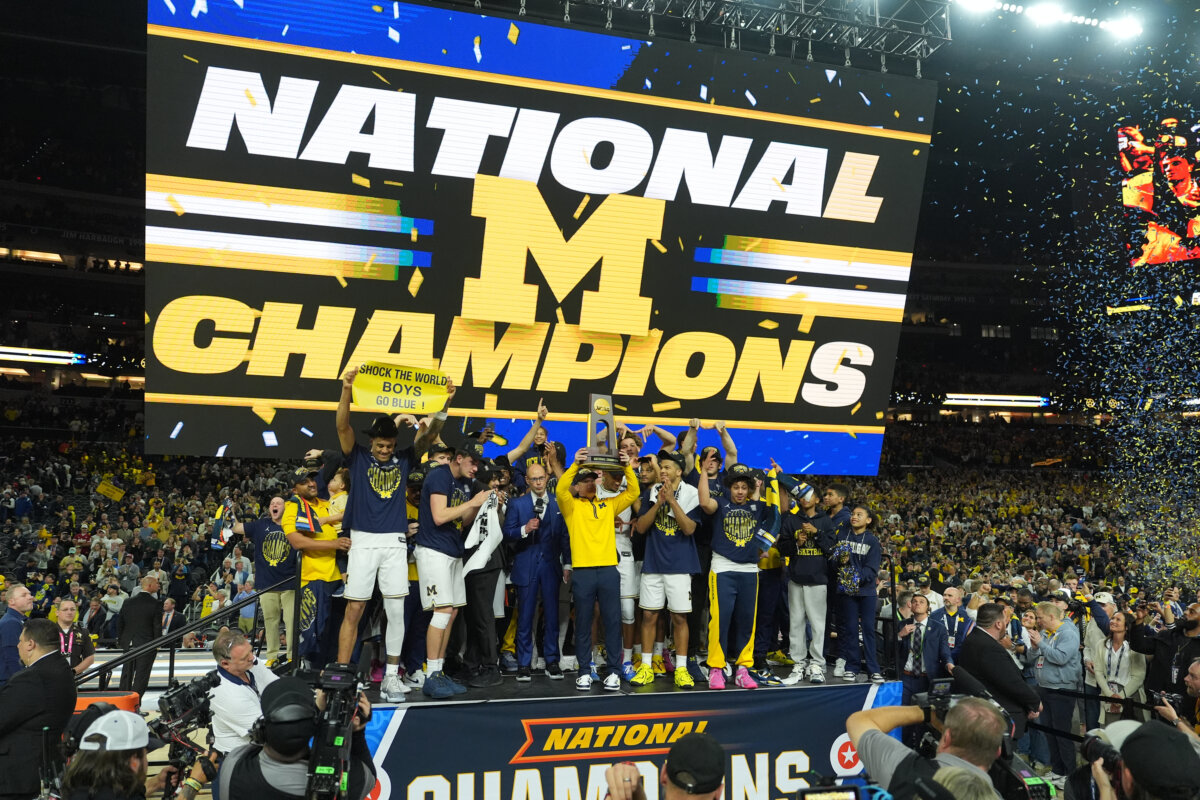
A few days ago, the annual men’s and women’s National Collegiate Athletic Association (NCAA) basketball tournaments, known as “March Madness” even though the championships are determined in April, ended with a championship team being crowned after the other 60-some teams had been defeated. Congratulations to Michigan (the men’s champ) and UCLA (the women’s champ).
That is old news already in the fast, ever-changing world of sports. What is now spreading is a recognition, or at least a suspicion, that college basketball has entered a new era. On the surface, this year’s twin tournaments were very much like their predecessors—the same enthusiastic fan bases willing to pay some serious money to travel and attend the games, the usual hype and high television ratings, the inexorable whittling away of the playing field over a period of three weeks until just one is left standing as the undefeated champion, the spirited efforts by the players. And yet, something felt different.
For the first time ever, March Madness was won by a team—the University of Michigan men’s team—that started five players who had all transferred to Michigan from other college basketball programs—four of them just in the last year. It seems like just a few years ago that we first heard about this thing called “the transfer portal” whereby players who started their college careers at one school could readily transfer to another school without losing any eligibility.
Under this new arrangement, a school could assemble a powerhouse team not just by recruiting the best high school seniors in the country, but by wooing players from other universities’ teams and even from foreign countries with lucrative offers of NIL (name, image, and likeness) contracts. Michigan’s success this year will only increase the incentive for all schools to ramp up their efforts to poach players from other schools, even from within their own conferences. The off-season will become an increasing scramble for talent.
Essentially, college basketball has become a professional sport with teams representing universities rather than cities. Judging from the intense interest and high viewership (up 7 percent from last year and the second-most watched tournament since 1994), this is a winning business model. I find it interesting that college teams can turn over their rosters faster than professional basketball teams, because in the pros, many players are tied down by multi-year contracts, while in college, the transfer portal allows players to transfer every year if they want to. (Indeed, I have read of college athletes playing for four different teams during their collegiate career. It kind of makes one wonder about what sort of degree they can obtain with little academic continuity between schools.)
Let me not convey the false impression that all a college basketball coach has to do is arrange for generous NIL contracts with the players of his or her choice and cruise to supremacy. Major college sports remain a very competitive landscape with multiple coaches, enjoying considerable financial backing, competing to secure the services of the same players. It was a major coaching achievement for U-M’s head basketball coach Dusty May to not only identify the players with valuable talents, but also to find players who would work well with him and with each other—in other words, to build a successful team. Yes, he assembled an athletic roster of prodigious talent that featured height, strength, speed, agility, leaping ability, basketball smarts, and, of course, shot-making skill, but molding such a collection of talent into a championship team required the most excellent coaching abilities.
Even with such an impressive lineup, Michigan lost three games in the regular season. In March Madness, they got hot, winning every game leading up to the finals by wide margins and scoring more than 90 points per game. In the championship game, though, they were a little off. Three-point shots that had swished through the nets in previous games were not falling. Star player Yaxel Lendeborg clearly wasn’t himself after sustaining a knee injury in the semifinal win over Arizona. But the Wolverines still managed to prevail over the perennial powerhouse UConn Huskies—winning the game, 69–63, at the foul line, where they sank 25 of 26 attempts versus UConn’s 12 of 15.
In the women’s tournament, basketball royalty reigned. The same four teams that were seeded first in the four regionals last year were seeded first again this year, and for the second straight year, all four—UConn, South Carolina, Texas, and UCLA—advanced to the Final Four. South Carolina had sort of a reverse Easter weekend, experiencing glory on Good Friday by routing UConn, the team that had beaten them in the Final last year, but then experiencing gloom on Easter Sunday, when they were crushed by this year’s champion, UCLA. The women’s Final Four underscored an immutable reality about basketball: players have to make their shots. On Friday, South Carolina shot well and won; on Sunday, they did not, and lost. UCLA played magnificently disciplined, smart basketball, and are worthy champions.
It sure looks like most of the same collegiate basketball teams—both men and women—will be dominant in the next few years. They have well-established “brands” and the financial backing to be able to recruit top players. Of course, there will be challengers. It is likely, though, that in college basketball, as in college football, it will require a wealthy booster or two to bestow millions of dollars that will enable their team to bid for top talent either out of high school or the transfer portal. Such a generous donor funded last year’s highly successful Texas Tech football team, and a similar development in college basketball could vault a currently undistinguished team to the pinnacle of the sport. Follow the money. And enjoy next year’s March Madness! If nothing else, the talent level will be awesome.
Views expressed in this article are the opinions of the author and do not necessarily reflect the views of The Epoch Times.
 Friends Read Free
Copy
Facebook
Tweet
Friends Read Free
Copy
Facebook
Tweet