Commentary
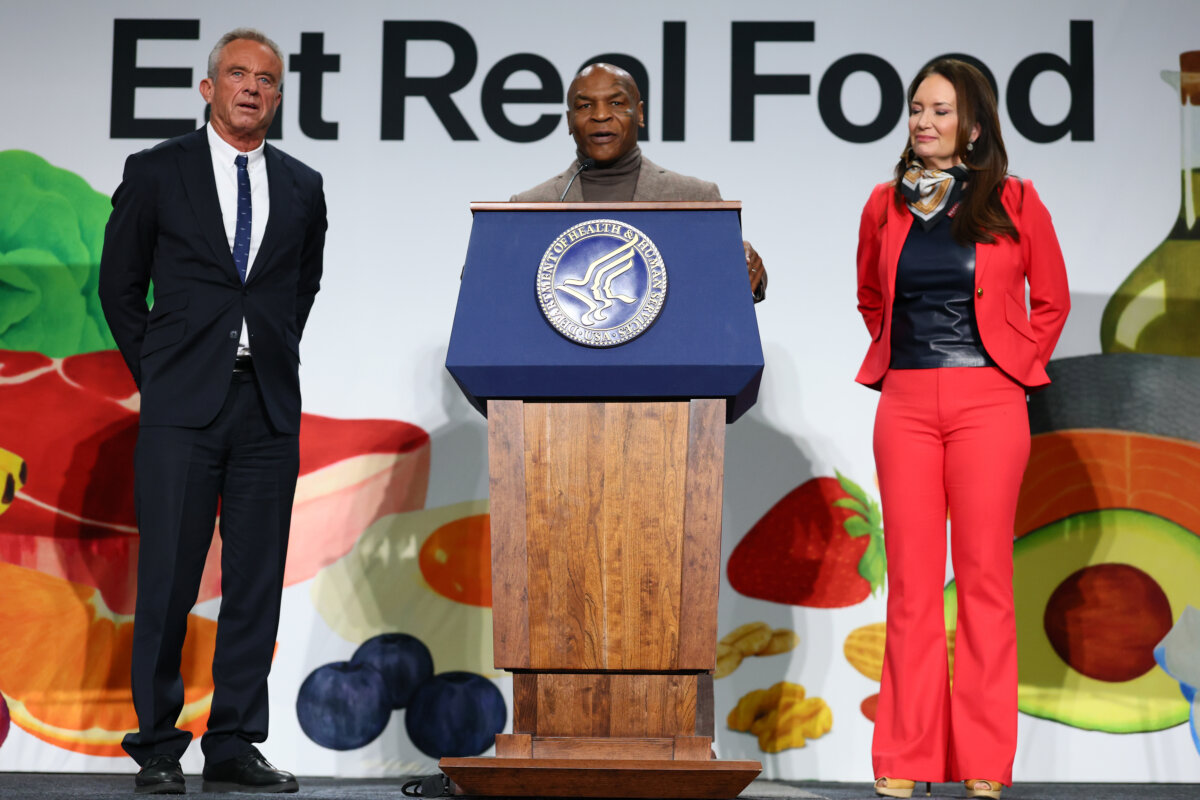
There’s a sudden and tremendous interest in eating real food. I’m watching the great Mike Tyson, onstage with Robert F. Kennedy Jr., kicking off a wonderful campaign for real food. It’s not just these two. It’s the whole of public health, and the campaign has gained powerful cultural resonance.
This effectively reverses one of the most outrageous U.S. government mistakes of the past 100 years. I was raised in the thick of the worst of it. Life was normal, eating beef and eggs and vegetables from my aunt’s garden across town, drinking whole milk, and going through butter like it was in infinite supply.
Suddenly it all stopped. Beef was tolerable so long as it was drained of fat. Eggs were poisonous. Butter was nearly banned. Vegetables were fine so long as they were swamped by bread, cereal, and rice. They tried to get us to eat soy burgers at school. Everything suddenly became a product: nondairy cream, butter-flavored topping, meat-flavored bean mush, and so on.
An entire generation, or two or three, was completely misled, with carnage that is impossible to quantify. They thought they were fixing heart disease and created more of it. They believed that we would slim down, but we got fat instead. The campaign to reduce cholesterol created new diseases as never before.
Everyone in this country, regardless of political preferences, owes Kennedy a huge debt of gratitude. His campaign for real food is not about forcing anything on anyone. It’s merely righting a wrong and encouraging people to do right by themselves and with much-improved science. In addition, he is liberating taxpayers from subsidizing poison food.
And yet I’m already seeing the following online. I cannot afford this fancy stuff, people say. Whole food—it’s just too expensive. Organic costs so much more. Grass-fed is out of my budget. The high-end health food stores are breaking the bank. I’m on a budget and can only afford to eat what I eat. All this stuff about real food is not practical.
I used to believe this too, that the push for food that is healthy, local, and fresh was an elite concern that could be satisfied only by trading with fancy stores with a philosophy. As Marge Simpson says, “We cannot afford to shop at stores with a philosophy.”
And it’s true, those stores can be expensive.
But here’s something weird and mostly unspoken about American shopping habits. People tend to pick their favorite stores based on opaque matters of class consciousness. The working class shop here, the immigrants shop there, this religion goes here and that religion goes there, the rich people head to this store, whereas the poor people shop there.
I could give you countless examples from my own neighborhood. I could tell you about the Vietnamese grocery where people on this side of town would never go, and the fresh fish place where I’ve never seen anyone with my skin tone trade. I could refer you to the Halal marketplace, where spices cost one-tenth the price of the same items at the outdoor mall downtown. I could amaze you with examples of high prices at the grocery where Teslas fill the parking lot.
I don’t have to tell you this. You know the truth from your own town or city. You have your own habits. Maybe something in you says, “I shop here and not there.” Maybe you don’t know why. You just have a sense that this is who you are and how you do things.
Let me invite you to mix matters up. There might be a Mexican market with vegetables at a fraction of the price at the high-end store. There could be a place that markets to immigrants from Bangladesh and Nepal with fish and rice that will shock you with low prices.
Or maybe you can try out one of those stores where you pay for memberships and they sell in bulk. The deals are stunning, sometimes beyond belief.
It’s all about breaking down barriers in your own mind and changing your habits. Live a little and shop around. You don’t need to make an appearance at the health-food place where the yoga people go. You can do the same at the store with the tacky or foreign name and save vast amounts of money. Nor do you need to get stuck on the organic label. You can do huge things for your health simply by staying on the outside ring of any grocery: fresh meat, fish, vegetables, and fruit.
I’ve tested all this, and I can say with absolute confidence that it is complete bunk that it costs more to eat healthy. To be sure, you can always find a place with shocking amounts of cupcakes and bread for prices that seem like a bargain. It’s a simple matter to decline the temptation and gravitate toward food that you know is good for you.
And cook it at home. That’s a real kicker and a point of resistance for many. Getting out of the restaurant and pizza habit is not easy. But once you do it and start making your own, you can feel the pride that comes with creativity and even have bragging rights. Trust me: This is very fashionable these days.
Now to the unspoken truth that not even Kennedy seems to have mentioned. We ultimately need to talk about how much we eat. We all carry around this idea of breakfast, lunch, and dinner, ideas left over from when we lived agricultural lives. Even in those days, there was no such thing as three full meals a day. Breakfast was big because people had already worked three hours. Lunch was a snack. And dinner was supper: That is to say, the family supped on small portions.
Today, a large part of the workforce sits all day looking at screens. How insane is it that we should think we can stay healthy while eating a full meal every few hours while otherwise doing nothing?
Have you ever been on an international flight and had multiple rounds of food come your way? I almost cannot believe it. We start with a big dinner, then try to sleep, and then suddenly there is breakfast, and then comes lunch. Truly absolutely no one on the plane has moved from one dumb chair. Why in the world do we think we have to eat?
Food is fuel. If you haven’t moved from one spot, it makes no sense to keep packing it in on a growing basis. Of course, you are going to blow up in size. This should not be a mystery. This whole habit of three meals a day, plus snacks, might bear as much blame for the American obesity crisis as does bad processed food that is loaded with sugar.
This issue becomes more pronounced as you get older. You need less food. I’m at the age where I feel perfectly happy with one meal a day at dinner time. The rest of the day, I’m free from the whole thing. When I go to lunch, I cut down dinner portions. When I eat breakfast because I’m at an event, I skip lunch.
Yes, it means getting used to feeling “hungry,” but I’ve come to suspect that what we call hunger is what previous generations called feeling normal and energetic. The physical feeling of being full during a meal is a signal that it is time to stop eating. It is not something you should feel all day and evening every day.
We are blessed to live in an age of abundance. With that comes the requirement of discipline. All of us were fooled into thinking that we can and should eat whatever we want, when we want, and in quantity. We can, of course, but at the expense of our personal well-being. If we want good and long lives, we need to take another route.
Views expressed in this article are the opinions of the author and do not necessarily reflect the views of The Epoch Times.
 Friends Read Free
Copy
Facebook
Tweet
Friends Read Free
Copy
Facebook
Tweet