
Commentary
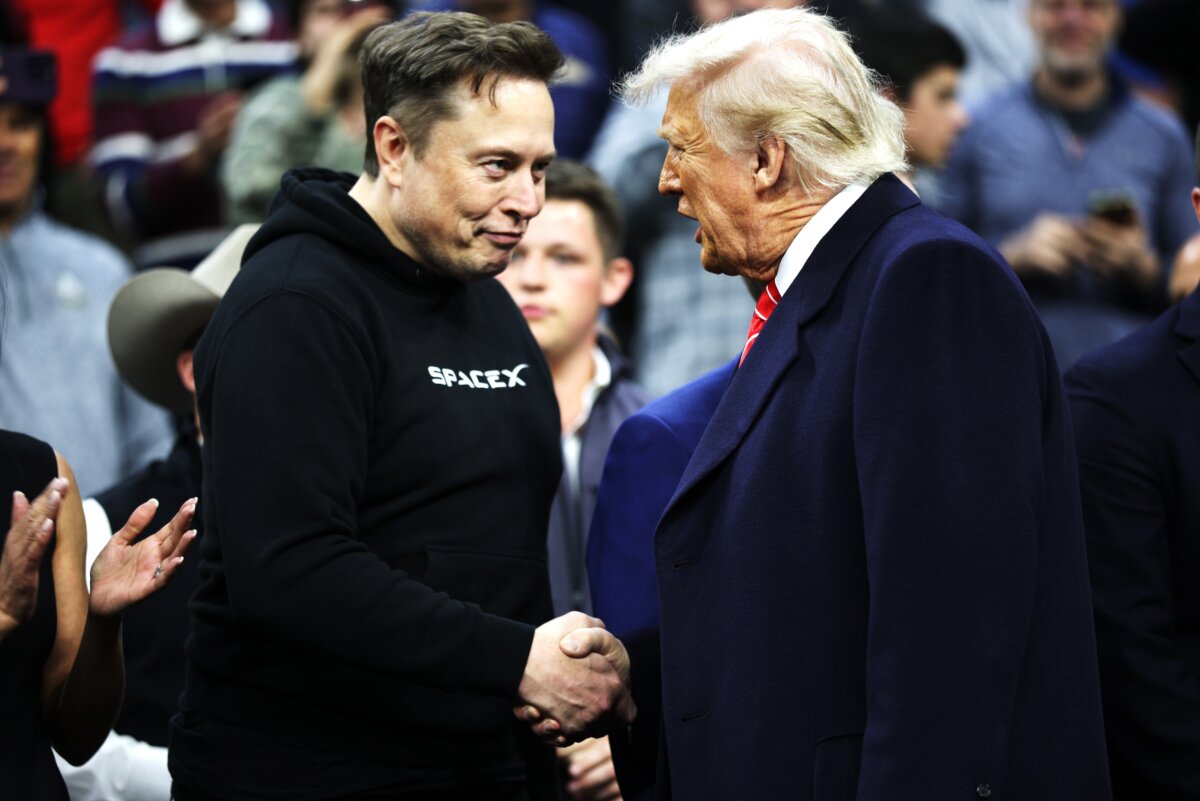
Whatever else one may think of mega-entrepreneur Elon Musk and President Donald Trump, we can agree that they both are strong, forceful characters. Nobody rises to the heights of success that they have attained in their respective fields without tons of confidence, initiative, persistence, moxie, self-assertiveness, conviction, etc.
When Trump asked Musk to take a leading role in his new creation, the Department of Government Efficiency (DOGE), it was an intriguing match from the start. Considering how much each of the two men had attained on their own and their larger-than-life personalities, what might they accomplish by joining forces? The potential for the pair to form a dynamic powerhouse was evident. So was the potential for a titanic clash of egos.
The recent row between the two was unwanted by the millions of Americans who favor massive cuts to our bloated federal government. By contrast, the Trump-Musk blow-up has been greeted with great glee by the opposition party and all those who opposed DOGE’s mission.
Let’s look at what has happened from several perspectives.
From the outset, Elon Musk was a fascinating choice to spearhead a drive to “drain the swamp.” On the one hand, his executive and problem-solving abilities are legendary. On the other, Musk’s companies have (according to The Washington Post) received approximately $38 billion in government subsidies, loans, tax breaks, etc. I can’t vouch for the accuracy of that number, but clearly, the Musk business empire has been a recipient of abundant federal largess.
At first glance, then, Musk might seem like a strange choice to be put in charge of slashing government spending. A deeper look, however, shows Musk to be a man willing to put the welfare of his country over personal profiteering from government intervention. As reported by The Epoch Times’ Jack Phillips, last year Musk endorsed Trump for president after Trump “pledged … that he would abolish federal mandates on electric vehicles,” despite the negative implications for Musk’s flagship corporation, Tesla. There aren’t very many corporate leaders who would throw their support for a presidential candidate vowing to shut down the federal gravy train, but Musk did so. According to Phillips’s report Musk stated, “as long as it’s [the abolition of the EV mandate] is happening to everyone, I’ll be able to compete.” In doing so, Musk showed himself to be an American patriot willing to compete on a level playing field rather than being a typical special-interest hustler.
I think it’s likely that Musk’s recent verbal tirade against Congress, the president, and the D.C. swamp was done in anguish, due to a sense of frustration, disappointment, failure, and even betrayal. After having donated so much time—time he could have used to provide additional leadership to his corporations—it must have been excruciatingly hurtful that his herculean efforts to slash government spending seemed to be for naught. I, for one, am not uncomfortable with him characterizing Trump’s “Big Beautiful Bill” (BBB) as an “abomination” and for calling out Congress for being weak, cowardly, and (by implication) corrupt for selling out the American taxpayer to the special interests and entrenched insiders.
And what about President Trump? Is he a villain for urging Congress to pass the BBB? Indeed, it would be very easy to be put off by Trump’s enthusiastic support of his proposed spending bill. He himself railed against all sorts of ridiculous, excessive, and indefensible government spending. Yet now that the chips are down, he seems willing to make too many concessions to the status quo. Is Trump a hypocrite, or worse? I think not.
What gives? Again, it depends on where a person is sitting. As a private citizen, I’m sure Trump would be calling for more spending cuts than what BBB contains. But he is the president, and therefore a politician. And what is that old truism about politics? That it is the “art of the possible.” I am sure that there are elements in the BBB that Trump personally despises, but he recognizes the political reality that if he is going to get enough votes to secure passage of his bill, then he is going to have to make some distasteful compromises. Seen in that light, it isn’t Donald Trump personally that Elon Musk finds so frustrating, but the political reality on Capitol Hill.
Nobody knows for sure what the future relationship between Trump and Musk will be, but there are clear signs that the recent rift is already on the mend. I think both men will overlook what was said in the heat of the moment. Musk has since expressed regret for some of his social media posts lashing out at Trump, saying they “went too far.”
As per Phillips’s report, it is likely that Trump will forgive (and perhaps already has forgiven) Musk for his angry outbursts, seeing them as evidence of a genuine patriotism that genuinely yearned for spending cuts as a way to help his country and not as a personal attack. Conversely, I can see Musk forgiving Trump by recognizing that as much power as the president of the United States has, there are times when his hands are tied and he just can’t get the votes he needs to accomplish all his goals.
Regardless of the future status of the Trump-Musk relationship, the bottom line for the rest of us is that the Big Beautiful Bill contains some positive provisions and some negative ones. For better or worse, that is the political reality in the United States in the summer of 2025.
Views expressed in this article are the opinions of the author and do not necessarily reflect the views of The Epoch Times.
 Friends Read Free
Copy
Facebook
Tweet
Friends Read Free
Copy
Facebook
Tweet