
Commentary
A wartime economy is no longer a hypothetical future scenario to contemplate. It has already arrived. This week, with U.S. forces launching what the Trump administration has labeled Operation Epic Fury against Iran, the question is no longer whether war will affect markets and the broader economy. The question is how severe and how long-lasting the conflict and the damage will prove to be.
History offers a clear and unambiguous verdict. War is always inflationary. There are no exceptions to this rule. Whether we look at World War II, the Korean War, or the Vietnam War, the economic playbook is the same: resource reallocation from civilian to military production, deficit spending financed by debt and the monetary printing press, eventual price controls that suppress inflation temporarily but cannot contain it permanently, and an inevitable reckoning paid by the working and middle classes in the form of diminished purchasing power.
During World War II, the federal government’s defense spending surged from roughly 1.6 percent of gross domestic product (GDP) in 1940 to more than 40 percent by 1944. Non-military automobile production was halted. Steel, rubber, and aluminum were rationed. Price controls suppressed the official inflation numbers, but black markets flourished, and the true cost of the war was deferred, not avoided.
By the time the war ended, the federal debt-to-GDP ratio had climbed from 44 percent to more than 119 percent. Vietnam tells an even more cautionary tale. President Lyndon Johnson’s “guns and butter” strategy—refusing to raise taxes to pay for the war while simultaneously expanding the Great Society—ignited the inflationary spiral that dominated the 1970s. The real bill came due long after the last soldier had returned home.
What makes the current moment particularly dangerous is the fact that the United States entered this conflict from a position of substantial fiscal weakness. Federal debt already stands at roughly $38 trillion, or 130 percent of GDP. Annual interest payments exceed $1 trillion. Unlike 1941, when the United States entered World War II with low debt and room to maneuver, today we are piling new wartime spending onto a balance sheet that was already unsustainable.
The military spending surge was well underway before the first bomb fell on Tehran, Iran. The Trump administration’s fiscal year 2026 defense budget requests $1.01 trillion, a 13.4 percent increase from the previous year. An additional $150 billion in defense spending was authorized through congressional reconciliation. These are not emergency supplements; they represent a deliberate, structural shift toward a wartime footing.
Across the Atlantic, NATO allies have committed to spending 5 percent of GDP on defense by 2035, more than doubling their long-standing 2 percent guideline. In 2014, only three NATO members met that threshold. Today, all 32 do. Germany—long the paragon of fiscal restraint—amended its constitution to allow debt-financed defense spending beyond 1 percent of GDP, unlocking some 500 billion euros (about $579 billion) in additional military capacity over the next decade. Poland is already spending 4.5 percent of GDP on its military. Europe’s defense investment grew by 42 percent in 2024 alone.
To some degree, financial markets saw this coming. Investors who heeded the signals early have been generously rewarded. Defense technology stocks have returned 72.8 percent since April 2025, roughly double the S&P 500 over the same period. Gold prices are up by about 83 percent over the past year. Oil prices have risen by more than 15 percent since the attacks. Airline stocks sold off, with the three U.S. majors falling by between 2 percent and 4 percent. Defense contractors have risen by 3 percent to 6 percent.
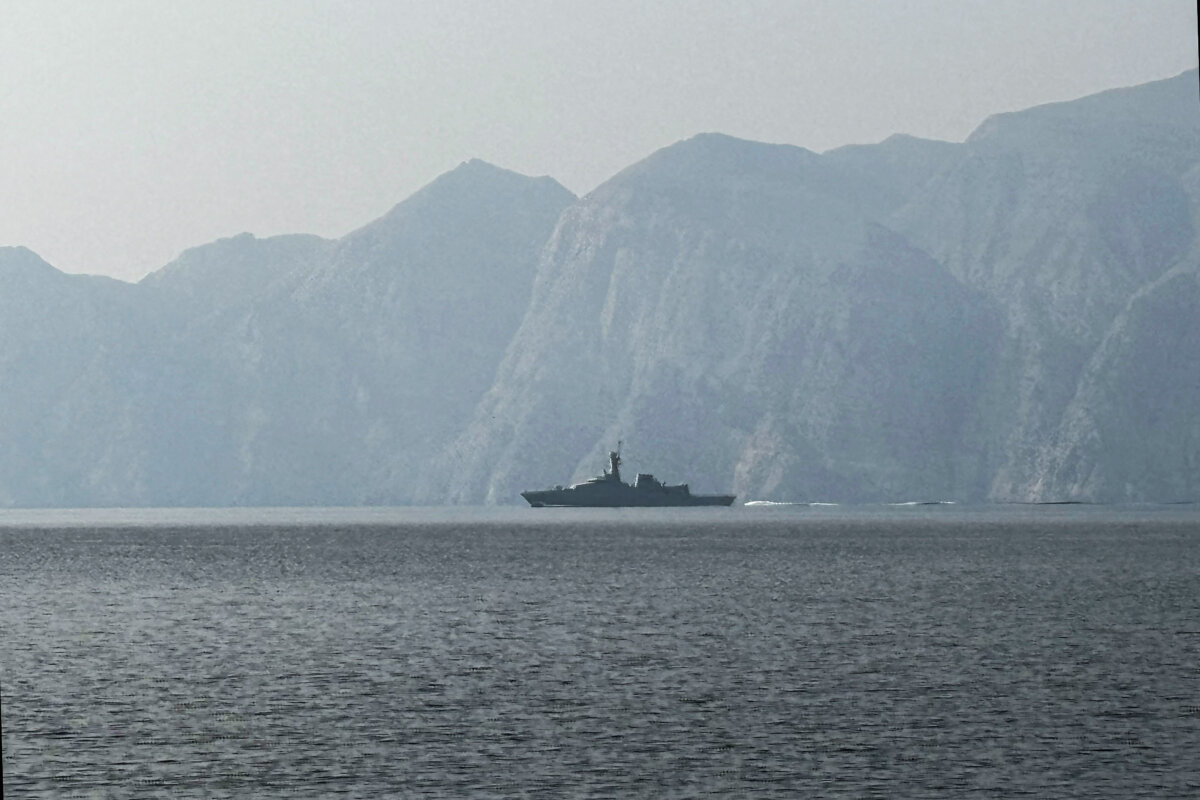
The critical wild card, as it has been in every Middle East conflict since 1973, is the Strait of Hormuz. Some 13 million barrels of crude oil transit this narrow waterway every day, representing 20 percent of global consumption and nearly one-third of global seaborne crude flows. Iran borders the strait to the north and has threatened to close it, although a decimated Iranian navy will limit this potential. Still, the economic consequences of a shutdown would ripple through every corner of the global economy.
U.S. equity indexes are falling but haven’t yet been routed by fear, indicating that investors are pricing in a short, contained conflict. Wall Street’s consensus is that geopolitical events, however dramatic, rarely derail corporate earnings for long. Although the Trump administration and many commentators expect the conflict to be brief—for example, “one to three weeks, at most two months”—similar predictions have been proven wrong time and time again in previous wars that dragged on for years, including in Iraq and Afghanistan.
That consensus may be right about this particular engagement. It is almost certainly wrong about the larger picture. Gold’s extraordinary run is not primarily a story about Iran. It is a story about sovereign debt, monetary debasement, and growing global loss of confidence in the fiat monetary system that has underwritten American economic hegemony since President Richard Nixon closed the gold window in 1971. Central banks around the world have been quietly and consistently accumulating gold, not because they fear a brief conflict in the Persian Gulf, but because they fear what decades of deficit spending, money printing, and weaponized sanctions have done to the U.S. dollar’s long-term credibility. The Iran conflict is an accelerant. The underlying fire was already burning.
For investors navigating this environment, the historical pattern is instructive, even if imperfect. Sustained wartime conditions favor defense and aerospace, energy producers, precious metals, heavy industrials, and select shipping companies. They punish consumer discretionary, airlines, high-multiple technology stocks, and anything sensitive to rising energy costs, higher interest rates, or compressed risk appetite. Health care and utilities tend to hold up as defensive anchors.
The bond market is sending a notable signal as well: The fact that Treasury yields have not collapsed in the traditional safe-haven manner suggests that investors are more worried about the inflationary implications of this conflict than they are eager for the relative safety of longer duration.
The broader lessons of history are sobering. Wars ultimately end. Inflation, once unleashed, is far harder to contain. Every major conflict in American history has been followed by an inflationary hangover—sometimes delayed by years but never escaped entirely. The Vietnam War’s true inflation tax was not paid until the 1970s. We are still living with the consequences of COVID-19 pandemic-era deficit spending, which, while no longer more than $6 trillion, has “normalized” at about $2 trillion. Adding a sustained military engagement in the Middle East to an already compromised fiscal position is not a recipe for price stability.
American taxpayers, as always, will foot the bill—first in taxes, and then, more perniciously, in the slow erosion of the purchasing power of every dollar they earn and save. Protection comes in owning investment assets that can resist or even benefit from a wartime—i.e., inflationary—economy.
Views expressed in this article are the opinions of the author and do not necessarily reflect the views of The Epoch Times.
 Friends Read Free
Copy
Facebook
Tweet
Friends Read Free
Copy
Facebook
Tweet