
Commentary
I can’t tell you how many times people have told me that they can eat foods in Europe that they can’t eat here in the United States.
They go on vacation and eat bread, pasta, cheese, and desserts without the digestive issues they experience at home. There are many possible explanations. Vacation lowers stress. Europeans often walk more. Portion sizes are different. Ingredients may be different. But there is also a broader truth: Europe has generally maintained stricter food regulations than the United States.
For years, the European Union has had stronger requirements around genetically modified organisms, stricter traceability standards, and greater transparency about how food is produced. That began to change on June 17 when the European Parliament approved a major shift in how it regulates many gene-edited crops.
Under the new framework, many plants developed through newer gene-editing technologies will no longer require the same consumer-facing GMO labels that Europeans have become accustomed to seeing. Farmers buying seed will still have access to information about how those seeds were developed, but shoppers standing in a grocery store may not.
To many Americans, that may not sound like much of a story.
After all, we lost much of that right to know years ago.
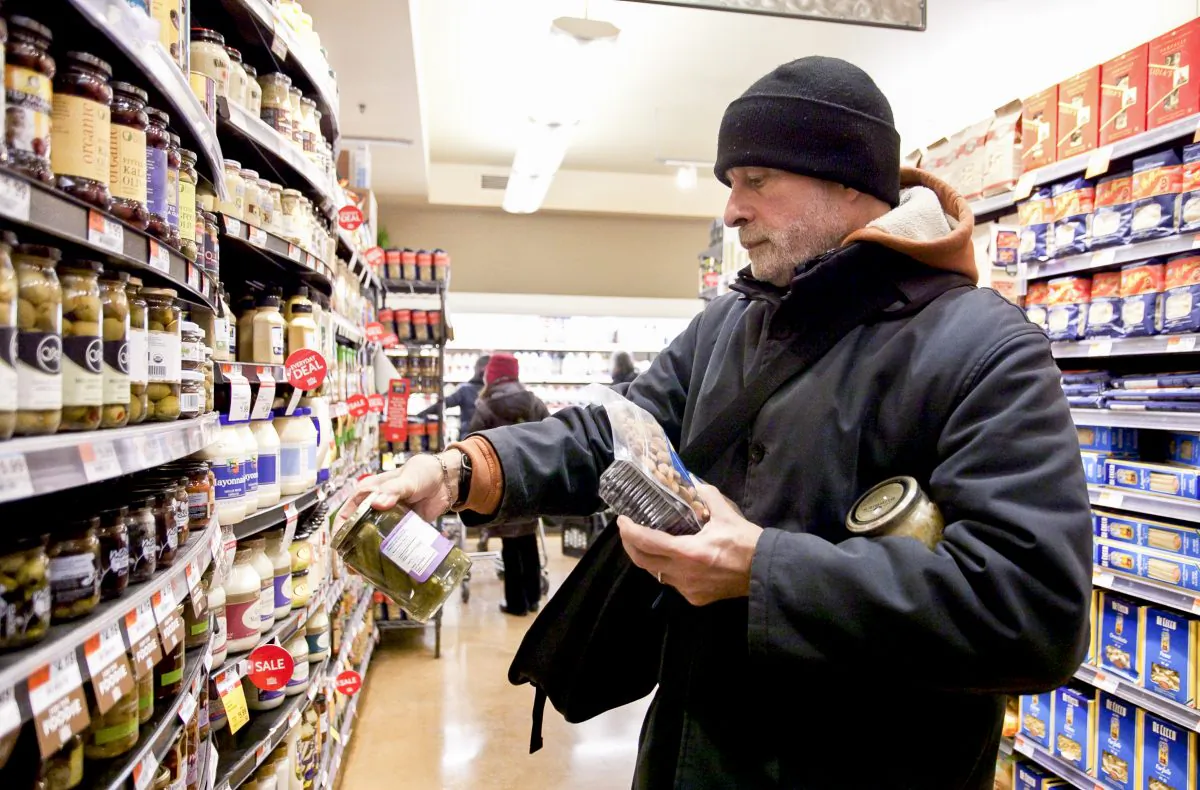
In the United States, consumers generally cannot walk through a grocery store and easily identify which foods contain genetically modified ingredients. We have disclosure requirements, but they are often buried in symbols, language most consumers do not understand, or QR codes that few people scan while pushing a shopping cart.
The question at the center of this debate is simple: Do consumers have the right to know how their food was produced?
Do we have the right to know whether a crop was genetically modified? Whether wheat was sprayed with glyphosate before harvest? Whether meat came from animals raised on pasture or in confinement? Whether “grass-fed” means grass-finished or simply that an animal ate grass for part of its life, as nearly all cattle do?
Labels can help answer those questions.
Labels can also mislead.
Some labels mean almost nothing. “Natural” may be one of the most meaningless words in the grocery store. Other labels can be technically accurate while still creating an impression that is incomplete.
Take grass-fed beef. Most cattle spend a significant portion of their lives eating grass. The more important question is often how they were finished. “Pasture-raised” sounds appealing, but what does that pasture actually look like? A thriving field full of diverse forage, or a small fenced area attached to an industrial chicken facility? Labels tell part of the story, but rarely the whole story.
Organic and regenerative certifications generally tell us more, and I want to be clear: I still believe organic is better than conventional agriculture in most cases. When I buy produce I cannot grow myself, I buy organic.
But certifications are not perfect.
One example comes from livestock production. Under organic standards, a farmer can vaccinate cattle, pigs, and chickens and still market those animals as organic. However, if an animal requires antibiotics, it is generally permanently removed from organic production.
I understand the reasoning. Organic standards aim to reduce pharmaceutical use and give consumers confidence in how animals are raised. But I have always found the distinction a little odd. Vaccines are pharmaceuticals. Antibiotics are pharmaceuticals. One is broadly accepted within the system, while the other effectively removes the animal from it.
In my view, a more sensible approach would allow therapeutic antibiotic use with an appropriate withdrawal period while still maintaining high standards for animal welfare and food quality.
The current system can create perverse incentives, particularly for cattle producers. A beef animal or dairy cow often represents years of investment. In the case of a dairy cow, her value is realized over time through milk production. When administering antibiotics means permanently removing that animal from the organic system, farmers may find themselves weighing the animal’s immediate needs against significant economic consequences.
I do not believe most organic farmers are neglecting animals. Quite the opposite. But good policy should align economic incentives with animal welfare, not place them in tension with one another.
This confusion often shows up in consumer conversations. Every so often, I see a social media post expressing shock that organic chicken may be vaccinated. The implication is that consumers have been misled. In reality, vaccinations are widely permitted within organic livestock production. Cattle, pigs, and chickens can all be vaccinated and remain organic. What is prohibited is the use of antibiotics if the producer wishes to continue marketing that animal as organic.
That does not mean organic is a bad system. I still buy organic whenever I can. It simply illustrates how difficult it is for any certification or label to fully communicate the realities of food production.
At the same time, I find myself torn.
As a consumer, I want transparency. As a farmer, I have spent years living under certification systems, and I know how imperfect they can be.
I have been certified organic. I have been certified Regenerative Organic. Today, our ranch is Regenified. Of all the systems I have participated in, I find Regenified among the most compelling because it focuses on measurable outcomes and ecological function rather than on paperwork alone. Farmers move through different levels based on improvements in soil health and land stewardship. The goal is progress, not perfection.
That distinction matters.
Too often, certification becomes an exercise in compliance. Forms are filled out. Boxes are checked. Inspectors review records. Large operations hire compliance departments. Small farms stay up late at the kitchen table trying to finish paperwork after feeding animals and putting children to bed.
Paperwork is not the same thing as transparency.
A farm can be excellent at filling out forms and poor at stewardship. Another farm can be building soil, increasing biodiversity, improving water infiltration, and raising healthy animals, yet it still struggles to navigate a mountain of regulations.
The more labeling requirements we create, the more bureaucracy we create alongside them. That burden rarely falls hardest on multinational corporations. They simply hire another compliance officer. The burden falls on farmers.
That is why I am conflicted.
I believe consumers have a right to know whether their food was genetically modified. I also know that every new label, certification, and reporting requirement comes with costs.
Which brings me to a question I rarely hear asked.
Is there anyone besides multinational chemical companies, seed companies, and large industrial agricultural interests who is actively asking for more chemicals in our food system?
I am not asking whether chemicals are useful. Clearly, they are. They have become deeply embedded in modern agriculture because they solve problems. They control weeds. They simplify management. They reduce labor. They help create the uniformity that global supply chains demand.
The better question is whether they are something we genuinely want or something we have simply accepted as necessary.
I have never met a mother standing in a grocery store wishing her food had been sprayed with more chemicals. I have never heard consumers ask for more pesticide residues, more synthetic inputs, or more processing. What people consistently ask for is food they trust.
Consumers want transparency. Farmers want profitability. Families want health.
Yet much of the conversation centers on preserving systems that require increasingly complex interventions and increasingly complicated labels to explain them.
Perhaps the real question is not whether consumers should know which chemicals were used.
Perhaps the real question is why so many chemicals are required in the first place.
If I got to be queen for a day, I am not sure I would spend much time arguing about labels at all.
I would spend my time arguing about what is allowed into the food system in the first place.
The labeling debate assumes potentially harmful products will remain in the marketplace and consumers simply need enough information to avoid them. There is some logic to that. People deserve to know what they are eating.
But part of me wonders whether we are asking the wrong question.
Instead of asking whether consumers should be told a crop was genetically modified, perhaps we should ask whether that modification benefits the eater, the farmer, and the environment enough to justify its existence.
Instead of asking whether a chemical should be disclosed, perhaps we should ask whether it should be legal to use at all.
The same goes for glyphosate used as a pre-harvest desiccant. The debate is usually about whether consumers should be informed. My question is simpler: Why are we spraying food with chemicals shortly before harvest in the first place?
I understand the realities of farming. I am a farmer. I know nature is messy, and perfect systems do not exist.
But if we are constantly debating labels, disclosures, warnings, exemptions, certifications, and QR codes, it may be because we have already accepted a food system far more complicated than it needs to be.
A truly healthy food system would require less disclosure because there would be less to hide.
It would rely on fewer synthetic inputs, healthier soils, shorter supply chains, and more direct relationships between farmers and eaters.
This is why I do not believe the answer is simply more labels, nor fewer labels.
The answer is shortening the distance between the eater and the grower.
Labels are a substitute for trust. Sometimes a necessary substitute, but a substitute nonetheless.
I would rather buy food from my neighbor than from a corporation with a perfect label. I would rather shake the hand that feeds me than scan a QR code in a grocery store aisle. I would rather know the family, the farm, the soil, and the animals than trust a marketing department to tell me the truth.
The European vote is a win for large corporate interests because uniform rules make international trade easier. It is a loss for consumers who value transparency. But it is also a reminder that no label can do all the work for us.
Real transparency is relational.
It is farmers markets. It is herd shares. It is farm stores. It is community-supported agriculture. It is asking questions. It is rebuilding a food system where the distance between the person growing the food and the person eating it is short enough to understand.
Because at some point, if we truly want to know what is in our food, we have to know who grew it.
Views expressed in this article are the opinions of the author and do not necessarily reflect the views of The Epoch Times.
 Friends Read Free
Copy
Facebook
Tweet
Friends Read Free
Copy
Facebook
Tweet