
Commentary
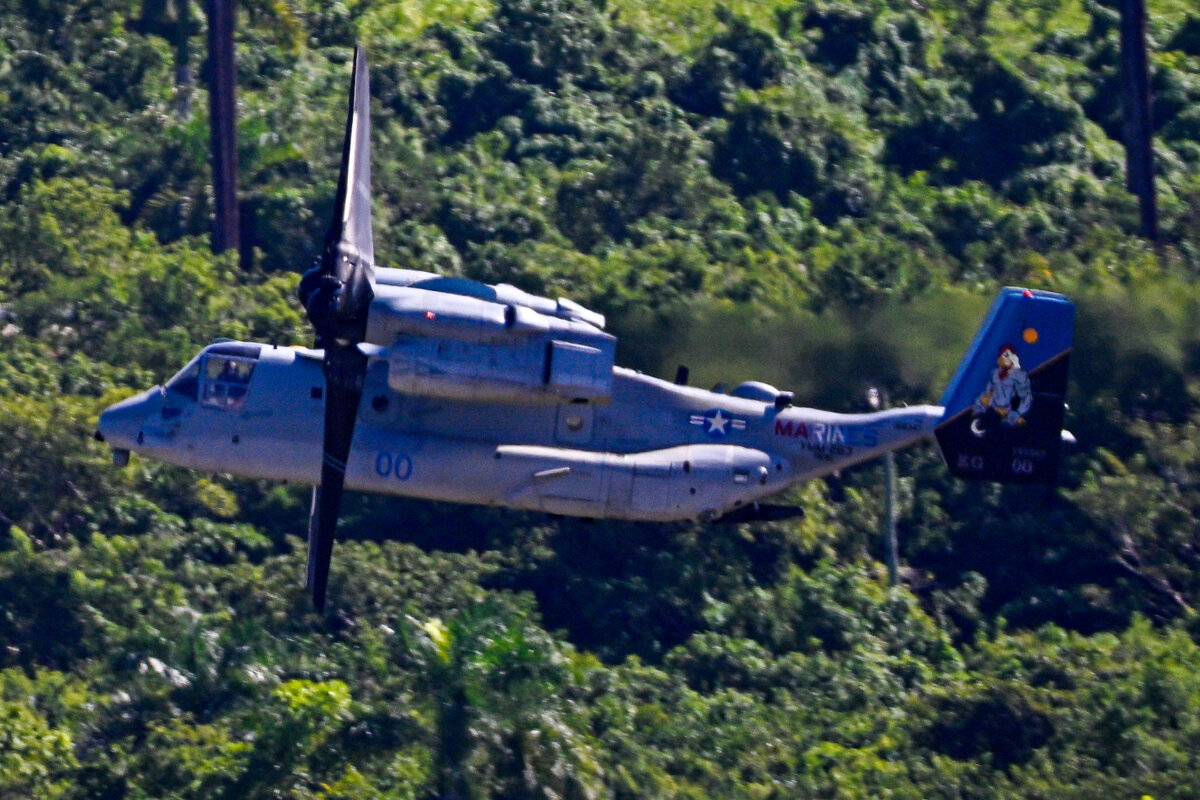
The V-22 Osprey tiltrotor aircraft’s persistent mechanical failures and safety risks have been confirmed and documented in a December 2025 Navy comprehensive review and a concurrent Government Accountability Office (GAO) report. These alarming evaluations detail accumulating drivetrain vulnerabilities, elevated accident rates, and oversight deficiencies, revealing a program where initial operational concepts overestimated the platform’s dual-role effectiveness as both a helicopter and airplane substitute.
The Navy review attributes the “overall risk posture” deterioration to delayed material solutions and fragmented joint-service management, with drivetrain issues such as hard clutch engagements and X-53 steel defects central. Over four years, 12 Class A mishaps destroyed four aircraft and killed 20 personnel. Full hardware fixes extend into the 2030s, leaving interim inspections as the primary safeguard.
The GAO concurred, stating that “the Osprey has had 4 fatal accidents since 2022, resulting in 20 service member deaths and raising concerns about its safety.” Serious accident rates climbed 36 percent to 88 percent above averages in fiscal years 2023–2024, surpassing fleet norms. Twenty-eight catastrophic risks persist, averaging nine years old, with system failures in airframes and engines compounded by unaddressed non-system factors such as training gaps. Only the $2 trillion dollar plus problem that plagued the F-35 program has more unresolved catastrophic risk assessments.
The Osprey’s tiltrotor transmission far exceeds the complexity of helicopter or airplane systems. And its complexity will continue to challenge even well-engineered configurations, as it must handle issues absent in simpler helicopter transmissions or airplane props. Recurrent failures, such as gearbox chipping, underscore its inherent fragility.
Groundings recur because drivetrain root causes remain unfixed, but then operations are allowed to be resumed on the promise that enhanced inspections that closely monitor how bad the defects are getting will allow action to be taken before another fatal accident. Flying Ospreys with known defects has become normalized.
Beyond mechanical unreliability, inherent design limits constrain versatility. Proprotors produce intense downwash, necessitating higher hovers for rescues or insertions, severely limiting hover endurance, and generating hazards from debris or exhaust that damage surfaces or risk engine ingestion. This contrasts with helicopters’ milder wash and sustained low-hover stability. And it lacks a true airplane’s cruise efficiency because of proprotor compromises. Finally, because of its lack of effective autorotation, its ability to survive loss of power is inferior to both helicopters’ and airplanes’.
The program’s Concept of Operations (ConOps), developed in the 1990s, reflected over-optimism by assuming the tiltrotor could seamlessly fulfill both helicopter and airplane roles, underestimating downwash-driven LZ constraints. Early requirements prioritized speed (250-plus knots) and range (400 to 500 nm) for over-the-horizon assaults, envisioning tasks like rapid insertions and logistics without traditional limitations. However, real-world operations revealed diminished capability in austere environments, and tiltrotors have nowhere near the landing zone flexibility of a helicopter. The flawed ConOps led to replacing versatile helicopters and more efficient, more reliable fixed-wing aircraft with a platform that excels in select niches such as light-load, long-range strikes but falters in rescues, heavy slings, and confined hovers. It suffers in operational cost and reliability, resulting in a net loss of overall capability across many mission sets.
Although the Osprey provides advantages for specific over-the-horizon missions unreachable by unrefueled helicopters, heavier loads erode these, often underperforming rotary-wing alternatives. Restricting its role to true niches at which it does excel, while leveraging helicopters for broader tasks and planes for better reliability and operating costs, merits evaluation to avoid further risks and costs.
Views expressed in this article are the opinions of the author and do not necessarily reflect the views of The Epoch Times.
 Friends Read Free
Copy
Facebook
Tweet
Friends Read Free
Copy
Facebook
Tweet