
Commentary
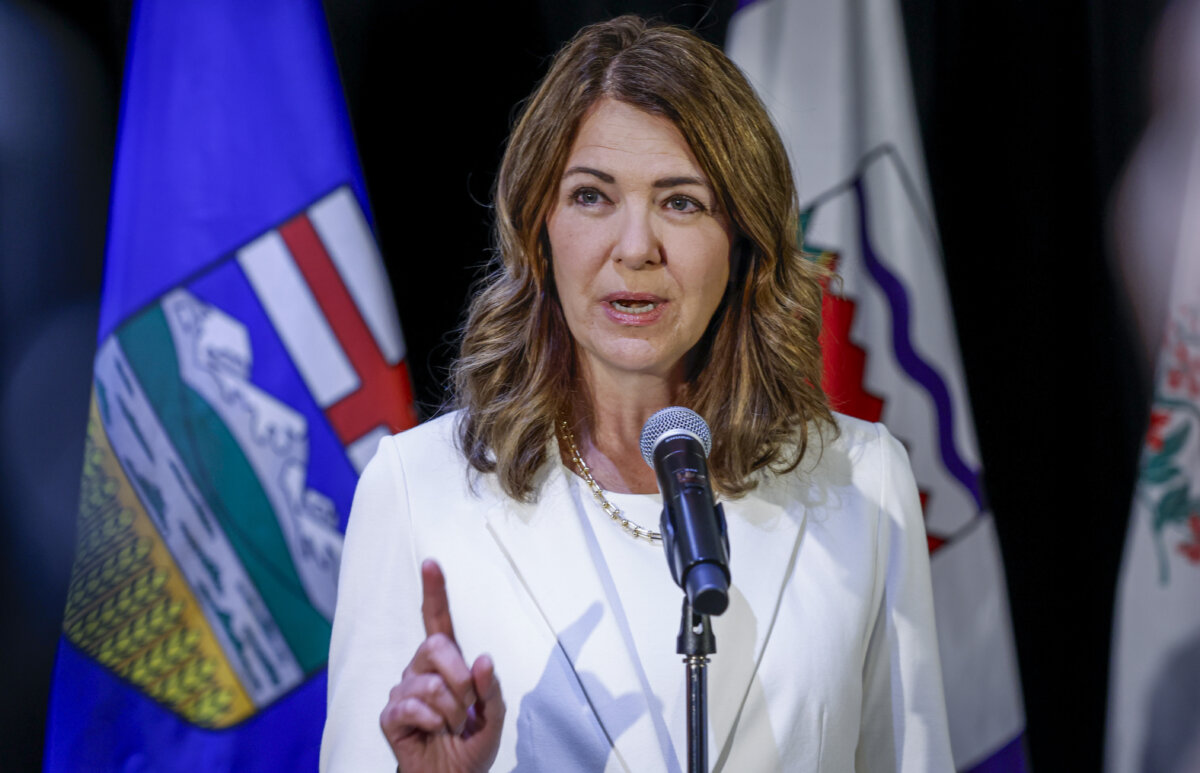
Alberta’s Premier Smith—leader of a government with annual revenues of $75+ billion, a majority in the provincial legislature, and leading her closest political opponent by 13–17 points according to a recent poll—on May 21 announced the addition of a tenth question to her proposed Oct. 19 referendum ballot.
The question: “Should Alberta remain a province of Canada or should the Government of Alberta commence the legal process required under the Canadian Constitution to hold a binding referendum on whether or not Alberta should separate from Canada?”
The announcement provoked a flurry of predictable reactions from predictable sources: the usual negatives from the NDP Opposition; fatuous fury from one spokesperson for the secession-championing Alberta Prosperity Project, but a more nuanced response from a wiser secession-advocate, lawyer Keith Wilson; dismay from Forever Canadian founder Thomas Lukaszuk, while repeating his preference for a vote on the issue in the legislature; and declarations of renewed commitments to Canadian unity by former Premier Kenney, federal Opposition Leader Poilievre, and Prime Minister Carney, leader of the federal party most responsible for Western alienation.
Of greater significance for Canadians outside of Alberta is the equally predictable reaction of most of the Toronto-based legacy media—still trusted by the older generation of Canadians but, as always, regrettably ill-informed concerning Alberta politics and either indifferent to or even prejudiced against the concerns and aspirations prompting the Oct. 19 referendum.
“Baffling,” says a headline in the Toronto Star. “Disastrous,” says another quoting Doug Ford. “A dangerous bluff … unhelpful and undemocratic,” says Carney as headlined in The Globe and Mail, along with an article on the “myths of secession.” “Everyone’s mad at Danielle Smith,” yet another confident declaration from the Globe. And according to the CBC, often referred to in Alberta as the Carney Broadcasting Corporation, Premier Smith is a closet separatist with her referendum “stuck in limbo” due to indigenous challenges. The list of negative, misinformed, and misdirected reports and commentaries from these sources goes on and on.
These constitute misinformed and misdirected reporting and commentary, because without exception they mistakenly or deliberately miss the main political reality in Alberta: that there is a responsible federalist alternative between the secession option and a status quo unacceptable to most Albertans. That alternative is the option consistently put forward by Premier Smith and the Alberta government for the last three years: a strong and sovereign Alberta within (not separate from) a united Canada.
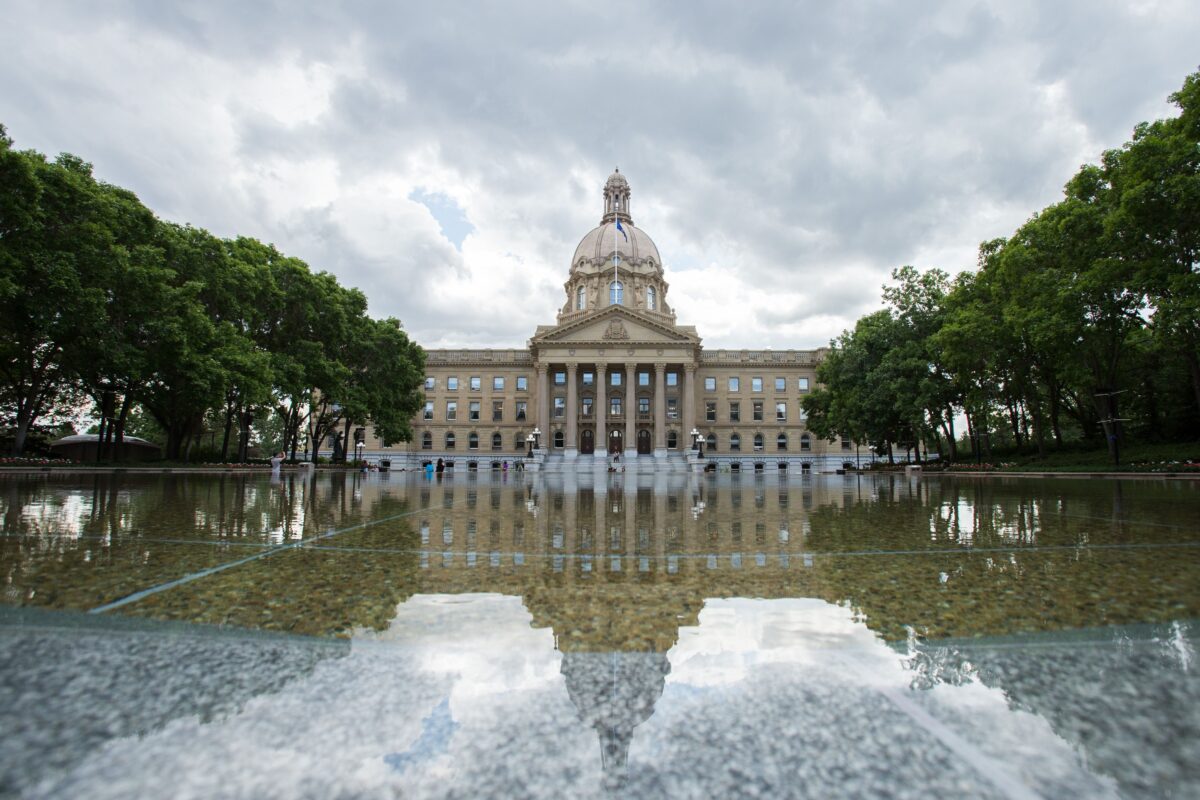
This position is legislatively defined by the 2022 Alberta Sovereignty Within a United Canada Act and expanded upon by the 2025 report of the Alberta Next consultations. It is the position which answers the question, “Remain in Canada, and what? Accept the status quo? No! Work toward the creation of a strong and sovereign province within (not separate from) a united Canada.
And here is what that means, an explanation frequently spelled out by Premier Smith, although largely ignored by the mainstream media:
First, strengthen the role and activity of the province in every jurisdictional area currently assigned to the provinces by Sections 92, 92A, and 93 of the Canadian Constitution. This includes direct taxation within the province and borrowing on its credit; natural resources development, of crucial importance to Alberta; the provision of health, education, and social services, the pillars of the modern welfare state; the provision of municipal institutions; and the administration of justice within the province, including the protection of property and civil rights—more than enough to keep any provincial administration focused and busy.
Secondly, strengthen provincial leadership and activity in every area of joint federal-provincial jurisdiction wherever and whenever possible. And what are those areas? Agriculture, according to Section 95 of the Constitution. Environment, the protection of which, although not explicitly mentioned in the Constitution, has also come to be a matter of joint jurisdiction. And immigration, according to Section 95 of the Constitution.
Is there a need for the Province of Alberta to “push the envelope” in each of these areas to the benefit of Albertans and other Canadians? Of course there is.
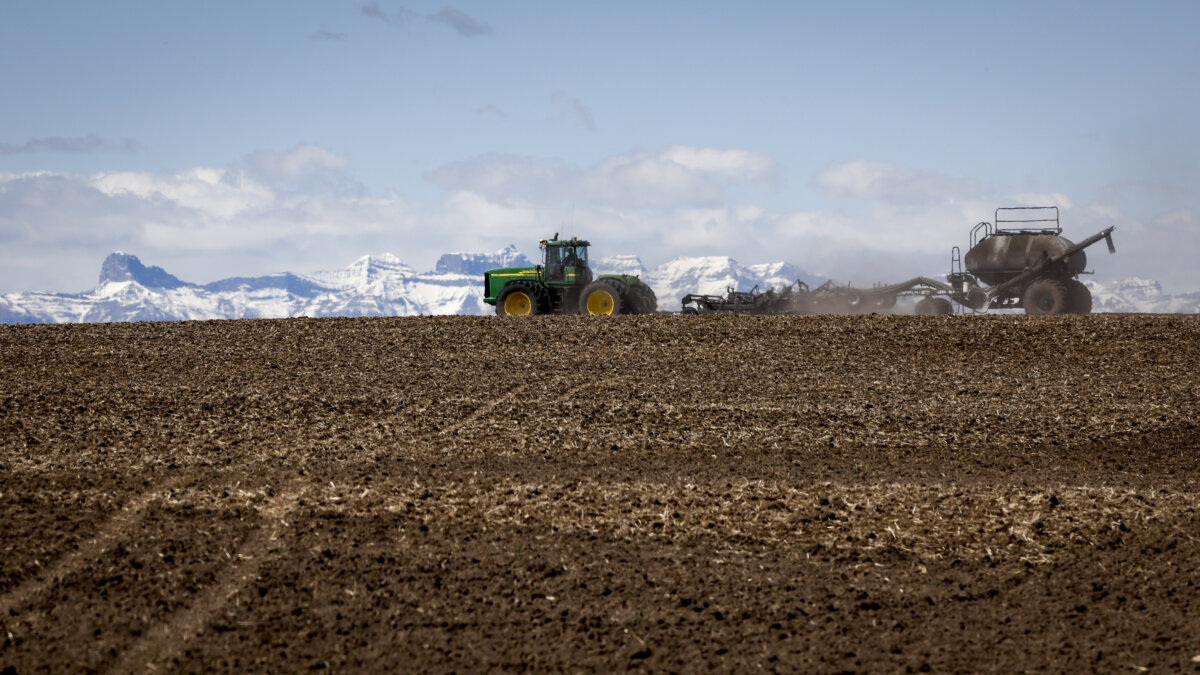
Agriculture (food production) is still one of the fundamental building blocks of the Canadian economy, and especially the Western Canadian economy, despite the fact that the Trudeau administration treated the natural resource sectors—agriculture, energy, mining, forestry, and the fisheries—as relics from the past and even environmental liabilities. Rural and agricultural Canada needs a champion, and it is provinces like Alberta that are best equipped and able to be that champion.
And on the environmental front? With the Carney administration fixated openly or covertly on climate change and the pursuit of net zero, and with no specific federal legislation requiring economic impact assessments of environmental policies and regulations, it is provinces like Alberta which must lead the way if an appropriate balance between environmental protection and economic development is to be achieved.
And on the immigration front? It is the disastrous aftermath of the immigration policies of the Trudeau administration—policies pursued without meaningful provincial consultation, burdening the provinces with unabsorbable population increases and vastly increasing the demands on their health and education services—which is prompting much more vigorous provincial participation in this area of joint jurisdiction.
Hence, the fact that the first five questions on Premier Smith’s Oct. 19 provincial referendum seek support for the Alberta government assuming increased control over immigration as it affects the province—a fact that has nothing whatsoever to do with secession and thus is completely ignored by most media coverage of the referendum.
Is there growing discontent in Alberta with the current imbalances and biases of federal institutions? Yes there is, and that discontent extends far beyond Alberta and the visible portion of the secessionist movement. Hence, the next four questions on the referendum—again largely ignored by secession-fixated media and commentators because they are not secession-oriented but focus on making federalism work better. The questions seek public support for the abolition of the unelected and ineffective Senate, a provincial role in the selection of provincial judges, and two measures designed to better protect provincial rights from federal intrusions.
Are the advocates of Alberta secession all crackpots and extremists? No, they are not. Many are loyal Canadians who believe that it is Ottawa and Central Canada which have abandoned and seceded from the Canada these patriots long for, and their objective is to “get that country back,” if necessary in an unshackled Western Canada. What a broader majority want is not to “get out of Canada,” but for the federal government to “get out of areas of provincial jurisdiction” and to focus on federal responsibilities which no one disputes are the responsibility of a national government.
What specifically could the federal government and the elected representatives of Eastern Canada do to address Western discontent—more than offering self-righteous sermons on “western whining” and running advertisements during the Stanley Cup playoffs trumpeting a federal commitment to pipelines, power plants, ports, railways, and roads while most of these remain projects on paper strangled by federal regulations and conditions?
There are two things which the current federal government has failed to do, but could undertake if it had the will, the courage, and the leadership to do so:
First, do a much better job in the areas assigned by the Constitution to the federal government. This includes improving national fiscal and monetary policy, areas where deficit spending and government-induced inflation are currently running out of control; improving foreign affairs, including the re-establishment of positive relations with our largest neighbour and trading partner; strengthening the enforcement of the Criminal Code to restore safety to public streets and communities; reforming the management of indigenous affairs which have been mishandled for over a century, and the list goes on. Implementing such measures would create a Canada no one in their right mind would want to leave.
And secondly, if the prime minister could find time to visit the House of Commons, introduce and pass an Act Respecting Provincial Sovereignty—an act repealing or amending the statutes that authorize federal intrusions in areas of provincial jurisdiction to eliminate or at least reduce their intrusiveness, and statutes like the Impact Assessment Act, the Canada Health Act, the National Housing Act, the Canada Infrastructure Bank Act, and the Emergencies Act, which intrudes without consultation or consent into provincial jurisdiction over property and civil rights.
Besides all this, and to repeat: Western Canadians discontented with the institutions and performance of the Canadian federation have a constructive alternative between the unacceptable status quo and the secession option. That alternative—ignored, unacknowledged, and largely unreported by most of the traditional media despite the likelihood of it enjoying majority support in Alberta—is the alternative consistently advocated by Premier Smith since 2022: a strong and sovereign province within (not separate from) a united Canada!
What makes this option especially significant and timely nationally is the upcoming Quebec provincial election, expected on or before Oct. 5 and just two weeks before the Oct. 19 Alberta referendum.
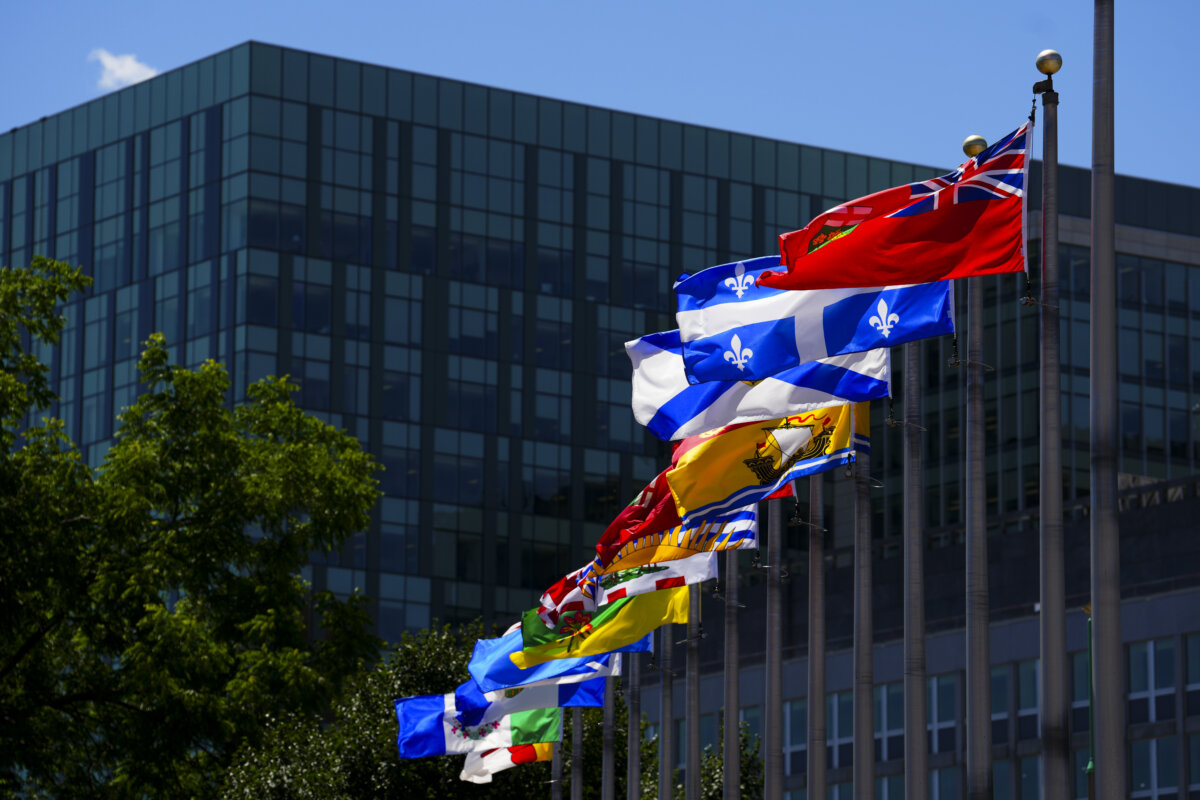
What will be the principal issue in that Quebec election? Is Quebec to become a sovereign country separate from the Canadian federation—the position of the Bloc Québécois—and to be decided by another provincial referendum should that party win the election? Or, is Quebec to be a sovereign province but within (not separate from) the Canadian federation—the position of the current CAQ government, and the position most likely to be advanced in some form or other by the Quebec Liberals supported by their federal cousins?
If another referendum on this issue should be held in Quebec, while Quebec Liberals and their federal counterparts are expected to be on the “no” side, they can hardly denounce the referendum itself as “undemocratic” if they hope to have influence with the millions of Quebec voters who will participate in it. How is it then that Prime Minister Carney can denounce the premier and government of Alberta as “undemocratic” when they propose a referendum—not even on separation, but simply on whether to allow a referendum on the subject? The hypocrisy is palpable, especially to Albertans.
And if the future for Quebec, advocated and supported by Quebec Liberals and their federal counterparts as an alternative between the status quo and secession, is a sovereign province within (not separate from) the Canadian federation—is this not almost identical to the federalist alternative currently advocated by Alberta and Premier Smith? How then can federal Liberals and the federal government support such a position, or some similar version of it in the case of Quebec, but denounce Premier Smith as a quasi-separatist and federation disrupter when she advocates precisely that position?
Despite the current flurry of misinformation and criticism of the referendum proposed by Premier Smith, she might well have the last and most visionary word as to “the best path forward,” not only for Alberta, but for the Canadian federation: strong and sovereign provinces within (not separate from) a united Canada—with both federal and provincial governments “staying in their lanes” as defined by the Constitution.
Views expressed in this article are the opinions of the author and do not necessarily reflect the views of The Epoch Times.
 Friends Read Free
Copy
Facebook
Tweet
Friends Read Free
Copy
Facebook
Tweet