Commentary
Prince Edward Island’s entry into Confederation, which did not occur until 1873, was delayed by a rough-edged, self-educated hot-head and brawler, a farmer, brewer, and distiller with a penchant for duelling “with sword or pistol.” George Coles’ curious dark energy helps explain why the “Cradle of Confederation”—it was P.E.I. that hosted the 1864 Charlottetown Conference that launched the negotiations—did not actually join Confederation until nine years later, when the Dominion was six years old.
Twice on the colony’s bumpy road to union, Coles, an islander born and bred, threatened a duel to the death. First, on the evening of June 21, 1851, though premier of the colony, he matched pistols with Edward Palmer, the lanky Tory opposition leader nicknamed “Neddy Longlegs.”
The story goes that a servant had informed Coles, 40, that Palmer, 41, had called him a “coward,” and Coles was incensed. They faced off at Government House Farm (later Victoria Park) where, on the commands “Ready and Fire,” Palmer’s reflex was quicker. He fired but did not draw blood. Coles either held his fire, deliberately missed, or (more dangerously) cast his cocked pistol aside. Whichever is true, honour was satisfied. Again in 1861, Coles promised death to another distinguished island statesman, James Pope, after a heated exchange in the House of Assembly. This time, no shots were fired. Another time, Coles spent 30 days in the slammer for refusing to withdraw an unparliamentary remark. On at least one other occasion, he beat someone up.
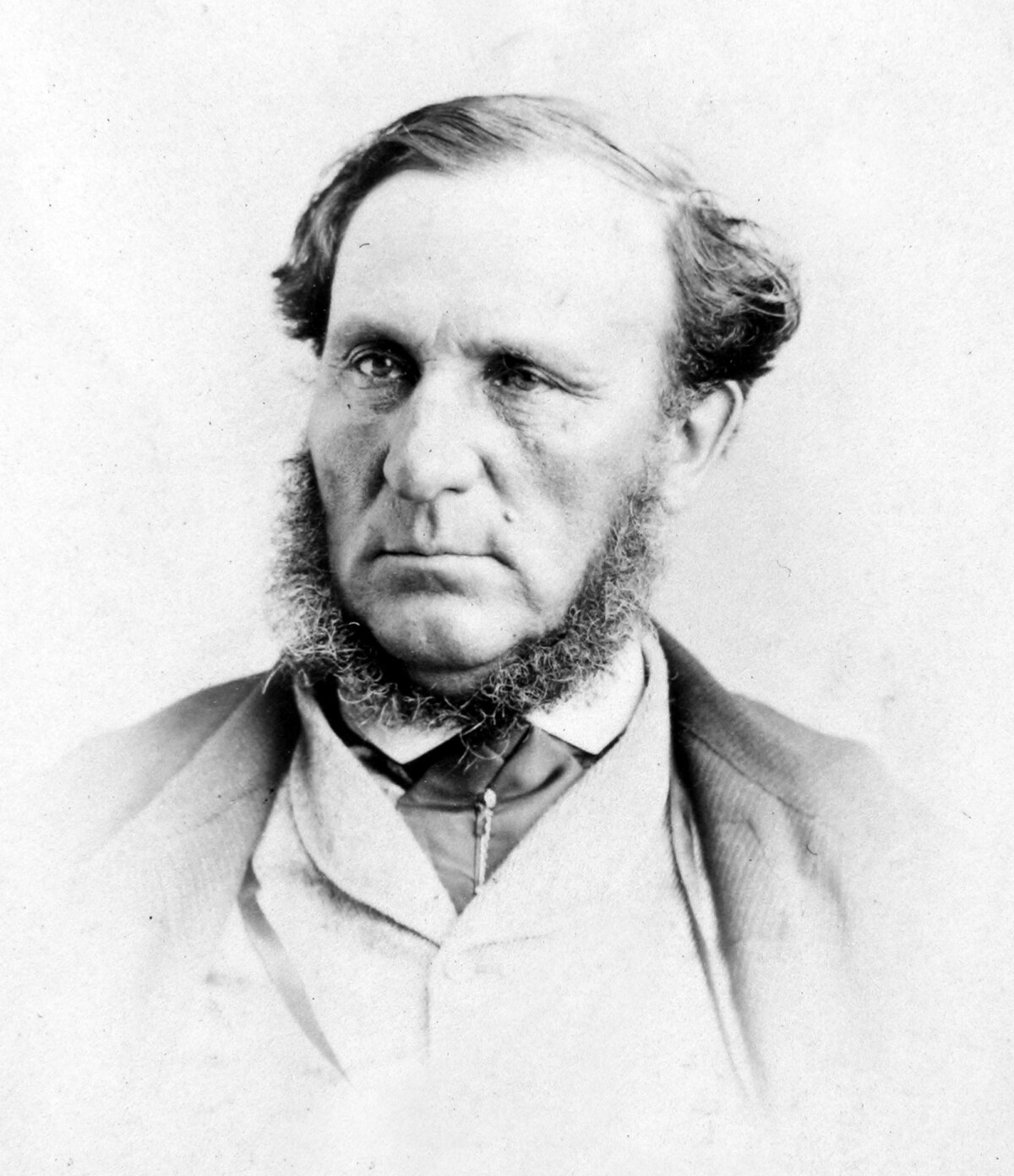
Coles’ wrath was oddly typical of the “Garden of the Gulf,” to all appearances a genteel rural paradise. One British observer was shocked at the tenor of politics: “I have been acting rather the Despot,” wrote Lt. Gov. Sir Alexander Bannerman in 1851, “living alone & consulting neither party, each ready to cut the other’s throats. I could have scarcely believed that such bitter animosity could have existed.” Yet Coles was respected on both sides as a “moderate” journalist and statesman who fought for land reform, responsible government, and public education. Together with Reform journalist Edward Whelan, Coles led a new Liberal Party out of “the old Escheat party.”
What was “Escheat”? It’s a long story. P.E.I. politics were consumed by the stultifying question of what to do with the quasi-feudal landholding system established in 1767 when the former Isle of St. John was still ruled by the governor of Nova Scotia. Land had been parcelled into 67 lots of 20,000 acres given to noblemen expected to ensure settlement and prosperity. Most didn’t rise to the occasion. And because they derived little income from the land, they could not pay the expected “quitrent” taxes either. By the 1840s, absentee lords still owned two-thirds, some of it tied up in 999-year leases, making it impossible to attract investors. Still, it was their property and, after all, aristocracy does have its merits.
For example, the great “Anne of Green Gables” author Lucy Maud Montgomery was a product of two of the island’s most prominent families of the Cavendish squirearchy. Another prominent landowner was Sir Samuel Cunard, born in Halifax to a Loyalist family, a Militia captain who went on to create the vast shipping and transoceanic travel empire known as Cunard Lines. Its many ships later included the famous RMS Queen Mary (now a floating hotel in Long Beach, California), and Queen Elizabeth (capsized by a fire in Hong Kong harbour in 1972), and later still, Queen Elizabeth 2 (today a floating hotel in Dubai) and Queen Mary 2 (the only traditional ocean liner still in service today). Cunard, described as a man “who made both men and things bend to his will,” owned one-sixth of Prince Edward Island—and he refused to sell.
Such lordly intransigence played into the hands of Reformers like Coles and Whelan, who said the Province of Canada was run “for the benefit of a couple of dozen land speculators, their connexions, dependents, and parasites” like a Family Compact. To give a flavour of the old island Toryism, men like Palmer opposed responsible government because it would empower “the democratical mass,” “the mob,” and “Red Republicans”; a wider franchise would “give a political ascendancy to men destitute of property over those who possessed it.” There was a certain logic to this!
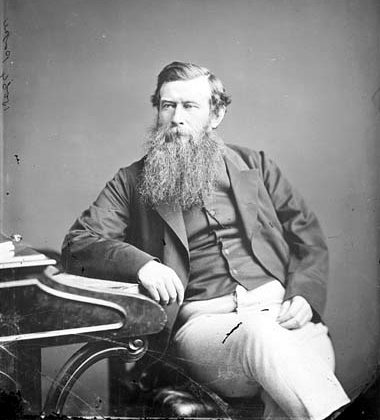
The Reformers’ solution was “Escheat”—a court of law to hold the landlords to account and chip away at the monopoly. Reformers won majorities in the Assembly several times. Still, other Tories sought compromise: “High as may be the respect entertained for the legal rights of the land owners,” wrote William Henry Pope, a lawyer and land agent and the brother of James Pope, “there are cases in which they should give way to the requirements of ‘public policy.’”
In fact, both Reformers and Tories sought Colonial Office approval to seize land—to no avail. In the end, Cunard’s death in 1865, and the sale of his 212,885 acres to the colony for $257,933 a year later, cracked the edifice.
To finish it off, union of the Maritime provinces and perhaps with Canada was seen as a kind of nuclear option in a Great Reset (to borrow a phrase). Coles and Whelan supported that and pushed the idea at the 1864 union conferences in Charlottetown and Quebec—again to no avail. So Coles opposed the “Quebec scheme” of 1864, holding out for a better deal.
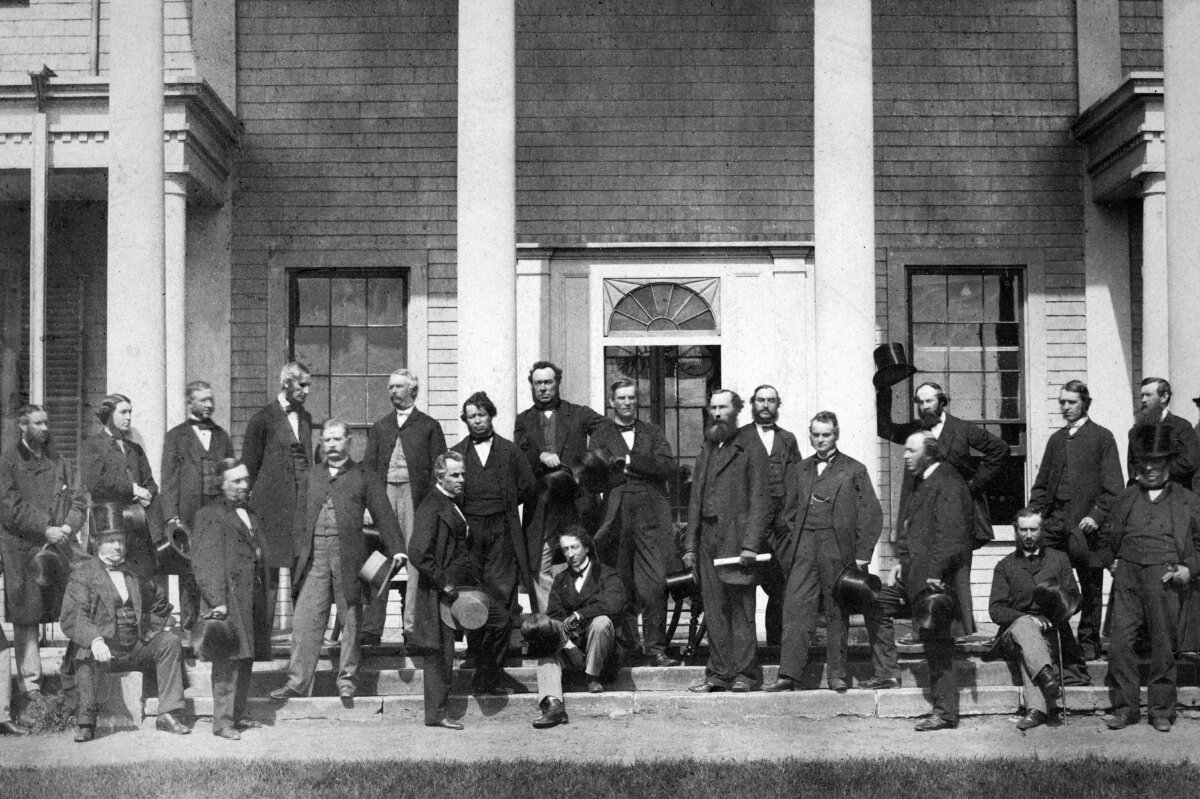
In contrast, W.H. Pope supported federation all along. (In the most famous painting of the Founding Fathers, he is seen in the far right back corner, sporting the greatest beard of Confederation.) Later, in 1870, Pope forged a new Conservative party to finally unite P.E.I. with Canada. In a fine example of hereditary talent, his son, Sir Joseph Pope, was Sir John A. Macdonald’s longtime private secretary and biographer, while his grandson, Maj.-Gen. Maurice Pope, was a distinguished World War II officer who married a Belgian countess, advocated for French Canadian participation in the Canadian Army, and later, as Ambassador to Spain, went hunting with the Spanish caudillo, Francisco Franco. In turn, Maurice’s son, Joseph, also served in the war, afterwards became a distinguished Toronto businessman and Catholic philanthropist, had seven children and at least 18 grandchildren, and died in 2010.
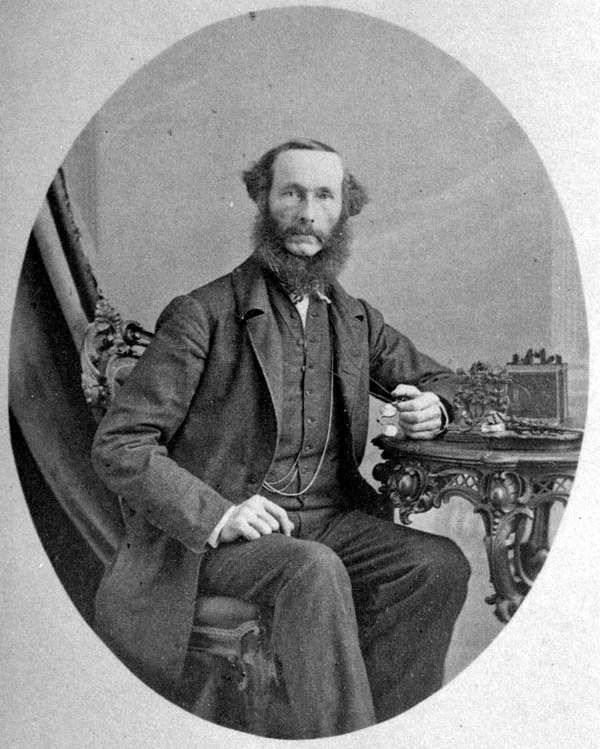
The island yielded many other pro- and anti-Confederation characters like John Hamilton Gray. Gray was born on P.E.I. of Loyalist descent, served in the British Army, and was later put in charge of all P.E.I. military units. As premier of the colony from 1863 to 1865, he served as chairman of the Charlottetown Conference. Gray, a Tory, supported Confederation, calling it “the dream of my life to be, one day, a citizen of a great nation extending from the Great West to the Atlantic seaboard.”
Another famous Father, Col. Thomas Heath Haviland, was a lawyer, assemblyman, and afterwards the third lieutenant governor of P.E.I. (1879–1884). Haviland had been Palmer’s “second” at the 1851 duel. Andrew Archibald Macdonald, a descendant of early Scots immigrants, followed a similar path to Confederation, and served as the fourth lieutenant governor (1884–1889).
Like British Columbia, Prince Edward Island enjoyed splendid isolation under the protection of the Royal Navy. But eventually, islanders caught the railway craze and built expensive lines that bankrupted the colony, forcing them to reconsider union. It is true that some politicians thought, according to historian Phillip Buckner, that it was “wise to build the railway before” joining Confederation, “since the debt would then be assumed by the federal government.” Thus P.E.I. remained, as the island motto says, “parva sub ingenti,” the tyke protected by the giant.
Views expressed in this article are the opinions of the author and do not necessarily reflect the views of The Epoch Times.