
Commentary
Finding a director of the Centers for Disease Control and Prevention (CDC) has proven to be one of the more contentious hiring placements of the second Trump administration. The reason is screamingly obvious. This powerful position was the communications portal for the entire COVID-19 pandemic response—from the forced closures to the forced masking to the forced shots and even the subsidized switch to mail-in ballots.
We have yet to have anything like a truth and reconciliation commission, much less apologies to the population for what happened. The entire subject just hangs around like the elephant in the room about which no one wants to speak.
Dr. Dave Weldon was the first pick for the job, but his nomination was withdrawn before he could testify. The reason is always the same. Sen. Bill Cassidy (R-La.) heads a powerful committee that has to approve nominees, and he has signaled strong resistance to anyone who wants to seriously revisit the mass injections of the COVID-19 era.
The second nominee was Susan Monarez. She made it through confirmation and briefly served as director before being fired for insubordination after clashing with the administration over policy directives, including resistance to certain vaccine-related changes. Monarez was replaced with a new acting director borrowed from the National Institutes of Health: Dr. Jay Bhattacharya, who needs to return to his exclusive focus at the National Institutes of Health.
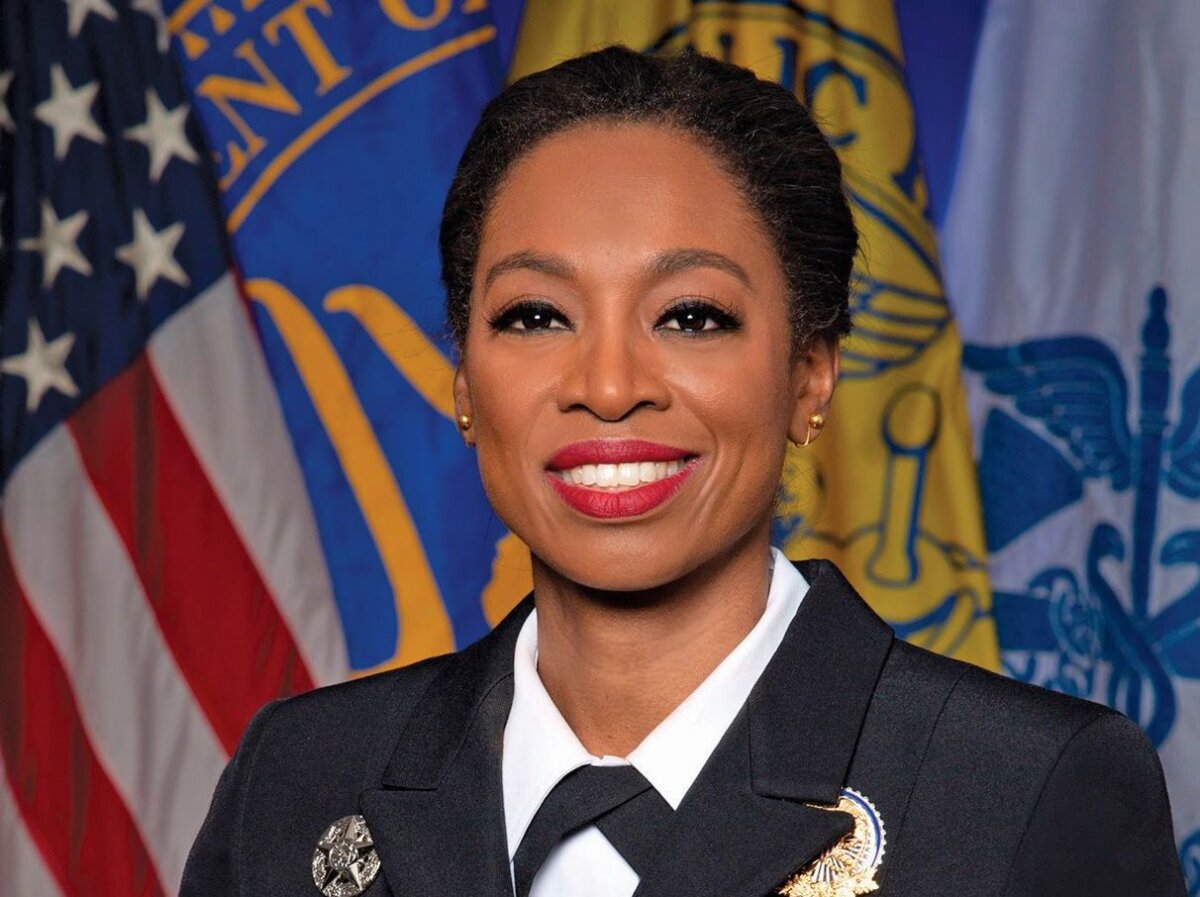
Now the administration has turned to Dr. Erica Schwartz, a physician, lawyer, and retired rear admiral in the U.S. Public Health Service Commissioned Corps. She previously served as deputy surgeon general during President Donald Trump’s first term (2019–2021), where she played a key role in coordinating the early federal COVID-19 response, including efforts to set up national testing sites.
Before that, she spent more than two decades in uniform, including as chief medical officer of the U.S. Coast Guard, where she pushed policies on pandemic influenza, vaccination mandates, disease surveillance, and outbreak response. She holds an MD and a biomedical engineering degree from Brown University, a master of public health degree from the Uniformed Services University, and a JD from the University of Maryland.
Schwartz is widely described as a traditional public health veteran with a strong record supporting vaccination programs. She has publicly praised vaccines as a cornerstone of public health and was involved in implementing aspects of the federal pandemic response during her time as deputy surgeon general.
After leaving federal service in April 2021, Schwartz transitioned into the private sector. She served as president of insurance solutions at UnitedHealthcare (a major division of the massive UnitedHealth Group), a role she held starting in 2021. In that position, she oversaw insurance-related strategies at one of the largest payers in the U.S. health care system—a company deeply intertwined with pharmaceutical manufacturers, vaccine distribution, and the very reimbursement mechanisms that shaped COVID-19-era policies.
UnitedHealthcare has profited handsomely from the expansion of preventive services, including routine vaccinations and COVID-19 pandemic-related coverage mandates. While there, Schwartz never publicly questioned the societal costs of lockdowns and mandates, although she was surely in a position to do so.
She has simultaneously served on corporate boards, including the board of Aveanna Healthcare Holdings Inc. (a major provider of pediatric and adult home healthcare services) since May 2021 and the board of Butterfly Network, Inc. (a digital health company focused on point-of-care ultrasound technology) since September 2021. These roles place her squarely inside the lucrative world of for-profit health care delivery and medical devices—sectors that benefited enormously from the centralized public health directives of the COVID-19 years.
This private-sector chapter raises pointed questions about independence. Can a nominee who spent years at the helm of insurance solutions for one of the United States’ largest health insurers—and who sits on boards of companies that thrive on the existing medical-industrial complex—truly lead a reformed CDC that prioritizes skepticism toward over-medicalization, conflicts of interest, and pharmaceutical influence? Or will her experience reinforce the status quo that many Americans now distrust?
She will certainly pass muster with Cassidy, who, based on current betting odds, is very likely to lose a primary challenge in his state next month, making him a lame duck. It seems odd that such a figure could find himself in a position to dictate health policy for the entire country. Other lawmakers should surely ask questions of this nominee, plain ones that are crying out for answers.
On COVID-19 policy failures: During your time as deputy surgeon general in the first Trump administration, you helped coordinate aspects of the federal COVID-19 response, including testing infrastructure. Looking back, do you believe the broad lockdowns, school closures, and masking mandates—many of which the CDC promoted or defended—were justified by the evidence? What specific lessons from that period would you apply to prevent similar overreach in the future?
On vaccines and mandates: You have a documented history of supporting mandatory vaccination programs, including policies on flu, anthrax, smallpox, and other outbreaks in your Coast Guard and Public Health Service roles. Do you stand by the CDC’s aggressive promotion of COVID-19 shots, including for healthy young adults and children, despite data on waning efficacy, myocarditis risks, and excess mortality signals in some cohorts? Would you commit to a full, transparent review of vaccine safety data, including any role the CDC played in suppressing dissenting views?
On agency independence and reform: The CDC has faced intense criticism for mission creep, conflicts of interest, politicization, and dabbling in matters that are none of its business, such as the directive for mail-in ballots issued on March 12, 2020. As director, would you support structural reforms such as separating vaccine approval/monitoring functions from promotion, ending reliance on pharmaceutical funding streams, and prioritizing lab-leak investigations for future pandemics? How would you handle pressure from pharmaceutical companies to push their products?
On truth and reconciliation: Many Americans still await a full accounting of the outrages of 2020–2022, including poor PCR testing guidance, inflated case counts, suppression of early treatment, hiding of vaccine injury, hospital protocols that caused unnecessary death, and rampant death misclassification. Will you commit to declassifying relevant documents, encouraging open scientific debate, opening up databases to other agencies and the public, looking more carefully at massive pharmaceutical harms, and fostering a culture at the CDC that prioritizes empirical evidence over consensus or political expediency?
On future preparedness: Given your background in occupational and environmental medicine and pandemic planning, what concrete changes would you make to ensure the CDC focuses on genuine threats rather than broad societal controls that erode public trust? Do you have any intention of revising whatever protocols were in place that led to the last calamity?
There are a thousand-plus more questions, as documented by the Norfolk Group. Senators need to examine them carefully and not just grant a partisan rubber stamp.
If confirmed, Schwartz will inherit an agency whose credibility has been badly damaged. Her military and public health pedigree suggests competence in operations, but the deeper question remains whether she will help bury the COVID-19 elephant—or finally help the country confront it honestly.
Views expressed in this article are the opinions of the author and do not necessarily reflect the views of The Epoch Times.
 Friends Read Free
Copy
Facebook
Tweet
Friends Read Free
Copy
Facebook
Tweet