Commentary
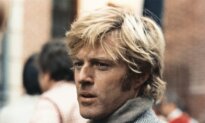
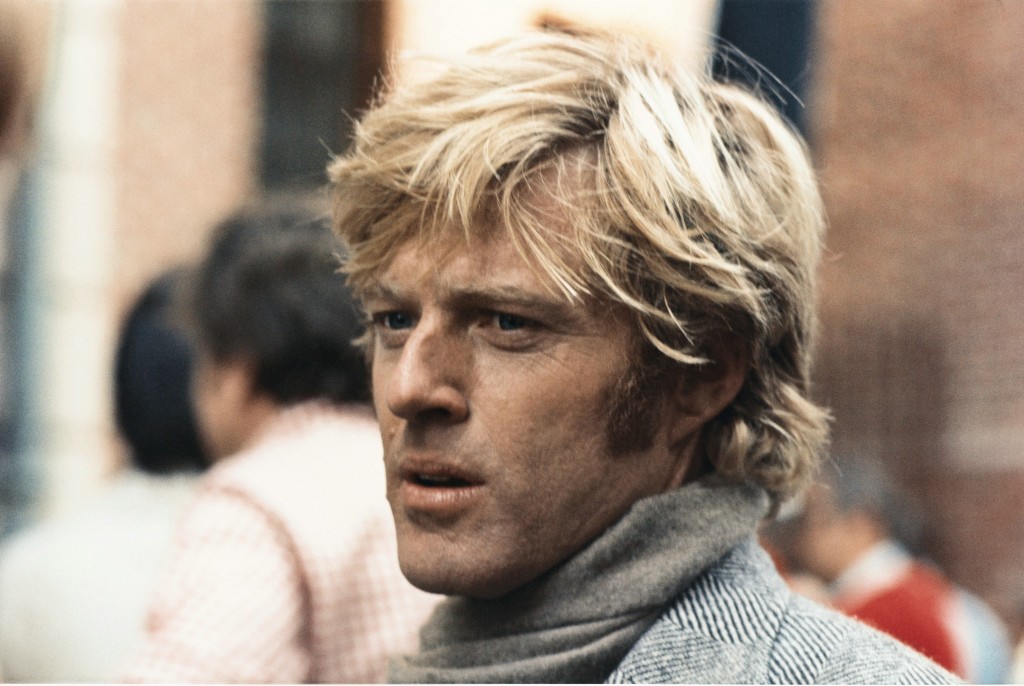
Last week, a mere six days after Charlie Kirk was killed in Utah, another famous American died in Utah. I refer, of course, to the passing of Robert Redford. Unlike the jarring way by which Charlie Kirk left this world, Redford’s death was gentle—a peaceful transition. Robert Redford lived a life filled with many accomplishments over the course of his 89-year sojourn on Earth, and his demise was a result of natural causes.
Redford was one of the dominant male movie stars for the Baby Boomer generation, comparable to what John Wayne, Jimmy Stewart, Cary Grant, and Gary Cooper meant to the Greatest Generation. His presence in American cinema, and therefore in American culture, was huge. He excelled as both an actor and a director, and he further enriched the world of cinema by being the architect of the Sundance Film Festival, opening the doors of the film industry to aspiring film-makers who often lacked access to Hollywood’s major studios.
He had a gift—a presence. He was always interesting to watch on the silver screen. He was likeable—not too good to be true, but a human being who seemed so genuine. Few men had his looks or his charisma. (Here is a question for the egalitarians out there: Was it fair that Robert Redford was more handsome than 99.9 percent of men, and that he had a natural attractiveness that propelled him to superstardom in film? Nature endows us very unequally, but wouldn’t it be monstrous for government to try to make us all equal in terms of looks?)
Although Redford never received an Oscar for his acting, he did win one for the very first film he directed—“Ordinary People.” He also was honored with a special Oscar for lifetime achievement. But it is for some of the movies in which he starred that made the biggest impact on me. In fact, I would rank six of his movies in the top 50 movies I have ever seen.
There probably won’t be any surprises in this list to my contemporaries, but younger Americans should treat themselves to some truly great movies if they have yet to see the following six:
I have to start off with a pair: His two “buddy movies” in which he paired up with Paul Newman. Both “Butch Cassidy and the Sundance Kid” and “The Sting” are classics. They are outstanding examples of the anti-hero genre that so dominated the late ‘60s and the ‘70s. Redford played a conscienceless, not-too-bright outlaw in the one, and a reckless con artist in the other, but the viewer never wanted him to leave the screen.
He took a calculated risk playing the title character in “The Great Gatsby.” Most fans of the F. Scott Fitzgerald novel disdained this film version. That was largely inevitable, because everyone who loves a great novel already has their own mental pictures of how it looks, and so whatever Hollywood comes up with generally falls far short of expectations.
I am in the minority who believe that Redford nailed the role of Jay Gatsby. Gatsby was a pretender, a faker—not because he was a bad man, but because he desperately wanted to win the girl he loved. As much as he wanted to blend in with the super-rich in pursuit of his obsessive love, he would always be on the outside looking in, despite the great fortune he had mysteriously earned and that he hoped would gain him acceptance in rich society. His wealth opened doors, but it didn’t enable him to connect and blend in naturally with “the old rich.” While he mastered the subterfuge of mimicking the superficial and artificial verbiage of the hoi-polloi, he conveyed to the viewer the insecurities of knowing that, at any moment, he might be exposed as a fake. That was a key part of the tragedy of the story, and Redford pulled it off brilliantly.
Next on the list is “Three Days of the Condor” from the mid-70s. It is one of the tightest suspense movies from start to finish that you can ever find. Co-starring Faye Dunaway, Redford’s character spends three days running for his life after uncovering some very sensitive information as an analyst working for the CIA. Truly powerful with riveting performances by the two stars.
In the late ‘70s, he paired up with Jane Fonda (with whom he had co-starred in “Barefoot in the Park” in the ’60s—a movie I found boring) to make “The Electric Horseman.” It’s about a past-his-prime rodeo star named Sonny Steele who is living a life of dissipation until he crosses paths with a champion stallion who is in the same line of work as he is—a soul-stultifying turn as an advertising attraction for a mundane consumer product. Then the fun starts—a thoroughly enjoyable “underdog against the system” tale featuring absolutely brilliant acting by Redford.
Finally, I would recommend the semi-mystical baseball saga, “The Natural.” In this film, Redford played a naïve, innocent country boy named Roy Hobbs who is endowed with the talent to be “the best there ever was” baseball player. Things don’t go as planned, though. Roy has to learn vital lessons about what is most important in life, and he has to outgrow the naivete that blinded him to the evil that drags down human beings. By the way, Redford didn’t have to learn his smooth left-handed batting swing for the movie; he had played baseball in college. At the end of “The Natural,” Redford’s smile lights up the screen as few others have ever been able to do. That was vintage Robert Redford.
Besides the films I just listed, which spanned the years 1969 to 1984, Redford’s acting career stretched from a guest appearance on the TV series “Maverick” in 1960 to playing a bad guy in the Marvel Comics movie “Avengers: Endgame” in 2019. A particularly memorable performance was in a 1962 episode of Rod Serling’s “The Twilight Zone,” in which he was boyish, innocent, and (of course) handsome as he played none other than Death.
Not every Redford movie was a hit or a classic or a hit, of course. A dedicated environmentalist and progressive, Redford would direct or act in movies that promoted his political beliefs. In doing so, he was exercising the same right that Charlie Kirk was exercising: to advocate for one’s beliefs, but as is so often the case in Hollywood, movies with a leftist message are usually box-office duds, and even Redford’s legendary star power couldn’t make financial successes of such movies. But his hits overshadowed his flops.
RIP, sir. And thank you for sharing your talents with us in so many memorable movies.
Views expressed in this article are the opinions of the author and do not necessarily reflect the views of The Epoch Times.
 Friends Read Free
Copy
Facebook
Tweet
Friends Read Free
Copy
Facebook
Tweet