Commentary
I should probably start with a confession.
I am biased.
I care about animal welfare. I have more than 100 head of hogs on my ranch. I believe animals should have enough room to move, turn around, and express some of their natural behaviors. I believe that if we are going to consume animals, the life we give them between birth and death matters.
I am also biased because I generally dislike regulations, especially regulations that come from California.
I lived in California for most of my life. I built businesses there. I raised a family there. I experienced firsthand a regulatory environment that often felt overwhelming, expensive, and increasingly difficult for small businesses and family farmers to navigate. In many ways, those policies helped convince me to move to Texas.
Yet despite all of those biases, I find myself struggling with a provision in the current Farm Bill called the Save Our Bacon Act.
The name sounds great. Who doesn’t want to save bacon?
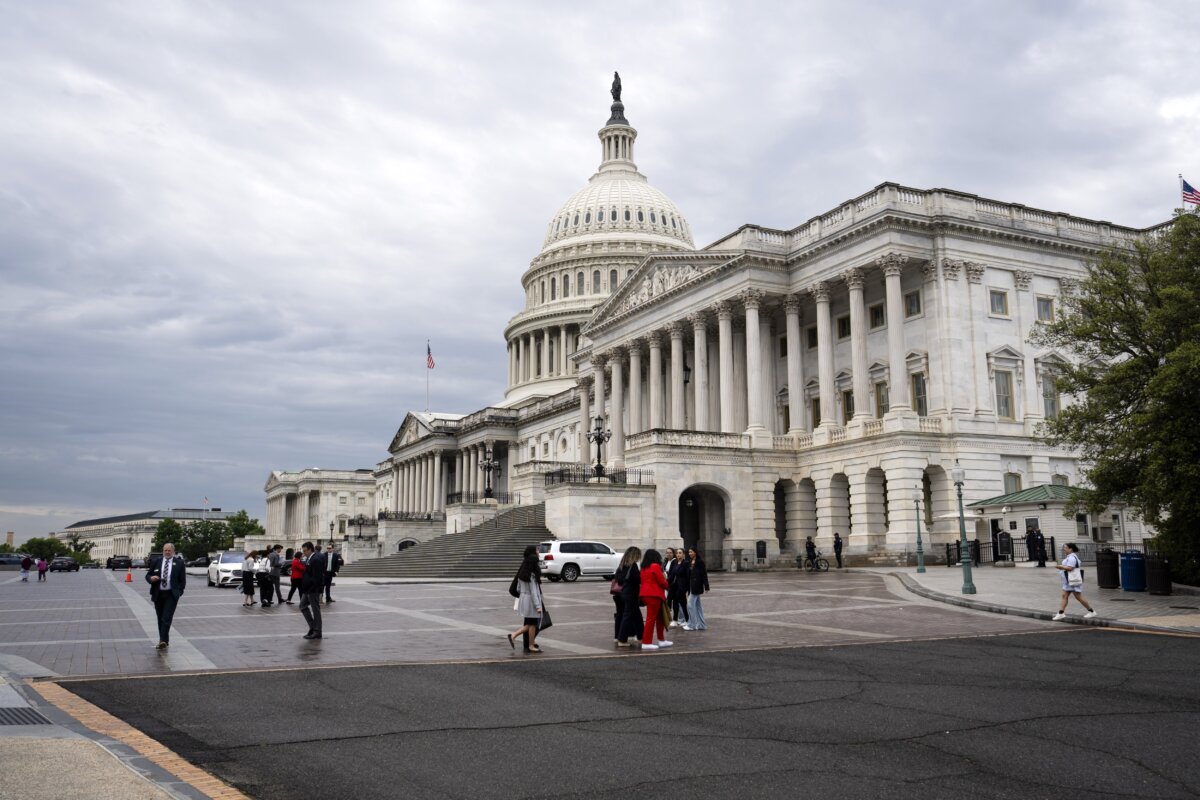
But this legislation is not really about bacon. It is about whether the federal government should have the authority to override the decisions individual states make about what products can be sold within their borders.
The provision is aimed primarily at California’s Proposition 12, a law approved by California voters that established minimum housing standards for breeding pigs, laying hens, and veal calves whose products are sold in California. Supporters of the Save Our Bacon Act argue that California should not be able to dictate production practices to farmers in Texas, Iowa, North Carolina, or anywhere else. Opponents argue that states have always had the authority to decide what products can be sold within their own markets.
What makes this debate particularly interesting is that it does not divide neatly along partisan lines.
Some conservatives support the measure because they see California’s rules as an unfair burden on farmers and an intrusion into interstate commerce. Other conservatives oppose it because they view it as federal overreach and a direct challenge to states’ rights. Likewise, some liberals support Proposition 12 because they care about animal welfare, while others worry about higher food prices and the impact on producers.
This is not really a debate about pigs.
It is a debate about where power belongs.
I understand the argument made by supporters of the Save Our Bacon Act. They say California is telling Texas ranchers and Iowa hog farmers how to farm.
I don’t think that is entirely accurate.
California is not forcing anyone in Texas to raise pigs a certain way. California is not sending regulators into Iowa. California is not making it illegal to produce pork under different standards.
What California is saying is that if you want access to California consumers, these are the requirements for selling into that market.
That may be frustrating. It may even be bad policy. But it is not the same thing as forcing every producer in America to adopt California’s standards.
Every market has standards. Organic markets have standards. Kosher markets have standards. Grass-fed markets have standards. Export markets have standards. Consumers routinely choose products that meet specific requirements and reject products that do not.
California voters decided that animal welfare standards were one of the requirements for access to their market. Farmers remain free to sell pork elsewhere. The real question is whether states still have the right to make those decisions.
If we believe in states’ rights when Texas makes decisions California dislikes, we should probably believe in states’ rights when California makes decisions Texas dislikes as well.
My own views on hog production probably frustrate people on both sides of this debate.
I raise pigs outside. They root. They wallow. They eat food scraps. They spread fertility. They help regenerate damaged ground. One or two hogs can transform a homestead, turning kitchen scraps into food while producing enough manure to enrich a garden. There is a reason pigs were once found on nearly every American farm. They are one of the most useful animals a farmer can own.
At the same time, I understand that not every producer wants to raise pigs the way I do. Outdoor systems come with challenges. Weather, predators, parasites, and production losses are real concerns. I do not believe every farmer should be forced into my model.
But I also cannot pretend to be comfortable with systems in which breeding sows spend much of their lives confined to spaces so small they can barely move. I understand why those systems developed. They were designed to maximize efficiency and reduce piglet mortality. Understanding something is not the same as endorsing it.
There is another reason I struggle with the Save Our Bacon Act.
Many producers invested enormous sums of money to comply with Proposition 12. They remodeled facilities, changed production systems, and made business decisions based on the rules that existed at the time. Whether someone agreed with the law or not, those investments were made in good faith.
If the federal government now changes the rules and opens those markets to pork produced under different standards, it risks penalizing the very farmers who spent millions complying with the requirements. Markets function best when the rules are clear and predictable.
The truth is that I wish laws were not necessary at all.
I wish consumers cared enough to demand humane treatment without government intervention. I wish producers felt a moral obligation to steward animals well because of their relationship with God, creation, and their own conscience. I wish culture rewarded the farmer who took better care of his livestock rather than simply rewarding whoever could produce the cheapest pound of meat.
In a healthy society, virtue should do most of the work that regulations are asked to do. Faith should matter. Character should matter. Stewardship should matter. The closer people are to their food and to the farmers who produce it, the less need there is for government to step in and referee every disagreement.
I wish our relationship with nature and with one another were strong enough that consumers naturally sought out farmers whose values matched their own. I wish people knew their local producers, visited farms, asked questions, and voted with their dollars. That creates lasting cultural change. Laws can force compliance, but they rarely create conviction.
Still, whether Proposition 12 is wise or foolish is almost beside the point.
California citizens voted for it. California has the right to decide what products are sold in California.
As much as I may disagree with many of the policies that come out of Sacramento, the answer is not for Washington to erase state decisions whenever they become politically inconvenient.
Today, the issue is pork. Tomorrow, it could be water, energy, land use, homeschooling, gun rights, food freedom, or any number of issues where states choose different paths.
The issue is not whether California got it right.
The issue is whether we still believe states have the right to govern themselves.
I happen to believe pigs deserve room to move. I happen to believe the life of an animal matters. I also happen to believe that states have rights.
If we only support states’ rights when the state agrees with us, then we don’t really believe in states’ rights at all.
Views expressed in this article are the opinions of the author and do not necessarily reflect the views of The Epoch Times.
 Friends Read Free
Copy
Facebook
Tweet
Friends Read Free
Copy
Facebook
Tweet