Commentary
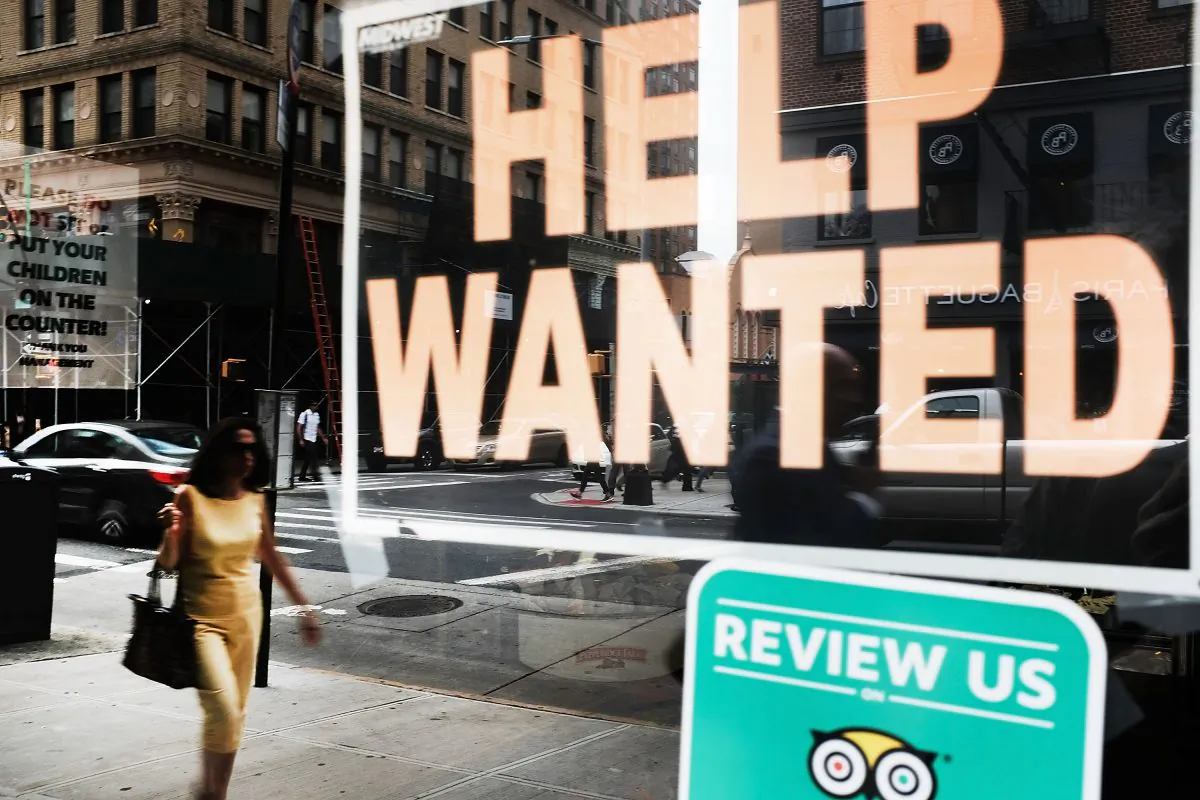
There is continuing concern that the current immigration crackdown could create shortages of workers in many industries in the United States. Labor shortages have long been an issue internationally, especially in countries in which birthrates have been low. Guest worker programs have frequently been used to fill these gaps, including in the United States on a limited basis. Such workers are most commonly found in seasonal industries such as agriculture and construction, but they are also prevalent in domestic work, hospitality, caregiving, and increasingly in high-skill IT jobs.
In the United States, the number of workers laboring in the shadows as “undocumented” is believed to be much larger than the number who are working legally under guest programs. The most recent estimates of the number of illegal immigrant workers employed in the United States put the figure at between 8.3 million and 8.7 million, or roughly 4.8 percent to 5.2 percent of all U.S. workers (New York Federal Reserve/Liberty Street Economics, June 2025 update; Center for Migration Studies, 2023; Pew Research Center, 2022). About 1 million individuals come in annually under guest worker programs.
It is important to understand the history and current state of guest worker programs in the United States. The Bracero Program was the earliest formal guest worker program. It began with World War II through an agreement with Mexico, primarily to address agricultural and railroad shortages, and lasted until 1964. In 1952, the Immigration and Nationality Act introduced a program for employment-based nonimmigrant visas with provisions covering some agricultural workers through its H-2 format. In 1986, under the Immigration Reform and Control Act, the program was divided into two categories: H-2A, specifically for agricultural workers, and the H-2B program for nonagricultural workers.
Both H-2 programs provide for the temporary entry of foreign workers. Meanwhile, the H-1B program, amended by the Immigration Act of 1990, is widely publicized for its use in high-skilled tech jobs and allows for the pursuit of a green card while in that visa status. It has been estimated that 30 percent to 50 percent of H-1B visa holders ultimately obtain green cards.
There are other smaller guest worker programs for interns and trainees, au pair workers, and exceptionally talented individuals in the arts, sciences, sports, and similar fields. And these latter programs usually do not have controversy attached to them. Sponsoring employers and/or applicants must meet several requirements to participate in any of these programs. In addition to having guest worker candidates pass criminal background checks, employers must demonstrate that there are no U.S. workers who could fill the jobs and must meet specifications that wages will not be adversely affected.
Although different sources provide somewhat varying figures for the number of workers entering the country under these programs, the following are generally considered reliable. According to the Department of Homeland Security, approximately 400,000 H-1B visa applications were approved in 2024. For the H-2A covering temporary or seasonal workers, the Government Accountability Office reports 310,000 being issued in 2023; and the U.S. Citizenship and Immigration Service reports about 131,700 issued in 2023 under the H-2B program. Thus, as noted, these guest worker programs collectively bring in about 1 million of these temporary workers annually.
The numbers regarding the shortfall of workers are unclear. Surveys of employers who report their degree of difficulty in finding workers for their businesses are helpful in this regard. The National Federation of Independent Businesses’ June 2025 survey found that 86 percent of the 58 percent who were hiring or trying to hire reported few or no qualified applicants for the positions that they were trying to fill. ManpowerGroup’s 2025 Global Talent Shortage Survey found that more than 70 percent of U.S. business owners were experiencing hiring difficulties.
These surveys suggest that merely comparing aggregate U.S. unfilled job openings (approximately 7.8 million in May 2025) and the number of unemployed workers (approximately 7 million in June 2025) does not capture the importance of a mismatch between a worker’s characteristics and the job’s characteristics. Shortages vary significantly by industry type. Hence, mismatches in labor markets are a further factor that needs to be considered when evaluating remedies.
Another significant headwind against our economy is the declining labor force participation rate, a trend that has been ongoing for several decades. It is estimated that 4.6 million new workers will be needed each year to replace retiring baby boomers, with only about 3 million entering the workforce on net annually.
It is commonly argued that undocumented workers, usually coming from poorer countries and with less protection for their positions, are not as adverse to working under unfavorable job conditions and for lower wages. Hence, their presence could disadvantage and displace legal U.S. workers. The concern is then that regularizing their positions through guest worker programs might depress wages and working conditions in those markets.
In the late 20th century, I conducted studies that produced some of the few existing datasets on job preferences and equilibrium wages for both legal and undocumented workers in the same agricultural labor market. My statistical analyses showed no significant difference between the legal U.S. citizen workers and undocumented workers in their job condition preferences, equilibrium wages, and other aspects of labor market behavior (American Journal of Agricultural Economics, Vol. 67, No. 2, 1985; The Review of Economics and Statistics, Vol. 72, No. 2, 1990). Thus, for these workers, there was no reason to believe that the presence of the undocumented workers disadvantaged the legal Americans in those markets.
Meanwhile, friends and neighbors whisper that their longtime housekeepers and lawncare workers have nervous and worried looks on their faces. Perhaps it is time to seriously examine empirical labor market data in areas in which worker shortages exist, set aside stereotypes, and consider ways to expand and reconfigure U.S. guest worker programs in impacted markets for undocumented workers who have been law-abiding and can contribute positively to our economy.
There will undoubtedly be political controversy in considering guest-worker policy changes, and no one wants a long, drawn-out battle in Congress that will only add to the divisions already pulling at our society. Hence, given the current urgency of this issue, it would make sense to kick the can down the road on controversial details such as a path to citizenship and try to make the guest worker remedies as simple and uncontroversial as possible. Perhaps we should start with existing and proven guest worker models that could be applied to more industries. Or there might be new possibilities that could operate simply at the individual skill level. There could even be a mechanism for individual citizens to “sponsor” their maids and lawn workers, checkout clerks at local hardware stores, and service workers in restaurants, with forms that could be filed at the post office with enough verifiable detail to ensure that we know who’s who in this system and can rule out any criminal elements.
Many details will need to be ironed out in any such expansion. But if the United States can put a man on the moon and be the envy of the world for its scientific developments, then surely we can find a fair and economically sensible way to address the obvious needs in the guest worker area. We just have to start thinking about this in more creative ways.
Views expressed in this article are the opinions of the author and do not necessarily reflect the views of The Epoch Times.
 Friends Read Free
Copy
Facebook
Tweet
Friends Read Free
Copy
Facebook
Tweet